Key takeaways
- Dual-piston quick-lift pump reduces effort noticeably
- 6,600-lb rating gives margin on larger vehicles
- Random-color shipping means you may not get the color pictured
Every DIY mechanic and small-shop owner eventually hits the same wall: a car that will not lift cleanly, a jack that barely slides under the frame, or a pump that takes thirty strokes to raise the vehicle even two inches. The right floor jack removes all that friction, letting you get the car up in seconds, roll under it with confidence, and drop it just as fast when the job is done. The wrong one wastes your evening, scratches your paint, or in the worst case, fails mid-repair.
What separates a dependable floor jack from a cheap one comes down to a handful of concrete specs that manufacturers publish if you know where to look. Minimum saddle height determines whether you can reach the lifting points on a lowered sedan or a wide-body truck. Dual-piston quick-lift pumps cut the stroke count roughly in half compared to single-piston designs. Steel gauge and overall weight tell you how much the jack flexes under load, and third-party overload testing—when available—gives you a margin of safety beyond the rated capacity. Below, we compared published specs, street prices, and verified owner feedback across eight popular floor jacks to help you find the right match for your vehicle and your budget.
Our top picks
 Maxority 3-Ton
- Extended Reach for Low Clearance: This jack's long…
- Low-Profile Design: With an ultra-low profile, this floor…
- RAPID PUMP Technology: Equipped with RAPID PUMP technology,…
 SATA 3-Ton
- 1.5x Overload Tested for Ultimate Safety: Every unit…
- Industrial-Grade Steel Construction: Built with thickened, high-strength steel…
- Efficient Dual-Piston Rapid Lift Pump: Equipped with a…
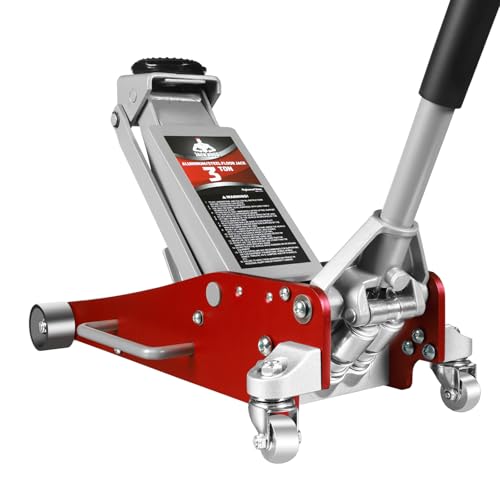 Jack Boss 3 Ton Low Profile
- This aluminum and steel car jack supports up…
- With a minimum lifting height of just 3-15/16",…
- The hydraulic jack equipped with a dual-piston pump,…
| Product | Key specs | |
|---|---|---|
| Maxority 3-Ton | Extended Reach for Low Clearance: This jack's long… Low-Profile Design: With an ultra-low profile, this floor… RAPID PUMP Technology: Equipped with RAPID PUMP technology,… | Check price |
| SATA 3-Ton | 1.5x Overload Tested for Ultimate Safety: Every unit… Industrial-Grade Steel Construction: Built with thickened, high-strength steel… Efficient Dual-Piston Rapid Lift Pump: Equipped with a… | Check price |
| Jack Boss 3 Ton Low Profile | This aluminum and steel car jack supports up… With a minimum lifting height of just 3-15/16",… The hydraulic jack equipped with a dual-piston pump,… | Check price |
 AV Steel Low Profile Floor Jack 3 AV Steel Low Profile Floor Jack 3 | ✅Capacity & Versatility: We offer a durable floor… ✅Low Profile Design: The Low Profile Floor Jack… ✅Overload Protection: A safety measure in the hydraulic… | Check price |
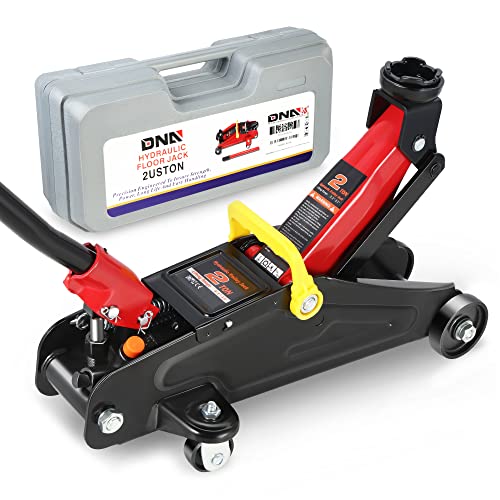 DNA Motoring TOOLS-00234 Low Profile Hydraulic Trolley DNA Motoring TOOLS-00234 Low Profile Hydraulic Trolley | This Hydraulic Trolley Jack features a 2 ton… Built-in dependable safety release valve triggers in the… Heavy duty steel construction provides rigidity and stability | Check price |
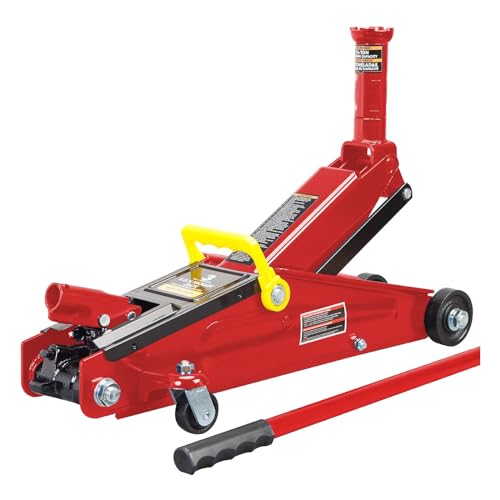 BIG RED T83006 Torin Hydraulic Trolley Service/Floor BIG RED T83006 Torin Hydraulic Trolley Service/Floor | Hydraulic trolley floor jack is providing long term… Features a 3 ton (6,000 lb) capacity with… Equipped with (2) large steel casters and (2)… | Check price |
 AUTOWN 3 Ton Floor Jack AUTOWN 3 Ton Floor Jack | Crafted from heavy-gauge alloy steel, this 3 ton… The 7.1” to 20.9” lifting range is tailored… An efficient hydraulic system delivers speedy elevation with… | Check price |
 AV Steel Low Profile Floor Jack 2.5 AV Steel Low Profile Floor Jack 2.5 | Check price |
As an Amazon Associate we earn from qualifying purchases at no extra cost to you.
Quick Picks
| Product | Best for | Price |
|---|---|---|
| Maxority 3-Ton | Budget low-profile work on cars and crossovers | $137.99 |
| SATA Ultra-Low Profile | Lowered vehicles and tight-clearance sedans | $163.99 |
| Jack Boss Aluminum/Steel | Racers who need a lighter jack they can stash in a trunk | $169.99 |
| AV Steel 3-Ton | Wider lift range for trucks and SUVs | $169.99 |
| DNA Motoring 2-Ton | Occasional maintenance on light compact cars | $53.99 |
| BIG RED T83006 | SUV and extended-height truck owners | $89.99 |
| AUTOWN 3-Ton | Owners who want a wide rubber pad on an alloy-steel frame | $139.99 |
| AV Steel 2.5-Ton | Sedans and coupes under 5,000 lbs | $62.99 |
How We Picked
We filtered the field using four criteria. First, minimum saddle height: any jack that cannot slide under a 3-inch ground clearance is useless on the majority of passenger cars sold in 2026. Second, rated capacity with headroom—we favored jacks that publish a tested overload margin over those that do not. Third, pump design: dual-piston quick-lift pumps consistently draw fewer complaints about slow raising. Fourth, build weight and material: heavier steel frames resist flex, while aluminum-alloy constructions earn their place when portability matters more than rigidity.
The 8 Best Floor Jacks Automotive in 2026
Maxority 3-Ton Low Profile
The Maxority suits weekend wrenchers who need real 3-ton capacity and a genuinely low profile without crossing the $140 threshold. Its dual-piston pump handles quick lifts in fewer strokes, and the heavy-duty steel body resists the frame twist that cheaper jacks develop after a year of abuse. Owners report it clears most factory-height sedans and crossovers on the first pass.
- Dual-piston quick-lift pump reduces effort noticeably
- 6,600-lb rating gives margin on larger vehicles
- Random-color shipping means you may not get the color pictured
Skip it if your garage needs a jack that can also top out above 20 inches for lifted trucks; the Maxority’s maximum height is lower than some competitors in this group.
SATA 3-Ton Ultra-Low Profile
SATA earns its spot here because of a 2-11/16-inch minimum height, the lowest in this roundup, making it the natural pick for lowered European sedans and track cars that sit close to the ground. The 1.5X overload testing is a published safety figure that no other jack in this list discloses, which gives careful buyers an extra reason to trust the steel underneath. Dual pistons keep the lift fast despite the compact frame.
- Lowest saddle height in the group, fits cars other jacks miss
- Tested to 1.5 times rated capacity for an independent safety claim
- Premium pricing puts it above several higher-capacity alternatives
If you mostly service trucks or SUVs with 7-plus inches of clearance, you will not exploit the ultra-low profile and could save money elsewhere.
Jack Boss 3-Ton Aluminum/Steel Racing
At 58.5 pounds net, this jack is roughly ten to fifteen pounds lighter than comparable steel models, which matters if you load it into a trunk for autocross or drag-day use. The mixed aluminum-and-steel construction keeps the body manageable while the steel saddle handles the load. Its 3-15/16-inch minimum still clears most street cars, and the 18-5/16-inch maximum covers a decent range for sedan undercarriage work.
- Lightest option in this group, ideal for transport to events
- Dual-piston pump maintains fast lift speed despite lighter frame
- Maximum height trails taller jacks meant for lifted trucks
Do not choose this one for a shop that leaves the jack parked permanently; the weight savings only pay off if you carry it.
AV Steel 3-Ton Low Profile
This AV Steel unit covers 3-1/8 inches to 19-7/8 inches of lift height, the widest range among the 3-ton low-profile jacks here. That top-end reach handles not just factory-height SUVs but many lift-kit-adjacent trucks without repositioning. The heavy-duty steel construction and dual-piston pump keep it competitive on lift speed and rigidity.
- Nearly 20 inches of maximum height, most versatile in its class
- Low-profile minimum still clears most passenger cars
- Higher price matches the Jack Boss without the weight advantage
If you never lift above 19 inches and do not need the extra capacity, the Maxority gives you similar low-profile performance for thirty dollars less.
DNA Motoring 2-Ton
For compact owners who pop a wheel off once a season for a tire rotation, the DNA Motoring delivers a functional hydraulic jack under $55. Its 2-ton (4,000-lb) rating covers Honda Fits, Mazda3s, and similar lightweight cars comfortably. The 5.1-to-13-inch range is adequate for stock-height compacts but limits it from lowered or lifted vehicles.
- Lowest price in the group, no compromise needed for light cars
- Simple single-piston design means fewer parts that can fail
- Single-piston pump requires noticeably more strokes than dual-piston rivals
Skip it if your vehicle tips the scales above 3,500 pounds; you will be running close to or over the rated limit.
BIG RED T83006
The extra saddle is the headline feature: it extends the lifting height enough to engage the frame points on full-size SUVs and dually-adjacent trucks that overwhelm standard low-profile saddles. The 3-ton (6,000-lb) rating handles those heavier vehicles, and the T83006’s reputation for durability in commercial garages is well established. At under $90, it represents the best capacity-per-dollar in this list.
- Extra saddle expands usable range for tall vehicles
- Strongest published value proposition among 3-ton jacks here
- Minimum height is higher than the true low-profile units; may not clear a lowered sedan
If your fleet is exclusively passenger cars with low ground clearance, the BIG RED’s taller minimum profile is a drawback you will notice every single use.
AUTOWN 3-Ton
The cross-shape rubber pad is a thoughtful touch that cradles pinch welds and frame rails with less risk of sliding off during a long brake job. Alloy steel construction keeps weight reasonable while the 7.1-to-20.9-inch range gives it genuine truck compatibility at the top end. The 6,600-lb capacity puts it in the same tier as the Maxority and SATA.
- Cross-shape rubber pad protects lifting points and resists slippage
- Nearly 21 inches of maximum height suits trucks and lifted SUVs
- Minimum height above seven inches rules out lowered cars entirely
Do not buy this for a garage that houses a lowered sports car alongside a truck; you would need a second, lower-profile jack.
AV Steel 2.5-Ton
At $63, this is the cheapest low-profile option that still reaches under a typical sedan at 3.4 inches. The single-piston pump is the honest trade-off: you will pull more strokes per lift. For occasional use on coupes and sedans under 5,000 pounds, the 3.4-to-14.6-inch range covers factory ground clearance and modest lowering without issue.
- Lowest price among genuine low-profile jacks in this roundup
- 3.4-inch minimum clears most stock passenger cars without a ramp
- Single-piston design is noticeably slower; explicitly not for trucks or SUVs
If you touch anything heavier than a midsize sedan, this jack is undersized and under-heighted. Look at the Maxority or SATA instead.
Buying Guide
Minimum Saddle Height Is the Non-Negotiable Spec
Your car’s ground clearance at the intended lifting point determines whether a jack physically fits. Factory sedans typically need 3 to 4 inches of minimum saddle clearance. Lowered vehicles, especially those on coilovers or race springs, can drop below 3 inches. If the published minimum height is even a quarter-inch above your car’s frame rail, the jack will not seat, and no amount of capacity rating matters. Measure your lifting point with a tape before buying and compare that number to the jack’s stated minimum.
Dual-Piston Quick-Lift Pumps Save Real Time
A dual-piston pump moves hydraulic fluid through two circuits simultaneously during the initial “approach” phase, typically cutting stroke count by 40 to 50 percent until the saddle contacts the vehicle. Single-piston jacks work fine for a tire change twice a year, but if you are under a car for an hour swapping brake calipers, the difference between twelve pump strokes and twenty-four compounds over dozens of lifts per year. Among the eight jacks here, six use dual pistons; the two exceptions (DNA Motoring and AV Steel 2.5-Ton) are priced accordingly.
Match Capacity to Your Heaviest Vehicle, Not Your Average One
A 3-ton rated jack lifts 6,600 pounds at one corner, but you should still verify that figure against your vehicle’s gross weight divided by four, plus margin for the jack’s own effort angle. If you own a dually truck or a large SUV that tips near 6,000 pounds, a 2-ton jack is genuinely dangerous. The overload-test data published by SATA (1.5X) is the kind of third-party confirmation that gives you confidence when the rated number alone feels close to the limit.
Our Verdict
The SATA 3-Ton Ultra-Low Profile is the top pick for the broadest range of passenger vehicles because its 2-11/16-inch minimum clears almost everything on the road, its 1.5X overload test is the only published safety margin in this group, and the dual-piston pump keeps lifting fast. The DNA Motoring 2-Ton at $53.99 is the best budget choice for owners of light compacts who change tires twice a year and will never service a truck. One exception: if your primary vehicle is a full-size SUV or extended-height pickup, the BIG RED T83006 wins outright because its extra saddle and 6,000-lb rating at under $90 deliver more usable capability per dollar than any low-profile unit in this list.
FAQ
Can a 2-ton floor jack lift a midsize SUV?
Technically yes at a single corner, but most midsize SUVs weigh between 4,500 and 5,500 pounds gross, meaning each corner carries roughly 1,250 to 1,400 pounds. A 2-ton (4,000-lb) jack rated at one point can handle that, though you are using more than a third of its capacity on a single lift, which leaves little margin if the jack is older or the hydraulic fluid is degraded.
Is a low-profile jack necessary for a stock vehicle?
No. A stock sedan with six or seven inches of ground clearance will lift fine on a standard jack with a 4-to-5-inch minimum height. Low-profile designs become essential when vehicles sit at three to four inches, such as lowered cars, wide-body imports, and some European performance sedans with deep front splitters.
What does “quick lift” actually mean in pump design?
A quick-lift dual-piston pump uses a larger-diameter first-stage piston that moves more fluid per stroke to rapidly close the gap between the saddle and the vehicle. Once contact is made, the system switches to a smaller second-stage piston that generates the force needed to lift the load. The net effect is roughly half the total strokes compared to a single-piston jack.
How often should I service the hydraulic fluid in a floor jack?
Manufacturers generally recommend inspecting the fluid every twelve to eighteen months under regular use. If you notice the jack sinking under load, lifting more slowly than before, or developing a spongy feel on the pump handle, air has entered the system or the fluid level has dropped, and bleeding or topping off is overdue.