Key takeaways
- Pro: Reusable filter keeps long-term ownership cost low
- Pro: Electronic remote adds convenience in a budget unit
- Con: Underpowered for any room beyond 150 square feet on hot days
When a single room turns unbearably warm and the rest of the house is already cool, choosing the right air conditioner is about matching cooling capacity to the actual space — not just grabbing the highest BTU number or the lowest sticker price. Owners consistently report that the best air conditioners ratings in 2026 cluster around units that deliver reliable performance without excessive noise or energy waste, paired with accessories that protect that performance over years of use.
What separates a satisfying purchase from a disappointing one comes down to three things: sizing accuracy, whether the unit seals properly against a window or exhausts cleanly through a portable hose, and how well the filter and power setup handle sustained use. This roundup covers eight products that address those questions directly, from compact window units to heavy-duty inverter portables and the filters and cords that keep them running.
Our top picks
 Midea 5
- The Midea EasyCool Window Air Conditioner unit has…
- This window AC unit is low as 52dB(low…
- Install easily in your home or apartment's existing…
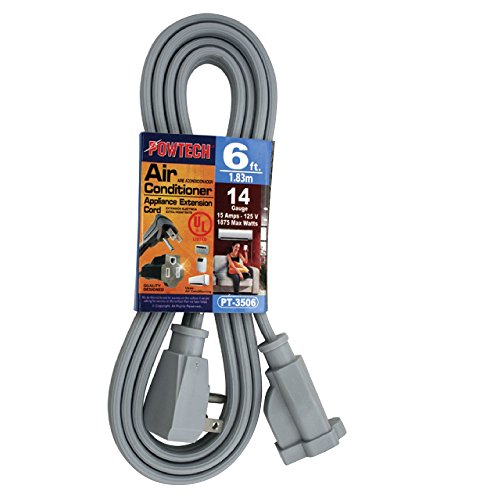 POWTECH Heavy duty 6 FT Air Conditioner
- Air Conditioner and Major Appliance Extension Cord UL…
- Angle Plug Allows cord to remain flush to…
- Heavy duty vinyl insulation, 14 Gauge, 1875 MAX…
 GE 6
GE 6- 6,000 BTU COOLS ROOMS UP TO 250 SQ…
- Precise temperature control from 64°F to 86°F via…
- Intelligent auto-cycling compressor maintains your set temperature while…
| Product | Key specs | |
|---|---|---|
| Midea 5 | The Midea EasyCool Window Air Conditioner unit has… This window AC unit is low as 52dB(low… Install easily in your home or apartment's existing… | Check price |
| POWTECH Heavy duty 6 FT Air Conditioner | Air Conditioner and Major Appliance Extension Cord UL… Angle Plug Allows cord to remain flush to… Heavy duty vinyl insulation, 14 Gauge, 1875 MAX… | Check price |
| GE 6 | 6,000 BTU COOLS ROOMS UP TO 250 SQ… Precise temperature control from 64°F to 86°F via… Intelligent auto-cycling compressor maintains your set temperature while… | Check price |
 BLACK+DECKER Portable Air Conditioner BLACK+DECKER Portable Air Conditioner | Three-in-One Unit: Our 10,000 BTU (5,550 DOE) air… Portable AC: Use this personal air conditioner (15.3”… Follow Me Remote: Our portable AC unit comes… | Check price |
 Amazon Basics MERV 5 AC Furnace Air Amazon Basics MERV 5 AC Furnace Air | Nominal 20x20x1 (Actual 19.75 x 19.75 x 0.75… Home air filter (6-pack) promotes cleaner indoor air Traps materials pass through the filter | Check price |
 Gasbye Dual Hose Portable Air Conditioner Gasbye Dual Hose Portable Air Conditioner | [Peak Efficiency with Full DC Inverter Tech] This… [Dual-Hose Cooling] Unlike single-hose portable AC units for… [Say Goodbye to Compressor Noise] Inverter Mode reduces… | Check price |
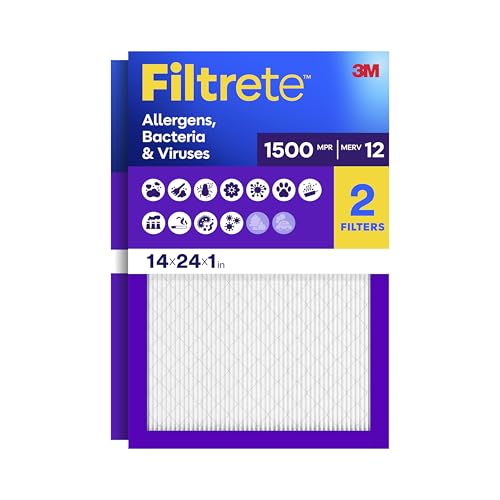 Filtrete 14x24x1 Air Filter Filtrete 14x24x1 Air Filter | 2-pack of 3-month pleated Filtrete 14x24x1 MERV 12… Designed with Filtrete 3-in-1 technology to pull in… With a 1500 MPR and MERV 12 rating,… | Check price |
 Tehanld 12000 BTU Portable Air Conditioner for Tehanld 12000 BTU Portable Air Conditioner for | 【12,000 BTU Upward Airflow for 600 Sq.Ft】Upward air… 【42dB Silent Sleep & 4‑in‑1】Cool, Dehumidify, Fan, Sleep 【8.1 CEER Energy Savings You Can Measure】 No… | Check price |
As an Amazon Associate we earn from qualifying purchases at no extra cost to you.
Quick Picks
| Product | Best for | Price |
|---|---|---|
| Midea 5,000 BTU Window AC | Small bedrooms and offices up to 150 sq ft | $157.99 |
| POWTECH 6 FT Heavy Duty Cord | Bridging short outlet-to-unit distances | $11.55 |
| GE 6,000 BTU Window AC | Medium rooms up to 250 sq ft, easy install | $190.91 |
| BLACK+DECKER 10,000 BTU Portable | Renters who cannot modify windows | $299.99 |
| Amazon Basics MERV 5 Filter 20x20x1 | Basic dust capture, central HVAC owners | $31.56 |
| Gasbye 14,000 BTU Dual Hose Portable | Large rooms up to 500 sq ft, energy efficiency | $499.99 |
| Filtrete MERV 12 Filter 14x24x1 | Allergy households wanting cleaner air | $29.28 |
| Tehanld 12,000 BTU Portable | Large rooms up to 600 sq ft on a budget | $279.98 |
How We Picked
We narrowed this list using four criteria: correct BTU-to-square-foot pairing, published energy efficiency where available, noise levels reported by owners over extended use, and the practical cost of keeping the unit running — including filter replacements, electricity draw, and whether the power setup demands an upgraded cord.
The 8 Best Air Conditioners Ratings in 2026
Midea 5,000 BTU Window Air Conditioner
For anyone cooling a bedroom, home office, or compact living area within 150 square feet, this Midea unit handles the job without complexity. Owners praise the reusable filter, which eliminates recurring consumable costs, and the electronic remote control that lets you adjust settings from bed or desk without getting up. The installation is straightforward for most standard window frames.
- Pro: Reusable filter keeps long-term ownership cost low
- Pro: Electronic remote adds convenience in a budget unit
- Con: Underpowered for any room beyond 150 square feet on hot days
Skip this one if your space exceeds 150 square feet or if you want smart-home integration or dedicated dehumidification modes.
POWTECH Heavy Duty 6 FT Extension Cord
Not every room places an outlet conveniently near the window. When a short gap between plug and socket keeps you from using a unit you already own, this 14-gauge, 15-amp, UL Listed grounded cord bridges that distance safely. It handles the sustained electrical draw that small AC units and fans require without the overheating risk of a thin household extension.
- Pro: 14-gauge wire rated for 1,875 watts — matches typical AC draw with margin
- Pro: UL Listed and grounded for safety compliance
- Con: Six feet may still fall short in rooms where the outlet and window sit on opposite walls
Skip this if your unit plugs directly into a nearby outlet. An extension cord should be a temporary bridge, not a permanent wiring solution for high-draw appliances.
GE 6,000 BTU Electronic Window Air Conditioner
GE’s 6,000 BTU unit targets the common scenario of a medium-sized bedroom or home office up to 250 square feet. The included easy install kit removes much of the frustration first-time window AC owners encounter, and the Energy Saver Mode paired with a 24-hour timer reduces electricity waste during overnight use. Digital controls with a remote keep adjustments simple.
- Pro: Energy Saver Mode and timer cut electricity costs during standby periods
- Pro: Installation kit included — reduces setup friction significantly
- Con: At 6,000 BTU, it strains near the upper limit of its rated range during peak summer heat
Skip this if your room exceeds 250 square feet or if you want Wi-Fi connectivity and voice assistant compatibility.
BLACK+DECKER Portable Air Conditioner 10,000 BTU
Renters, homeowners with non-standard windows, and anyone who cannot drill or modify a frame will appreciate the portability this BLACK+DECKER unit offers. At 10,000 BTU it provides meaningful cooling for medium rooms, and the ability to roll it between spaces means one unit can serve multiple needs throughout the day.
- Pro: Roll it between rooms — no permanent installation required
- Pro: 10,000 BTU delivers real cooling for medium-sized spaces
- Con: Single-hose design recirculates some warm air, reducing efficiency compared to dual-hose models
Skip this if you have a usable window and prioritize energy efficiency over mobility. A window unit will outperform a single-hose portable per dollar spent.
Amazon Basics MERV 5 AC Furnace Air Filter 20x20x1 (6-Pack)
Central HVAC owners who replace filters quarterly know the cost adds up. This six-pack at under five dollars per filter is among the most economical options for anyone with a furnace-integrated system needing basic dust and lint capture. MERV 5 protects the equipment without restricting airflow in systems not engineered for higher filtration resistance.
- Pro: Six-pack pricing is among the lowest per-filter cost available
- Pro: MERV 5 captures larger particulates without overloading older furnaces
- Con: Will not filter allergens, bacteria, or fine dust — those demand a higher MERV rating
Skip this if allergy sufferers live in the household or if you want genuine air purification rather than basic equipment protection.
Gasbye Dual Hose Portable Air Conditioner 14,000 BTU
The Gasbye addresses the main criticism of portable ACs — poor efficiency — with a full DC inverter compressor and a 13.6 CEER rating that significantly reduces energy consumption. The dual-hose design exhausts properly and eliminates the heat recirculation that plagues single-hose units. At 45 dB, it runs quiet enough for a bedroom, and 14,000 BTU covers rooms up to 500 square feet.
- Pro: DC inverter compressor and high CEER rating mean lower electricity costs over a full season
- Pro: Dual-hose design exhausts efficiently without warm-air recirculation
- Con: At $499.99, you enter window-unit territory on price while still sacrificing floor space
Skip this if you have a usable window and do not need portability — a window unit can match or exceed its cooling output per dollar.
Filtrete 14x24x1 MERV 12 Air Filter (2-Pack)
For households where air quality matters — allergy sufferers, pet owners, anyone wanting cleaner room air between HVAC cycles — this MERV 12 filter captures allergens, bacteria, and virus carriers that lower-rated filters pass through. The 2-pack keeps quarterly replacement affordable, and Filtrete’s consistent sizing helps avoid the airflow gaps that cheaper filters sometimes create.
- Pro: MERV 12 effectively captures fine particulates including bacteria and allergens
- Pro: Reliable airflow rating avoids the static pressure problems of some high-MERV competitors
- Con: Higher MERV ratings restrict airflow in older or underpowered furnace systems
Skip this if your furnace manual specifies MERV 8 or lower, or if you already run a dedicated air purifier alongside your HVAC system.
Tehanld 12,000 BTU Portable Air Conditioner
At just under $280, the Tehanld offers 12,000 BTU of cooling capacity for rooms up to 600 square feet — a coverage claim that puts it among the most generous per-dollar options in this roundup. For large open spaces where smaller units simply fail, the raw output matters more than refinement.
- Pro: 12,000 BTU covers large rooms where mid-range units cannot keep up
- Pro: Sub-$300 price is aggressive for this cooling capacity in a portable form
- Con: Published specifications are sparse on noise level and energy efficiency, leaving buyers reliant on owner feedback
Skip this if energy cost is a primary concern or you want a well-documented efficiency rating before committing to a purchase.
Buying Guide
Match BTU to Square Footage Before Anything Else
The single most common mistake is undersizing. A rough guideline: 5,000 BTU handles up to 150 square feet, 6,000 BTU covers up to 250, 10,000 BTU serves medium rooms, and 12,000 to 14,000 BTU is needed for spaces exceeding 500 square feet. Rooms with high ceilings, large windows, or sun exposure effectively need one size up from the standard recommendation. An undersized unit runs continuously without reaching the thermostat target, which wastes electricity and shortens compressor life.
Understand the Window vs. Portable Efficiency Gap
Window units transfer heat directly outside through the chassis, making them inherently more efficient per BTU delivered. Portable units must exhaust heat through a hose, and single-hose models create negative pressure that pulls warm air back into the room through gaps. Dual-hose designs like the Gasbye mitigate this, and inverter compressors reduce energy draw further, but a well-sealed window unit will almost always beat a portable at equal BTU on electricity cost. Choose portable only when installation constraints genuinely prevent a window unit.
Do Not Overlook the Filter and Cord
A clogged or wrong-rated filter reduces airflow, forces the system to work harder, and can trigger safety shutoffs on furnace-integrated units. Match MERV rating to your system’s specifications, not to the marketing on the box. Similarly, a thin household extension cord running an AC compressor is a fire risk. If distance demands an extension, it must be 14-gauge or heavier and rated above the unit’s draw — the POWTECH cord exists precisely because this mistake is common.
Our Verdict
Our top pick is the Gasbye 14,000 BTU Dual Hose Portable. It solves the core weakness of portable air conditioners — inefficiency and poor exhaust — with an inverter compressor and genuine dual-hose engineering, and it covers rooms large enough to render most competitors useless. For a budget pick, the Midea 5,000 BTU Window AC at $157.99 handles small rooms reliably with minimal ownership cost. However, the GE 6,000 BTU wins outright for anyone whose priority is effortless first-time installation and low maintenance in a room up to 250 square feet.
FAQ
How many BTU do I need for my room?
Multiply your room’s length by its width to get square footage, then match to BTU: 5,000 for up to 150 sq ft, 6,000 for up to 250, 10,000 for medium spaces, and 12,000 or higher for rooms over 500 sq ft. Add one size up for rooms with high ceilings, south-facing windows, or poor insulation.
Are portable air conditioners as efficient as window units?
Generally no. A window unit transfers heat outside directly through its chassis, while a portable must exhaust through a hose. Dual-hose models and inverter compressors close the gap significantly but rarely match a properly sealed window unit at the same BTU rating and electricity cost.
How often should I replace my air filter?
Most manufacturers recommend quarterly replacement for standard residential use, though pets and high dust levels can shorten that interval. Check monthly during heavy AC season by holding the filter up to light — if you cannot see through it, replace it regardless of how long it has been in service.
Can I use a regular extension cord with an air conditioner?
You should not. Standard household extension cords often lack the gauge to handle sustained compressor draw, which creates heat and fire risk. If distance requires one, use a 14-gauge or heavier cord rated above the unit’s amperage, such as the POWTECH 15-amp model in this list, and treat it as a bridge until a permanent outlet solution is installed.