Key takeaways
- Pro: Largest batch size on this list, reducing the number of cycles needed per week.
- Pro: Smoke filter plus chimney design makes indoor operation realistic without opening every window.
- Con: Tuned toward lighter profiles; pushing into dark roasts requires close attention to timing to avoid smoke breakthrough.
Green coffee beans cost a fraction of roasted specialty coffee, and they store for months without losing quality. Roasting at home lets you control the exact roast level, capture peak freshness, and save money over time. The catch is that not every roaster makes the process tolerable. Smoke fills the kitchen, chaff spreads everywhere, and the machine produces an uneven batch that tastes like dirt or charcoal depending on which minute you stopped.
The best home roasting machines in 2026 solve those problems through three mechanisms: integrated smoke filtration or exhaust routing, consistent heat distribution, and accessible controls for timer or temperature. Poorer units have a spinning drum with a heating element and little else — you end up opening windows, sweeping chaff off the counter, and guessing when the second crack arrives. Between those two extremes sits a wide range of designs that trade capacity, precision, and convenience against price.
Our top picks
 1Pound Electric Coffee Roaster for Home Use
- 【Versatile Design】 Combines automatic, assisted, and manual modes…
- 【Environmentally Friendly Ventilation System】Equipped with a smoke filter…
- 【Wide Applicability】Ideal for both home and small commercial…
 500g Automatic Coffee Roaster Machine for Home
- Automatic sample coffee roaster(110V): This sample home roaster…
- 500g home use coffee roaster with stainless drum:…
- Two types of smoke exhaust methods: It is…
 WINB Coffee Roaster Machine for Home Use
- ☕ 【 Upgrade coffee machine for Home 】This…
- ☕【 High Efficient Roasting Machine】The 110V60Hz coffee roaster…
- ☕【 Professional design of electric coffee roaster 】Transparent…
| Product | Key specs | |
|---|---|---|
| 1Pound Electric Coffee Roaster for Home Use | 【Versatile Design】 Combines automatic, assisted, and manual modes… 【Environmentally Friendly Ventilation System】Equipped with a smoke filter… 【Wide Applicability】Ideal for both home and small commercial… | Check price |
| 500g Automatic Coffee Roaster Machine for Home | Automatic sample coffee roaster(110V): This sample home roaster… 500g home use coffee roaster with stainless drum:… Two types of smoke exhaust methods: It is… | Check price |
| WINB Coffee Roaster Machine for Home Use | ☕ 【 Upgrade coffee machine for Home 】This… ☕【 High Efficient Roasting Machine】The 110V60Hz coffee roaster… ☕【 Professional design of electric coffee roaster 】Transparent… | Check price |
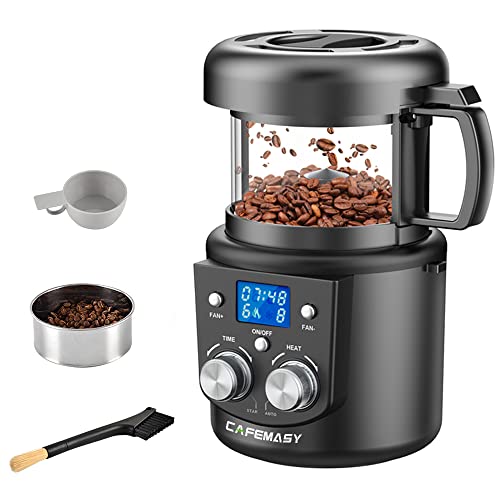 CAFEMASY Coffee Bean Roaster Machine CAFEMASY Coffee Bean Roaster Machine | 【Coffee Roaster Machine with 2 Modes】- Automatic mode… 【Coffee Roasters for Home Use】- Small size air… 【Coffee Bean Roaster Performance】- Adjustable timer(1-15mins) and roasting… | Check price |
 Fresh Roast SR540 Automatic Coffee Bean Roaster Fresh Roast SR540 Automatic Coffee Bean Roaster | ☕ Fresh and flavorful coffee guaranteed - Why… ☕ Roast any kind of coffee even espresso… 👍 Easy to use for the novice and… | Check price |
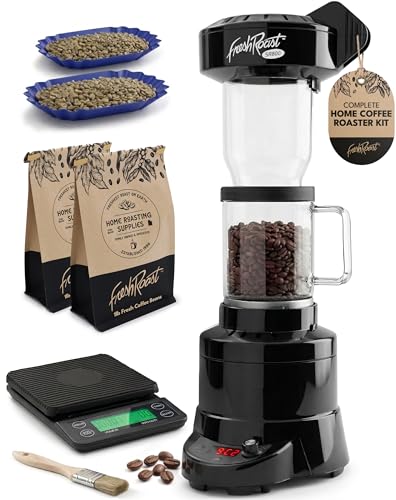 Fresh Roast SR800 Coffee Roaster Bundle Fresh Roast SR800 Coffee Roaster Bundle | Complete Coffee Roasting System: This all-in-one kit provides… Professional-Grade Roaster: The Fresh Roast SR800 coffee roasting… Be Precise: The digital pour-over scale guarantees accurate… | Check price |
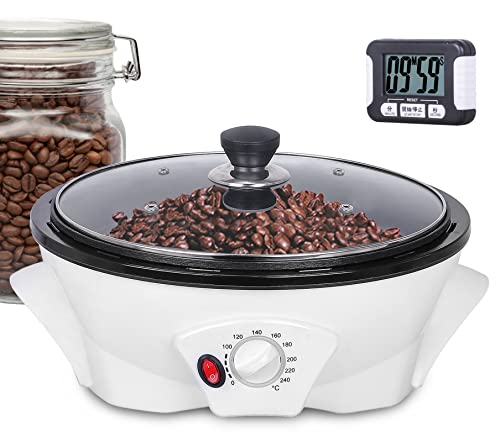 JIAWANSHUN Electric Coffee Bean Roaster Machine for JIAWANSHUN Electric Coffee Bean Roaster Machine for | 100-240℃ adjustable temperature control, comes with an extra… Recommended roasting capacity 300-500g for the most even… Clear glass lid with 4 ventilation holes lets… | Check price |
 JIAWANSHUN 1.1LB Electric Coffee Bean Roaster 1200W JIAWANSHUN 1.1LB Electric Coffee Bean Roaster 1200W | 1200W power, non-stick interior, and built-in stirrer… Adjustable thermostat (0-240°C) offers precision for light,… Roast enough beans for the week (ideal… | Check price |
As an Amazon Associate we earn from qualifying purchases at no extra cost to you.
Quick Picks
| Product | Best For | Price |
|---|---|---|
| 1Pound Electric Coffee Roaster | Large-batch light roasting | $498 |
| 500g Automatic Coffee Roaster | Medium to dark roasts with smoke control | $505 |
| WINB Coffee Roaster | Budget entry with timer simplicity | $107.99 |
| CAFEMASY Air Coffee Roaster | Air-roast style with fan adjustment | $129.99 |
| Fresh Roast SR540 | Precision and speed in a compact unit | $219 |
| Fresh Roast SR800 Bundle | Complete starter kit for beginners | n/a |
| JIAWANSHUN 1.1lb Roaster | Value capacity without the premium price | $86.98 |
| JIAWANSHUN 1200W Roaster | Lowest price with high wattage | $75.03 |
How We Picked
Three criteria separated the contenders. First, smoke management: a built-in filter or directed exhaust path is the difference between daily use and a machine that lives in the garage. Second, roast control — whether the unit offers independent adjustment of heat, timer, and airflow so you can repeat a profile or push into darker territory without scorching. Third, capacity and value: a roaster that costs four hundred dollars but handles a full pound in one cycle earns its price, while a cheap unit that requires five batches for the same output does not. We also weighed chaff collection and owner-reported reliability.
The 8 Best Home Roasting Machines in 2026
1Pound Electric Coffee Roaster
This is the high-capacity pick for anyone roasting weekly for a household or a small office. The integrated smoke filter keeps kitchen air manageable, and the twin chimney tubes give you an exhaust path through a window. Owners report it handles light roasts particularly well, with an even color across the full pound.
- Pro: Largest batch size on this list, reducing the number of cycles needed per week.
- Pro: Smoke filter plus chimney design makes indoor operation realistic without opening every window.
- Con: Tuned toward lighter profiles; pushing into dark roasts requires close attention to timing to avoid smoke breakthrough.
Skip this if you roast fewer than half a pound at a time or if your budget does not stretch past four hundred dollars.
500g Automatic Coffee Roaster
Half-kilo capacity sits in a sweet spot for dedicated home users who roast two or three times a week. The standout feature is the dual smoke-handling approach: a filter optimized for light roasts and separate smoke pipes for medium and dark roasts, letting you switch strategy as your palate evolves.
- Pro: Two distinct smoke-management paths mean you are not fighting the machine when roasting dark.
- Pro: Chaff collector is integrated, keeping the countertop clean.
- Con: Highest price on this list by a few dollars, and the 500g ceiling means multiple batches for larger households.
Skip this if you want the most economical path to a full pound in one cycle.
WINB Coffee Roaster
At under one hundred and ten dollars, this is the easiest way to test whether home roasting is for you before committing serious money. The 110V timer dial is straightforward: set it, let the drum run, pull the batch when you hear your target crack. It also handles peanuts and other legumes, which owners appreciate.
- Pro: Low entry cost with a simple timer that removes guesswork from short batches.
- Pro: Dual-purpose design (beans and peanuts) adds utility without a second machine.
- Con: No smoke filter; you will need ventilation nearby or you will trigger detectors.
Skip this if smoke is a dealbreaker or if you want repeatable roast profiles beyond trial and error.
CAFEMASY Air Coffee Roaster
Air-roasting is the gentler cousin of drum-roasting: hot convection lifts and tumbles the beans rather than relying on a heated surface. This unit lets you dial both heating and fan speed independently, giving more control over development time than a simple timer allows. The result is a cleaner roast with less scorch risk on delicate beans.
- Pro: Independent fan and heat adjustment enables roast profiling without guesswork.
- Pro: Air-roast design produces less scorching on lighter beans compared to contact-heated drums.
- Con: Smaller effective capacity than drum models; you may need extra cycles for the same weekly output.
Skip this if batch volume matters more than roast precision.
Fresh Roast SR540
The SR540 is the enthusiast’s compact machine. Variable heat settings, convection fan control, and a digital status display give you visibility into the roast that a dial-timer cannot match. The speed roasting system cuts cycle time, which matters when you are iterating on a profile. Owner feedback consistently praises the repeatability.
- Pro: Digital display and independent heat/fan controls make profiling and repeating results straightforward.
- Pro: Fast cycle times reduce total kitchen-smoke exposure per batch.
- Con: No integrated smoke filter; relies on external ventilation or an attached tube.
Skip this if you want a true set-and-forget machine with no adjustment between batches.
Fresh Roast SR800 Bundle
Not a single machine but a full system: the SR800 roaster arrives with a glass extension tube for larger capacity, a digital scale for weighing green beans precisely, two pounds of green coffee to get you started, and a chaff brush. For someone with zero equipment and zero confidence, this removes the shopping list entirely.
- Pro: Everything needed to roast and measure your first batch arrives in one shipment.
- Pro: Glass extension tube raises capacity beyond the base unit’s limit.
- Con: Pricing is not fixed; bundle value depends on what the base roaster and accessories would cost separately.
Skip this if you already own a scale or green beans and only need the roaster itself.
JIAWANSHUN 1.1lb Electric Roaster
Just under eighty-seven dollars for a full pound of capacity is aggressive value. The drum tumbles beans with a central heating element, and owners report acceptable results for medium roasts when watched closely. It lacks the refinement of pricier units but delivers the core function at a fraction of the cost.
- Pro: Largest capacity among budget machines, making it efficient for households that roast a full pound at once.
- Pro: Simple operation with minimal learning curve.
- Con: No smoke filtration or chaff collection; expect cleanup and ventilation work after each batch.
Skip this if you roast in an apartment with poor airflow or if consistency across batches matters to you.
JIAWANSHUN 1200W Electric Roaster
Seventy-five dollars for a 1200-watt drum roaster is the lowest price point on this list with the highest wattage. That power translates to shorter roast times, which reduces the window where smoke escapes unfiltered. Build quality is utilitarian, and the finish shows wear faster than pricier competitors, but the core roasting job gets done.
- Pro: 1200W heating element shortens cycle time compared to lower-wattage budget units.
- Pro: Lowest absolute cost for a machine capable of meaningful batch sizes.
- Con: Minimal controls and no smoke management mean the roast outcome depends heavily on your attention and timing.
Skip this if you want repeatable profiles or plan to roast frequently enough that smoke buildup becomes a nuisance.
Buying Guide
Smoke Management and Chaff Collection
Roasting coffee produces visible smoke and brittle silver-skin chaff. A machine with an integrated filter or a dedicated exhaust tube (chimney-style or extension) lets you operate near a window without filling the house. Chaff that escapes into the air settles everywhere — counters, floors, your next cup. Look for a collector that catches chaff at the exhaust point rather than just at the drum exit, because the difference between a clean kitchen and a messy one is usually where the chaff lands.
Heat Control and Roast Flexibility
A single fixed heating element forces you into one roast style. If you drink light roasts on weekends but want a darker breakfast blend mid-week, you need independent control over temperature, airflow, or timer. Drum machines rely on contact heat and benefit from fan adjustment to cool the beans or redistribute heat. Air roasters use convection and gain precision from variable fan speed. Decide whether you want to repeat one profile or explore the full roast spectrum, then match the control scheme to that goal.
Capacity vs. Batch Frequency
A half-pound machine that takes twelve minutes per cycle is slower than a one-pound machine that takes fifteen, but the one-pound unit finishes your weekly supply in one run while the half-pound demands two. Factor in cooldown time between batches. If you roast once a week for two drinkers, 500g may suffice. For a household of four or anyone gifting roasted beans, a full-pound capacity saves a meaningful amount of total kitchen time per week.
Our Verdict
The 1Pound Electric Coffee Roaster is the top pick overall for anyone who roasts at high volume and wants smoke handled by the machine rather than by a box fan. Its capacity, filter, and chimney system make it the most self-contained solution on this list. For the budget pick, the JIAWANSHUN 1200W delivers the best cost-per-watt entry point, accepting the tradeoff that you will manage smoke and cleanup yourself. The Fresh Roast SR540 wins outright if you value repeatable profiles and digital feedback over raw capacity — a roaster you can tune precisely beats a bigger machine you cannot control.
FAQ
Is home coffee roasting worth it?
If you drink more than two cups daily and prefer fresh or lightly roasted beans, the savings on green-bean pricing versus roasted specialty coffee typically offset a machine’s cost within a few months. The larger gain is flavor control: you decide when to stop the roast rather than trusting a roaster who shipped three months ago.
Do I need a smoke filter, or can I just open a window?
An open window helps, but roasting produces fine particulate and volatile compounds that spread beyond the room. A built-in filter or directed exhaust tube captures more smoke at the source, making the process tolerable enough to do weekly instead of once a month out of spite.
Can I roast peanuts and other foods in a coffee roaster?
Several models on this list — notably the WINB — are explicitly rated for peanuts and legumes alongside coffee beans. Drum-style machines handle the shape and density of peanuts well. Just expect cross-contamination of oils and aromas, so dedicate one machine to each food group if you care about flavor purity.
How long does a batch take?
Typical home roasting cycles run between eight and twenty minutes depending on machine wattage, batch size, and target roast level. Faster cycles reduce smoke exposure and heat buildup in the kitchen but give you less window to catch the exact moment you want to stop.