Key takeaways
- Choosing knobs vs pulls for kitchen cabinet doors and drawers is less about following a trend and more about deciding how your kitchen should feel every day. The right hardware affects how easily you open a heavy trash drawer, whether…
What's inside
Choosing knobs vs pulls for kitchen cabinet doors and drawers is less about following a trend and more about deciding how your kitchen should feel every day. The right hardware affects how easily you open a heavy trash drawer, whether small children can reach a cabinet, how quickly fingerprints show, and how much you spend when outfitting an entire room.
Knobs usually cost less, take up less visual space, and suit traditional or compact kitchens. Pulls offer a larger gripping surface and can be more comfortable on wide drawers, busy family kitchens, or doors with heavy contents. You can also mix them: knobs on doors and pulls on drawers is the most common combination, but using pulls everywhere can create a streamlined look.
As an Amazon Associate we earn from qualifying purchases at no extra cost to you. Product prices and availability are accurate as of the date shown and are subject to change.



Before buying, check the cabinet material, door thickness, existing hole spacing, and the clearance between each door and nearby wall or appliance. New hardware may be inexpensive, but replacing dozens of pieces becomes costly if the size or finish is wrong.
Quick Verdict
Choose knobs if you want the lowest upfront cost, a classic appearance, and hardware that takes up minimal space. They work especially well on standard cabinet doors, narrow uppers, and kitchens where decorative detail matters.
Choose pulls if comfort, leverage, and easy access are your priorities. A pull gives you several fingers to grip, making it preferable for wide drawers, pan storage, refrigerator panels, and cabinets used frequently. For most homes, a practical compromise is knobs on doors and pulls on drawers.
There is no universal rule about matching sizes. A 1-inch knob can look appropriate on a small door, while a 3-inch hole-center pull is a versatile choice for many drawers. On larger doors and drawers, a 5-inch or longer pull can look more proportional, provided the cabinet has enough surrounding space.
Side by Side
| Factor | Knobs | Pulls |
|---|---|---|
| Comfort | Easy for light doors; one-point grip can be less comfortable on heavy doors | More finger room and leverage; generally easier for frequent use |
| Durability | Fewer attachment points, but repeated force is concentrated in one area | Two mounting points distribute force across the cabinet face |
| Price range | About $0.40–$8 per knob when purchased in multipacks | About $0.65–$15 per pull in common multipacks |
| Maintenance | Simple to wipe; ornate shapes can collect grease and dust | Long bars are easy to wipe, though ends and mounting areas need attention |
| Space needed | Usually projects 1–1.5 inches and needs little side clearance | Often projects 1–1.5 inches but needs room for fingers and nearby doors |
| Look | Traditional, cottage, vintage, or visually quiet | Modern, transitional, architectural, or streamlined |
| Resale appeal | Broadly familiar and easy for buyers to accept | Often reads as upgraded, especially in contemporary kitchens |
| Best for | Standard doors, small kitchens, rentals, and decorative styles | Drawers, large doors, busy households, and accessible designs |
| Installation | One hole; easier to align and replace | Two holes; requires more accurate measuring and drilling |
Where Knobs Wins
Knobs are the easiest choice when you want a classic kitchen without making the hardware a focal point. Their compact footprint keeps cabinet faces from looking crowded, which is useful in a small apartment or a kitchen with many narrow doors. A knob typically requires one drilled hole, so installation is faster and alignment is more forgiving than with a two-screw pull.
They are also economical. An 18-pack of 30mm matte black cabinet knobs priced at $7.99 works out to less than 45 cents per piece, before any taxes or shipping. That type of multipack can cover a modest kitchen at a very low hardware cost. A decorative option, such as a 12-piece ivory pumpkin knob set with a leaf pattern priced at $13.99, can add character to a cottage, farmhouse, or vintage-style room without changing the cabinets.
Knobs are particularly effective on upper doors and shallow cabinets. Their small size leaves more visual breathing room around glass panels, crown molding, and tight corners. They can also be easier to replace individually if one becomes scratched or loose.
The main drawback is leverage. Pulling a heavy drawer by a small knob concentrates force in your fingertips and at one point on the cabinet front. That is not usually a problem for a lightly loaded spice cabinet, but it becomes noticeable with cookware, canned goods, or a full waste drawer. A round knob can also be less comfortable for people with limited hand strength or dexterity.
Where Pulls for Kitchen Cabinet Doors and Drawers Wins
Pulls for kitchen cabinet doors and drawers offer a more substantial grip. You can use two or three fingers, or your whole hand, instead of pinching a small projection. That extra leverage makes pulls a strong choice for deep drawers, tall pantry doors, and cabinets that need to be opened while your hands are wet or occupied.
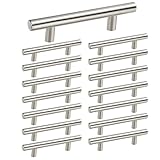
They can also make a kitchen look more intentional. Long horizontal pulls emphasize the width of drawers, while vertical pulls can visually lengthen tall doors. A 3-inch hole-center pull is a flexible middle ground for many standard cabinets. For example, a 15-pack of brushed nickel pulls with a 3-inch hole center and 5-inch overall length is listed at $9.99. A 30-pack of brushed nickel handles with a 3-inch hole center and 5-inch overall length is listed at $14.99, making either option economical when a full kitchen needs matching pieces.
Pulls require more planning than knobs. The holes must be level and accurately spaced, especially when several drawers sit side by side. If you are replacing existing hardware, matching the hole center—the distance between screw holes—is usually easier than drilling new holes. Common pull sizes include 3 inches, 4 inches, and 5 inches overall, but the advertised measurement may refer to hole center rather than total length.
Long pulls can also interfere with adjacent doors, walls, or appliances if the clearance is tight. Before installation, open neighboring doors fully and confirm that the hardware does not collide. For a clean appearance, center pulls horizontally on drawers and vertically on doors, unless your cabinet design calls for a different layout.
Cost Over 5 Years
The five-year cost depends more on quantity and replacement needs than on the difference between one knob and one pull. Assume a kitchen has 24 doors and drawers, with one piece of hardware per front. A budget knob setup at $0.40–$3 per piece costs approximately $10–$72 initially. A basic pull setup at $0.65–$5 per piece costs about $16–$120.
Midrange hardware may cost roughly $3–$8 per knob or $4–$15 per pull, putting the initial total at $72–$192 for knobs or $96–$360 for pulls. Add approximately $10–$30 over five years for replacement screws, washers, or one or two lost or damaged pieces. If the finish remains intact and the mounting holes are compatible, either option can last beyond five years.
Installation can change the calculation. A do-it-yourself knob installation generally needs only a drill, a bit, and a simple template. Pulls may justify spending $10–$30 on a cabinet hardware jig for consistent spacing. Professional installation often costs more than the hardware itself, so replacing existing knobs with pulls can be less economical if new holes must be drilled, filled, and refinished.
Which One for Your Home
Small Apartment
Use knobs on most doors and either knobs or short pulls on drawers. Compact hardware preserves clearance in a narrow galley kitchen and keeps the room from looking visually busy. Matte black or brushed nickel can provide contrast without overwhelming limited wall and counter space. If your drawers hold heavy cookware, use pulls only on those high-load areas.
Family With Kids or Pets
Pulls are usually the more practical option because they are easier to grip quickly and require less finger strength. Choose rounded ends and a finish that hides fingerprints, such as brushed nickel or satin brass. Keep in mind that any projecting hardware is easier for a child or pet to grab, so use cabinet locks where necessary rather than relying on hardware shape for safety.
Rental
Knobs are a sensible rental upgrade because they are inexpensive, easy to install, and simple to remove when you move. If the cabinets already have holes, match the existing spacing instead of drilling new ones. Keep the original hardware labeled in a bag so the replacement can be reversed without leaving extra holes.
Long-Term Home
Mix knobs and pulls according to function: knobs for doors and pulls for drawers. This arrangement offers the visual variety of traditional hardware while providing a comfortable grip where the most force is required. For a contemporary kitchen, use pulls throughout and vary their orientation rather than their finish. Buy a few extra pieces at the start, since matching a discontinued finish several years later can be difficult.
FAQ
Are knobs or pulls better for kitchen drawers?
Pulls are generally better for kitchen drawers, especially drawers wider than 24 inches or those holding heavy items. Their two mounting points distribute force, and the larger grip is more comfortable. Knobs can work on small, lightly loaded drawers or when a minimalist look is the priority.
Can you mix knobs and pulls in the same kitchen?
Yes. Knobs on doors and pulls on drawers are a widely used arrangement because it combines a tidy appearance with practical access. Keep the finish consistent and choose shapes with a similar design character so the combination looks deliberate.
What size pull should I use?
A 3-inch hole-center pull is a versatile starting point for standard cabinets. A 5-inch overall pull often suits medium drawers, while larger drawers may need a longer pull or two pulls for balanced use. Always check the manufacturer’s hole-center measurement rather than relying only on total length.
Which finish is easiest to maintain?
Brushed or satin finishes usually disguise fingerprints and minor water spots better than polished metal. Matte black can look sophisticated but may show dust or chipped edges more clearly. Clean any finish with a soft damp cloth and mild dish soap, then dry it; avoid abrasive cleaners that can dull the coating.