Key takeaways
- Do not use steel wool or wire brushes. They can scratch stainless steel and leave behind iron particles that rust again.
- Do not scrub across the grain. Crosswise scratches are more visible and difficult to blend.
- Do not use chlorine bleach or chlorine-based scouring products. Chlorides can damage stainless steel, particularly when left on the surface.
- Do not mix cleaners. Never combine a rust remover with bleach, ammonia, vinegar, drain cleaner, or another chemical product.
- Do not let a chemical dry on the sink. Dried residue may be harder to remove and can discolor the finish.
- Do not use abrasive powders indiscriminately. Even products marketed for kitchens can dull a brushed or satin finish.
- Do not skip the rinse. Chemical residue can damage the metal, faucet, drain components, or countertops around the sink.
Rust spots on a stainless steel sink are usually surface contamination, not proof that the sink itself is rusting through. Steel wool, metal cans, cast-iron cookware, hard-water deposits, and cleaning products containing iron can leave orange or brown marks behind. The good news is that most spots can be removed with a gentle, acid-safe cleaner and the correct scrubbing direction.
What goes wrong is usually the method: abrasive pads can permanently scratch the finish, chlorine bleach can worsen corrosion, and mixing rust removers with other cleaners can create dangerous fumes. The steps below use the least aggressive approach first, then explain when a dedicated product is appropriate. Always read the product label before using a rust remover, especially around a sink used for food preparation.
As an Amazon Associate we earn from qualifying purchases at no extra cost to you. Product prices and availability are accurate as of the date shown and are subject to change.

What You Need
| Item | Why | Optional? |
|---|---|---|
| Warm water and mild dish soap | Removes grease, food residue, and loose mineral deposits before treatment | No |
| Microfiber cloths | Provides gentle cleaning and drying without shedding abrasive fibers | No |
| Soft nylon dish brush or non-scratch sponge | Lifts residue without cutting into the stainless-steel finish | No |
| Baking soda | Useful for a mild, low-abrasion cleaning paste | Yes |
| White vinegar | Helps loosen some mineral residue, but should not be mixed with commercial cleaners | Yes |
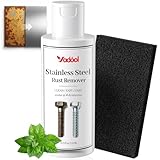
| Stainless Steel Rust Stain Remover & Cleaner, 3.72 fl oz | Dedicated treatment for rust spots on stainless appliances, sinks, and other surfaces; listed price is about $15.95 | Yes |
| Iron OUT Rust Stain Remover Spray with Cling, 24 oz | A stronger no-scrub rust-stain option; listed price is about $6.88 | Yes |
| Rubber gloves and eye protection | Protects skin and eyes from acidic or otherwise irritating rust removers | Recommended when using a commercial product |
Prices can change by store and size, but a reasonable shopping range is about $7 to $16 for the two example rust-removal products. Use only one commercial rust remover at a time. Never combine either product with bleach, ammonia, vinegar, drain cleaner, or another rust remover.
Step-by-Step
-
Clear and rinse the sink (2 minutes)
Remove dishes, drain baskets, soap dispensers, and anything else sitting in the basin. Rinse the sink with warm water to remove crumbs and loose grit. If the spot is beneath a removable grate or drying rack, clean that item separately so it does not transfer more rust.
-
Wash away grease and residue (3 to 5 minutes)
Add a small amount of mild dish soap to a wet microfiber cloth or non-scratch sponge. Wipe the entire basin, including the drain rim, corners, faucet base, and backsplash seam. Rinse thoroughly. Rust removers work less predictably when grease or food residue is covering the stain.
-
Identify the grain and test a hidden area (3 minutes)
Look closely at the sink’s finish. Most brushed stainless steel has fine lines running in one direction. You will wipe and scrub with those lines, never in circles. Before using anything stronger than soap, test it on an inconspicuous area near the back edge. Apply a small amount, follow the label’s dwell time, rinse, and check for discoloration or a change in sheen.
-
Try a mild baking-soda paste (5 minutes)
For a small, recent spot, mix baking soda with enough water to make a soft paste. Spread it over the mark and let it sit for about 5 minutes. Using a damp microfiber cloth or soft nylon brush, rub gently in the direction of the grain. Rinse completely and dry. Do not use a dry powder, because loose granules can create unnecessary friction.
-
Use a dedicated stainless-steel rust remover if needed (5 to 10 minutes)
If the stain remains, apply a product specifically labeled for stainless steel, such as the 3.72-fluid-ounce stainless-steel rust stain remover. Put on gloves, open a window or run the exhaust fan, and follow the label exactly. Apply only enough product to cover the spot; saturating the entire basin is unnecessary.
Allow the product to work only for the stated time. Unless the label says otherwise, do not let it dry on the metal. Wipe gently with a microfiber cloth, then rinse the area with plenty of water. A second short application is safer than leaving one application on too long.
-
Use a stronger spray cautiously for stubborn marks (5 to 10 minutes)
For extensive or persistent rust staining, a product such as Iron OUT Rust Stain Remover Spray with Cling may be an option if its label permits use on your sink’s stainless-steel finish. Spray only the affected area, maintain ventilation, and keep the product away from skin, eyes, food, and nearby surfaces that could be damaged.
Do not scrub aggressively unless the label specifically directs you to do so. After the recommended dwell time, rinse the sink very thoroughly with clean water. If the product’s instructions call for a particular rinsing procedure, follow those instructions instead of relying on a quick wipe.
-
Rinse, neutralize only as directed, and dry (3 to 5 minutes)
Rinse the treated area several times, moving clean water across the basin and into the drain. Do not add baking soda, vinegar, bleach, or another chemical to “neutralize” a commercial remover unless the label specifically instructs you to do so. Dry with a clean microfiber cloth, following the grain. Drying prevents water spots and reveals whether any orange color remains.
-
Inspect the source and protect the finish (5 minutes)
Look for the cause of the stain. Replace rusty sink racks, remove metal cans promptly, and use a barrier beneath cast iron or carbon-steel cookware. If the marks return in the same place, inspect the faucet base, drain hardware, rack feet, and plumbing fixtures for exposed iron or damaged plating. Avoid leaving wet metal objects on the sink overnight.
Mistakes to Avoid
- Do not use steel wool or wire brushes. They can scratch stainless steel and leave behind iron particles that rust again.
- Do not scrub across the grain. Crosswise scratches are more visible and difficult to blend.
- Do not use chlorine bleach or chlorine-based scouring products. Chlorides can damage stainless steel, particularly when left on the surface.
- Do not mix cleaners. Never combine a rust remover with bleach, ammonia, vinegar, drain cleaner, or another chemical product.
- Do not let a chemical dry on the sink. Dried residue may be harder to remove and can discolor the finish.
- Do not use abrasive powders indiscriminately. Even products marketed for kitchens can dull a brushed or satin finish.
- Do not skip the rinse. Chemical residue can damage the metal, faucet, drain components, or countertops around the sink.
How Often
Clean the sink with dish soap and dry it after regular use. For most homes, a deeper stainless-steel cleaning once a week is sufficient. Check for rust spots whenever you wash the sink rack or after using cast iron. Treat a new mark promptly, ideally within a day or two, before repeated moisture and abrasion make the discoloration more noticeable.
Rust remover should be an occasional treatment, not a daily cleaner. If you need it more than every few weeks, focus on eliminating the source. A rusty rack, damaged drain flange, or metal storage container may be causing the recurring problem.
When to Call a Pro or Replace
Call a professional if the surface is deeply pitted, develops holes, leaks beneath the basin, or continues to corrode after all sources of iron are removed. A plumber can check the drain assembly, faucet connections, and hidden leaks. A countertop or sink professional can advise whether a damaged finish can be refinished.
Replacement may make more sense when corrosion has created structural weakness, the basin flexes, or the cost of repair approaches the price of a new sink. Surface orange spots that disappear after cleaning usually do not require replacement. Dark pits, spreading discoloration, rough edges, and recurring rust from beneath the finish are more serious warning signs.
FAQ
Can I use vinegar to remove rust from a stainless steel sink?
Vinegar may loosen mineral residue and some light surface staining, but it is not always effective on rust. Use it only by itself, rinse thoroughly, and never mix it with bleach or a commercial rust remover. Do not leave vinegar on stainless steel for a prolonged period.
Why does my stainless steel sink keep getting rust spots?
Common causes include steel-wool particles, rusty rack feet, cast-iron cookware, metal cans, damaged chrome-plated hardware, and hard-water deposits that trap iron. Check anything that rests on the wet sink. Repeated spots in one location often point to a specific piece of hardware or a leak.
Can I use a magic eraser on stainless steel?
It is better to avoid it or use extreme caution. Melamine foam is mildly abrasive and can leave a dull patch, especially on polished stainless steel. If you try it, test a hidden area first, use very light pressure, and follow the grain.
How can I prevent rust after cleaning?
Rinse away cleaners, dry the basin after use, and keep wet metal objects off the surface. Replace rusty racks and use a silicone mat or rack approved for stainless steel beneath heavy cookware. Regular drying and prompt removal of metal residue are more effective than applying a coating that may trap moisture or food particles.