Key takeaways
- The best salt boxes compared: bamboo duet, olive wood keeper, acacia cellar with spoon, ceramic salt pig and marble box, with capacity and lid facts.
As an Amazon Associate we earn from qualifying purchases.
A salt box earns its place on the counter by doing one job well: keeping your everyday salt dry, covered and close enough to grab with one hand while the other hand is busy at the stove. Unlike a shaker, a cellar lets you take a real pinch, judge it between your fingers and season as you go. The five salt boxes below cover the main shapes the format takes: a two-compartment bamboo keeper, a handcrafted olive wood keeper, an acacia cellar with its own spoon, an open ceramic salt pig and a small marble box with a lift-off lid. Each entry sticks to what the maker states about material, capacity and lid design, so you can match the box to the salt you actually use.
This article contains affiliate links, and we may earn a commission when you buy through them, at no extra cost to you.
Quick Answer
For most counters, the Totally Bamboo Salt Keeper Duet is the easiest pick: two compartments under one magnetic swivel lid, so kosher salt and pepper sit side by side in a five-inch footprint. Cooks who want a spoon parked inside the box should look at the KITCHENDAO acacia cellar. The Emile Henry salt pig is the classic open design, and the MARBLOUS KRAFTS marble cellar suits a single finishing salt.
1. Totally Bamboo Salt Keeper Duet

The Duet solves the most common countertop problem, which is that most cooks reach for two seasonings, not one. A single round bamboo body is divided into two compartments, and one lid swivels over both, held shut by a magnetic catch. Open it with a thumb push, take your pinch, and swing it closed again, all one-handed. Totally Bamboo makes the box from Moso bamboo and rates the total capacity at eight ounces across the two sections. At five inches across and two and a quarter inches high, it takes up about the same counter space as a single standard cellar while replacing two containers. No spoon is included, which fits the design: this is a pinch box, meant for fingers. It works well for a kosher salt and cracked pepper pairing, or for keeping a fine cooking salt separate from a flaky finishing salt.
Specs
- Material: Moso bamboo
- Capacity: 8 ounces total, two compartments
- Lid: magnetic swivel lid covering both compartments
- Size: 5 inches diameter by 2.25 inches high
- Spoon: none included
- View on Amazon
2. Berard Handcrafted Olive Wood Salt Keeper

Berard has worked in olive wood in France for well over a century, and this keeper shows why the material keeps its following. Each box is handcrafted from a single piece of olive wood, so the grain pattern on yours will not match the photograph or anyone else’s box. The round body measures four inches across, and the lid pivots to the side on a magnetic catch, the classic salt keeper action that opens with one hand and closes with a soft click. The listing gives the capacity as half a pound, generous for a box this size. At twelve ounces in weight, the box stays put on the counter when you swing the lid. No spoon is included.
Specs
- Material: olive wood, handcrafted, single piece
- Capacity: 0.5 pounds as listed
- Lid: magnetic swivel (pivoting) lid
- Size: 4 inches round; item weight 12 ounces
- Model: 7490070
- Spoon: none included
- View on Amazon
3. KITCHENDAO Acacia Wood Salt Cellar

Some cooks do not want fingers in the salt, and this is the pick built for them. KITCHENDAO carves its cellar from acacia wood and builds the serving spoon into the design: a raised rest inside the box holds the spoon above the salt, so it is always in the same place and never buried. The swivel lid carries a magnetic lock, and the maker notes the spoon stays clear of the salt surface. Capacity is six ounces, and the footprint is small at three and a half inches wide and two point seven inches high. The maker is plain about care: wipe with a wet cloth and air dry in a ventilated spot, and expect the colour of natural acacia to vary from box to box. If your household shares salt at the table, this is the most practical design in the roundup.
Specs
- Material: acacia wood
- Capacity: 6 ounces
- Lid: swivel lid with magnetic lock
- Size: 3.5 by 2.7 inches
- Spoon: built-in serving spoon stored inside the box
- Care: wipe clean and air dry, per the maker
- View on Amazon
4. Emile Henry Salt Pig

The salt pig is the oldest shape in this roundup: no lid at all, just a hooded opening that shelters the salt from splashes while leaving it permanently within reach. Emile Henry makes its version in France from its HR Ceramic, a high-resistance body made with Burgundy clay, in the Clay colourway here. The maker leaves the interior unglazed and states that this stops sea salt sticking together and forming a crusty top. The wide mouth fits a whole hand, and the listed capacity is 0.35 litres, the largest in this group. It stands taller than the lidded boxes at five and a quarter inches high, with a footprint of three and three quarter inches square. The trade-off is honest: an open pig gives the fastest access of any design here, but the least protection in a steamy kitchen, so placement away from a boiling kettle matters.
Specs
- Material: HR Ceramic (Burgundy clay), made in France
- Capacity: 0.35 litres as listed
- Lid: none; open hooded salt pig design
- Size: 3.75 by 3.75 by 5.25 inches; weight 14.9 ounces
- Interior: unglazed, per the maker
- Spoon: none included
- View on Amazon
5. MARBLOUS KRAFTS Marble Salt Cellar
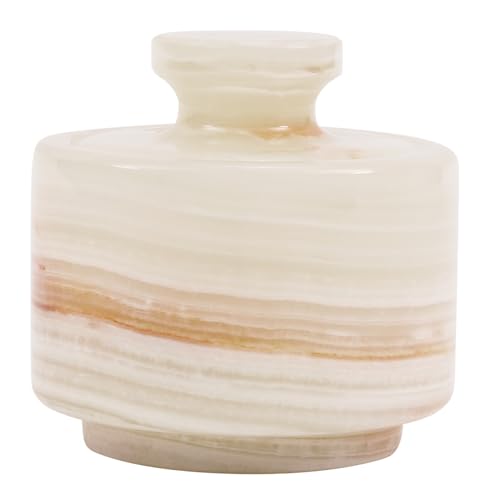
Stone is the third classic cellar material, and this small MARBLOUS KRAFTS box shows its strengths. It is handcrafted from natural white onyx marble, three inches across and three inches high, with a simple lift-off lid rather than a swivel mechanism. Capacity is three and a half ounces, the smallest here, which makes it a finishing-salt box rather than a main cooking-salt store: think of it holding flaky sea salt at the table. The stone’s weight keeps it planted, and the maker notes natural onyx varies in shade toward pink or light green. The listing includes the cellar bowl and its lid; no spoon is included with this version. Care is hand wash only, and marble should be kept away from acidic spills, which can etch the polished surface.
Specs
- Material: natural white onyx marble, handmade
- Capacity: 3.5 ounces
- Lid: lift-off lid
- Size: 3 inches diameter by 3 inches high
- Included: 1 salt cellar bowl and 1 lid; no spoon
- Care: hand wash only
- View on Amazon
How to Choose the Right Salt Box
Start with the salt, not the box. Fine table salt and standard kosher salt pinch happily from any design here. Large flaky finishing salts need a wide opening and room for your fingers, which favours the Emile Henry pig or the wider lidded boxes. If you keep two seasonings in constant rotation, the Totally Bamboo Duet’s divided body removes the need for a second container entirely.
Lid style is the second decision. A magnetic swivel lid, as on the Totally Bamboo, Berard and KITCHENDAO boxes, opens and closes with one hand and gives the best day-to-day protection against steam and splashes. A lift-off lid, like the marble cellar’s, takes two hands but has no mechanism to wear. An open pig has no lid at all: fastest access, least cover. Beside a stove that boils pasta water nightly, choose a lidded box; on a dining table, the open pig or marble cellar is fine.
Capacity is the third check. Three and a half ounces, the marble box, is a finishing-salt supply. Six to eight ounces, the wooden boxes, covers most households’ cooking salt between refills. The Emile Henry’s 0.35 litres is the choice for high-volume cooks. Finally, decide about the spoon: only the KITCHENDAO includes one. If you prefer spooning for hygiene or portioning, that settles the question.
One piece of general kitchen practice applies to every box here: salt clumps when it absorbs moisture, so fill the box with dry salt, keep it away from direct steam, and break up any crust that forms instead of topping up damp salt. A lidded box slows moisture down; none of these boxes seals it out completely, and none of the makers claims otherwise.
Who Should Skip Salt Boxes
Skip the format entirely if you cook with a single fine salt and are happy shaking it from the carton, since a cellar adds a refill routine you may not need. Skip open salt pigs if your kitchen is small and steamy, or if toddlers can reach the counter, because the salt is always exposed. Skip the marble cellar if you want one box for all your cooking salt, since three and a half ounces will mean constant refilling, and skip any wooden box if you plan to run it through a dishwasher, because every wooden maker here specifies hand care. Households that need measured seasoning for low-sodium cooking may also find a spoon-and-scale routine more useful than pinch seasoning, which is deliberately approximate.
FAQ
Do salt boxes keep salt from clumping?
A lidded salt box slows moisture reaching the salt, which reduces clumping, but no countertop box is airtight. Keeping the box away from steam and closing the lid between uses are the habits that matter most. The Emile Henry pig takes a different approach: its maker states the unglazed interior helps stop salt sticking together.
Which salt works best in a salt box?
Kosher salt and flaky sea salt are the easiest to pinch and judge by hand, and they are what most of these boxes are sized for. Fine table salt works in any of them but is harder to pinch evenly. Very coarse rock salt can be awkward in the smallest cellars, such as the marble box.
How do I clean a wooden salt box?
Follow the maker of your box. KITCHENDAO specifies wiping with a wet cloth and air drying in a ventilated place. As general practice for the bamboo and olive wood boxes, wipe out the interior with a dry or barely damp cloth and let the box dry fully before refilling. Do not soak wooden boxes or put them in a dishwasher.
Is a salt pig better than a lidded salt cellar?
Neither is better in general; they trade access against protection. A salt pig is always open, so it is the fastest to use mid-cooking, but it shields salt only from above. A lidded cellar takes a moment to open, though swivel lids make that a one-thumb job, and it protects the salt the rest of the day.
Final Verdict
The Totally Bamboo Salt Keeper Duet is the default recommendation: two compartments, one magnetic swivel lid and an eight-ounce capacity in a compact bamboo body cover the widest range of kitchens. The Berard keeper is the heirloom version of the same idea in handcrafted olive wood. Choose the KITCHENDAO if a stored-inside spoon matters to you, the Emile Henry pig if you want the traditional open design with the largest capacity here, and the MARBLOUS KRAFTS marble cellar for a small amount of finishing salt at the table.
Product and ASIN Reference
| Product | ASIN |
|---|---|
| Totally Bamboo Salt Keeper Duet | B01IF4E7PG |
| Berard Handcrafted Olive Wood Salt Keeper | B002365IRO |
| KITCHENDAO Acacia Wood Salt Cellar | B0BJTBMF7D |
| Emile Henry Salt Pig | B00T4AOI3M |
| MARBLOUS KRAFTS Marble Salt Cellar | B0DYJMR438 |
FAQ
Do salt boxes keep salt from clumping?
Which salt works best in a salt box?
How do I clean a wooden salt box?
Is a salt pig better than a lidded salt cellar?
More from Amazon
Programs that pair well with the guide above. Offers and eligibility are set by Amazon and may change.
Set up recurring deliveries of everyday items on eligible products. Terms and savings are set by Amazon.
Explore Subscribe & SaveCollect the home and kitchen items you want in one registry that guests can shop from.
Create a wedding registryFree shipping on eligible items, Prime Video and more. Eligible new members can start with a free trial.
Start a Prime free trialAudiobooks and podcasts to listen to on the go. Eligible new members can start with a free trial.
Try Audible freeAs an Amazon Associate we earn from qualifying purchases.