The best 75 inch TV for most living rooms is a 75-inch-class mini-LED model with strong local dimming, such as the TCL QM7K, Hisense U8QG, or Samsung QN90F; choose an OLED-style display instead only if perfect black levels and a controlled-light room matter more than maximum brightness.
A 75-inch TV is large enough to make films, sports, and console games feel immersive, but it also exposes poor wall placement, weak sound, glare, and an undersized media console. The right choice depends less on a single “best” specification than on your room, seating distance, daylight, and how the television will be mounted or supported.
Our top picks
 INSIGNIA 75" Class F50 Series LED 4K
- 4K Ultra HD (2160p resolution): Enjoy breathtaking HDR10…
- High Dynamic Range: Provides a wide range of…
- Alexa voice control: The Alexa Voice Remote lets…
 INSIGNIA 75-inch Class QF Series LED 4K
- 4K UltraHD Resolution: Experience incredible detail with 4X…
- Quantum Dot Technology enhances brightness and color for…
- Direct LED Backlight: Enjoy uniform brightness and rich…
 Samsung 75-Inch Class M70H Series
- Our advanced processor delivers brighter highlights and deeper…
- delivers one billion true-to-life colors, powered by advanced…
- Experience HDR picture quality with brighter highlights and…
| Product | Key specs | |
|---|---|---|
| INSIGNIA 75" Class F50 Series LED 4K | 4K Ultra HD (2160p resolution): Enjoy breathtaking HDR10… High Dynamic Range: Provides a wide range of… Alexa voice control: The Alexa Voice Remote lets… | Check price |
| INSIGNIA 75-inch Class QF Series LED 4K | 4K UltraHD Resolution: Experience incredible detail with 4X… Quantum Dot Technology enhances brightness and color for… Direct LED Backlight: Enjoy uniform brightness and rich… | Check price |
| Samsung 75-Inch Class M70H Series | Our advanced processor delivers brighter highlights and deeper… delivers one billion true-to-life colors, powered by advanced… Experience HDR picture quality with brighter highlights and… | Check price |
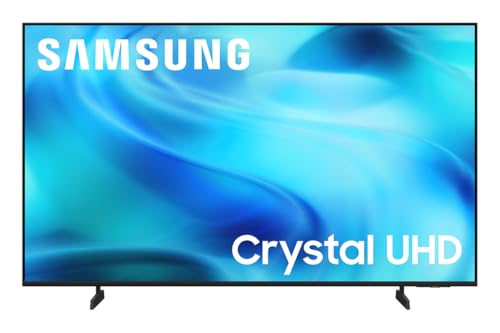 Samsung 75-Inch Class U8000H Series Crystal UHD Samsung 75-Inch Class U8000H Series Crystal UHD | Powerful processor enhances colors and sharpens details for… Watch 2,700+ free streaming options, including 750+ subscription-free… Experience clear picture and smooth motion in games… | Check price |
As an Amazon Associate we earn from qualifying purchases at no extra cost to you.
Best 75-inch TVs by viewing situation
| Situation | Best match | Why it fits | Typical price range |
|---|---|---|---|
| Bright living room with windows | Samsung QN90F or another premium mini-LED TV | High full-screen brightness, effective anti-reflection treatment, and strong contrast | Usually $1,800–$3,000 |
| Best value for movies, sports, and streaming | TCL QM7K 75-inch | Mini-LED contrast and high refresh rate without premium-TV pricing | Usually $900–$1,500 |
| Dark movie room | A 77-inch OLED, if a slightly larger size is acceptable | Near-perfect black levels and wide viewing angles | Usually $1,800–$3,500 |
| Mixed family viewing and sports | Hisense U8QG 75-inch | Very high brightness, local dimming, and a fast panel suited to motion | Usually $1,000–$1,800 |
| Simple furniture-led living room | Sony BRAVIA 5 75-inch | Natural image processing and flexible stand placement | Usually $1,000–$1,700 |
TCL QM7K: the value-focused pick
The TCL QM7K is a strong starting point when you want a large, bright picture without paying flagship prices. Its mini-LED backlight can create much better contrast than a basic edge-lit LCD television, while its high refresh rate is useful for sports and current-generation game consoles.
Choose it for a family room with moderate or bright daylight, especially when several seats are positioned near the center of the screen. It is less ideal if people routinely watch from very wide angles, because LCD contrast and color can change as you move sideways. Its built-in speakers are acceptable for everyday programs, but a soundbar or separate audio system will better match the size of the picture.
Hisense U8QG: the bright-room performance choice
The Hisense U8QG is suited to rooms where sunlight, lamps, or pale walls make ordinary televisions look washed out. Its high brightness and local dimming help preserve impact in daytime sports, animated films, and HDR programming. It also provides the speed needed for gaming and fast-moving broadcasts.
The trade-off is that aggressive backlight control can sometimes produce small halos around bright subtitles or stars against a dark background. That effect is most visible in a dark room viewed straight on. If your room is bright for much of the day, the U8QG’s brightness is usually more useful than absolute black-level perfection.
Samsung QN90F: the premium all-round LCD
The Samsung QN90F is a sensible premium choice when your room has many windows or when the seating arrangement is wider than a single sofa. Its mini-LED design, strong brightness, gaming features, and anti-reflection treatment make it versatile for sports, television, and console play.
Samsung televisions generally use the company’s Tizen smart-TV platform and do not support Dolby Vision. That is not a deal-breaker—HDR10 and other supported formats still look excellent—but it is worth considering if your movie collection or streaming equipment specifically prioritizes Dolby Vision. You are paying more for refined processing, glare control, and overall polish rather than a dramatically different screen size.
Sony BRAVIA 5: the balanced furniture-friendly option
The Sony BRAVIA 5 75-inch is a good fit for shoppers who value natural-looking faces, clean upscaling of ordinary HD channels, and a restrained picture rather than maximum showroom brightness. Sony’s processing can be especially helpful when much of your viewing comes from broadcast television, older films, or lower-quality streams.
Check the stand configuration before ordering. Many large televisions offer wide feet at the outer edges, while others allow a narrow or raised position. A model with adjustable stand positions can fit a media console more easily and leave room below the screen for a soundbar.
How far should you sit from a 75-inch TV?
For a 4K 75-inch television, a practical seating range is about 6.5 to 12.5 feet. Around 8 to 10 feet is a comfortable starting point for mixed viewing. Sit closer if you want a cinema-like field of view and mostly watch high-quality 4K content; sit farther away if you watch cable channels, low-resolution video, or prefer a less immersive image.
| Room or seating measurement | Recommended approach |
|---|---|
| 10 × 12 ft room | A 75-inch TV can work well on the 10-foot wall with seating about 7–9 feet away; avoid placing a deep sofa so close that walking space disappears. |
| 8 × 10 ft room | Use a 65-inch model unless the seating is at least 6.5 feet away and the room has careful furniture planning. |
| 12 × 16 ft room | A 75-inch TV suits seating 8–12 feet away; a larger screen may be preferable if the sofa is beyond 11 feet. |
| Eye level while seated | Aim for the center of the screen roughly 40–44 inches above the floor, adjusting for sofa height and personal comfort. |
A typical 75-inch television is approximately 65.5–66.5 inches wide and 37–39 inches tall without its stand. Leave at least 3 inches of clearance at the sides for ventilation and access, and more if the television sits inside cabinetry. A 72-inch console may technically support it, but an 80–84-inch console usually looks more balanced and leaves safer clearance around the feet.
Wall mounting, console placement, and sound
Wall mounting can make a large screen look integrated with surrounding furniture, but measure the wall, not just the television. Leave space for the wall bracket, power plug, HDMI cables, and ventilation. A fixed mount keeps the screen close to the wall; a tilting mount helps when the television is installed above a fireplace, although mounting too high can create neck strain.
Keep the bottom of the screen low enough that your seated eye line lands near the middle or slightly below the middle of the picture. Above a low media cabinet, the screen often sits at a comfortable height. Above a fireplace, it may be visually convenient but ergonomically too high.
Built-in TV speakers point sound toward the viewer only imperfectly and rarely create convincing bass. A compact soundbar works well in a smaller room, while a soundbar with a wireless subwoofer suits an open-plan living room. If the television is mounted, confirm that the soundbar will not block the lower edge or infrared controls. For a clean furniture arrangement, leave approximately 2–4 inches between the console top and soundbar, unless the soundbar is wall mounted.
What to check before buying
- Measure the delivery route. A boxed 75-inch TV may be roughly 74–80 inches long and often 44–48 inches tall. Measure doors, hallways, stair turns, and elevator openings before ordering.
- Plan for two-person handling. Large TVs are awkward even when their listed weight is manageable. The boxed unit may weigh about 100–140 pounds, while the unpacked television commonly weighs 70–100 pounds depending on the stand and panel design.
- Check the console weight limit. The furniture should support at least 1.5 times the television’s listed weight, with feet fully supported and no overhang that could make the screen unstable.
- Confirm VESA compatibility. The wall mount must match the television’s VESA hole pattern and weight rating. Attach it to suitable wall structure, not only drywall.
- Consider reflections before contrast. A glossy screen can deliver rich blacks in a dark room but reflect windows and lamps. A brighter anti-reflective LCD may look better in your actual space.
- Use a surge protector with adequate spacing. Large televisions often place ports close to the wall, so right-angle HDMI cables can prevent unnecessary bending.
Should you choose OLED instead?
OLED is compelling for a dedicated movie room because each pixel can switch off independently, producing deep blacks and excellent viewing angles. However, many OLED televisions are sold in 77-inch rather than exact 75-inch sizes, and they may cost more. A bright mini-LED television is often the better practical choice for a family room with open curtains, daytime sports, or a screen positioned opposite a window.
For most homes, prioritize the room first: choose mini-LED for brightness and value, premium mini-LED for glare control and wide seating, and OLED for dark-room cinema viewing. Then confirm the actual dimensions, stand width, wall-mount pattern, delivery path, and audio plan before committing to the best 75 inch TV for your furniture layout.