Our Short List of 3

All 3 Picks at a Glance
| Product | Specs | Action |
|---|---|---|
 HALLY Stainless Steel Wall Mount Hand Sink, 17 x 15 Inches | Check price on Amazon | |
 WILPREP Hand Sink Commercial Stainless Steel Sink, 17 x 15 Inches | Check price on Amazon | |
| Portable Sink Hand Wash Station, Single Basin, by The USA Trailer Store | Check price on Amazon |
Key takeaways
- Compare stainless hand washing sinks for a food truck by size, backsplash, faucet type and code needs to choose a compact, compliant hand sink.
As an Amazon Associate we earn from qualifying purchases.
A hand washing sink is one of the few pieces of equipment a food truck simply cannot do without. Health rules in most jurisdictions require a dedicated hand sink, separate from any sink used for food preparation, warewashing, or dumping waste water, and an inspector can close a truck that does not have one working properly. At the same time, space inside a food truck is measured in inches, water and power are limited, and everything has to survive vibration, heat, and constant cleaning. Choosing the best hand washing sink for a food truck is therefore less about finding a single perfect model and more about matching basin size, faucet style, backsplash, mounting, and plumbing to your menu, your crew size, and your local code. This guide walks through each decision so you can buy once and pass inspection with confidence.
Start With the Rules That Govern Hand Sinks
Before comparing any sink, confirm what your local health department requires, because the inspector’s checklist is the real specification sheet. Requirements vary by state, county, and city, but several themes appear again and again.
A hand sink must be dedicated to hand washing only. Staff must never use it to dump drinks, rinse produce, fill pots, wash utensils, or dispose of mop water. Many operators post a small hand-washing-only sign above the sink, both as a reminder to new staff and as a visible signal to an inspector that the rule is understood.
The sink must be accessible at all times. That means nothing stored in the basin, nothing blocking the approach to it, and no equipment parked in front of it during service. In a tight truck this is a layout problem as much as a sink problem, so plan the position before you plan the purchase.
It must have hot and cold running water, or at least tempered water through a mixing faucet, along with soap and a way to dry hands, usually single-use towels, within easy reach. Many codes also specify a minimum hot water temperature at the hand sink and require the water heater serving the truck to keep up during a busy service. If your truck’s water heater is small, a hand sink that wastes less water is not just convenient, it helps you stay compliant through a full shift.
Placement rules often require a hand sink in or immediately adjacent to food preparation areas and near the point where staff enter the working area, so hands can be washed on arrival, after handling money, after touching raw food, after waste handling, and after any break. Some jurisdictions also set splash rules: if a hand sink sits next to food, food-contact surfaces, or clean equipment, side splashes or a separating barrier may be required so hand-washing water cannot contaminate food.
Finally, many inspectors look for commercial certification marks and smooth, easily cleanable materials. Stainless steel is the default expectation in commercial food service because it does not harbour bacteria in cracks, tolerates sanitizers, and can be scrubbed hard every day. Whatever you choose, keep the product documentation, because being able to show an inspector what the sink is made of and how it is certified can settle questions quickly.
The Main Types of Food Truck Hand Sink
Wall-mounted compact hand sinks
The wall-mounted sink is the most common choice in food trucks, and for good reason. It uses no floor space, leaves room underneath for a small waste bin, water container, or plumbing access, and keeps the walkway as clear as possible. A compact wall-mounted basin suits a truck with one or two staff, a limited menu, and short service periods. The trade-off is basin size: a very small bowl makes it hard to wash up to the elbows, which proper hand washing requires, and enthusiastic washing in a shallow bowl splashes the floor and the operator.
Pedestal and stand-mounted hand sinks
A pedestal or stand sink takes more room but can sit where there is no suitable wall, often has a deeper or wider basin, and can make plumbing runs simpler. In a larger truck or trailer that stability is worth the footprint; in a small truck it usually is not.
Knee-operated and foot-operated hand sinks
These sinks replace conventional taps with a knee panel, knee valve, or foot pedal. The point is hygiene: after washing, you do not touch a tap handle with clean hands, and during washing you do not contaminate handles with dirty hands. Many health codes and inspectors favour hands-free operation, and some require it. Knee operation is usually easier to fit in a truck than a floor pedal because the panel sits on the front of the sink itself, where a pedal needs clear floor space and a more involved plumbing path. The mechanism adds parts that can wear, so choose a design where the valve is accessible for service rather than sealed behind a panel you cannot open in a truck.
Sensor-operated hand sinks
An electronic sensor faucet is also hands-free and can reduce water use, but it needs batteries or power, can misbehave when the sensor gets coated with grease, and a failure during service leaves you without a working hand sink. For many trucks, the mechanical knee valve is the more robust hands-free answer.
Size: The Decision That Shapes Everything Else
Measure your available space in three dimensions before looking at sinks: width along the wall, depth out from the wall, and the clear space a person needs to stand in front of the basin. Then think about the basin itself, not just the overall unit.
Basin width and depth decide whether an adult can wash hands and forearms properly. A basin that is too narrow forces elbows out and water onto the floor. A basin that is too shallow splashes. A basin that is very deep in a small bowl can be awkward in a different way, because hands hit the sides. As a planning approach, favour the largest basin your measured space genuinely allows, rather than the smallest sink that technically fits, because staff wash their hands many times per shift and a sink that is unpleasant to use gets used less thoroughly.
Height matters too. The rim should sit at a comfortable working height for the range of staff you employ, so people are not stooping or reaching up dozens of times a day. If the sink is wall-mounted, you have some freedom in fixing height; with a pedestal, the height is set by the unit, so check it against your crew before committing.
Do not forget the space around the sink. Soap and towel dispensers need wall room beside or above the basin, a small bin for used towels needs to live within a step, and the plumbing, trap, and supply lines need access underneath or behind. A sink that fills every available inch leaves no room for the accessories that make it compliant and usable.
Backsplash and Side Splashes
A backsplash protects the wall behind the sink from constant water and makes cleaning easier, and on many commercial hand sinks it also carries the faucet mounting. A taller backsplash gives more protection and more room to mount dispensers, but check that it does not collide with shelving, a pass-through, or a window above the sink position in your truck.
Side splashes deserve special attention in food trucks because everything is close together. If the hand sink sits beside a preparation counter, a cooking line, or stored clean equipment, side splash panels help keep hand-washing water where it belongs. If your local code requires splash protection in that situation, it is far cheaper to buy a sink with the right splash configuration than to modify one later or fail an inspection and have to rework the installation.
Faucet Choices
The faucet is not a minor detail. It controls hygiene, water use, and how the sink feels to use many times a day.
A conventional lever or wrist-blade faucet is simple, familiar, and easy to repair, and wrist blades let staff turn water off with a forearm or wrist rather than clean fingers. Gooseneck spouts give clearance for forearms under the water, which matters for proper washing. A low, short spout in a small basin makes thorough washing cramped.
A mixing faucet that blends hot and cold to a comfortable temperature is preferable to separate hot and cold taps, both for comfort and because staff are more likely to wash for the full recommended time if the water is not scalding or cold. Some setups use a thermostatic or preset mixing valve below the sink, which also helps keep the delivered temperature consistent when other water is being drawn elsewhere in the truck.
Consider aerators and flow control as water management. Trucks carry limited fresh water and have limited grey water capacity. A faucet that delivers a comfortable, effective stream without waste extends the time between refills and dumps. Just make sure any flow restriction still gives enough water to rinse soap away properly, and check whether your code sets any expectations about flow at the hand sink.
Materials and Build Quality
Stainless steel is the standard for commercial hand sinks, but not all stainless is the same. Two things are worth understanding: the type of stainless and its thickness, often described by gauge, where a lower gauge number means thicker metal.
Thicker stainless resists denting from knocks, dropped utensils, and the general vibration and movement of a vehicle. It also feels more solid when a knee panel is pressed many times a day. Thinner material costs less and weighs less, which is not irrelevant in a truck where payload matters, but it can flex, dent, and drum noisily. For a sink that will be used hard every day, the middle ground most commercial operators choose is a robust gauge that balances durability and weight rather than the thinnest available.
Look at the finish and the corners. Welded, smoothly finished corners inside the basin are easier to clean than sharp folded corners where grime collects. A slightly sloped basin bottom that drains fully matters more than it sounds: standing water in a hand sink between services is unhygienic and looks bad to an inspector. Check that the drain opening is a standard size that matches readily available strainers and plumbing parts, because a non-standard drain becomes a real problem the first time something needs replacing in a hurry.
Mounting hardware is part of build quality too. A wall-mounted sink in a moving vehicle lives a harder life than one in a building. The bracket and fixings must hold the sink firmly against vibration, and the wall or panel it fixes to must be strong enough. If your truck’s wall at the sink position is thin, plan reinforcement as part of the installation rather than discovering movement after the first week on the road.
Plumbing, Water Heating, and Drainage
A hand sink is only as good as the system behind it. Plan the fresh water supply, the water heater capacity, the pump pressure, and the grey water route together with the sink choice.
Water heating is the most common weak point. The hand sink must deliver warm water throughout service, not just for the first hour. If staff also draw hot water for other tasks, size the heater for the combined demand and consider whether the hand sink circuit needs priority. A sink with sensible flow control helps here as well.
Drainage must be trapped, vented as your plumbing arrangement requires, and routed to the grey water tank, never to the ground. Keep the drain run as simple and accessible as possible, because in a food truck you will eventually need to clear a blockage or replace a trap, and a sink plumbed into an inaccessible void turns a small job into a big one. Flexible connections can help with installation in tight spaces and tolerate vibration, but they should be food-service appropriate, properly supported, and checked regularly for wear.
In cold weather, exposed lines and traps can crack overnight. Plan insulation or drain-down routines at the design stage.
Soap, Towels, and the Complete Hand-Washing Station
Inspectors assess the station, not just the sink. Soap must be present and dispensed in a way that does not contaminate it; a wall-mounted dispenser beside the sink is the usual answer, positioned so drips fall into or near the basin rather than onto a work surface. Hand drying must be single-use towels or an approved air dryer; in most trucks, a towel dispenser mounted within easy reach is the practical choice, with a bin close by so used towels do not end up on counters.
Build a quick station check into your opening routine: water runs warm, soap works, towels stocked, basin empty and clean, bin in place. That habit prevents the most common inspection findings, which are usually about a blocked or misused sink rather than the sink itself.
Installation and Layout Tips
Place the hand sink where staff naturally pass when entering the work area and close to preparation, without putting it so close to food that splashing becomes a contamination risk. Keep it away from the service window money-handling point if you can, or at least make the wash-after-money routine easy to follow. Make sure the approach stays clear during service: if a storage box migrates in front of the hand sink on busy days, the layout, not the staff, is the problem.
Install with maintenance in mind. Leave access to the trap, the mixing valve, and any knee or pedal valve. Use shut-off valves on the supply lines so a faucet problem does not disable the truck’s whole water system. After installation, run the sink through a full simulated service: repeated washes, other water being drawn at the same time, and a check for leaks after the truck has been driven, because vibration can loosen what felt tight in the workshop.
Cleaning and Daily Care
Stainless steel rewards simple, consistent care. Wash the basin and backsplash daily with a suitable detergent, rinse, and sanitize according to your food safety plan. Avoid leaving wet cloths or scouring pads sitting in the basin. Remove limescale before it builds up around the faucet and drain, especially in hard water areas, because scale harbours grime and makes a well-kept sink look neglected. Check the knee panel, pedal, or sensor weekly for smooth operation, and keep the drain strainer clear so the basin always empties freely.
Train every team member from day one: hands only, never blocked, wash on entering, after touching raw food, after handling waste or money, and after breaks. The best sink fails its purpose if the crew treats it as a general-purpose basin.
Buying Checklist
Before you order, work through this list. Confirm your local code requirements for hand sinks, including hands-free operation and splash rules. Measure the space in width, depth, and standing room, and choose the largest practical basin that fits. Decide the faucet type: knee, foot, sensor, or wrist-blade lever, with a mixing arrangement for comfortable water temperature. Choose stainless thickness and finish for durability, with smooth welded basin corners and full drainage. Check the backsplash height and side splash needs against what sits above and beside the sink position. Plan soap and towel dispenser positions and a towel bin. Confirm your water heater and pump can serve the sink through a full service, and plan the trapped drain route to the grey water tank with maintenance access. Finally, confirm fixings are strong enough for a moving vehicle, and keep product documentation for your inspector.
Hand washing sinks to consider
HALLY Stainless Steel Wall Mount Hand Sink, 17 x 15 Inches
A wall-mounted commercial hand basin in 304 stainless steel with a 14 by 10 inch bowl, an 8 inch gooseneck faucet, side splashes, an 8 inch backsplash and a wall mounting clip, described as NSF commercial equipment.
WILPREP Hand Sink Commercial Stainless Steel Sink, 17 x 15 Inches
A wall-mount stainless hand sink with a gooseneck faucet, listed for restaurant, bar, RV and laundry use and described as an NSF utility sink, sold by Wilprep and shipped from Amazon Fulfillment.
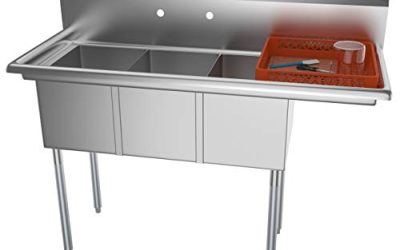
Portable Sink Hand Wash Station, Single Basin, by The USA Trailer Store
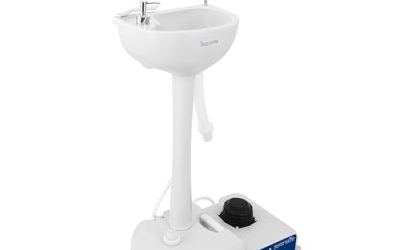
A freestanding, self-contained hand washing station with hot and cold water, a built-in 2.5-gallon electric heater and a 5-gallon freshwater tank in stainless steel, listed for food trucks, concession stands and other commercial use.
The Bottom Line
The best hand washing sink for a food truck fits your measured space, satisfies your local code, gives staff a basin big enough to wash hands and forearms properly, delivers warm water all service long, and stays dedicated to hand washing only. Wall-mounted stainless sinks with hands-free knee operation suit most small and mid-sized trucks; larger builds can take advantage of pedestal designs and bigger basins. Spend your attention on size, faucet type, splash protection, water heating, and installation strength rather than on decoration, keep the station stocked and unblocked, and your hand sink will do its quiet, essential job: keeping hands clean, inspectors satisfied, and customers safe.
More from Amazon
Programs that pair well with the guide above. Offers and eligibility are set by Amazon and may change.
Set up recurring deliveries of everyday items on eligible products. Terms and savings are set by Amazon.
Explore Subscribe & SaveCollect the home and kitchen items you want in one registry that guests can shop from.
Create a wedding registryFree shipping on eligible items, Prime Video and more. Eligible new members can start with a free trial.
Start a Prime free trialAudiobooks and podcasts to listen to on the go. Eligible new members can start with a free trial.
Try Audible freeAs an Amazon Associate we earn from qualifying purchases.