Key takeaways
- Compare the best heel balms for dry, cracked heels, from urea sticks and a night treatment to an aloe stick, with sizes, key ingredients and use notes.
A general foot cream spreads a little moisture over the whole foot. A heel balm does a narrower, heavier job: it concentrates softening ingredients on the thick rim of skin around the heel, where dryness builds into callus and callus splits into cracks. That focus is why balms come in dense sticks, rich tubes, and high-urea formulas rather than light lotions.
This guide covers five heel-specific products: two urea sticks that glide on without dirty hands, a maximum-strength urea cream for thick callus, a deep conditioning night treatment, and an aloe-based stick with no urea at all. If you want a broader whole-foot cream for general dryness, our foot creams guide covers that ground; everything below is aimed at the heel itself.
Disclosure: As an Amazon Associate, we earn from qualifying purchases made through links on this page, at no extra cost to you.
How to Choose a Heel Balm
Urea strength sets the pace
Urea is the ingredient that does the heavy lifting in most heel balms. At around 10 percent it softens and holds moisture in the surface layer, which suits upkeep once heels are back in shape. At 25 percent it works harder on thick, cracked rims, loosening the hardened layer so it can thin out over days of steady use. At 40 percent it is a maximum-strength callus treatment, best kept for short, focused runs on stubborn patches rather than indefinite daily use. Match the strength to the skin: mild roughness rarely needs the strongest tube on the shelf, and very thick callus rarely responds to the mildest stick.
Stick, cream, or night treatment
A stick is the cleanest format. It glides over the heel rim, keeps fingers out of the product, and travels well because it is solid. Sticks suit quick morning and evening passes and anyone who dislikes the feel of cream on their hands. A tubed cream or balm gives more control over how much goes on and spreads further when the rough area runs along the side of the foot as well as the heel. A night treatment is built for one long, undisturbed session: a richer formula applied at bedtime, usually under socks, so the conditioning oils have hours to work while you sleep.
What sits alongside the urea
Not every heel balm leans on urea. Aloe-based sticks use plant oils, shea butter, and cocoa butter to soften and shield the skin, a gentler route for heels that are dry and flaky rather than deeply callused. Epsom salt and essential oils appear in some urea sticks to soothe as the balm softens. Deep conditioning oils such as sweet almond and lavender show up in night formulas meant to restore suppleness overnight. If a scented product bothers you, check the ingredient list for peppermint, lavender, or tea tree oil before ordering, since several heel formulas carry a noticeable botanical scent.
Routine matters more than size
Heel skin responds to repetition. Most of these products call for once or twice daily use, applied to clean, dry heels, ideally after a shower when the surface layer is soft. Cotton socks after an evening application keep the balm on the skin instead of the sheets. Give a new balm two weeks of steady use before judging it, and keep strong urea formulas off deep open splits; broken skin belongs under a clinician’s eye first, especially for anyone managing diabetes.
The 5 Best Heel Balms
1. Dr. Scholl’s Cracked Heel Repair Balm, 2.5 oz Stick

Dr. Scholl’s packages its heel treatment as a solid stick, and the formula pairs 25 percent urea with Epsom salt and a blend of essential oils. That urea level is the same strength as many heavy heel creams, but the stick format changes how it feels to use: one glide lays down a thin, even layer over the heel rim, and the balm leaves an invisible protective film rather than a greasy coat that transfers to socks and floors.
The 2.5 ounce stick suits a twice-daily routine aimed at heels that have already cracked. Because the applicator never touches your hands, it is an easy one to keep by the bed or in a gym bag. The brand positions it as safe for people with diabetes, though the usual caution still applies: keep it for the intact but thickened skin around a crack, not inside a deep open split.
Specs
- Size: 2.5 oz stick
- Form: solid balm stick
- Key ingredients: urea 25%, Epsom salt, essential oils
- Use: apply to dry, cracked heels
- Model number: not published
2. Flexitol Heel Magic Stick, 2.5 oz
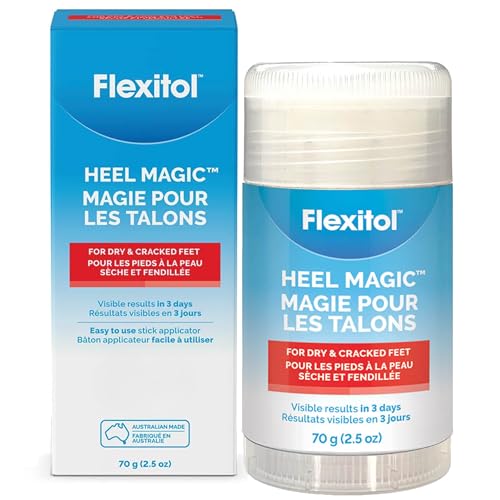
Heel Magic is Flexitol’s stick format, a step down in strength from the same brand’s well known heel cream and a step up in convenience. It carries 10 percent urea in a solid base of shea butter, lanolin, beeswax, and olive oil, with vitamin E in the mix. The brand describes visible improvement in about three days of use, and the milder urea level makes it a sensible daily driver once a stronger treatment has done the initial clearing.
The stick is the draw here. It is hands-free, portable, and solid, so it can ride in a carry-on bag without counting as a liquid. Flexitol suggests pairing the two formats: the stronger cream for intensive care, this stick for quick daily upkeep. For heels that cycle between smooth and rough through the year, that maintenance role is exactly where Heel Magic fits. The formula is also free from parabens, per the brand.
Specs
- Size: 2.5 oz (70 g) stick
- Form: solid balm stick
- Key ingredients: urea 10%, shea butter, lanolin, vitamin E, beeswax, olive oil
- Model number: 835787
- Use: daily upkeep for dry, rough heels
3. PurOrganica Urea 40% Cream, 4 oz

This is the strongest formula in the guide. PurOrganica builds its cream around 40 percent urea, the level aimed at thick callus, corns, and heels that have resisted gentler products. Safflower seed oil carries the base, and the ingredient list adds aloe, chamomile, and tea tree oil to soften the feel of what is otherwise a purely functional treatment cream. It is made in the USA and dermatologist tested, per the brand.
A 40 percent cream asks for a measured approach. Use it on the thickened heel rim and other callused patches rather than the whole foot, begin at once a day, and ease back to a milder balm once the hard layer thins. The 4 ounce tube holds enough for a focused course of treatment with some left for elbows, knees, and hands, which the brand also lists as suitable spots. Keep it away from broken skin, where high urea will sting.
Specs
- Size: 4 oz tube
- Form: cream
- Key ingredients: urea 40%, safflower seed oil, aloe, chamomile, tea tree oil
- Model number: 0008-001-U-CJ7
- UPC: 867806000302
4. O’Keeffe’s Healthy Feet Night Treatment, 7 oz Tube

O’Keeffe’s takes a different route from the urea sticks above: this night treatment skips urea and leans on glycerin with deep conditioning oils, including shea butter, sweet almond oil, lavender oil, and grapefruit peel oil, plus beeswax to hold moisture against the skin. It is a rich, calming cream designed to be applied at bedtime and after bathing, then left to work through the night while feet are off the floor and undisturbed.
The 7 ounce tube is the largest container in this guide, sized for a reliable at-home supply rather than travel. The formula is hypoallergenic and not tested on animals, per the maker, The Gorilla Glue Company. For heels that are extremely dry and cracked but not heavily callused, an overnight oil-based treatment like this one can be easier to stick with than a strong urea cream, and it layers well under cotton socks.
Specs
- Size: 7 oz (198 g) tube
- Form: night treatment cream
- Key ingredients: glycerin, shea butter, sweet almond oil, lavender oil, beeswax
- Model number: 107601
- Use: apply at bedtime and after bathing
5. Miracle of Aloe Miracle Heel Stick, 2.5 oz

Miracle of Aloe builds its heel stick on plant oils instead of urea. The ingredient list leads with coconut oil and safflower seed oil in a beeswax base, with shea butter, menthol, lavender oil, tea tree oil, vitamin E, and aloe leaf juice. It reads as a shielding, softening stick: the waxes and butters coat the heel rim, the aloe and oils condition it, and the menthol gives a cool feel on application.
The maker directs morning and night application, and the 2.5 ounce stick format keeps that routine clean and quick. This is the gentlest option here, suited to heels that are dry, rough, and flaky rather than thick with callus, and to anyone whose skin reacts to strong urea formulas. Expect steady softening over consistent use rather than the faster callus thinning of the 25 and 40 percent picks above.
Specs
- Size: 2.5 oz stick
- Form: solid balm stick
- Key ingredients: coconut oil, safflower seed oil, shea butter, aloe leaf juice, tea tree oil
- Urea: none
- Use: apply morning and night
Comparison Table
| Product | Size | Key active | Form | Urea |
|---|---|---|---|---|
| Dr. Scholl’s Cracked Heel Repair Balm | 2.5 oz | Urea, Epsom salt | Stick | 25% |
| Flexitol Heel Magic | 2.5 oz | Urea, shea butter | Stick | 10% |
| PurOrganica Urea Cream | 4 oz | Urea, safflower oil | Cream | 40% |
| O’Keeffe’s Healthy Feet Night Treatment | 7 oz | Glycerin, conditioning oils | Cream | None |
| Miracle of Aloe Miracle Heel Stick | 2.5 oz | Aloe, plant oils | Stick | None |
Frequently Asked Questions
How often should I apply a heel balm?
Once or twice a day suits most formulas. The sticks in this guide are built for quick morning and evening passes, the night treatment goes on at bedtime, and a maximum-strength urea cream is often best begun at once a day on callused patches only. Steady daily use over two weeks tells you more than doubling up for two days and stopping.
Which urea strength do I need?
Match it to the skin in front of you. Around 10 percent handles upkeep and mild roughness. At 25 percent, urea takes on thick, cracked heel rims and is the common intensive-care level. At 40 percent it is a callus treatment for stubborn patches, used in focused runs rather than as a permanent daily cream. Heels with little callus usually do fine with an oil-based balm and no urea at all.
Is a stick better than a cream?
Neither wins outright; they suit different habits. A stick keeps hands clean, lays down a thin layer, and travels well because it is solid. A cream lets you work a thicker coat into a wide rough area and tends to come in larger sizes for nightly whole-heel coverage. Many people end up with both: a cream for intensive phases and a stick for maintenance.
Can I use a heel balm with a foot file or pumice?
Yes, and the pairing helps. File or pumice the softened skin gently in or after a shower, rinse, dry, then apply the balm so the softening ingredients reach fresher skin. Go lightly: heavy filing on cracked heels can open the skin further. Let the balm do the chemical softening between sessions instead of scrubbing harder.
When should I see a clinician instead of using a balm?
See a clinician when a crack is deep, bleeding, painful to walk on, or shows signs of infection such as spreading redness or warmth. Anyone with diabetes or poor circulation should check with a clinician before using a strong urea treatment and should not use these products on open splits. Balms are for dry, intact, thickened skin; open wounds are a different problem.
Conclusion
The right heel balm depends on how far the dryness has gone. For heels already cracked, the Dr. Scholl’s stick brings 25 percent urea in the cleanest format here. Thick, stubborn callus calls for the PurOrganica 40 percent cream, used in a focused course. Once heels are back under control, the Flexitol Heel Magic stick keeps them there with mild daily passes, the O’Keeffe’s night treatment restores dry heels overnight with conditioning oils, and the Miracle of Aloe stick covers the gentle, urea-free end of the range. Pick the strength that matches your heels, apply it on a steady schedule, and let repetition do the work.
FAQ
How often should I apply a heel balm?
Which urea strength do I need?
Is a stick better than a cream?
Can I use a heel balm with a foot file or pumice?
When should I see a clinician instead of using a balm?
More from Amazon
Programs that pair well with the guide above. Offers and eligibility are set by Amazon and may change.
Set up recurring deliveries of everyday items on eligible products. Terms and savings are set by Amazon.
Explore Subscribe & SaveCollect the home and kitchen items you want in one registry that guests can shop from.
Create a wedding registryFree shipping on eligible items, Prime Video and more. Eligible new members can start with a free trial.
Start a Prime free trialAudiobooks and podcasts to listen to on the go. Eligible new members can start with a free trial.
Try Audible freeAs an Amazon Associate we earn from qualifying purchases.