Key takeaways
- Five hyaluronic acid serums compared side by side, from a budget dropper bottle to pharmacy formulas, with notes on texture, ingredients and layering.
Hyaluronic acid is a humectant, a molecule that pulls water toward itself and holds it at the surface of the skin. Your body makes it naturally, but the amount in skin falls with age, sun exposure and dry indoor air, which is one reason skin can feel tight and look dull even when it is not truly dry underneath. A serum built around this ingredient is a simple way to add a water layer back into a routine: it goes on after cleansing, feels light, and works under almost any cream.
The five serums below all use hyaluronic acid as their main active, but they differ more than the labels suggest. Some blend several molecular weights of the ingredient so part of it sits on the surface and part sinks lower. Some add vitamin B5, ceramides or glycerin to support the skin barrier while the water layer does its work. Textures run from thin and watery to a rich gel-cream, and bottle sizes run from one ounce to a four-ounce bottle that also covers the neck and the backs of the hands. None of these products is a medicine, and none of them changes skin structure; they support surface moisture, and they do it best when you use them the right way, on damp skin with a cream sealed over the top.
Disclosure: As an Amazon Associate, we earn from qualifying purchases made through links on this page, at no extra cost to you.
How to Choose a Hyaluronic Acid Serum
Look at the forms of hyaluronic acid. A single large molecule mostly forms a film on the surface, which smooths and softens right away. Smaller or hydrolyzed forms move a little deeper into the outer layer. Formulas that list two or three forms, such as sodium hyaluronate plus a crosspolymer, usually feel more complete across the day.
Check the supporting ingredients. Vitamin B5, listed as panthenol, helps skin hold onto water and feel calm. Ceramides support the barrier that keeps water from escaping. Glycerin is a second humectant that backs up the main one. Madecassoside, from the centella plant, shows up in formulas aimed at reactive skin.
Match the texture to your skin and climate. Thin, watery serums suit oily and combination skin and layer well under sunscreen and makeup. Gel and gel-cream textures suit normal to dry skin and can double as a light moisture step in humid weather.
Think about scent and sensitivity. Several formulas below carry no added fragrance, which matters if your skin reacts to scented leave-on products. If your skin is reactive, patch test a new serum on the jawline for a few days first.
Plan how you will apply it. Hyaluronic acid needs water to work with. Pat it onto skin that is still slightly damp from cleansing or from a splash of water, give it a minute, then seal it with a moisturizer. Used on bone-dry skin in a heated room, it can pull water from the skin itself and leave a tight feeling, which is the opposite of the goal.
The 5 Best Hyaluronic Acid Serums
1. The Ordinary Hyaluronic Acid 2% + B5 (with Ceramides)
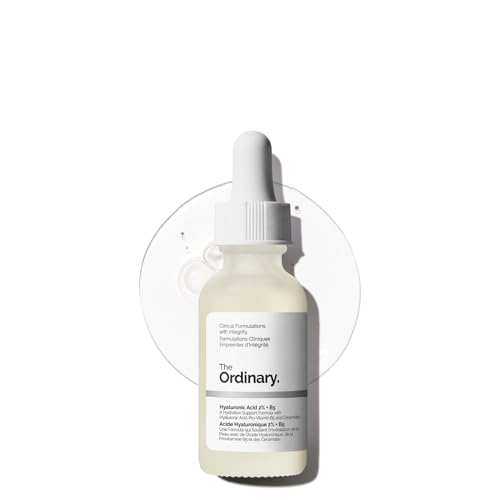
The Ordinary built this serum around a combined 2% system of hyaluronic acid forms at several molecular weights, so the texture spreads like a light gel and covers both the surface film effect and the lower outer layer. Vitamin B5 sits alongside it, and the current version adds ceramides, the lipids that help the barrier keep water in. The formula is vegan, carries no added fragrance, and comes in a glass bottle with a dropper, which makes it easy to dose two or three drops at a time.
This is the pick for someone who reads ingredient lists and wants the full multi-weight approach in a small, focused bottle. The gel can feel slightly tacky for a minute before it settles, so give it a moment before cream. It layers cleanly with vitamin C in the morning and with stronger night products in the evening.
Specs
- Size: 30 ml (1 fl oz)
- Key ingredients: Sodium hyaluronate, hydrolyzed hyaluronic acid, sodium hyaluronate crosspolymer, panthenol, ceramides
- Texture: Light gel
- Fragrance: None added
- Applicator: Glass dropper
2. Cosmedica Hyaluronic Acid Serum

Cosmedica takes the opposite approach: one humectant, a large bottle, and very little else. The formula is built on sodium hyaluronate in a distilled water base, with no parabens and a vegan, cruelty-free profile. At four fluid ounces, this is by far the biggest bottle in the group, which changes how you use it. There is enough to cover the face, neck, chest and the backs of the hands every day without rationing drops.
Choose this one if you want a single-purpose moisture layer and go through serum quickly, or if you use hyaluronic acid on the body as well as the face. The clear gel texture suits all skin types, and the simple formula plays well with anything you layer over it.
Specs
- Size: 4 fl oz
- Model: HA_4
- Key ingredient: Sodium hyaluronate
- Texture: Clear gel
- Free from: Parabens
3. La Roche-Posay Hyalu B5 Serum

Hyalu B5 pairs two forms of hyaluronic acid with vitamin B5, madecassoside and glycerin in a richer gel that was designed with sensitive skin in mind. The madecassoside, drawn from the centella plant, is there to keep reactive skin comfortable, and the formula is oil-free, so it will not feel heavy even though the gel itself is plush. A little goes a long way; a few drops cover the whole face.
This is the pharmacy pick of the group, suited to skin that feels both dry and easily irritated, and to anyone whose skin protests against heavily scented products. The texture sits between a serum and a light gel moisturizer, so dry skin types may find they need less cream over it than with the thinner formulas here.
Specs
- Size: 30 ml (1.0 fl oz)
- Key ingredients: Hyaluronic acid in two forms, panthenol, madecassoside, glycerin
- Texture: Rich gel
- Oil-free: Yes
- Skin focus: Sensitive, moisture-depleted skin
4. Neutrogena Hydro Boost Hyaluronic Acid Serum

The Hydro Boost serum uses purified hyaluronic acid with glycerin in a water-light gel that absorbs fast and leaves no greasy film, which is why it suits oily and combination skin so well. It is oil-free and non-comedogenic, so it adds water without adding anything that sits heavy on pores. The one-ounce bottle is the familiar blue Hydro Boost format and slots into a routine next to the matching gel-cream if you already use it.
Pick this one if your skin gets shiny by midday but still feels tight after washing, a common sign that the surface is short on water rather than oil. It wears well under sunscreen and makeup because the finish is clean and almost weightless once it sets.
Specs
- Size: 1.0 fl oz
- Model: 10013
- Key ingredients: Purified hyaluronic acid, glycerin
- Texture: Water-light gel
- Oil-free and non-comedogenic: Yes
5. CeraVe Hyaluronic Acid Serum

CeraVe combines hyaluronic acid with three essential ceramides and vitamin B5 in a gel-cream texture, a formula developed with dermatologists for normal to dry skin. The ceramide side of the formula matters if your barrier is worn down from weather, cleansing or strong actives, because the water layer only helps if the barrier can keep it in place. The serum is fragrance free, paraben free and non-comedogenic, and it comes in a pump bottle that keeps fingers out of the product.
Choose this one if your skin leans dry or sensitive and you want the barrier support built in rather than added through a second product. The gel-cream texture is the thickest of the five, so in warm weather some people use it as their only moisture step at night.
Specs
- Size: 1 oz (30 ml)
- Key ingredients: Hyaluronic acid, three essential ceramides, vitamin B5
- Texture: Gel-cream
- Fragrance: None
- Applicator: Pump bottle
Comparison Table
| Product | Size | Standout ingredients | Texture | Best for |
|---|---|---|---|---|
| The Ordinary Hyaluronic Acid 2% + B5 | 30 ml | Multi-weight HA, B5, ceramides | Light gel | Ingredient-focused routines |
| Cosmedica Hyaluronic Acid Serum | 4 fl oz | Sodium hyaluronate | Clear gel | Face and body, heavy users |
| La Roche-Posay Hyalu B5 | 30 ml | Two HA forms, B5, madecassoside | Rich gel | Sensitive, reactive skin |
| Neutrogena Hydro Boost Serum | 1.0 fl oz | Purified HA, glycerin | Water-light gel | Oily and combination skin |
| CeraVe Hyaluronic Acid Serum | 1 oz | HA, three ceramides, B5 | Gel-cream | Dry skin and barrier support |
Frequently Asked Questions
Should I apply hyaluronic acid serum to wet or dry skin?
Damp skin works best. The ingredient binds water, so a little water left on the face after cleansing gives it something to hold. Pat the serum on while skin still feels slightly wet, wait about a minute, then apply moisturizer to seal the layer in place.
Can I use a hyaluronic acid serum with vitamin C or retinol?
Yes. Hyaluronic acid is a moisture ingredient rather than a strong active, and it pairs well with both. Apply thinner, water-based products first, and many people find that a layer of hyaluronic acid under or over retinol makes the retinol feel more comfortable on the skin.
How often can I use one of these serums?
Morning and evening use is fine for most people, since the ingredient is gentle and does not exfoliate. If your skin is very reactive, begin with once a day and build up over a week or two while you watch how your skin responds.
Why does my skin feel tight after using a hyaluronic acid serum?
That usually happens in dry indoor air when the serum goes on over dry skin with no cream on top. The humectant then draws water from the skin itself. Fix it by applying to damp skin and always finishing with a moisturizer, especially in heated or air-conditioned rooms.
How much serum should I use each time?
Two to three drops, or a pea-size amount, covers the face and neck for most formulas here. Using more does not add moisture; it mostly adds a sticky layer that can roll under makeup. Spread it thin and let it settle for a minute before the next step.
Conclusion
For most people, the choice comes down to texture and what else your skin needs. The Ordinary suits anyone who wants the multi-weight hyaluronic system plus ceramides in a focused dropper bottle. Cosmedica is the value play for face and body use, thanks to the four-ounce size. La Roche-Posay Hyalu B5 fits sensitive, reactive skin that wants a richer gel. Neutrogena Hydro Boost keeps things weightless for oily and combination skin. CeraVe folds barrier support into a gel-cream for dry skin. Whichever bottle you pick, the habit matters more than the brand: damp skin first, serum second, cream on top to hold the water where you want it.
FAQ
Should I apply hyaluronic acid serum to wet or dry skin?
Can I use a hyaluronic acid serum with vitamin C or retinol?
How often can I use one of these serums?
Why does my skin feel tight after using a hyaluronic acid serum?
How much serum should I use each time?
More from Amazon
Programs that pair well with the guide above. Offers and eligibility are set by Amazon and may change.
Set up recurring deliveries of everyday items on eligible products. Terms and savings are set by Amazon.
Explore Subscribe & SaveCollect the home and kitchen items you want in one registry that guests can shop from.
Create a wedding registryFree shipping on eligible items, Prime Video and more. Eligible new members can start with a free trial.
Start a Prime free trialAudiobooks and podcasts to listen to on the go. Eligible new members can start with a free trial.
Try Audible freeAs an Amazon Associate we earn from qualifying purchases.