Key takeaways
- Find the best paint for porcelain sink refinishing, from two-part epoxy kits to pour-on glaze and spray paint, with prep, cure times and buying tips today.
Introduction
The best paint for porcelain sink refinishing bonds to glazed porcelain, resists standing water and daily cleaning, and dries to a smooth, hard finish like the original glaze. Ordinary wall paint and most all-purpose spray paints do not meet that standard: they soften in water and peel at the drain.

Quick answer: for most porcelain sinks, a two-part epoxy tub and tile refinishing kit is the strongest choice. It mixes a base with a hardener, bonds tightly to porcelain, and cures to a hard, water-resistant surface. Water-based kits are a lower-odor alternative, a pour-on resin suits a worn, dull glaze, and spray paint is best for small areas and touch-ups.
One honest point: there is no widely sold paint made only for porcelain sinks. Every product here is a tub and tile refinishing paint also rated for sinks, a partial fit worth knowing. None is a general wall paint, a rust remover or a caulk, and each lists porcelain among its recommended surfaces.
Quick Picks
| Product | Best For | Formula | Finish | ASIN |
|---|---|---|---|---|
| Rust-Oleum Tub and Tile Refinishing 2-Part Kit | Most porcelain sinks | Two-part epoxy acrylic | Gloss white | B000PTSBKW |
| DWIL Tub and Tile Refinishing Kit, 33 oz | Low-odor refinishing with tools included | Water-based acrylic with hardener | Semi-gloss white | B09WCZDX6L |
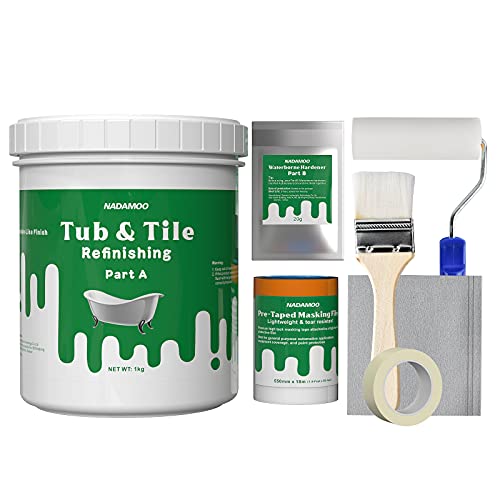
| NADAMOO Tub and Tile Refinishing Kit, 1 kg | Larger sink and countertop projects | Water-based two-part acrylic | Semi-gloss white | B08YQPYGG3 |
| Ekopel 2K Bathtub Refinishing Kit, Pour-On | A thick, glossy coat on a worn sink | Pour-on casting resin, two-part | Bright gloss white | B07MCW3KJB |
| Rust-Oleum Tub and Tile Spray Paint, 12 oz | Touch-ups, edges and small areas | Spray epoxy acrylic | Gloss white | B00T82712Q |
How to Choose
A pedestal, drop-in, vessel or undermount sink all take the same coating, but shape changes application. A deep basin suits a roller and brush, a shallow vessel suits a spray or pour-on coat, and a cracked or rust-stained sink needs repair first, because paint will not fill a deep chip.
Paint Formula and How It Bonds to Porcelain
Porcelain is glazed and non-porous, so paint cannot soak in as it does into wood. Adhesion depends on formula and preparation. Two-part epoxy is the usual first choice because the hardener triggers a chemical cure that leaves a hard film. The Rust-Oleum kit is a two-part epoxy acrylic and the Ekopel kit is a two-part casting resin, and both bond to porcelain, ceramic, fiberglass, enamel and metal once the surface is cleaned and lightly scuffed.
Water-based acrylic formulas, such as the DWIL and NADAMOO kits, also use a hardener, but they are built around a water-based resin. They tend to have less odor than solvent-based epoxy and suit a small bathroom with limited ventilation. A coat that looks dry is not fully cured, and running water over it too soon is a common reason a sink finish fails.
Finish: Gloss, Semi-Gloss and Satin
Most porcelain sinks start with a high-gloss glaze, so gloss or semi-gloss usually looks most natural. Gloss wipes clean easily, which is why the Rust-Oleum kit and Ekopel kit dry to bright gloss white. Semi-gloss, used by DWIL and NADAMOO, is softer to the eye and hides minor unevenness better.
Whichever sheen you choose, buy enough paint for two coats, because a single coat over a stained sink often leaves the old color showing through around the drain and overflow.
Coverage and Kit Size
Most refinishing kits are sized for a bathtub, so one kit usually covers a sink with paint to spare. The Rust-Oleum kit covers about 110 square feet, the DWIL 33 oz kit covers about 50 to 55 square feet, and the NADAMOO 1 kg kit suits a sink, countertop or small tub area. The Ekopel kit is sized for a standard bathtub, so a sink will use only part of it.
Coverage figures assume thin, even coats on a prepared surface. A rough or heavily stained sink will use more paint, because the first coat fills texture instead of laying down a smooth film.
Cure Time and When the Sink Can Be Used Again
Cure time is the period the coating needs to reach full hardness, and it is longer than dry time. The Rust-Oleum kit dries to the touch in about one hour and needs about three days before water exposure. The DWIL kit lists a full cure time of about seven days, with a dry time of about 24 hours between stages.
Plan around the cure time, not the dry time. Using the sink the day after painting exposes a soft finish to water and soap, and that is when peeling starts at the drain. If it is the only sink in the house, arrange an alternative, and keep bottles off the fresh surface until it has cured.
Odor and Ventilation
Refinishing paint smells strongly while it is mixed and applied, and the strength depends on the formula. Two-part epoxy has the strongest smell, and the Rust-Oleum instructions call for proper ventilation. Ekopel resin is marketed as odorless, a real advantage in a small bathroom, but odorless does not mean fume-free. DWIL and NADAMOO kits are described as low odor.
Whatever formula you choose, open a window, run the bathroom fan, and wear gloves and eye protection. Keep children and pets out of the room while you paint and while the coating cures.
Color and Application Method
White is the standard color, and every product in this guide is sold in white. Most porcelain sinks, toilets and tubs are white already, and a fresh white coat makes an old sink match the room. Some lines also come in off-white, coastal fog or bisque, so check the options if your sink is almond.
Application shapes the result as much as formula. A roller gives the most even coat over a basin bottom and a drop-in rim, a brush is needed where the basin meets the drain and behind the faucet, a pour-on kit levels on its own into a thick coat, and a spray needs several light passes and good masking.
The Best Best Paint for Porcelain Sink Reviewed
The five products below are paints and refinishing kits made for porcelain sinks, tubs and tile, each listed with its ASIN and Amazon link. All five are general tub and tile products rather than sink-only paints, so that partial fit applies to every product here.
Rust-Oleum Tub and Tile Refinishing 2-Part Kit
The Rust-Oleum Tub and Tile Refinishing 2-Part Kit is the most widely known product in this category, and the default choice for a sink that needs a hard, glossy, porcelain-like finish. It is a two-part epoxy acrylic with a working time of about six hours once mixed. It works on tubs and sinks made from ceramic, porcelain, fiberglass, acrylic, cast iron and steel.
The kit is a 32 fluid ounce size, it covers about 110 square feet, it dries to the touch in about one hour, and it needs about three days before it should be exposed to water. It is sold in white with a gloss finish, and the same line is also available in a satin finish. Preparation calls for removing hardware, cleaning, repairing chips, sanding and wiping with a tack cloth. This is a partial-fit product: a tub and tile kit, not a sink-only paint, and a single sink will use only a small part of it.
DWIL Tub and Tile Refinishing Kit, 33 oz
The DWIL Tub and Tile Refinishing Kit is a water-based alternative to solvent-based epoxy, and the most sink-friendly option here because its listing names sinks directly alongside bathtubs and countertops. It is sold in semi-gloss white, and the 33 ounce size covers about 50 to 55 square feet, more than enough for two coats on a sink.
DWIL describes the formula as a water-based acrylic with a hardener, and the kit includes application tools, which makes it a practical choice for a first refinishing project. The trade-off is cure time. The listing gives a dry time of about 24 hours and a full cure time of about seven days, so this kit needs more patience than the Rust-Oleum kit. This is also a partial-fit product: it is a multi-surface refinishing paint, not a paint made only for a porcelain sink, but porcelain is on its recommended list.
NADAMOO Tub and Tile Refinishing Kit, 1 kg
The NADAMOO Tub and Tile Refinishing Kit is a 1 kg, 35 ounce kit with tools included, sized for a larger job than a single small sink. It is a bathtub, sink and countertop DIY kit for porcelain and fiberglass, finished in semi-gloss white. Its water-based two-part acrylic formula is mixed in a four-to-one ratio.
The larger size is the main reason to choose this kit. A wide basin, a double sink, or a sink plus a tiled backsplash will use more paint than a single small basin, and a 1 kg kit gives you enough for two coats. Like the DWIL kit, this is a partial-fit product: a general tub and tile kit, not a sink-only paint. The semi-gloss finish hides minor application marks better than a full gloss.
Ekopel 2K Bathtub Refinishing Kit, Pour-On
The Ekopel 2K Bathtub Refinishing Kit is a pour-on kit: a two-part casting resin poured onto the surface and spread into a thick, glossy coat. The listing describes it as a one-coat, odorless sink and bathtub paint with a bright gloss white finish, made in the USA, adhering to porcelain, ceramic, fiberglass and enamel.
The thick coat is the point of this kit: a pour-on resin lays down a much thicker film in one application, filling minor dullness and light pitting in an old glaze. This is also a partial-fit product. It is a bathtub kit sized for a standard tub, so a single sink will use only part of it, and the pour-on method needs careful masking around the drain, overflow and faucet. It suits a worn, dull sink that needs a thick new surface.
Rust-Oleum Tub and Tile Spray Paint, 12 oz
The Rust-Oleum Tub and Tile Spray Paint is a 12 ounce aerosol for tubs, sinks and tile, and the touch-up option in this guide. It bonds to porcelain and ceramic and gives a smooth, porcelain-like finish. It is a one-step spray with no mixing, roller or brush to clean, useful for a small sink, a sink rim, a pedestal base or a spot repair.
A spray has real limits on a whole basin. A 12 ounce can covers a small area, so a single can is not enough for a large sink with two coats, and its thin coat is more likely to show the old color through and wear first at the drain. Use it for a small sink, a vessel sink exterior, or a chip touch-up. This is a partial-fit product: a tub and tile spray, not a sink-only paint.
What to Check Before You Buy
Before you buy any paint for a porcelain sink, check the surface the product is made for. The label or listing should name porcelain, ceramic or enamel directly. A paint made for wood, metal or wall surfaces may stick at first and peel later. All five products in this guide name porcelain among their recommended surfaces.
Check the kit size: two coats, a rim, a pedestal and a backsplash add up. Check whether tools are included: the DWIL and NADAMOO kits include them, while the Rust-Oleum two-part kit expects you to supply a roller, brush, gloves and masking materials. Check the cure time too. A three-day cure and a seven-day cure are very different commitments when the sink is the only one in the house.
Check the drain, overflow and existing glaze. A damaged drain flange, cracked overflow or loose faucet base needs repair before painting, because paint will not seal a leak. A stained, dull sink is a good candidate for refinishing, but deep cracks, a large chip or rust bleeding from the drain may need a professional repair or replacement.
FAQ
Can you paint a porcelain sink?
Yes, a porcelain sink can be painted with a refinishing paint made for porcelain, such as a two-part epoxy kit, a water-based kit, or a pour-on resin. Ordinary wall paint and general-purpose spray paint are not suitable, because they do not bond well to glazed porcelain and soften with standing water. The sink must be cleaned, repaired, sanded lightly and masked first, and the coating must cure for the full time on the label.
What kind of paint sticks to porcelain?
Two-part epoxy sticks best to porcelain, because the hardener creates a chemical cure that leaves a hard, water-resistant film. Water-based two-part acrylic also sticks when the surface has been cleaned and lightly scuffed, and it has lower odor. Pour-on resin sticks as well and lays down a thicker coat. In every case, adhesion depends on preparation: grease, soap residue and loose paint must be removed first.
How long does paint on a porcelain sink last?
How long a refinished sink lasts depends on the formula, preparation, cure time and use. A two-part epoxy or pour-on resin on a well-prepared, fully cured surface will last longer than a thin spray coat or a coat exposed to water too soon. Avoid abrasive cleaners and scouring pads, and do not leave standing water or strong cleaners in the basin.
Do you need to sand a porcelain sink before painting?
Yes, light sanding is part of the preparation for almost every refinishing kit. The glaze is smooth and non-porous, so paint needs a slightly roughened surface to grip. Fine wet and dry sandpaper, usually 400 to 600 grit, scuffs the glaze without cutting through it. Clean first, then sand, rinse and wipe with a tack cloth, and repair chips and cracks before sanding.
Can you use tub and tile paint on a sink?
Yes, tub and tile paint is the standard product for a porcelain sink, because there is no widely sold paint made only for sinks. Every product in this guide is a tub and tile refinishing paint that lists sinks and porcelain among its uses. The difference is in the application: a sink is smaller, its sides are steeper, and its drain and overflow need careful masking. Choose a kit that names porcelain and sinks directly, apply it in thin coats, and respect the cure time on the label.
Bottom Line
The best paint for porcelain sink refinishing is a two-part epoxy tub and tile kit for most sinks, with a water-based kit as the lower-odor alternative and a pour-on resin as the thickest, glossiest option for a worn glaze. The Rust-Oleum two-part kit is the strongest all-round choice, the DWIL kit is best when odor and included tools matter most, the NADAMOO kit suits a larger project, the Ekopel kit suits a dull, worn sink, and the Rust-Oleum spray suits touch-ups.
Whichever product you choose, the paint is only half the job. Clean the sink, repair chips, sand lightly, mask the faucet, drain and overflow, apply thin coats, and leave it alone for the full cure time. A deep crack, large chip or rust through the glaze needs a professional repair or replacement first, because no coating can fix a structural problem underneath it.
Disclosure: As an Amazon Associate, we may earn from qualifying purchases.
FAQ
Can you paint a porcelain sink?
What kind of paint sticks to porcelain?
How long does paint on a porcelain sink last?
Do you need to sand a porcelain sink before painting?
Can you use tub and tile paint on a sink?
More from Amazon
Programs that pair well with the guide above. Offers and eligibility are set by Amazon and may change.
Set up recurring deliveries of everyday items on eligible products. Terms and savings are set by Amazon.
Explore Subscribe & SaveCollect the home and kitchen items you want in one registry that guests can shop from.
Create a wedding registryFree shipping on eligible items, Prime Video and more. Eligible new members can start with a free trial.
Start a Prime free trialAudiobooks and podcasts to listen to on the go. Eligible new members can start with a free trial.
Try Audible freeAs an Amazon Associate we earn from qualifying purchases.