Key takeaways
- Acrylic thickness: 5mm to 10mm acrylic sheet before reinforcement. Premium is typically 6-8mm, then layered with fiberglass and resin for a total wall thickness of 12-18mm. Thinner 3-4mm acrylic flexes, loses heat faster, and feels hollow when tapped.
- Reinforcement: Multiple fiberglass layers plus an ASA or polyurethane resin base and often a solid steel or stainless steel support frame with adjustable leveling feet. Some brands like MTI Baths, Hydro Systems, and Americh use a vacuum-formed acrylic shell with a hand-laid fiberglass backing.
- Finish and insulation: High-gloss Lucite or Aristech acrylic with UV resistance to prevent yellowing. Insulation is either full spray-foam undercoat or thermal insulation blanket on premium models, which can keep water temperature 3-5°F warmer after 30 minutes compared to an uninsulated shell.
- Hardware: Solid brass or stainless steel drain and overflow, often with an integrated slot overflow for a clean look and deeper fill, plus cUPC certification.
The best premium freestanding acrylic soaking bathtubs combine 6-8mm thick high-gloss acrylic reinforced with fiberglass and resin, an interior water depth of 15 to 19 inches, and dimensions that fit your bathroom’s clearance and floor load without sacrificing a full-body soak.
Unlike alcove tubs, a freestanding soaking tub is evaluated on what you can measure before you buy: shell thickness and reinforcement, footprint vs. bathing well, actual water depth to the overflow, heat retention, drain location, empty and filled weight, and the inches of clearance you need for cleaning, plumbing, and code. Getting those numbers right matters more than style alone, because a 67-inch tub that looks perfect in a showroom can overwhelm a 5×8 foot bathroom or exceed a second-floor joist limit once filled.
Our top picks
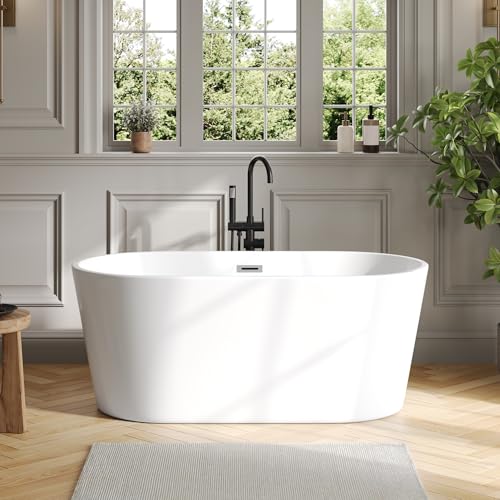 DeerValley 55" Acrylic Freestanding Bathtub
- Compact Space-Saving Design: Free standing bathtub has a…
- Freestanding Tub: Designed for flexible placement, this free…
- Premium Material: This stand alone tub crafted from…
 WOODBRIDGE 59" Acrylic Freestanding Bathtub Contemporary Soaking
- Exterior size: 59" L x 28 3/4" W…
- ASTM-compliant non-slip bathtub surface enhances bathing safety while…
- Constructed from 100% high-gloss white LUCITE acrylic, reinforced…
 WOODBRIDGE 67" Acrylic Freestanding Bathtub Contemporary Soaking
- ✅ [DIMENSIONS AND SPECIFICATIONS]: Exterior Dimension: 67" Long…
- ✅ [NON-SLIP DESIGN]: Non-Slip bathtub meet ASTM standards…
- ✅ [PREMIUM QUALITY CONSTRUCTION]: WOODBRIDGE bathtub is made…
| Product | Key specs | |
|---|---|---|
| DeerValley 55" Acrylic Freestanding Bathtub | Compact Space-Saving Design: Free standing bathtub has a… Freestanding Tub: Designed for flexible placement, this free… Premium Material: This stand alone tub crafted from… | Check price |
| WOODBRIDGE 59" Acrylic Freestanding Bathtub Contemporary Soaking | Exterior size: 59" L x 28 3/4" W… ASTM-compliant non-slip bathtub surface enhances bathing safety while… Constructed from 100% high-gloss white LUCITE acrylic, reinforced… | Check price |
| WOODBRIDGE 67" Acrylic Freestanding Bathtub Contemporary Soaking | ✅ [DIMENSIONS AND SPECIFICATIONS]: Exterior Dimension: 67" Long… ✅ [NON-SLIP DESIGN]: Non-Slip bathtub meet ASTM standards… ✅ [PREMIUM QUALITY CONSTRUCTION]: WOODBRIDGE bathtub is made… | Check price |
 59" Acrylic Freestanding Bathtub 59" Acrylic Freestanding Bathtub | 【Ergonomic Relaxation】Designed with a gentle sloped backrest, the… 【Deep Full-Body Soak】Enjoy a deeper immersion thanks to… 【Easy to Clean Acrylic】Crafted for easy maintenance, the… | Check price |
As an Amazon Associate we earn from qualifying purchases at no extra cost to you.
What Makes a Freestanding Acrylic Soaking Tub “Premium”
Premium does not just mean glossy white and a high price tag. In 2026, premium freestanding acrylic tubs usually fall in the $1,800–$5,500 range and share these construction markers:
- Acrylic thickness: 5mm to 10mm acrylic sheet before reinforcement. Premium is typically 6-8mm, then layered with fiberglass and resin for a total wall thickness of 12-18mm. Thinner 3-4mm acrylic flexes, loses heat faster, and feels hollow when tapped.
- Reinforcement: Multiple fiberglass layers plus an ASA or polyurethane resin base and often a solid steel or stainless steel support frame with adjustable leveling feet. Some brands like MTI Baths, Hydro Systems, and Americh use a vacuum-formed acrylic shell with a hand-laid fiberglass backing.
- Finish and insulation: High-gloss Lucite or Aristech acrylic with UV resistance to prevent yellowing. Insulation is either full spray-foam undercoat or thermal insulation blanket on premium models, which can keep water temperature 3-5°F warmer after 30 minutes compared to an uninsulated shell.
- Hardware: Solid brass or stainless steel drain and overflow, often with an integrated slot overflow for a clean look and deeper fill, plus cUPC certification.
6 Measurements to Compare Before You Choose
1. Acrylic Thickness and Rigidity
Thickness determines rigidity, sound, and heat retention. You cannot judge it from photos, so check the spec sheet for “acrylic layer” and “overall wall thickness.”
| Acrylic Layer Thickness | Total Wall Thickness (with fiberglass/resin) | What to Expect | Best For |
|---|---|---|---|
| 3-4 mm (builder grade) | 8-10 mm | Lightweight, more flex, faster heat loss, may need extra bracing | Budget remodels, rarely ideal for deep soaking |
| 5-6 mm (mid-premium) | 12-14 mm | Solid feel, good insulation, moderate weight 70-110 lbs empty | Most homes, second-floor installs |
| 7-8 mm+ (premium) | 15-18 mm | Very rigid, quiet fill, best heat retention, heavier 100-150 lbs empty | Dedicated soak experience, primary suites |
Ask if the tub is double-walled or single-walled. Double-walled soaking tubs hide a thicker internal bathing well and retain heat longer but add 20-30 lbs and reduce interior length by 2-3 inches for the same outer footprint.
2. Outer Dimensions vs. Interior Bathing Well
Two tubs both listed as 59 inches can offer very different soak space because wall thickness and slope eat into the interior.
- Compact: 54-59″ L x 27-30″ W x 22-24″ H. Fits small bathrooms and 5-foot alcove replacements. Interior length at the rim is often only 43-47 inches, best for users up to 5’8″.
- Standard: 60-67″ L x 28-32″ W x 22-26″ H. The sweet spot for most adults. Interior length 48-54 inches allows a 5’10” to 6’0″ bather to recline with knees slightly bent.
- Grand: 70-75″ L x 32-36″ W x 24-28″ H. True full-stretch soaking for taller bathers, but requires a 7-foot wall and wider doorway for delivery.
Check two specs that listings often bury: interior length at the base and water depth to overflow. A steep, thinner wall can give you 2 inches more legroom than a bulky double-wall design at the same outer length.
3. Water Depth and Soak Comfort
Water depth, not tub height, determines how much of your body is submerged. Measure from the tub floor (where your feet rest) to the bottom of the overflow opening.
- 14-15 inches: Shoulder-deep for smaller bathers when seated, chest-deep for average adults. Lower water volume (40-50 gallons to overflow).
- 16-17 inches: True soaking depth for most adults. Covers shoulders when reclined. Volume 50-65 gallons.
- 18-19+ inches: Deep Japanese-inspired soak. Excellent for tall users but needs 60+ gallons and a water heater that can supply it. A 50-gallon water heater may not fill a 67-inch deep soaker with enough hot water for a second shower immediately after.
Seat height inside the tub is also critical. Many modern freestanding tubs have an internal seat height of 15-17 inches from the floor of the tub. Lower seats (12-14 inches) recline you more but are harder to get in and out of for users with knee or back issues.
4. Insulation and Heat Retention
Acrylic itself is warmer to the touch than cast iron or stone resin, but holding heat depends on reinforcement and insulation. Premium tubs add one of these:
- Full polyurethane foam spray on the underside and sides (best retention, adds slight weight)
- Fiberglass + insulation blanket wrap (good, lighter, easier to repair if needed)
- No added insulation (cools fastest, common on lower-priced models)
In practical terms, an insulated 7mm acrylic tub will lose about 4-6°F in 30 minutes in a 72°F bathroom, while an uninsulated 4mm shell can lose 8-10°F in the same time. If you take 30-45 minute soaks, insulation is worth prioritizing over an extra inch of length.
5. Drain Placement and Plumbing Clearance
Drain placement affects where you can set the tub and how your feet sit:
- Center drain: Balanced for two-person soaking or centered lounging, but the drain assembly sits under the middle of the tub. You need a floor drain location near the center or a platform to run the p-trap.
- End drain (reversible): Most common for single bather, allows you to recline toward the higher sloped backrest. Easier to align with existing floor plumbing from a former alcove tub.
- Linear or slot overflow: Found on premium models from brands like BainUltra and Victoria + Albert-style designs. Lets water rise 1-1.5 inches higher before overflowing, adding depth without increasing tub height.
Freestanding tubs use an exposed freestanding tub filler or a floor-mounted faucet, not a wall spout. Confirm the faucet’s reach matches the tub’s rim thickness and that your floor can accommodate the water lines. Most freestanding fillers need the hot/cold lines roughed in within a 6-8 inch diameter circle under the tub.
6. Weight, Floor Load, and Delivery Clearance
This is where buying decisions fail. A premium acrylic tub is light empty but heavy full.
| Tub Size | Empty Weight (Premium Acrylic) | Filled Weight (Tub + Water + 170 lb Bather) | Floor Load Focus |
|---|---|---|---|
| 55″ compact | 65-90 lbs | 480-580 lbs | Usually fine on standard 40 psf floor |
| 60-67″ standard | 85-130 lbs | 620-780 lbs | Check joist direction and span; span over two joists minimum |
| 71-75″ grand | 110-160 lbs | 750-950 lbs | May need reinforcement on older or second-floor joists |
Compare to materials: a similar size cast iron tub is 300-400 lbs empty and can exceed 1,100 lbs filled. Acrylic is the lightest premium option, which is why it is preferred for upper floors.
Measure delivery path before ordering:
- Boxed tub dimensions are 2-4 inches larger than the tub on each side. A 67-inch tub ships in a ~70″ x 32″ x 26″ crate weighing 120-180 lbs.
- Standard interior doorway is 28-30 inches wide, hallway 36 inches. A 32-inch wide tub will not turn through a 28-inch door without removing the door and possibly the crate outside.
- Clearance around installed tub: Allow 4-6 inches minimum between tub and wall for cleaning, 30 inches clear space on the entry side for safe stepping, and 15 inches from the tub rim to any wall-hung vanity or toilet for code in most jurisdictions. In a 10×12 ft bathroom, a 67-inch tub along the 10-foot wall leaves about 53 inches of open floor depth, which is comfortable.
Decision Matrix: Which Tub Fits Your Situation
| Your Situation | Best Spec to Prioritize | Why |
|---|---|---|
| Small bathroom or apartment (under 40 sq ft) | 54-59″ L, 27-29″ W, center or end drain to match existing plumbing | Keeps 30″ clearance for door swing and code, uses 40-50 gallons to avoid water heater upgrade |
| Tall bather (6’1″ and above) or two-person soaking | 66-72″ L, 16.5″+ water depth, low sidewall slope | Interior base length over 52″ needed for full leg extension |
| Second-floor or older home | 6-7mm acrylic, 85-110 lbs empty, insulated but not stone-resin | Stays under floor load limits while retaining heat |
| Long soaks / 30+ minutes | 7-8mm acrylic + foam insulation, slot overflow | Reduces temperature drop, adds usable depth without taller tub height |
| Kids, pets, or mobility concerns | 22-23″ tub height, 15-16″ internal seat height, end drain with sloped backrest | Lower step-in height is easier and safer to enter and exit |
| Renter-friendly or future move | Standard 60″ with freestanding floor filler, not wall-mounted | No need to open walls; can take tub and filler when you move |
Installation Realities Premium Listings Rarely Explain
Floor prep: The tub must sit level within 1/8 inch. Use the adjustable feet and a mortar bed or adhesive pads recommended by the manufacturer if the floor is uneven. Do not rely on caulk to fix a rocking tub.
Access panel: Even with a freestanding tub, you need access to the drain and p-trap. If you cannot access from below (basement or crawlspace), leave a removable access panel in the floor or nearby wall. Without it, a simple drain leak requires cutting tile or flooring.
Faucet timing: Order the tub and the freestanding filler together. Rough-in valves vary by brand, and the tub’s drain location determines where the faucet base must be centered. Rough-in after the tub arrives is safer than guessing from a spec sheet.
Cleaning and durability: Premium acrylic cleans with non-abrasive liquid cleaners. What wears first is not the acrylic but the drain finish and the silicone caulk at the base. Avoid suction-cup bath mats, which can craze the acrylic finish over time. Use a mat that hangs over the rim instead.
Choosing by Spec, Not Just Shape
If you want a versatile premium pick for most primary bathrooms, look for a 60-67 inch oval or rectangular tub with 6-7mm acrylic, 16-17 inch water depth to overflow, full insulation, and an end drain that matches your existing waste line. That combination usually costs $2,200–$4,000, holds 55-65 gallons, and fits through a 30-inch doorway while providing a true soaking depth for one adult.
If your bathroom is compact or your water heater is 40-50 gallons, scale down to a 55-59 inch model with 15-16 inch depth and prioritize a thinner but still insulated shell to save weight and gallons.
For a luxury focal point in a large suite, a 71-75 inch double-walled tub with 7-8mm acrylic and a linear overflow delivers the deepest, quietest soak, but confirm you have a 72-inch wall, a 32-inch delivery opening, and a 60-75 gallon water heater or tankless system to support it.
Measure twice — outer footprint, interior bathing well, water depth to overflow, doorway path, and filled weight — and you will get a premium freestanding acrylic soaking tub that looks built-in and feels made for your space.