A buyer looking for the best quality juicing machines usually starts with a frustration: a cheap unit that oxidizes produce, jams on leafy greens, or takes twenty minutes to disassemble after a single glass. The category splits into centrifugal, masticating (cold press), citrus-specific, and manual designs, and each type excels at a narrow set of tasks while failing at others. Choosing well means matching your actual daily routine—what you juice, how often, how much cleanup you tolerate—to the mechanism and build quality of the machine.
What separates a good juicer from a mediocre one comes down to three things: how efficiently the extraction mechanism preserves flavor and nutrient integrity, how the feed chute and internal geometry resist clogging, and whether the unit can be cleaned in under five minutes without a parts-washing session. Below, we compared published specs, listed prices, and recurring owner feedback across eight machines to show where each one fits and where it falls short.
Our top picks
 AAOBOSI 3-in-1 Cold Press Juicer Machine
- 【Smooth Extraction with Reduced Clogging】 The slow masticating…
- 【6.5" Large Feed Chute for Whole Fruits &…
- 【Easy to Clean & 3-in-1 Versatility】 Designed for…
 Juicer Machine 800W Centrifugal Juicer with Wide
- Upgraded 800W Motor - Centrifugal juicer machine with…
- Dual Speed Juicer Machine - Juicer Machine with…
- Centrifugal Juicer with Wide Mouth - Centrifugal juicers…
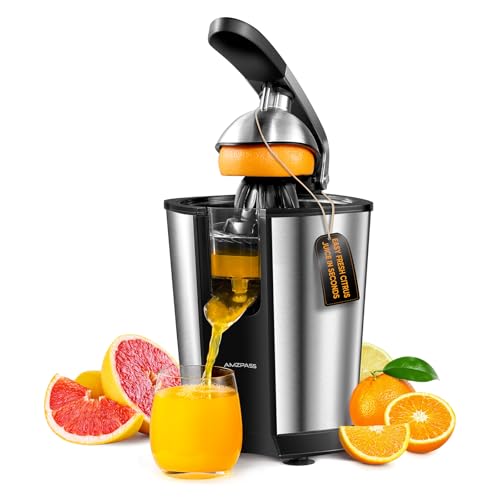 Amzpass Electric Orange Juicer
- 【Fresh Juice in Seconds】Skip the store-bought bottles and…
- 【Perfect for Every Citrus Fruit 】Whether it's a…
- 【Effortless Juicing, Every Time】The soft-grip handle and one-touch…
| Product | Key specs | |
|---|---|---|
| AAOBOSI 3-in-1 Cold Press Juicer Machine | 【Smooth Extraction with Reduced Clogging】 The slow masticating… 【6.5" Large Feed Chute for Whole Fruits &… 【Easy to Clean & 3-in-1 Versatility】 Designed for… | Check price |
| Juicer Machine 800W Centrifugal Juicer with Wide | Upgraded 800W Motor - Centrifugal juicer machine with… Dual Speed Juicer Machine - Juicer Machine with… Centrifugal Juicer with Wide Mouth - Centrifugal juicers… | Check price |
| Amzpass Electric Orange Juicer | 【Fresh Juice in Seconds】Skip the store-bought bottles and… 【Perfect for Every Citrus Fruit 】Whether it's a… 【Effortless Juicing, Every Time】The soft-grip handle and one-touch… | Check price |
 Breville RM-BJE830BSS1BUS1 Juice Fountain Cold XL Breville RM-BJE830BSS1BUS1 Juice Fountain Cold XL | The Breville Juice Fountain Cold XL features a… A Breville juicer with Cold Spin Technology and… The Breville Juice Fountain Cold XL's unique 3.5… | Check price |
 QCen 18oz Clear Glass Bottle for Juicing QCen 18oz Clear Glass Bottle for Juicing | ECO-FRIENDLY Clear Glass Bottles - Reusable glass water… One of the standout features of this glass… Each airtight bottle comes with a stainless steel… | Check price |
 Juicer Machine 800W Centrifugal Juicer with Wide Juicer Machine 800W Centrifugal Juicer with Wide | Upgraded 800W Motor - Centrifugal juicer machine with… Dual Speed Juicer Machine - Juicer Machine with… Centrifugal Juicer with Wide Mouth - Centrifugal juicers… | Check price |
 Hurom H400 Cold Press Juicer Machine Hurom H400 Cold Press Juicer Machine | The H400 is equipped with an Easy Clean… We’ve further streamlined the internal juicing mechanism, reducing… The H400 comes with a high volume self-feeding… | Check price |
 Stainless Steel Manual Citrus Juicer Stainless Steel Manual Citrus Juicer | Effortlessly Extract Fresh Juice with Our Manual Juicer,… Maximize Juice Extraction: Our Manual Juicer efficiently extracts… After-Sales Service: Featuring an Ergonomic Handle, this Manual… | Check price |
As an Amazon Associate we earn from qualifying purchases at no extra cost to you.
Quick Picks
| Product | Best for | Price |
|---|---|---|
| AAOBOSI 3-in-1 Cold Press Juicer | Versatile cold-press juicing and nut milk | $129.99 |
| 800W Centrifugal Juicer (Wide Chute) | Speed on a tight budget | $50.39 |
| Amzpass Electric Orange Juicer | Quiet citrus-only extraction | $49.99 |
| Breville Juice Fountain Cold XL (Renewed) | High-volume cold extraction with premium build | $267.95 |
| QCen 18oz Glass Bottles (6 Pack) | Storing and carrying fresh juice | $14.99 |
| 800W Centrifugal Juicer (Budget) | Occasional juicing at the lowest price | $44.99 |
| Hurom H400 Cold Press Juicer | Hands-free, self-feeding cold press at a premium | $749 |
| Stainless Steel Manual Citrus Juicer | Professional citrus service in commercial settings | $449.19 |
How We Picked
We weighed four criteria across every unit: extraction mechanism and its effect on juice quality, feed-chute design and clog resistance, cleanup effort relative to daily use, and value at the listed price when compared to competing machines in the same type. Products were evaluated on published specifications and recurring themes in owner reviews rather than hands-on bench work.
The 8 Best Quality Juicing Machines in 2026
AAOBOSI 3-in-1 Cold Press Juicer Machine
This masticating unit suits home cooks who want one machine for juice, nut milk, and sorbet without stepping into a three-appliance cabinet. The 6.5-inch wide chute accommodates whole fruits and vegetables, cutting prep time noticeably compared to narrow-funnel slow juicers. Clog resistance is a highlighted design goal, and the “easy to clean” claim appears repeatedly in owner feedback. The main drawback is modest build mass—some owners note the housing feels less substantial than premium slow juicers at triple the price. Skip this one if you primarily juice large batches of leafy greens in a single session, where a higher-RPM masticating screw with dual augers may extract more efficiently.
800W Centrifugal Juicer with Wide Mouth Feed Chute
At just over fifty dollars, this centrifugal model is for someone who wants fast, everyday juice from firm produce and does not care about oxidation or foam. The 800-watt motor spins hard and the wide-mouth chute means less cutting before feeding. Cleanup is straightforward with few parts. The obvious trade-off is noise—centrifugal units of this class are not quiet—and the high-speed blade generates more heat and foam than a slow press. If you juice wheatgrass or wheat berries, this design will struggle and frustrate you. For apple-and-carrot mornings with minimal fuss, it delivers.
Amzpass Electric Orange Juicer
Designed exclusively for citrus, this squeezer is ideal for households that drink orange, grapefruit, lemon, or lime juice daily but have no interest in processing other produce. Two included cones cover a range of fruit sizes, and the stainless steel construction paired with a soft-grip handle makes operation comfortable. Owners consistently call it quiet, which matters for early-morning use. The limitation is obvious: it does one job. You cannot juice apples, carrots, or greens with it. If your kitchen already owns a centrifugal or cold-press machine and you simply want a dedicated citrus tool, this fills the gap neatly at an accessible price.
Breville RM-BJE830BSS1BUS1 Juice Fountain Cold XL
This renewed Breville model targets serious juicers who want commercial-grade build quality without paying new-unit prices. The Cold XL designation signals a slow-speed extraction system that reduces heat and oxidation compared to standard centrifugal designs, while the brushed stainless housing carries the structural confidence Breville is known for. Owners praise its throughput capacity for large produce loads. The renewed condition is the single risk—cosmetic wear varies, and warranty terms differ from a new purchase. If you want this caliber of machine without refurbished uncertainty, buy new at retail or choose a non-renewed alternative.
QCen 18oz Clear Glass Bottles (6 Pack)
These are not a juicer, but they are the accessory that makes owning one practical. The six-pack of 18-ounce BPA-free glass bottles with stainless steel leak-proof lids solves the storage problem every juicer eventually faces: what to do with extra juice before it degrades. The wide mouth allows easy pouring and cleaning, and clear glass lets you check contents without opening them. Skip these if you consume all juice immediately or already own a set of glass containers with tight-sealing lids.
800W Centrifugal Juicer (Budget)
The second 800W centrifugal on our list, priced at under forty-five dollars, serves the same buyer as its slightly costlier sibling: someone who wants a no-frills, high-speed juicer for firm produce. The marginal price difference between the two centrifugal models likely reflects brand or included accessories rather than a spec gap—both share the 800W motor and wide-mouth chute. Owners report similar noise levels and cleanup requirements. If you already own a dedicated citrus press, this handles the remaining apple-carrot-cucumber tasks adequately. Skip if you need leafy greens or wheatgrass extraction.
Hurom H400 Cold Press Juicer
This is the premium end of the best quality juicing machines category, and the $749 price tag reflects it. The H400 earns its reputation through hands-free, self-feeding operation via a wide-mouth hopper—load produce, walk away, return to finished juice. Masticating extraction at slow speed preserves flavor and minimizes foam. Assembly is simple, and easy-clean design is a stated priority. The con is pure cost: this machine is roughly five times the price of a competent budget centrifugal. If you juice daily, value time over money, and want a proven award-winning mechanism, the premium is defensible. If juicing is occasional, it is overkill.
Stainless Steel Manual Citrus Juicer
This professional-grade hand press is built for restaurant counters, tea houses, and commercial kitchens that need high-volume citrus extraction without electricity. The all-stainless construction is durable, the lever mechanism requires no power source, and output quality from a well-made manual press rivals electric units for citrus. At $449, it is priced for commercial buyers, not casual home use. Home juicers who want citrus juice occasionally should look at the Amzpass electric model instead. This unit wins when you need reliability under heavy daily service, no motor to burn out, and the aesthetic of a commercial-grade fixture on the counter.
Buying Guide
Extraction Mechanism
Centrifugal juicers use a high-speed blade and strainer basket; they are fast and affordable but generate heat and foam. Cold-press (masticating) juicers crush and squeeze at low RPM, yielding drier pulp and more stable juice. For leafy greens and wheatgrass, masticating is functionally superior. For firm fruits and vegetables consumed within minutes of pressing, centrifugal is adequate at half the cost.
Feed Chute Diameter
A wide chute—6 inches or more—means whole apples, carrots, or citrus halves drop in without pre-cutting. Narrow chutes (under 3 inches) turn juicing into a prep-heavy chore that discourages daily use. Check the stated diameter before buying; it is one of the most consequential differences between machines that get used weekly and ones that collect dust.
Cleanup and Part Count
Every additional part—strainer basket, pulp ejector, auger seal—multiplies cleanup time. Owner feedback consistently flags units with more than five detachable components as friction points that reduce usage frequency. Machines advertising “easy to clean” or “clog-resistant” geometry typically succeed at keeping the experience under five minutes; verify through reviews specific to your produce types rather than marketing copy alone.
Our Verdict
Our top pick for most home juicers is the AAOBOSI 3-in-1 Cold Press Juicer: it balances cold-press quality, a wide chute, clog resistance, and multi-function output (juice, nut milk, sorbet) at a price that does not require justification to a skeptical household budget. The budget pick is the $44.99 centrifugal model—unassuming but perfectly functional for daily fruit-and-vegetable juice. The Hurom H400 wins outright if you juice every morning, refuse to stand near a machine during operation, and want self-feeding hands-free convenience; its price is the only barrier.
FAQ
What is the difference between centrifugal and cold press?
Centrifugal juicers spin a blade at high speed to shred and separate juice, producing foam and mild heat that slightly degrades nutrient retention. Cold press (masticating) juicers crush produce slowly with an auger, yielding drier pulp, less foam, and juice that stays fresh longer in the refrigerator.
How much should I expect to pay for a quality juicer?
Entry-level centrifugal models start around forty-five dollars and handle firm produce well. Reliable cold-press machines occupy the $100 to $200 range. Premium self-feeding or commercial-grade units run from $250 to $750. The sweet spot for most home buyers sits between $100 and $150.
Do wide-chute juicers really save time?
Yes. Pre-cutting apples, carrots, or celery into narrow-chute-compatible pieces adds two to five minutes per session. Over dozens of uses, that prep time exceeds the juicing time itself. A six-inch or larger chute eliminates most cutting and is consistently cited in positive owner reviews as the reason a juicer gets used regularly.
Can a citrus press substitute for a general juicer?
No. Citrus machines use reamer or press mechanisms designed specifically for segmented fruit; they cannot process apples, carrots, or greens. If you want both citrus and general produce juice, you need either a cold-press juicer with a citrus attachment or two separate machines.