Key takeaways
- Compare the best rust removers for bathtubs, sinks, tile and porcelain, from powders and liquids to a soak for metal parts, with surface safety guidance.
Rust stains in a kitchen or bathroom rarely come from the fixture itself. They creep in from well water rich in iron, from a can left sitting on a wet tub ledge, from steel wool pads, metal shampoo bottles, and hard water that leaves an orange film around drains and faucets. The stain sits on porcelain, enamel, ceramic tile, and fiberglass, and plain soap does almost nothing to it, because the color is iron oxide bonded to the surface rather than ordinary dirt.
The five removers below tackle that bond in different ways: two liquids you apply and rinse, one powder, one premixed cream cleanser, and one soak for metal parts you can remove and submerge. Each pick lists the surfaces it belongs on and the surfaces it must stay off, because the fastest way to ruin a tub is a strong formula on a finish it was never meant to touch.
Disclosure: As an Amazon Associate, we earn from qualifying purchases made through links on this page, at no extra cost to you.
How to Choose a Rust Remover
Match the formula to the surface
Porcelain and ceramic tile tolerate the widest range of removers, which is why most labels lead with sinks and toilet bowls. Enamel over cast iron, fiberglass, and acrylic are less forgiving: worn or chipped enamel can be damaged by strong liquids, and several makers warn against use on refinished tubs. Natural stone, marble, terrazzo, and colored grout sit at the far end of caution, and most acid based removers exclude them outright. Read the exclusion list before the feature list, and test any new product on a small hidden patch first.
Pick a form that fits the stain
A thin liquid suits toilet bowls and sink basins, where it can pool against the stain and be rinsed away. A powder gives you two modes in one bottle: dissolved in water for soaking and for toilet tanks, or sprinkled on a damp sponge for direct rubbing on tub walls and tile. A cream cleanser clings better on vertical tile and around faucet bases, and it adds mild abrasive action for stains that have texture as well as color. A soak bath is the odd one out: it does nothing for a fixed tub, but it is unmatched for removable metal such as drain covers, hinges, and faucet handles.
Respect dwell time and rinsing
Rust removers work by changing iron oxide into a form that rinses away, and that change takes contact time, but more time is not always better. Several labels say to rinse promptly with cold water once the stain fades, and leaving a strong liquid sitting on porcelain or chrome can dull the finish. Wear household gloves with the stronger liquids, and never mix a rust remover with bleach or another cleaner.
Plan for the source, not only the stain
If iron rich well water caused the marks, they will return. A powder that also maintains water softeners and toilet tanks saves repeated scrubbing later. For a one time stain from a metal can left in the sink, any wipe on pick below will do, and the better habit is to keep metal items off wet surfaces once the stain is gone.
The 5 Best Rust Removers
1. Iron OUT Rust Stain Remover Powder

Iron OUT is the broadest tool in this group, and the powder form is the one to own if rust shows up in more than one room. Dissolved in water it cleans toilet bowls and tanks, sinks, tubs, showers, and dishwashers; applied with a damp sponge or cloth it rubs directly onto tile and fixture surfaces. The maker describes the formula as changing rust and iron into a clear, soluble state that rinses away without heavy scrubbing, and the same powder doubles as maintenance for water softeners on iron bearing water, which addresses the source of recurring stains rather than only the marks.
The 4.75 pound bottle goes a long way, because each use takes a modest scoop. The label does carry limits worth honoring: it is not recommended for older, worn, or chipped porcelain on cast iron fixtures, and the powder is an eye and skin irritant, so gloves and care around the dust are part of the routine.
Specs
- Form: Powder, unscented
- Size: 4.75 lb bottle
- Model: IO65N
- Uses: Toilet bowls and tanks, tubs, sinks, showers, tile, dishwashers, water softeners, white fabrics
- Notes: Bleach free and phosphate free per the listing; not for worn or chipped porcelain
2. Whink Rust Stain Remover

Whink is the specialist here, sold since 1947 for one narrow job: iron and rust stains on white sinks and white toilet bowls. The thin liquid goes on, sits briefly, and rinses off, and the maker is unusually blunt that this is not a general purpose remover. That narrow focus is its strength on the surfaces it names, where it dissolves set in orange and brown marks that broader cleaners only lighten.
The limits are firm. Keep it to white porcelain sinks and bowls, plus colorfast fabrics and carpets where the label allows. It is safe for septic and piping systems when used as directed. The label warns it can cause burns on skin contact, so gloves and prompt cleanup of drips are non negotiable.
Specs
- Form: Liquid, unscented
- Size: 32 fl oz bottle
- Model: 1232
- Item weight: 2.3 lb; Dimensions: 3 x 3 x 9 in
- Uses: White sinks, white toilet bowls, colorfast fabrics and carpets
- Notes: Safe for septic and piping systems per the maker; not a general purpose remover
3. Bar Keepers Friend Soft Cleanser

Bar Keepers Friend Soft Cleanser is the premixed, ready to use version of the long running powder cleanser, built around oxalic acid with citric acid and a fine mineral abrasive. The thick liquid clings to vertical tile, tub walls, and the curved base of a faucet, and the gentle rubbing action helps where a rust mark has a gritty feel, such as around a drain or on a stainless steel sink that also carries water spots and tarnish.
Shake the bottle, apply to the wet surface or to a sponge, rub gently, and rinse well. The same bottle moves between rooms: porcelain, ceramic, glass, copper, and brass are all on the maker list, which makes it handy for a kitchen sink one day and a bathroom basin the next. The maker notes that ingredients in the soft cleanser may etch or dull delicate surfaces, so keep it off stone and test first on any finish you are unsure about.
Specs
- Form: Premixed liquid cleanser, citrus scent
- Size: 26 oz bottle
- Model: 11624
- Key ingredients: Water, mineral abrasive, citric acid, oxalic acid, surfactant, citrus fragrance
- Uses: Stainless steel, porcelain, ceramic, glass, copper, brass, tile, cookware, bathroom fixtures
- Notes: May etch or dull delicate surfaces per the maker; test a hidden patch first
4. CLR Calcium, Lime & Rust Remover

CLR is the pick when rust arrives with company, meaning the tub or shower also carries white calcium crust and lime scale from hard water. The lactic and gluconic acid formula is built to dissolve all three deposits, so one bottle handles the orange stain under a faucet and the chalky ring beside it. For light buildup the label directs a mix of equal parts CLR and warm water; stubborn stains can be treated full strength, then rinsed promptly with cold water.
The surface list is long: bathtubs, toilet bowls, sinks, porcelain, chrome, fiberglass, stainless steel, and shower heads are all named by the maker. The exclusion list matters just as much. Do not use it on natural stone, marble, terrazzo, colored grout, painted or metallic glazed surfaces, plastic laminates, aluminum, copper, or brass, and never on a damaged or cracked surface. It is part of the EPA Safer Choice program, is septic safe, and contains no phosphates.
Specs
- Form: Liquid
- Size: 28 oz bottle
- Model: CL-12
- Key ingredients: Water, lactic acid, gluconic acid, lauramine oxide
- Uses: Tubs, toilet bowls, sinks, porcelain, chrome, fiberglass, stainless steel, glass, shower heads
- Notes: EPA Safer Choice recognized; septic safe; no phosphates; keep off stone, marble, and colored grout
5. Evapo-Rust ER012 Rust Remover
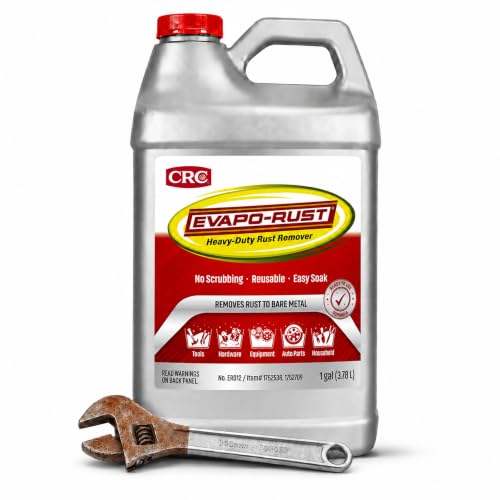
Evapo-Rust plays a different role from the other four. It is a water based soak, not a wipe on cleaner, so it does nothing for a stain fixed to a tub wall. Its place in a bathroom or kitchen project is the bucket beside the sink: drop in the rusted drain cover, faucet handles, hinges, shower parts, and metal fittings you have removed, leave them submerged until the rust lifts, then rinse and dry. The maker describes the formula as non toxic and biodegradable, with no acids, and the bath can be reused across several jobs before it loses strength.
Because there is no scrubbing and no abrasive, it is gentle on the underlying metal. For a remodel where several small metal pieces come off at once, a single gallon handles them in batches, which none of the wipe on bottles above can match.
Specs
- Form: Liquid soak, water based
- Size: 1 gallon, 128 oz
- Model: ER012
- Item weight: 8.65 lb; Dimensions: 4.5 x 7 x 10.5 in
- Uses: Removable metal parts, tools, cast iron cookware, hardware, hinges, faucet parts
- Notes: Reusable bath; no acids per the maker; parts must be submersible
Comparison Table
| Product | Form | Size | Strongest use | Main limit |
|---|---|---|---|---|
| Iron OUT Powder | Powder | 4.75 lb | Bowls, tubs, tanks, softener upkeep | Not for worn or chipped porcelain |
| Whink | Liquid | 32 fl oz | White sinks and toilet bowls | White porcelain only; handle with care |
| Bar Keepers Friend Soft Cleanser | Cream liquid | 26 oz | Tile, sinks, stainless steel, fixtures | May dull delicate finishes |
| CLR | Liquid | 28 oz | Rust plus calcium and lime buildup | Keep off stone, marble, colored grout |
| Evapo-Rust ER012 | Soak liquid | 1 gallon | Removable metal parts and hardware | Parts must come off and submerge |
Frequently Asked Questions
Can I use a rust remover on a fiberglass or acrylic tub?
Yes, with the right pick and a patch test. CLR names fiberglass among its surfaces, and Iron OUT is used on tubs and showers, but keep strong liquids off refinished tubs and off any worn or chipped finish, rinse promptly, and test a hidden corner before treating a wide area.
Will these removers damage chrome faucets and drains?
CLR lists chrome as a suitable surface when used as directed and rinsed promptly. The risk comes from long contact, so apply, watch the stain fade, and rinse with cold water rather than leaving any remover sitting on a plated finish while you do other chores.
Why does the rust stain keep coming back in my toilet and sink?
Recurring stains usually mean iron in the water supply, common with private wells. Cleaning removes the mark but not the source. A powder such as Iron OUT that also maintains a water softener, used on a routine, slows the return, and a softener service check helps if stains reappear within days.
Can I use a rust remover on natural stone or marble tile?
No pick in this group belongs on natural stone or marble. CLR excludes stone and marble outright, acid based cleansers can etch polished stone, and Whink is limited to white porcelain. Stone needs a cleaner made and labeled for stone, used exactly as its maker directs.
Is a soak remover worth it if my stains are on the tub itself?
Not for the tub wall, because a soak only works on items that can sit under the liquid. It earns its place when a project involves removable metal, such as drain covers, handles, and hinges, where it cleans every side at once with no rubbing and no abrasive contact.
Conclusion
For most bathrooms and kitchens, Iron OUT Powder is the first bottle to reach for, because it covers bowls, tubs, tile, and tanks and helps with upkeep where iron rich water keeps staining. Whink is the narrower answer for white porcelain alone, Bar Keepers Friend Soft Cleanser suits hands on cleaning of sinks and fixtures, and CLR is the match when lime and calcium share the surface with rust. Keep Evapo-Rust for metal parts that come off during a deep clean, match each formula to the surfaces its maker allows, and the orange marks will rinse away.
FAQ
Can I use a rust remover on a fiberglass or acrylic tub?
Will these removers damage chrome faucets and drains?
Why does the rust stain keep coming back in my toilet and sink?
Can I use a rust remover on natural stone or marble tile?
Is a soak remover worth it if my stains are on the tub itself?
More from Amazon
Programs that pair well with the guide above. Offers and eligibility are set by Amazon and may change.
Set up recurring deliveries of everyday items on eligible products. Terms and savings are set by Amazon.
Explore Subscribe & SaveCollect the home and kitchen items you want in one registry that guests can shop from.
Create a wedding registryFree shipping on eligible items, Prime Video and more. Eligible new members can start with a free trial.
Start a Prime free trialAudiobooks and podcasts to listen to on the go. Eligible new members can start with a free trial.
Try Audible freeAs an Amazon Associate we earn from qualifying purchases.