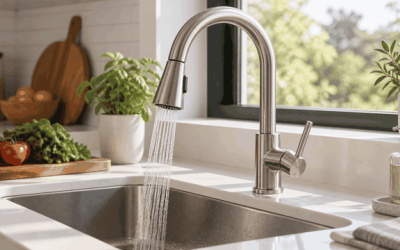
Touchless kitchen faucets have moved from luxury showrooms into the mainstream, and for good reason. Whether you’re wrestling with raw chicken on your cutting board, kneading bread dough, or simply tired of smearing grease and grime across your faucet handle, a motion-sensor faucet eliminates the need to touch anything with messy hands. The problem is that the market is now flooded with options ranging from budget-friendly imports to premium smart-home fixtures, making it difficult to separate reliable, long-lasting hardware from gimmicks that leak, misfire, or burn through batteries in a week.
This guide cuts through the noise. We’ve evaluated the leading touchless kitchen faucets based on sensor responsiveness, build quality, spray functionality, installation flexibility, and real-world usability. Below you’ll find our top recommendations, followed by a practical buying guide and answers to the questions buyers ask most. Whether you’re outfitting a farmhouse sink, a compact laundry room, or a full-scale kitchen remodel, these picks represent the best hands-free options available today.
Our top picks


As an Amazon Associate we earn from qualifying purchases at no extra cost to you.
🛒 Best Price Today on Amazon
Prime members get fast, free shipping on everything above, plus member-only deals. New members get a 30-day free trial — cancel anytime.
How to Choose a Touchless Kitchen Faucets for Hands-Free Convenience
- Sensor Reliability: Look for faucets with infrared or motion sensors that respond consistently within a half-second of hand movement. Cheaper sensors often lag, over-trigger, or fail to shut off promptly, which wastes water and frays your patience during daily use.
- Power Source: Most touchless faucets run on AA or AAA battery packs, typically lasting 6 to 12 months. Some premium models offer an AC adapter option. Battery-only is fine for most households, but consider whether you want to swap batteries twice a year.
- Spray Functionality: A pull-down sprayer with multiple modes — typically stream, spray, and sweep or blade spray — gives you flexibility for rinsing, filling pots, and cleaning the basin. Pay attention to hose length and whether the head retracts cleanly.
- Finish and Coating: Brushed nickel and spot-resistant stainless finishes hide fingerprints and water spots far better than polished chrome. If your household is busy or your sink sees heavy cooking use, a spot-resistant coating is worth prioritizing.
- Hole Configuration and Installation: Check the number of mounting holes your sink has and whether the faucet accommodates 1, 3, or 4-hole setups. Many touchless models include a deck plate or come with a matching soap dispenser, which can simplify both fit and aesthetics.
The Best Touchless Kitchen Faucets for Hands-Free Conveniences Reviewed
Moen Riley Spot Resist Stainless Touchless Faucet
Moen’s Riley combines reliable MotionSense Wave technology with Power Clean spray, delivering 50% more spray power than standard faucets. The Spot Resist Stainless finish is a standout for busy kitchens, and Moen’s build quality means this is a fixture you’ll likely have for a decade or more.
FORIOUS Touchless Kitchen Faucet
The FORIOUS offers impressive value with a responsive motion sensor and high-arc pull-down design that works equally well in farmhouse kitchens, laundry rooms, and RVs. Its brushed nickel finish resists corrosion, and the single-handle control keeps temperature adjustments simple.
APPASO Touchless Kitchen Faucet with Soap Dispenser
APPASO earns high marks for including a matching soap dispenser in the box, making this a smart pick for 1-to-4-hole sink configurations. The lead-free brass construction and dependable motion sensor make it a practical, well-rounded choice for standard kitchen remodels.
OWOFAN Touchless Pull Down Kitchen Faucet with LED Light
This OWOFAN model adds a temperature-indicating LED light — blue for cold, green for warm, red for hot — which is both functional and visually striking. The hands-free motion sensor and lead-free stainless steel build make it a solid choice for families who want a bit of smart flair without a premium price tag.
Moen Essie MotionSense Wave Touchless Faucet
The Moen Essie brings the same trusted MotionSense Wave sensor found on higher-end Moen models in a cleaner, more compact package. It’s an excellent pick for homeowners who want a name-brand touchless experience with a slimmer profile and straightforward installation.
Frequently Asked Questions
Do touchless kitchen faucets require electricity or batteries?
Nearly all touchless faucets run on battery power, usually four to six AA batteries housed in an under-sink pack. Some models offer an optional AC power adapter, but battery power remains the standard because it simplifies installation and works even during power outages.
How long do the batteries typically last?
On average, you can expect 6 to 12 months of battery life with normal household use. High-traffic kitchens may see closer to 6 months, while lighter use can stretch to a year or more. Most battery packs include a low-battery indicator to prevent surprise shutoffs.
Can I still use a touchless faucet manually if the batteries die?
It depends on the model. Some touchless faucets include a manual override mode, while others stop working entirely once the batteries die. If you’re concerned about reliability, look for a model that explicitly supports manual operation as a fallback feature.
Are touchless faucets harder to install than regular faucets?
Installation is similar to a standard pull-down faucet, with the added step of mounting the battery pack and sensor wire under the sink. Most homeowners can handle it with basic plumbing tools, though the under-sink wiring adds roughly 15 to 20 minutes to the job.
Final Thoughts
For shoppers who prioritize long-term reliability and brand support, the Moen Riley and Moen Essie stand out as the strongest overall picks, offering proven sensor technology and durable finishes. The APPASO is our top budget-friendly recommendation thanks to its included soap dispenser and versatile hole configuration. Whichever you choose, a touchless faucet brings genuine hygiene and convenience to your daily kitchen routine — making it one of the most practical upgrades you can make during a remodel or fixture replacement.