Key takeaways
- Convenience: You can rinse small amounts of soft food residue from plates instead of scraping every particle into the trash.
- Less wet trash: Grinding limited food scraps can reduce odors and leaking bags, particularly in warm weather.
- Potentially better treatment support: A septic-oriented model may dispense a treatment product intended to help break down food waste as it enters the tank.
- Useful for small, frequent scraps: Vegetable peelings, rice, small soft leftovers, and plate residue are easier to manage than bulky food waste.
- More refined operation: Premium disposals commonly offer better sound insulation and more grinding stages than entry-level models.
- Long-term convenience: For a busy household that dislikes countertop compost containers or food scraps in the trash, the daily improvement can be meaningful.
The Short Answer
It depends—but you should use a septic-safe garbage disposal system only if your septic tank is properly sized, routinely pumped, and your septic professional or local rules allow a disposal.
A “septic-safe” disposal does not make food scraps disappear. It grinds them into wastewater that enters your septic tank. That adds solids, water, and organic matter to a system that already needs time to separate waste and digest it. A disposal with a septic enzyme or conditioning feature may help, but it does not replace sensible use or regular pumping.
Our top picks
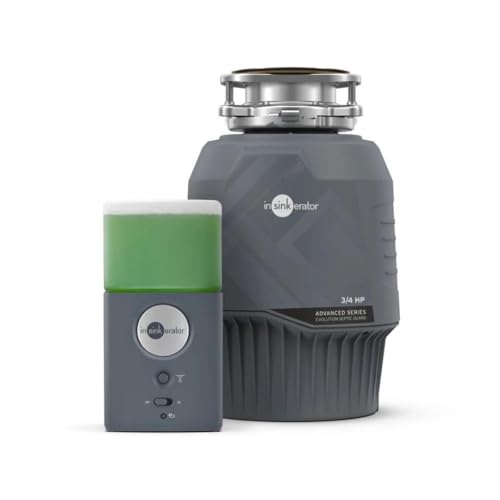
 InSinkErator Badger 5 Garbage Disposal with Power
- Finish: black
- Material: Stainless Steel
- Voltage: 120 volts
As an Amazon Associate we earn from qualifying purchases at no extra cost to you. Ratings are shown as listed on Amazon.
For many households, the best answer is still to scrape plates into the trash or compost bin. If convenience matters more and your system is in good shape, a septic-oriented disposal can be a reasonable upgrade. In 2026, the key question is less “Is this disposal septic safe?” and more “Can my septic system handle the extra load?”
What You Actually Get
A septic-safe garbage disposal is usually a standard food-waste disposer with an added mechanism intended to support septic treatment. Depending on the model, that may include an automatic enzyme cartridge, a dosing system, or a manufacturer-approved treatment designed to enter the waste stream in small amounts.
For example, the InSinkErator Evolution Septic Guard is a 3/4-horsepower continuous-feed disposal with a BOOST system and a septic-focused treatment feature. It is positioned as the premium option of the two related products here, with a listed price of about $279.99. A disposal in this class is generally larger and quieter than a basic unit, and it may include upgraded grinding stages, sound insulation, and jam-assist features.
The InSinkErator Badger 5, by contrast, is a conventional 1/2-horsepower continuous-feed disposal with a power cord. Its listed price is about $109.99. It can grind ordinary food scraps, but it is not the same thing as a septic-specific system. It may be suitable for a home with a septic tank if the owner uses it sparingly and follows the tank manufacturer’s guidance; it does not provide a special septic treatment feature.
Most under-sink disposals fit a standard sink flange, but compatibility is not automatic. Before buying, check the sink opening, mounting assembly, drain connection, dishwasher inlet, cabinet clearance, and electrical setup. Typical units are roughly 6 to 9 inches wide and 11 to 13 inches tall, with heavier premium models often weighing around 20 to 30 pounds. Measure the space beneath the sink, especially if you have a low cabinet shelf or a shallow drain line.
Horsepower is not a direct measure of how septic-friendly a disposal is. It mainly affects grinding capacity and motor strength. A stronger motor can process food more easily, but it can also encourage a household to send more waste down the drain.
Pros
- Convenience: You can rinse small amounts of soft food residue from plates instead of scraping every particle into the trash.
- Less wet trash: Grinding limited food scraps can reduce odors and leaking bags, particularly in warm weather.
- Potentially better treatment support: A septic-oriented model may dispense a treatment product intended to help break down food waste as it enters the tank.
- Useful for small, frequent scraps: Vegetable peelings, rice, small soft leftovers, and plate residue are easier to manage than bulky food waste.
- More refined operation: Premium disposals commonly offer better sound insulation and more grinding stages than entry-level models.
- Long-term convenience: For a busy household that dislikes countertop compost containers or food scraps in the trash, the daily improvement can be meaningful.
Cons
- It increases septic loading: Every ground scrap becomes additional solids in the septic tank. That can shorten the interval between pump-outs.
- “Septic safe” is not a guarantee: An enzyme feature cannot correct an undersized tank, a failing drainfield, excessive water use, or poor maintenance.
- Higher purchase cost: A septic-oriented 3/4-horsepower model may cost around $250 to $350 before installation, compared with roughly $100 to $150 for a basic disposal.
- Ongoing treatment expense: If the system uses replaceable cartridges, budget for periodic replacements. The frequency depends on the product and usage.
- More water enters the tank: Running the disposal requires water, and high-volume or long-running use adds unnecessary hydraulic load.
- Maintenance remains essential: You still need septic inspections and pumping according to your tank, household size, and local professional’s recommendation.
- Some foods remain poor choices: Grease, cooking oil, coffee grounds, fibrous peels, bones, eggshells, pasta, and large quantities of starchy food can create problems or add solids quickly.
Who Should Buy It
A septic-safe disposal makes the most sense for a homeowner who has a healthy, adequately sized septic system and wants limited, convenient use rather than a replacement for trash or composting. It is especially reasonable when the household produces small amounts of food waste, already follows water-use best practices, and is willing to pay for a premium appliance and treatment cartridges.
Choose a model such as the Evolution Septic Guard if quiet operation, stronger grinding performance, and the integrated septic feature justify a price near $280. It is the more purposeful choice for someone specifically shopping for septic compatibility. Confirm that the treatment cartridge is available and that your septic service provider is comfortable with the product.
Buy a standard model such as the Badger 5 if your priority is a lower upfront price near $110 and you will use it conservatively. It may handle occasional plate scrapings, but you should not treat it as an equivalent substitute for a septic-specific disposal.
Who Should Skip It
Skip a garbage disposal if your septic tank is overdue for pumping, frequently backs up, has sewage odors, or has a drainfield problem. A disposal can add stress to a system that already needs repair. Do not install one without checking local codes, a home warranty or insurance requirements, and any restrictions from your septic installer.
It is also a poor fit for households that cook heavily, discard large quantities of food, or expect to send nearly everything down the drain. A compost pail, municipal organics collection, or ordinary trash service will usually be cheaper and easier on the septic system. Renters should obtain permission before changing the sink plumbing or electrical connection.
Cheaper Alternatives
| Option | Cost | Trade-off |
|---|---|---|
| Countertop compost container | $15–$60 | Lowest-cost option, but it needs frequent emptying and can develop odors. |
| Outdoor compost bin | $40–$200 | Keeps food out of the septic system, but requires outdoor space and regular management. |
| Municipal organics service | $0–$35 per month | Very convenient where available; service rules may limit accepted foods. |
| Scrape-and-trash method | $3–$15 per month for extra bags | Simple and septic-friendly, but increases trash volume and can cause odors. |
| Basic garbage disposal | $100–$150, plus installation | Less expensive than a septic-specific model, but it offers no special septic treatment feature. |
FAQ
Can I use a regular garbage disposal with a septic tank?
Possibly, but only in moderation and only if your septic professional approves. A regular disposal does not automatically damage a septic system, yet it sends additional solids and water to the tank. Use it for small, soft scraps, run cold water while operating it, and avoid treating it as a food-waste chute.
Does a septic-safe disposal eliminate the need for pumping?
No. Septic treatment features may support the handling of food waste, but they do not remove accumulated sludge or scum. Pumping remains necessary, with the schedule determined by tank size, household occupancy, water use, and the amount of solids entering the system. Ask a septic professional for a schedule rather than relying on a product claim.
What should never go in a septic garbage disposal?
Keep grease, oil, fat, coffee grounds, bones, shells, fibrous foods, large amounts of pasta or rice, harsh chemicals, and nonfood items out of the disposal. These materials can add solids, clog plumbing, interfere with treatment, or contribute to drainfield problems. Even acceptable scraps should be limited.
Is the more expensive septic model worth it?
It can be worth it if you want quieter operation, a stronger motor, upgraded grinding, and an integrated treatment feature—and your septic system is suitable for a disposal. It is not worth paying extra if the tank is poorly maintained or if your household can easily compost or discard scraps. The most septic-friendly disposal is the one you use sparingly and maintain properly.