Key takeaways
- The phrase high carbon stainless steel shows up on almost every knife block in 2026, which is exactly why it deserves a skeptical look.
The phrase high carbon stainless steel shows up on almost every knife block in 2026, which is exactly why it deserves a skeptical look. It describes a compromise: more carbon than basic stainless for a firmer, sharper edge, plus enough chromium to resist rust. It does not tell you the hardness, the exact alloy, or how well the maker heat-treated the blade. A shopper who types this keyword is usually trying to avoid soft, cheap steel without paying for specialty carbon knives that rust if left wet, and that is the decision this guide supports.
The six sets below all name high carbon stainless steel in the title, in German, Japanese, or unspecified varieties. They range from a six-piece starter to a sixteen-piece block, and from brand-name hollow-handle knives to lesser-known Japanese-style sets. Each description relies only on listing text, so edge retention, hardness, and long-term corrosion resistance are not claimed here. Use the comparison to pick a format and then verify the details on the full product page.
Quick Picks
Our top picks




As an Amazon Associate we earn from qualifying purchases at no extra cost to you.
| Product | Best for | Key spec from the title |
|---|---|---|
| imarku Japanese Knife Set with Block | Japanese-style gyutou with a sharpener | Japanese high carbon stainless, precision-forged gyutou, built-in sharpener |
| Yatoshi 15-Piece Block Set | Warm wood look | High carbon stainless, pakkawood handles, acacia wood block |
| Astercook 6-Piece Block Set | Small counters | High carbon stainless steel, wood grain handle, dishwasher safe |
| 15-Piece German High Carbon Set with Sharpener | Gift buyers | High carbon German stainless, built-in sharpener, dishwasher safe |
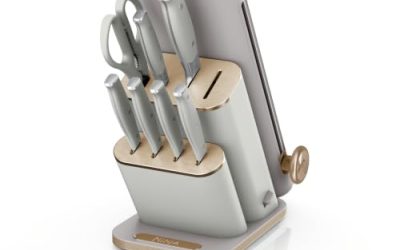
| Cuisinart 15-Piece Hollow Handle Set (C77SS-15PK) | Name-brand stainless look | Hollow handles, taper-ground high-carbon stainless |
| HOSHANHO 16-Piece Knife Set | Largest Japanese-style block | 16 pieces, Japanese high carbon stainless, block |
How to Choose
What high carbon stainless really means
Stainless steel always contains some carbon, and the high carbon label usually signals a range somewhere near 0.5 to 1 percent carbon along with at least 10.5 percent chromium for corrosion resistance. More carbon generally makes the steel harder, so it holds an edge longer but can chip if abused. The label alone does not guarantee quality, because heat treatment and blade geometry matter just as much as the alloy. When a title adds a named origin such as German or Japanese, it gives a rough stylistic cue: tougher and more forgiving versus harder and finer.
Check hardness and construction cues
Real spec sheets sometimes list hardness on the Rockwell C scale, where roughly 54 to 58 HRC is typical for German-style kitchen knives and 58 to 62 HRC is common for Japanese-style blades. If a listing does not state it, do not assume a figure. Look instead for forged versus stamped construction, a full tang running into the handle, and rivets or a seamless handle that will not trap water. Precision-forged and taper-ground wording are construction hints worth noting. A forged blade is shaped from a heated billet and usually has a thick bolster, while a stamped blade is cut from sheet and tends to be lighter. Neither is automatically better, but they feel different in the hand, and the difference is worth knowing before you choose.
Set size and sharpening plan
Six to eight pieces fit most home cooks, while 15 and 16 piece sets add steak knives and shears. A built-in block sharpener keeps things convenient but removes metal quickly. A honing steel or ceramic rod is gentler. Whichever you choose, schedule a sharpening session every few months, because the steel type affects how long between sessions but never removes the need for them. A simple routine is a few honing strokes before heavy prep and a proper sharpening on a stone or by a professional when the knife starts to slip on tomato skins.
Care, dishwashers, and block material
High carbon stainless resists rust far better than plain carbon steel, but it is not rustproof. Hand washing and immediate drying prolong the life of any set, even those marked dishwasher safe. Acacia and pine blocks add character but need a dry spot, and a block with open slots should sit away from the sink. Where budget sets cut corners is often in the handle fit, the quality of the shears, and the block, so inspect those closely in photos. What to ignore: gift boxes, adjectives like professional, and hardness figures that appear in marketing copy without a test source.
The 6 Best Options
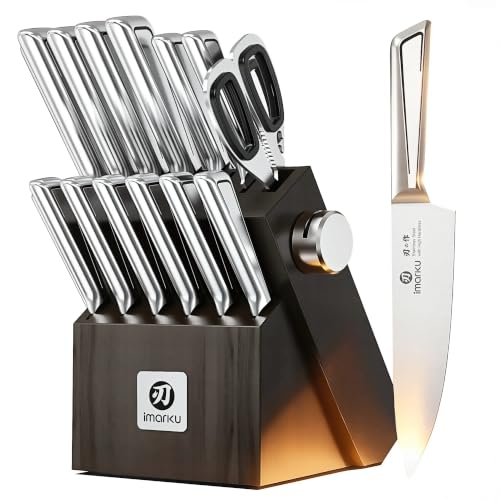
imarku Japanese High Carbon Stainless Steel Knife Set with Block
This block set names Japanese high carbon stainless steel, a precision-forged gyutou chef knife, and a built-in sharpener. The title leans on an ultra-sharp edge, so it is aimed at cooks who want a Japanese-style profile with an easy upkeep feature. The gift box named in the title also makes it a tidy present for someone who cooks often and has been using the same dull block for a decade.
- Precision-forged construction is stated in the title.
- The built-in sharpener means no separate tool is needed for basic upkeep.
- Trade-off: a block sharpener is coarse, and the hard Japanese-style edge is less forgiving of bone or twisting.
Who should skip it: cooks who want a German-style, tougher blade or a larger piece count.
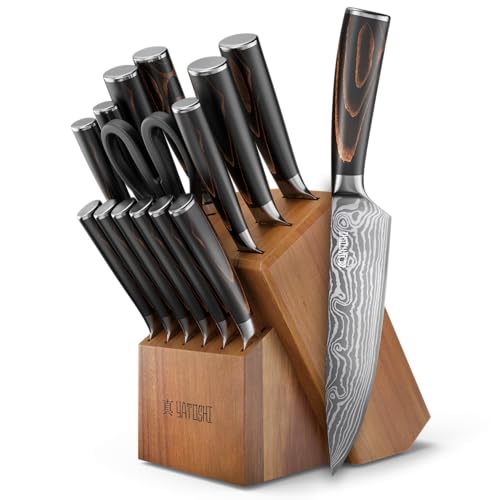
Yatoshi 15-Piece Block Set
Yatoshi markets this as a professional set with high carbon stainless blades, pakkawood handles, and an acacia wood block. It reads as a style-forward choice for people who want the countertop to look good as well as work well, with rust resistance stated in the title. It is a good fit for an open kitchen where the block stays on display, and for a cook who enjoys cutting on a wooden board alongside wooden handles.
- Pakkawood handles and an acacia block give a warm, upscale look.
- Fifteen pieces provide broad coverage for prep and serving.
- Trade-off: the title does not mention a sharpener, so budget for a honing steel.
Who should skip it: minimalists who want only a few knives in a drawer.
Astercook 6-Piece Block Set
The smallest set in the group lists high carbon stainless steel, a wood-grain handle, a block, and dishwasher-safe care. It suits small kitchens, dorms, and first apartments where a huge block would feel excessive. Six pieces cover a chef, paring, bread, and utility need. For a person cooking for one or two, that is usually everything the week demands, and the lighter footprint makes cleanup and storage easy.
- A compact block fits tight counters.
- High carbon stainless is named in the title.
- Trade-off: with six pieces there is little room for extras like shears or a large steak set.
Who should skip it: families that want table knives and a complete kit.
15-Piece German High Carbon Stainless Set with Sharpener
This unbranded-looking listing names high carbon German stainless steel, a built-in sharpener, a knife block, and dishwasher-safe care, and it is promoted as a gift. It is a convenience-first set, giving a full block with upkeep included. A relative setting up a new kitchen would get a ready-to-use set without further shopping, which is the point of the Father’s Day style gift wording in the title.
- German stainless suggests a tougher, more forgiving edge.
- The built-in sharpener keeps the block self-contained.
- Trade-off: the title does not highlight a brand name, so confirm the seller details before buying.
Who should skip it: shoppers who want a well-known maker on the handle.
Cuisinart 15-Piece Hollow Handle Block Set
The C77SS-15PK uses precision taper-ground high-carbon stainless blades with featherweight hollow handles. It is the established-brand choice here and looks modern in a stainless kitchen. Light handles can lessen fatigue during long prep sessions, which suits batch cooks and anyone who chops a lot of vegetables at a time. The model number in the title makes it easy to match against the maker’s own product page.
- Hollow handles keep the knives light, according to the title.
- Taper-ground blades are named as a construction feature.
- Trade-off: hollow handles change the balance compared with traditional riveted grips.
Who should skip it: cooks who prefer a heavier, handle-forward balance.
HOSHANHO 16-Piece Knife Set with Block
HOSHANHO lists a 16-piece Japanese-style set in Japanese high carbon stainless steel with a block, aimed at multipurpose cooking. It offers the largest piece count in the group, so it covers more roles than the compact sets. Anyone who wants a Japanese-style lineup with room for steak knives and shears in the same block will find the count appealing, as long as the counter can host it.
- Sixteen pieces give the broadest coverage of the six.
- Japanese high carbon stainless is named in the title.
- Trade-off: the title does not mention a sharpener, and the block will need counter space.
Who should skip it: households with small counters or those who dislike large blocks.
Which One Fits Your Situation
You want a Japanese-style set with built-in upkeep
The imarku Japanese High Carbon Stainless Steel set pairs a gyutou with a sharpener in the block, so it is the closest match. The HOSHANHO 16-Piece is the alternative if you want the same Japanese style in a bigger block.
You want something small and tidy
The Astercook 6-Piece fits compact kitchens and still names high carbon stainless steel in the title. It is the easiest to wash and dry by hand after dinner, which helps the steel last.
You like the look of wood on the counter
The Yatoshi 15-Piece, with pakkawood handles and an acacia block, is the most decorative option and works well as a housewarming gift.
You prefer a known brand
The Cuisinart 15-Piece Hollow Handle set offers an established name and a lightweight stainless design. The 15-Piece Cuisinart with forged triple rivet and a white finish is a second option if you prefer traditional handles.
Common Mistakes
- Assuming high carbon stainless means the same quality in every set.
- Expecting a rust-free blade after leaving it wet in the sink.
- Using a block sharpener as the only form of maintenance.
- Buying the largest set when only four or five knives will be used.
- Ignoring handle construction, especially seams that can trap moisture.
Specs and Terms Explained
Carbon content
Carbon is what lets steel harden. More carbon generally means a harder blade that takes a finer edge, but it also makes the steel more brittle and more likely to rust unless chromium balances it. The label high carbon stainless is a compromise term and rarely comes with a percentage.
Chromium and stain resistance
To count as stainless, steel typically carries about 10.5 percent chromium or more. That chromium forms a thin protective layer against rust. If a block sits in a humid kitchen near the sink, higher stain resistance matters more than a slightly harder edge.
German versus Japanese style
German-style sets usually use thicker blades with an edge angle around 20 degrees per side, and they cope well with heavy chopping. Japanese-style sets lean thinner with an angle closer to 15, trading toughness for slicing finesse. The imarku Japanese set follows the second approach, while the 15-Piece German set follows the first.
Sharpener included
Several of the blocks here bundle a sharpening rod or a built-in slot. A steel rod only realigns the edge, while a slot with abrasive wheels removes metal. Knowing which one you have helps you set your expectations for how often to use it.
Who Should Skip These
- Buyers who want a named steel. If you want to see an alloy such as a specific Japanese grade on the label, this broad category may frustrate you, since many blocks only say high carbon stainless.
- Cooks with a small drawer-only kitchen. The 15- and 16-piece blocks need a counter spot, and you may prefer a compact setup.
- People who want zero maintenance. Better edge retention only appears when the blades are dried promptly and honed occasionally.
- Anyone who already owns a good chef knife. A single upgrade blade often adds more than a full block of knives you will rarely open.
Setup and Care Tips
- Season your routine, not the blade: wipe after each use, and never leave knives wet in the sink.
- Run a honing rod over the edge at a shallow angle every few meals to keep it aligned.
- Use a whetstone or a guided sharpener once or twice a year to restore the edge, matching the angle to the style of the set.
- Keep wood blocks dry and clean the slots occasionally with a soft brush to prevent grit.
- Avoid twisting or prying with the tip, since harder high carbon blades can chip rather than bend.
Related guides
- Bathroom Makeup Organizer With Dustproof Lid
- Stackable Bathroom Storage Bins With Lids
- Widespread Bathroom Faucets 8 Inch
Frequently Asked Questions
Is high carbon stainless steel better than regular stainless?
It generally holds an edge longer because of its higher carbon content, but it can be more brittle. Heat treatment and design matter as much as the label.
Will high carbon stainless steel rust?
It resists rust better than carbon steel but is not immune. Dry the blades after washing and keep them out of standing water.
Which is better, German or Japanese high carbon stainless?
German-style blades are usually tougher and easier to maintain, while Japanese-style blades are harder and finer. Choose based on how carefully you cut and how you sharpen.
Do I need to hand wash dishwasher-safe knives?
You do not have to, but hand washing is gentler on edges and handles. It also reduces the chance of rust spots and loosened handles over time.