Key takeaways
- When choosing a bathroom faucet, the real decision is not simply whether you prefer a modern or traditional style. You are also choosing how many holes must be drilled in the sink or countertop, how much space the faucet will…
When choosing a bathroom faucet, the real decision is not simply whether you prefer a modern or traditional style. You are also choosing how many holes must be drilled in the sink or countertop, how much space the faucet will occupy, and how difficult it will be to replace later. The single hole vs widespread bathroom faucet hole drilling pattern question matters because the wrong configuration can make an otherwise suitable vanity unusable without a new countertop or an extra deck plate.
A single-hole faucet combines the spout and handles in one compact opening. A widespread faucet uses three separate openings: one for the spout and one for each handle. Most widespread bathroom faucets use an adjustable spread of approximately 8 to 16 inches from handle center to handle center, although the exact range depends on the model. For a 2026 bathroom remodel, either pattern can be a smart choice if it matches the sink, vanity, plumbing, and daily habits.
Our top picks


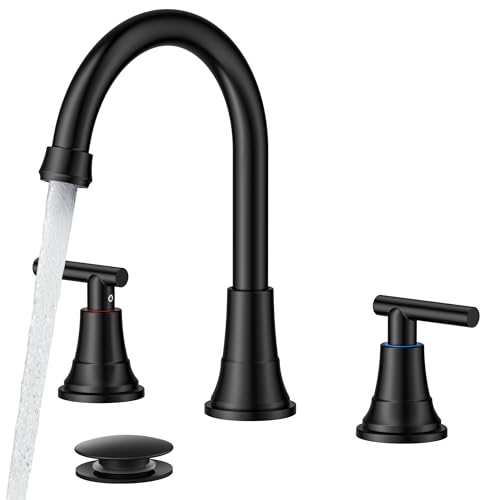
As an Amazon Associate we earn from qualifying purchases at no extra cost to you. Ratings are shown as listed on Amazon.
Quick Verdict
Choose a single-hole faucet when you want a compact, straightforward installation, a clean contemporary appearance, and fewer parts to maintain. It is usually the better fit for small vanities, powder rooms, apartments, and homeowners who want to control installation costs.
Choose a widespread faucet when you have a larger vanity, want more flexibility in handle placement, or prefer a traditional, furniture-like appearance. Widespread faucets also leave more room around the spout, which can make hand washing more comfortable on a generous countertop.
Before buying, measure the existing holes. A three-hole sink cannot normally accept a single-hole faucet without a deck plate, while a single-hole countertop cannot accept a widespread faucet unless additional holes are drilled. Drilling stone, quartz, porcelain, or solid-surface material should generally be handled by a qualified installer.
Side by Side
| Factor | Single hole | Widespread |
|---|---|---|
| Comfort | Controls sit close to the spout; convenient with one hand. | Handles are spaced apart, giving more elbow and hand room. |
| Durability | Fewer components and connections can mean fewer potential failure points. | Separate supply lines and valves add components but allow individual replacement. |
| Typical price range | About $40–$250 for the faucet; premium designs can cost more. | About $60–$350; designer and solid-brass models may exceed that range. |
| Maintenance | Usually quicker to clean and simpler to access below the counter. | More seams and parts to wipe; separate valves can complicate service. |
| Space needed | Often fits a 4-inch or smaller mounting area, depending on the model. | Commonly needs an 8- to 16-inch center-to-center spread. |
| Look | Streamlined, minimalist, and contemporary. | Balanced, substantial, and often traditional or transitional. |
| Resale appeal | Broad appeal in compact and modern bathrooms. | Strong appeal in larger, custom, or traditionally styled bathrooms. |
| Best for | Small vanities, powder rooms, rentals, and easy replacements. | Primary baths, wide countertops, and homeowners wanting design flexibility. |
| Installation | One faucet body and usually two flexible supply connections. | Three deck components plus supply connections and more alignment work. |
Where Single Hole Wins
The biggest advantage of a single-hole faucet is efficiency. The spout and temperature control occupy one mounting opening, so the faucet works well on a narrow vanity or a compact sink with limited deck space. Many single-hole models are designed for a mounting opening around 1 1/4 to 1 3/8 inches, but the manufacturer’s specification always takes priority.
Installation is generally easier because the faucet is installed as one assembled unit. There are fewer pieces to align, and the connections beneath the sink are easier to identify. That can reduce labor time during a replacement, especially when the old faucet is corroded or the vanity cabinet provides little room to work.
Cleaning is another practical benefit. A single faucet body has fewer gaps around the deck, and the close-set handle is easy to wipe in one pass. For households that frequently deal with toothpaste residue, soap film, or hard-water deposits, the simpler footprint can save time.
Single-hole designs also make sense when you want a clearly modern look. Lever handles are intuitive, and a single control can be operated with one hand. That is useful when a parent is holding a child, someone has messy hands, or accessibility is a priority.
There is one important limitation: a single-hole faucet may not cover an existing three-hole pattern. A deck plate can bridge the unused openings, but it must be wide enough and compatible with the faucet base. A plate also adds a visible layer between the faucet and countertop, which some homeowners dislike.
Where Widespread Bathroom Faucet Hole Drilling Pattern Wins
A widespread layout earns its space through flexibility and visual presence. Because the handles are separate from the spout, you can position them for comfortable reach rather than accepting the fixed arrangement of a single-hole faucet. The standard 8-inch configuration is common, but adjustable models may accommodate a broader range.
This pattern is especially useful on countertops 30 inches wide or larger, where a compact faucet can look undersized. Separate handles create visual balance across a broad vanity and coordinate naturally with framed mirrors, furniture-style cabinets, and traditional lighting.
Widespread faucets can also provide more clearance around the water stream. The handles are out of the way, leaving the area beneath the spout open for washing hands, rinsing a small item, or filling a container. The benefit is noticeable when the sink basin is large and the counter has enough room to support the wider layout.
Replacement flexibility is another advantage. If one handle valve eventually develops a problem, the valve may be serviceable or replaceable independently of the spout, depending on the design and availability of parts. However, widespread faucets have more connections and seals, so there are also more places where a leak could develop over time.
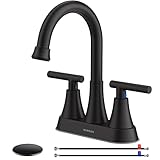
Product listings illustrate the usual market difference without making the choice for you. A Brushed Nickel Waterfall Bathroom Faucet for Sink 3 Hole Widespread is listed at $41.98, while the FORIOUS Black Bathroom Faucet 3 Hole, 8" Widespread Bathroom Vanity Faucet is listed at $39.99. At these prices, inspect the included drain, supply lines, finish instructions, warranty, and required hole spacing rather than assuming every three-hole faucet is interchangeable.
Cost Over 5 Years
For a realistic five-year comparison, separate the faucet price from installation and replacement supplies. A basic single-hole faucet may cost about $40–$100, with midrange models commonly reaching $100–$250. A basic widespread faucet may cost about $60–$150, while midrange options often cost $150–$350.
Professional installation commonly adds roughly $150–$400 for either pattern, depending on access, local labor rates, shutoff-valve condition, and whether the old faucet must be removed. Widespread installation can trend higher because it involves three deck components and more connections. If new holes must be drilled in a stone countertop, expect a separate fabrication charge that can add approximately $100–$300 or more.
Over five years, a straightforward single-hole replacement might total approximately $200–$650 for the faucet, basic supplies, and installation. A widespread replacement might total approximately $250–$850. These are planning ranges, not guarantees; a DIY installation can reduce labor, while damaged shutoff valves or countertop modifications can raise the total substantially.
Do not confuse a faucet’s hole pattern with a paper hole punch. For example, the Swingline 1 Hole Punch, 5 Sheet Capacity Hole Punch, Single Hole Paper Punch, Chrome (74005) is listed at $4.59, and the Single Hole Punch 1/4” Paper Hole Puncher for Crafts with a blue soft-grip handle is listed at $4.99. Those products make a “single hole” sound familiar, but they are unrelated to plumbing dimensions, faucet mounting, or countertop drilling.
Which One for Your Home
Small apartment
Choose a single-hole faucet in most small apartments. It uses less deck space, suits compact 18- to 24-inch vanities, and is usually easier to replace when the bathroom has a tight cabinet. Confirm whether the existing sink has one hole or three before ordering. If it has three, select a compatible deck plate or purchase a faucet designed for that configuration.
Family with kids or pets
A single-hole lever faucet is usually the practical choice because one control is easy to operate with one hand and has fewer areas where grime collects. Select a finish with clear care instructions, and avoid assuming that a dark or brushed finish will hide every water spot. A widespread model can still work well if adults prefer widely separated handles and the vanity is large enough.
Rental
Match the existing drilling pattern and prioritize reliable, uncomplicated replacement. A single-hole faucet is often less expensive to install, but a three-hole widespread replacement may be the least disruptive option if the sink already has three openings. Keep the removed faucet and any deck plate so the bathroom can be returned to its original condition later.
Long-term home
Choose based on the vanity and your preferred reach, not only the initial price. A widespread faucet is a strong choice for a spacious primary bathroom where you want a substantial, coordinated design. A single-hole faucet is better if easy cleaning, accessibility, and future simplicity matter most. In either case, favor standard connections, a documented warranty, and readily available replacement cartridges.
FAQ
Can I replace a widespread faucet with a single-hole faucet?
Usually, yes, if the single-hole faucet includes or accepts a deck plate large enough to cover the two unused holes. Measure the distance between the existing holes and compare it with the plate’s length and width. If the holes remain visible, replacing the sink or countertop may be necessary.
Can I install a widespread faucet in one hole?
No. A typical widespread faucet requires three separate openings: one for the spout and two for the handles. Additional holes may be drilled in some countertop materials, but the work should be done by a professional to avoid cracking, chipping, or weakening the surface.
Is a single-hole faucet cheaper than a widespread faucet?
Often, but not always. Single-hole models generally have fewer parts and can cost less to install. Premium single-hole faucets may cost more than basic widespread models, so compare the complete package, including the drain assembly, supply lines, warranty, and labor.
What hole spacing is standard for a widespread bathroom faucet?
An 8-inch center-to-center spread is common, measured from the center of the hot-water handle hole to the center of the cold-water handle hole. Some widespread faucets adjust from approximately 8 to 16 inches. Always measure the existing sink or countertop and verify the product’s minimum and maximum spacing before purchase.