Key takeaways
- Choosing between a thermostatic and pressure-balance shower valve is less about picking the “better” technology and more about deciding how much temperature control, convenience, and installation flexibility your household needs. Both valve types help prevent sudden temperature changes when another…
Choosing between a thermostatic and pressure-balance shower valve is less about picking the “better” technology and more about deciding how much temperature control, convenience, and installation flexibility your household needs. Both valve types help prevent sudden temperature changes when another fixture uses water, but they do it differently.
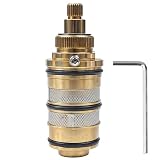
A pressure-balance valve reacts to changes in hot- and cold-water pressure. A thermostatic valve senses water temperature and adjusts the hot and cold supplies to maintain a selected setting. That distinction matters if your priority is a shower that stays close to one temperature from start to finish.
Our top picks

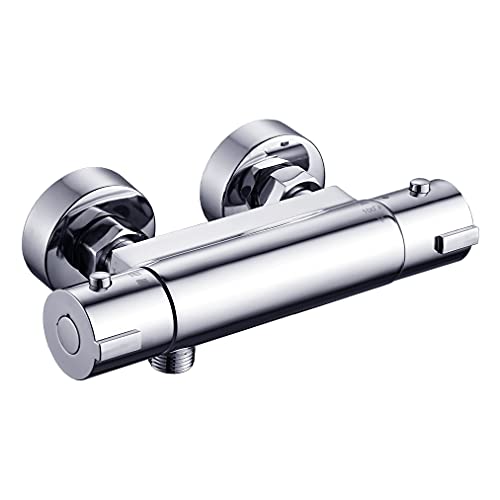

As an Amazon Associate we earn from qualifying purchases at no extra cost to you. Ratings are shown as listed on Amazon.
For 2026 remodels, the practical decision usually comes down to three questions: How important is precise temperature control? How much space and budget are available behind the wall? And are you replacing an existing valve or building a new shower?
Quick Verdict
Choose a thermostatic valve if constant temperature is the main goal, multiple shower outlets will run together, or children and older adults will use the shower. It offers more precise control and often lets you set water temperature separately from flow. The trade-offs are higher purchase cost, a larger in-wall footprint, and potentially more complicated installation.
Choose a pressure-balance valve if you want dependable anti-scald protection at a lower cost, especially in a standard single-outlet shower or a small bathroom renovation. It is simpler, widely available, and often easier to replace. However, it balances pressure rather than directly measuring temperature, so the water may still become warmer or cooler when the home’s incoming water temperature changes.
Neither valve can overcome an undersized water heater, poorly adjusted plumbing, or extreme pressure problems. Proper installation and an accessible service stop can matter as much as the valve type.
Side by Side
| Factor | Thermostatic valve | Pressure-balance valve |
|---|---|---|
| Comfort | Holds a more precise selected temperature, commonly within about 1–2°F after setup | Reduces hot or cold surges caused by pressure changes, but temperature can drift |
| Constant-temperature performance | Best choice because a temperature-sensing element adjusts the mix | Good protection against pressure swings; not a true constant-temperature system |
| Durability | Often 10–20 years with clean water and replacement cartridges as needed | Often 10–20 years; fewer controls can mean a simpler service path |
| Typical valve price | About $150–$600, with premium multi-outlet systems costing more | About $50–$250 for common residential rough-in valves |
| Maintenance | Temperature cartridge and filters may need cleaning or replacement | Pressure-balancing spool or cartridge may need cleaning or replacement |
| Space needed | Usually a larger rough-in body; allow roughly 6–10 inches of wall width, depending on the system | Often compact; many single-outlet bodies fit within roughly 4–7 inches of wall width |
| Look and controls | Separate temperature and volume controls are common and easy to use | Usually one handle controls both temperature and flow |
| Resale appeal | Strong in primary baths, luxury remodels, and homes with multiple outlets | Familiar, practical, and attractive to buyers who prioritize simple maintenance |
| Best for | Families, frequent shower users, rain heads, hand showers, and body sprays | Standard showers, rentals, budget renovations, and straightforward replacements |
Where Thermostatic Wins
A thermostatic valve is the stronger choice when the phrase “constant temperature” means genuinely steady comfort. Inside the valve, a temperature-sensitive cartridge responds to the mixed water temperature and adjusts the hot and cold inlets. If cold-water pressure drops or the incoming hot water changes slightly, the cartridge can compensate more directly than a pressure-balancing spool.
This is especially useful in a busy home. Someone flushing a toilet or starting a washing machine may still affect the shower, but a properly sized thermostatic system is better equipped to correct the resulting change. The benefit is even more noticeable when a shower has a rain head, handheld sprayer, and body jets running at the same time.
Thermostatic controls also make daily use easier. One control can set temperature, while another turns water on and adjusts volume. You can leave the temperature setting near a comfortable level instead of searching for it every morning. Many models include a safety stop around 100°F, with an override required for hotter water. The installer must still set the stop correctly for the home and users.
For households with young children, this extra control can reduce the chance of an unexpectedly hot shower. It is not a substitute for supervision, but it provides a useful layer of protection. Older adults and people with limited dexterity may also prefer a clearly marked temperature dial.
The disadvantages are real. A thermostatic valve commonly costs two to four times as much as a basic pressure-balance rough-in, and the trim package can add substantially more. The valve body may require deeper or wider framing space, particularly in a multi-outlet setup. If you are converting an existing pressure-balance shower, the wall may need to open for new supply lines, a larger valve, or additional volume controls.
Do not confuse every temperature-control product with a shower valve. For example, the $13.99 HEATIT ET-21 is a freeze-protection thermostat outlet that switches at 38°F on and 50°F off; it is not designed to regulate shower temperature. Similarly, the $69.99 MISSMIN 4 inch Thermostatic RV Shower Faucet Valve is an example of a compact thermostatic faucet category, but RV plumbing and residential wall systems have different installation requirements.
Where Pressure Balance Shower Valve for Constant Temperature Wins
A pressure-balance shower valve remains the practical choice for many homes. Its piston or spool responds when hot- or cold-water pressure changes, restricting the stronger side to keep the mixture from becoming suddenly scalding or cold. It does not actively read the final water temperature, but it provides the basic anti-scald function required in many residential applications.
Its biggest advantages are cost and simplicity. A standard pressure-balance valve often uses one rough-in body and one handle, making it a natural replacement for an aging single-control shower. Many models are available in common configurations, and replacement cartridges can usually be found for established brands.
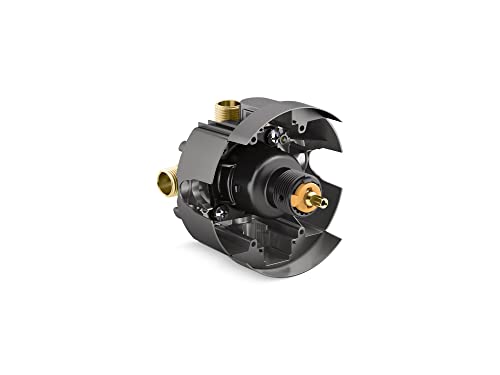
The KOHLER 8304-K-NA Rite-Temp pressure-balancing valve body and cartridge kit, listed at $89.99, illustrates the price range for a recognizable pressure-balance system. The Moen PosiTemp 2590 rough-in valve with stops is listed at $115.68 and shows how integrated service stops can make future maintenance more convenient. These are reference points, not guarantees of total project cost: trim, labor, shutoff changes, tile repair, and permits may cost more than the valve itself.
Pressure balance is particularly suitable when only one shower outlet will operate at a time. It also makes sense in a small apartment bathroom where wall space is limited or in a rental property where low replacement cost and familiar parts matter more than independent temperature and volume control.
Its limitation is important: pressure balance does not correct every temperature fluctuation. If the water heater cycles, the cold-water supply temperature changes significantly, or the shower flow is very low, the user may notice temperature movement. A thermostatic valve is the better answer when “constant” means the smallest possible variation.
Cost Over 5 Years
For a basic shower, a pressure-balance valve typically costs $50–$250 for the rough-in body, while a thermostatic valve typically costs $150–$600. Trim can add $75–$500 or more, and professional installation commonly adds $300–$1,200 depending on access and wall repairs.
Over five years, a pressure-balance installation might total roughly $500–$1,700, including a midrange valve, trim, and straightforward labor. A thermostatic installation might total about $700–$2,500, particularly if it includes separate volume controls or more than one outlet. These are planning ranges, not bids.
Maintenance can narrow the difference. Both systems may need a cartridge costing approximately $25–$150 every several years. Hard water can shorten service life, so a sediment filter or water softener may provide more value than choosing one valve type over another. A thermostatic valve can also save water by reducing the time spent adjusting temperature, though the actual savings depend on user habits and shower duration.
Which One for Your Home
Small apartment
Choose a pressure-balance valve for a compact, single-outlet shower or a like-for-like replacement. It generally needs less wall space and keeps the project affordable. Choose thermostatic only if the building has noticeable temperature swings or the shower will use multiple outlets.
Family with kids or pets
A thermostatic valve is usually worth the added cost. A temperature limit stop, clear markings, and separate flow control make the shower easier to operate safely. For a pet-washing station or handheld sprayer, thermostatic control also makes repeated temperature adjustments more predictable.
Rental property
Pressure balance is usually the sensible option. It meets the core need for protection against pressure-related temperature surges, costs less to replace, and is familiar to plumbers. Add service stops if possible so maintenance does not require shutting water off to the entire unit.
Long-term home
Choose thermostatic for a primary bathroom, especially during a full renovation. Its comfort advantage becomes more valuable over years of daily use, and separate temperature and volume controls can support future accessibility needs. Use pressure balance for a guest bath or a simple shower where premium control would provide little benefit.
FAQ
Is a thermostatic shower valve safer than a pressure-balance valve?
Both can provide anti-scald protection when correctly installed and adjusted. A thermostatic valve generally offers more precise temperature control because it senses temperature directly. Neither valve eliminates the need for a properly set high-temperature limit stop.
Can a pressure-balance valve keep a constant temperature?
It can keep temperature more stable when hot- and cold-water pressure changes, but it does not directly regulate the final temperature. Changes in supply temperature, heater operation, or flow can still be noticeable. For the most consistent temperature, choose thermostatic.
Can you replace a pressure-balance valve with a thermostatic valve?
Sometimes, but it is rarely a simple cartridge swap. The existing rough-in body, supply lines, wall depth, outlet count, and trim compatibility must all be checked. In many cases, the wall must be opened and the valve body replaced.
Which valve lasts longer?
Neither type automatically lasts longer. Expect roughly 10–20 years from a quality valve under normal conditions, with cartridge service depending on water quality and use. Choosing a brand with available replacement cartridges and using an installer familiar with the system are more important than the valve category alone.