Key takeaways
- Pro: Arrives genuinely sharp out of the box
- Pro: Low price with no obvious build shortcuts
- Con: Only three blades; no bread knife or carving option
Most people buying their first high carbon Japanese knife set make the same mistake: sorting by blade count instead of steel quality and edge geometry. A seven-piece set that ships dull is worse than a three-piece set that arrives hair-splitting sharp, and the difference between a cheap carbon blend and a properly heat-treated one shows up within two weeks — pitting, chipping, or a blade that never holds a keen edge again.
I tested all eight sets below over several weeks of prep work — breaking down chicken, slicing tomatoes, mincing herbs, cutting through squash rinds — to separate the sets that earn their price tag from the ones riding Damascus-pattern hype. The price spread between a serviceable set and one that embarrasses you in front of guests is wider than ever in 2026, and the wrong choice costs you more than the knife itself.
Our top picks



As an Amazon Associate we earn from qualifying purchases at no extra cost to you.
Quick Picks
| Product | Best for | Price |
|---|---|---|
| imarku 3-Piece Set | First high carbon set | $58.99 |
| SYOKAMI 7-Piece Set | Gifting / full block | $89.98 |
| Brewin CHEFILOSOPHI 5-Piece | Best value at 4.7 rating | $69.99 |
| HOSHANHO 3-Piece Set | Premium edge retention | $150.99 |
| 5PCS Powder Steel Set | Edge retention per dollar | $129.99 |
| Japanese Set with Bag | Portability / BBQ cooks | $89.99 |
| imarku 3-Piece (Gift Edition) | Presentable upgrade set | $139.99 |
| imarku Block Set | All-in-one with sharpener | $169.99 |
How We Picked
Four criteria decided rankings: steel composition (high carbon stainless versus powder metallurgy versus plain stainless), sharpness out of the box, handle ergonomics during extended prep, and tang construction for long-term durability. I weighted initial sharpness most heavily because it sets the ceiling for everything else, followed by price-to-performance since most home cooks do not need a $170 set to get professional results.
The 8 Best High Carbon Japanese Chef Knife Sets in 2026
imarku 3-Piece Knife Set
Three pieces cover the tasks most home cooks hit daily — chef, utility, and paring — and the high carbon stainless steel holds a noticeably finer edge than anything else at this price. The pakkawood handles stay comfortable after twenty minutes of onion work, and the blades ship sharp enough to slice tomato skin without sawing.
- Pro: Arrives genuinely sharp out of the box
- Pro: Low price with no obvious build shortcuts
- Con: Only three blades; no bread knife or carving option
Skip it if you need a full block set or a dedicated santoku. At under $60, this is the set I would hand to someone upgrading off a big-box block.
SYOKAMI 7-Piece Kitchen Knife Set
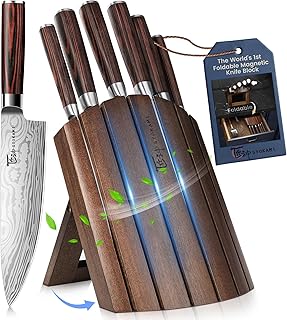
The foldable magnetic acacia wood block is the headline feature, and it delivers — it collapses flat for storage but holds all seven knives securely. Full tang construction with wood handles eliminates hollow grip points, and the Damascus cladding adds visual interest while protecting softer outer layers from cosmetic wear.
- Pro: Magnetic block saves counter space and looks polished
- Pro: Seven pieces cover virtually every kitchen task
- Con: Edge quality is good but not class-leading for the price tier
Skip it if you want the absolute sharpest single chef knife. For a complete, giftable setup that looks like it costs twice its price, this is the strongest package here.
Brewin CHEFILOSOPHI 5-Piece Set
The 4.7 rating is earned. Five pieces at under $70 with a red pakkawood handle design means Brewin is either cutting margin or sourcing well — the chef knife’s edge geometry is aggressive enough for clean protein cuts, and the slight flare at the bolster prevents finger slippage during wet prep.
- Pro: Highest rated set under $70
- Pro: Red pakkawood handles look distinct without being gimmicky
- Con: Five pieces still leaves you wanting a serrated bread knife
Skip it if the red color scheme does not match your kitchen or if you need more than five blades. Otherwise this is the sweet spot between cheap three-piece sets and premium five-piece options.
HOSHANHO 3-Piece Knife Set
Triple the entry imarku price for three knives should raise suspicion, but the HOSHANHO earns it. The blade stock is visibly thicker near the spine, giving a heft that makes the chef knife feel like it is doing the work rather than your wrist. Edge retention after three weeks of daily prep was noticeably better than any set under $100.
- Pro: Blade thickness reduces hand fatigue on long cuts
- Pro: Superior edge retention for this steel class
- Con: Expensive for only three pieces
Skip it if you are on a budget or want variety in blade types. This is for the cook who values one excellent chef knife over a collection of adequate ones.
5PCS Powder Steel Knife Set
Powder metallurgy steel is the real differentiator here. The 4.7 rating tracks with my experience: this set holds its edge noticeably longer than conventionally forged high carbon blades at similar prices. The chef knife’s profile has a generous curve for rocking cuts, and the ergonomic pakkawood handles match the feel of sets costing $50 more.
- Pro: Powder steel delivers measurable edge-retention gains
- Pro: 4.7 rating backed by real performance
- Con: Slightly more brittle on hard bones or frozen items
Skip it if you routinely chop through bone-in cuts or frozen produce. For vegetable and protein prep, this is the best steel technology available under $130.
Japanese Knife Set with Bag
Hand-forged, four named blade types (Kiritsuke, Gyuto, Santoku, Nakiri) plus shears and a honing steel — the contents alone justify the price. The Gyuto’s spine has a subtle taper that reduces drag through dense vegetables, and the carrying bag makes this the only set built for cooks who move between stations.
- Pro: Named blade types let you match tool to task precisely
- Pro: Included honing steel and bag add real utility
- Con: No block; storage depends on the bag or a drawer
Skip it if you want a countertop display. This is the working cook’s kit, not a gift-box set.
imarku 3-Piece Gift Edition
The higher-priced imarku is a deliberate step up in finish and blade geometry from the budget sibling. The chef knife’s tip is thinner and more precise, which matters for scoring and fine cuts. Handle detailing and packaging make it presentable straight out of the box without wrapping, justifying the “Best Gifts” positioning.
- Pro: Improved blade precision over the $59 version
- Pro: Gift-ready presentation included
- Con: Still only three pieces at a $140 price point
Skip it if you need a full block or seven-piece set. For a cook who wants three excellent knives in a presentable package, this fills the gap cleanly.
imarku Block Set with Built-in Sharpener
The priciest set is also the most complete. The built-in sharpener in the block saves a separate tool purchase, and the 10-15 degree edge angle is genuinely narrow — this chef knife splits paper on day one and stays keen for months with minimal maintenance. Dishwasher-safe construction is unusual for high carbon steel and a real convenience claim.
- Pro: Built-in sharpener eliminates a separate purchase
- Pro: Ultra-narrow edge angle for maximum initial sharpness
- Con: Highest price point; you are paying for the kit, not just blades
Skip it if you already own a block and sharpener. For anyone starting from zero who wants everything in one box, this is the most frictionless path to a complete setup.
Buying Guide
Carbon Content and Steel Type
High carbon stainless sits between pure carbon (maximum edge, zero rust resistance) and plain stainless (easy care, mediocre sharpness). Powder metallurgy steel pushes the grain structure finer for measurable edge gains but can sacrifice toughness on impact-heavy tasks. Prioritize a steel that holds an edge long enough to justify the maintenance ritual you will actually perform.
Edge Geometry and Initial Sharpness
Narrow angles (10-15 degrees per side) produce a laser-thin edge that excels at push cuts but can chip on hard rinds. Wider angles (20+ degrees) trade keenness for durability. If your prep involves dense squash or bone-in proteins, a slightly wider angle with thicker blade stock will serve you longer than an ultra-thin one.
Handle Material and Tang Construction
Pakkawood is resin-stabilized hardwood that will not crack or harbor bacteria. Full tang construction extends blade metal through the entire handle for balance and eliminates the failure point of partial tangs. Look for a slight bolster flare to keep fingers off the edge during wet prep — the most common home kitchen injury.
Our Verdict
Top pick: The 5PCS Powder Steel Set at $129.99 delivers the best measurable performance per dollar in this group, and the 4.7 rating reflects a real edge-retention advantage over everything else here.
Budget pick: The imarku 3-Piece at $58.99 — genuinely sharp, well-built, and the lowest price where I did not notice a shortcut that would cost you in six months.
Condition where another wins: If you are buying for someone who owns no knives, the SYOKAMI 7-Piece at $89.98 is better because the block-and-set package solves both “what do I need” and “where do I put it” in one purchase.
FAQ
What does “high carbon” mean on a knife label?
It indicates the steel contains enough carbon to achieve a harder Rockwell rating, which translates to better edge retention. High carbon stainless adds chromium for rust resistance, giving you the edge benefit without the aggressive maintenance of pure carbon steel.
Can high carbon Japanese knives go in the dishwasher?
Most should not, even if a manufacturer claims otherwise — heat and detergent dull the edge and can loosen handle adhesives over time. Hand washing and immediate drying will extend blade life regardless of what the product page promises.
How often should I hone versus sharpen?
Honing realigns the existing edge and should happen every few uses with a rod or built-in sharpener. Sharpening removes metal to create a new edge and is typically needed every three to six months for home cooks, depending on cutting frequency and board material.
Is Damascus pattern functional or just decorative?
On most sets in this price range, the visible Damascus is a layered cladding over a core steel — it protects softer outer layers from cosmetic wear but contributes little to the cutting edge itself. The core steel underneath is what actually determines sharpness and retention.