Investing in a pressure canner is one of the best decisions you can make for home food preservation, allowing you to safely can low-acid foods like vegetables, meats, poultry, and seafood. However, with various designs, sizes, and safety mechanisms on the market, finding the right model can feel overwhelming for home cooks who want both safety and efficiency.
Navigating the current market in 2026 requires looking past flashy marketing claims and focusing on core engineering principles that guarantee structural safety, long-term durability, and reliable heat performance. This comprehensive decision guide breaks down everything you actually need to consider before making your purchase, ensuring you select a canner that matches your kitchen setup, stovetop type, and preserving volume.
As an Amazon Associate we earn from qualifying purchases at no extra cost to you.
Understanding Sizing and Capacity (Quart vs. Pint Jars)
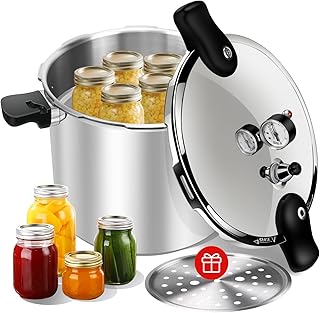
Capacity is often the first feature buyers look at, but liquid volume is frequently misunderstood. Pressure canners are categorized by their total liquid capacity or, more importantly, how many standard mason jars they can hold at one time. A standard 15-quart or 16-quart model usually holds seven quart jars or up to nine pint jars in a single tier. Larger 22-quart to 25-quart models can often double-stack pint jars, significantly increasing your output per batch.
When choosing your size, consider both your harvest volume and your physical strength. A fully loaded canner filled with water, heavy glass jars, and food is exceptionally heavy and cumbersome to lift on and off the stove. If you only process a few jars at a time for a small household, a mid-sized model is far more manageable. Conversely, if you garden extensively or hunt, a large-capacity double-stacker saves hours of processing time.
Stove Type Compatibility: Glass, Induction, and Gas
Not all pressure canners work on all cooktops, and overlooking this detail can lead to damaged appliances or ruined meals. Gas cooktops are universally compatible with all pressure canners, as they easily accommodate heavy pots and uneven weight distribution. Electric coil burners also handle heavy canners well, provided the burner diameter closely matches the base of the pot.
If you have a smooth glass-top (radiant) stove or an induction cooktop, your options require careful scrutiny. Many traditional heavy aluminum canners have ridged bottoms that do not make full contact with a flat glass surface, drastically reducing heating efficiency and potentially scratching the glass. Furthermore, glass cooktops often have strict weight limits that water-filled canners can easily exceed, risking cracked cooktop glass. If you use induction, you must ensure the canner base is made of a magnetic stainless steel alloy or features a bonded induction plate, as standard pure aluminum will not register on induction burners.
Weighted Gauge vs. Dial Gauge Models
The method your canner uses to regulate and monitor internal pressure is a critical mechanical distinction. Dial gauge canners feature a visual meter that displays exact pressure readings in pounds per square inch (PSI). While precise, dial gauges must be tested for accuracy annually at your local extension office to ensure they haven’t drifted out of calibration over time.
Weighted gauge canners use a physical metal jiggler—usually set at 5, 10, or 15 PSI—that rocks or rattles when the correct pressure is maintained. They do not require calibration, making them exceptionally low-maintenance and reliable over decades of use. Many modern hybrid canners include both systems, giving you the precise visual tracking of a dial alongside the fail-safe reliability of a weighted regulator.
Material Quality: Heavy-Gauge Aluminum vs. Stainless Steel
The construction material dictates both the lifespan and the price point of your pressure canner. Heavy-gauge stamped or cast aluminum is the traditional standard. It is an excellent thermal conductor, distributing heat rapidly and evenly across the base and sides. High-grade aluminum canners are durable, robust, and generally more affordable, though they can pit or discolor over time if exposed to hard water or prolonged dishwasher cycles (hand washing is always recommended).
Stainless steel canners offer a sleeker aesthetic, higher resistance to staining, and superior compatibility with modern cooktops, including induction. However, stainless steel is a poor natural heat conductor on its own, meaning manufacturers must bond a thick aluminum or copper core into the base to prevent hot spots. Premium stainless steel models represent a higher upfront investment but provide a lifetime of rust-free durability and effortless cleanup.
Common Sizing and Usage Mistakes to Avoid
One of the most frequent mistakes beginners make is buying a pressure cooker and assuming it functions identically to a pressure canner. Standard electric pressure cookers and multi-cookers lack the volume, venting mechanisms, and USDA-approved thermal mass required to safely process low-acid foods against botulism risks. Never attempt pressure canning in a cooker that is not explicitly rated and tested as a pressure canner.
Another common pitfall is ignoring the physical dimensions of your storage space and kitchen sink. Large canners take up massive amounts of cabinet space and can be extremely difficult to wash in a standard double-basin kitchen sink. Measure your storage cabinets, pantry depth, and sink clearance before committing to an oversized industrial-scale model.
When to Spend More on a Premium Model
Entry-level pressure canners provide basic functionality, but stepping up to a mid-tier or premium model delivers tangible quality-of-life upgrades. You should consider spending more if you want features like metal-to-metal sealing systems that eliminate the need for perishable rubber gaskets, or thicker gauge metals that resist warping under high heat. Premium brands also tend to offer superior customer service and readily available replacement parts, such as safety plugs, petcocks, and handles, ensuring your investment lasts for generations.
Related Guides
To see how top-performing models compare side-by-side in real-world testing, check out our detailed testing breakdown. You can also explore our curated expert rankings to find options tailored to specific budget categories and kitchen setups.
FAQ
Can I use a pressure canner as a regular stockpot?
Yes, you can use an aluminum or stainless steel pressure canner for boiling water, making soups, or cooking large batches of food without locking the lid. However, their massive size can make everyday cooking somewhat unwieldy compared to standard cookware.
How often do I need to replace the sealing gasket?
Rubber or silicone sealing gaskets typically last between one to three years depending on usage frequency and maintenance. If your gasket feels stiff, dry, or cracked, or if steam escapes around the lid rim during operation, it is time for an immediate replacement.
Is pressure canning difficult to learn?
Pressure canning is straightforward once you master the basic steps of preparing jars, venting the canner, and regulating pressure. Following trusted, scientifically tested recipes from authoritative sources ensures safe and repeatable results every time.
Can I pressure-can on a portable induction burner?
You can use a compatible stainless steel pressure canner on a portable induction burner, provided the burner has a high enough wattage output and can physically support the immense weight safely. Always check the manufacturer weight limits for both your burner and your cooktop surface.