Key takeaways
- Pro: Shaker styling suits classic and transitional kitchens.
- Pro: The 30-inch width and 7-1/4-inch depth simplify early planning.
- Con: The listed configuration does not include a ventilator or liner.
A custom wood canopy can turn a range wall into the focal point of a kitchen, but it also creates a practical problem: the hood insert must fit inside the decorative shell without leaving gaps, crowding the cabinet, or overwhelming the room. Ductless models add another constraint because they recirculate air rather than sending it outdoors. That makes insert width, canopy dimensions, and the stated ventilation capacity especially important.
This 2026 roundup separates decorative wood covers from the actual hood inserts that power them. The products are ranked in the supplied order, with attention to size, listed price, canopy compatibility, and whether the product description specifically identifies ductless use. Since no independent laboratory measurements were provided, the rankings do not claim verified airflow, noise, or filtration performance.
As an Amazon Associate we earn from qualifying purchases at no extra cost to you. Product prices and availability are accurate as of the date shown and are subject to change.


Quick Picks
| Product | Best for | Price |
|---|---|---|
| Castlewood Shaker Style Range Hood Front with Ventilator/Liner – Maple | Traditional maple canopy projects | $650 |
| Riley & Higgs White Wood Range Hood Cover, Sloped Front | Bright kitchens with a sloped canopy | $1,808.99 |
| Riley & Higgs Unfinished Wood Range Hood Cover, Curved Front, 31.5″W x 36″H | Custom-painted curved surrounds | $1,559.99 |
| IKTCH 30 inch Insert Range Hood 900 CFM | Dedicated 30-inch ductless insert | $299 |
| FIREGAS Range Hood Insert 30 inch, 600 CFM | Value-focused insert installations | $158.99 |
| Riley & Higgs Unfinished Wood Range Hood Cover, Curved Front, 37.5″W x 36″H | Wider custom canopy designs | $1,792.99 |
| Riley & Higgs Unfinished Wood Range Hood Cover, Curved Front, 37.5″W x 30″H | Wide but lower-profile surrounds | $1,907.99 |
| Riley & Higgs Black Wood Range Hood Cover, Tapered Front, 37.5″W x 48″H | Statement-making black canopy walls | $2,194.99 |
How We Picked
We prioritized products that can make sense in a custom wood canopy, then considered whether each listing is an actual ventilation insert or a decorative cover. That distinction matters: a wood cover does not replace the mechanical hood inside it. For the two products that list airflow capacity, the stated figures are included without treating them as independently verified results.
We also compared width and height where those measurements were supplied. A 30-inch insert may suit a 30-inch cooking area, while a 31.5-inch or 37.5-inch cover can provide a broader visual frame. Finally, price helped identify value, but it was not used to imply build quality, installation difficulty, or real-world performance.
The 8 Best Picks
1. Castlewood Shaker Style Range Hood Front with Ventilator/Liner – Maple
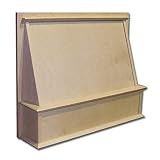
This is the most natural choice for a traditional kitchen centered on a maple Shaker-style canopy. Its listed front measures 30 inches high, 30 inches wide, and 7-1/4 inches deep, giving a buyer concrete dimensions to compare with the planned enclosure. At $650, it occupies the middle of this group, but the listing’s wording requires careful attention: the selected version is identified as “No Ventilator/Liner.” That means shoppers should not assume the decorative front alone provides ductless ventilation.
- Pro: Shaker styling suits classic and transitional kitchens.
- Pro: The 30-inch width and 7-1/4-inch depth simplify early planning.
- Con: The listed configuration does not include a ventilator or liner.
Choose it when the canopy appearance is the priority and you already have a compatible insert plan. Skip it if you want a complete ductless hood in one purchase.
2. Riley & Higgs White Wood Range Hood Cover, Sloped Front, 31.5″W x 30″H
This white wood cover is aimed at kitchens where the hood should blend with painted cabinetry rather than read as a separate appliance. The sloped front gives the canopy a more shaped profile than a simple rectangular box, while the 31.5-inch width and 30-inch height create a moderately sized surround. At $1,808.99, it is a substantial decorative investment, and buyers should budget separately for the insert that performs the ventilation work.
- Pro: White wood coordinates easily with light cabinetry.
- Pro: The sloped front adds architectural detail without the height of a tall statement hood.
- Con: It is a cover, not a listed ductless ventilation unit.
Pick it for a bright, tailored kitchen with a sloped canopy concept. Skip it if you need a ready-to-install hood rather than a decorative enclosure.
3. Riley & Higgs Unfinished Wood Range Hood Cover, Curved Front, 31.5″W x 36″H
The unfinished curved-front cover gives remodelers a blank surface for coordinating paint or stain with surrounding cabinetry. Its 31.5-inch width is relatively restrained, while the 36-inch height makes the hood more visually prominent than the 30-inch-high option. The $1,559.99 price is lower than several other Riley & Higgs covers here, though it still represents a canopy shell rather than a complete ventilation system.
- Pro: Unfinished wood allows a more customized color treatment.
- Pro: The curved front softens a kitchen with many straight cabinet lines.
- Con: The taller 36-inch profile may dominate a compact room.
Choose it when you want a curved, paint-ready focal point around a separate insert. Skip it when ceiling height or visual simplicity favors a shorter canopy.
4. IKTCH 30 inch Insert Range Hood 900 CFM, Ducted/Ductless Vent Hood
This is the clearest appliance pick for shoppers searching specifically for a ductless insert. The listing identifies a 30-inch insert, ducted/ductless operation, and 900 CFM. Those specifications make it a practical starting point for a custom canopy designed around a 30-inch hood opening. At $299, it is also much less expensive than the decorative wood covers, leaving more of the budget available for carpentry or finishing.
- Pro: The listing explicitly identifies both ducted and ductless use.
- Pro: The stated 900 CFM gives buyers a clear capacity figure to compare.
- Con: The canopy must be designed separately around the 30-inch insert.
Pick it for a dedicated appliance inside a custom wood surround. Skip it if your project needs a decorative wood cover included in the same product.
5. FIREGAS Range Hood Insert 30 inch, Built-in Kitchen Hood with 600 CFM
The FIREGAS insert is the budget-minded appliance in this lineup, priced at $158.99. Its listing identifies a 30-inch built-in hood, ductless suitability in the product description supplied here, and 600 CFM. That combination makes it worth considering for a smaller or cost-controlled custom canopy project. As with any insert, the surrounding woodwork still needs to accommodate the hood, and the decorative shell is not included in the listed product.
- Pro: It is the lowest-priced ventilation appliance in the group.
- Pro: The 30-inch format is straightforward to plan around.
- Con: Its listed 600 CFM is lower than the IKTCH’s stated capacity.
Choose it when upfront cost matters most and the listed capacity suits your cooking needs. Skip it if you want the higher stated airflow figure.
6. Riley & Higgs Unfinished Wood Range Hood Cover, Curved Front, 37.5″W x 36″H
This wider curved cover is designed for a more substantial range wall or a canopy that intentionally extends beyond a standard insert. It measures 37.5 inches wide and 36 inches high, giving it a broad, prominent presence. The unfinished surface is useful when the canopy must match custom cabinetry, tile, or a painted focal wall. At $1,792.99, it costs more than the narrower curved cover, so its value depends on whether the wider composition fits the room.
- Pro: The 37.5-inch width creates a generous visual frame.
- Pro: Unfinished wood supports custom painting or staining.
- Con: Its width and 36-inch height may feel oversized in a small kitchen.
Pick it for a broad custom canopy with a separate insert inside. Skip it if your range wall is compact or your design calls for a restrained hood profile.
7. Riley & Higgs Unfinished Wood Range Hood Cover, Curved Front, 37.5″W x 30″H
This version keeps the same 37.5-inch width and curved-front concept but lowers the listed height to 30 inches. That can create a wider, less vertically imposing canopy, especially where the backsplash or upper cabinets already provide plenty of visual activity. The unfinished finish gives the installer flexibility, while the $1,907.99 price makes it one of the costlier decorative options in the group.
- Pro: The 30-inch height offers a lower-profile alternative to the taller curved cover.
- Pro: Its 37.5-inch width can frame a broad cooking area attractively.
- Con: It is priced higher than the narrower 31.5-inch curved cover.
Choose it when width matters more than extra height. Skip it if you need a complete ductless hood or prefer a taller architectural silhouette.
8. Riley & Higgs Black Wood Range Hood Cover, Tapered Front, 37.5″W x 48″H
This is the boldest decorative option, with a black wood finish, tapered front, 37.5-inch width, and 48-inch height. It is suited to a kitchen where the canopy should act as a strong architectural anchor rather than disappear into the cabinetry. At $2,194.99, it is also the highest-priced product in the roundup. Because it is a cover, buyers still need a compatible insert, such as a separately selected ductless appliance.
- Pro: Black wood and a tapered front create a dramatic focal point.
- Pro: The tall 48-inch profile can fill a large range wall effectively.
- Con: Its height and price make it unsuitable for understated or budget-conscious projects.
Pick it for a statement kitchen with enough wall and ceiling presence. Skip it if a tall black canopy would overpower the room.
Buying Guide
Separate the cover from the insert
Start by identifying whether you are buying ventilation equipment or only the decorative shell. The Castlewood and Riley & Higgs products are canopy-style fronts or covers, while the IKTCH and FIREGAS products are the listed hood inserts. A ductless setup needs an actual recirculating hood inside the wood canopy; the cover alone cannot perform that job.
Match the insert to the canopy opening
Use the insert’s listed width as the starting point for the cabinetmaker or installer. The IKTCH and FIREGAS are both 30-inch products, while the decorative covers range from 30 inches to 37.5 inches wide. A wider cover can frame a smaller insert, but the opening, support, clearances, and finishing details must be planned rather than assumed.
Choose height for the room, not just the style
Height changes the visual weight of the hood wall. The listed covers range from 30 inches high to 48 inches high. Lower profiles can preserve a lighter look, while taller designs create a stronger focal point. Before choosing, compare the canopy dimensions with the ceiling, upper cabinetry, backsplash, and sightlines across the kitchen.
Our Verdict
For the simplest ductless insert search, the IKTCH 30 inch Insert Range Hood stands out because its listing explicitly identifies ducted/ductless operation and 900 CFM at $299. The FIREGAS is the value alternative at $158.99 with a listed 600 CFM. For the decorative surround, choose among the Castlewood and Riley & Higgs designs according to width, height, finish, and front shape. The best result comes from treating the insert and custom wood canopy as one coordinated installation.
FAQ
What is the best ductless range hood insert for a custom wood canopy?
The IKTCH 30 inch Insert Range Hood is the strongest direct match in this group because its listing specifically states ducted/ductless operation and 900 CFM. The FIREGAS is a lower-cost alternative with a listed 600 CFM.
Are the Riley & Higgs products complete range hoods?
No. The Riley & Higgs products are wood range hood covers. They provide the decorative canopy appearance, so a separate compatible insert is required for ventilation.
Is the Castlewood product sold with a ventilator?
The supplied product name includes “with Ventilator/Liner,” but the listed configuration is marked “No Ventilator/Liner.” Confirm the exact configuration before purchasing.
Which canopy is best for a small kitchen?
The shorter or narrower options are generally easier to proportion in a compact room. Compare the 31.5-inch-wide covers and 30-inch-high designs with your wall before considering the 37.5-inch-wide or 48-inch-high options.