Key takeaways
- Matching nominal sizes without checking actual dimensions: A “30-inch” hood may be slightly narrower or wider than expected. Use the specification sheet.
- Choosing a hood narrower than the cooktop: This leaves side burners poorly covered and can allow grease to collect on cabinets.
- Ignoring depth: Width cannot compensate for a hood that is too shallow to cover the front burners.
- Using island rules for a wall hood—or vice versa: Island hoods generally need more coverage because they face drafts from every direction.
- Installing at the wrong height: Too high reduces capture; too low can interfere with cooking or violate clearance requirements.
- Assuming more CFM fixes poor ductwork: A long, narrow, or sharply bent duct can limit airflow and increase noise.
- Forgetting cabinet and door clearances: Confirm that cabinet doors, microwave doors, and nearby windows can open normally after installation.
The Short Answer
Your range hood should be at least as wide as your cooktop surface. For the best capture of smoke, steam, grease, and heat, choose a hood that extends beyond the cooking surface by about 3 inches on each side when possible.
That means a 30-inch cooktop generally pairs with a 30-inch hood at minimum, but a 36-inch hood is often the better choice. A 36-inch cooktop should have at least a 36-inch hood, while a 42-inch hood provides extra coverage. For island installations, oversizing matters even more because air currents can push cooking vapors away from the hood. An island hood is commonly 6 inches wider than the cooktop overall, or 3 inches wider on each side.
Our top picks



As an Amazon Associate we earn from qualifying purchases at no extra cost to you. Ratings are shown as listed on Amazon.
Width is only one part of the decision. Hood depth, mounting height, blower capacity, duct size, and whether the cooktop is gas, electric, or induction all affect performance. This guide explains how to match those measurements for a practical kitchen setup in 2026.
Standard Sizes
Cooktops and range hoods are sold in nominal widths, but their actual measurements can vary by model. Always compare the manufacturer’s cutout dimensions and finished product dimensions before ordering.
| Nominal cooktop or range width | Approximate actual width | Minimum hood width | Preferred hood width |
|---|---|---|---|
| 24 inches | 23–24 in (58.4–61 cm) | 24 in (61 cm) | 30 in (76.2 cm) |
| 30 inches | 29–30 in (73.7–76.2 cm) | 30 in (76.2 cm) | 36 in (91.4 cm) |
| 36 inches | 35–36 in (88.9–91.4 cm) | 36 in (91.4 cm) | 42 in (106.7 cm) |
| 42 inches | 41–42 in (104.1–106.7 cm) | 42 in (106.7 cm) | 48 in (121.9 cm) |
| 48 inches | 47–48 in (119.4–121.9 cm) | 48 in (121.9 cm) | 54 inches (137.2 cm) |
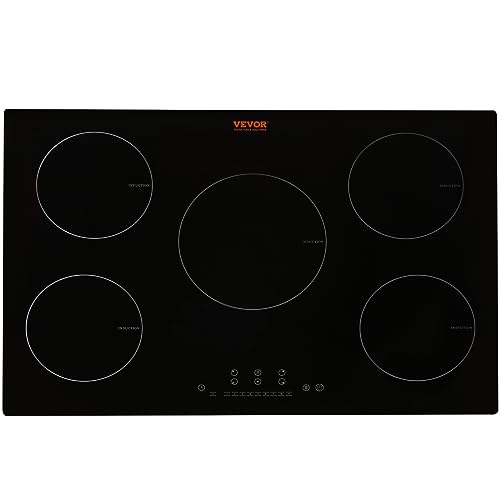
A 30-inch electric or induction cooktop is the most common size for a standard kitchen. Examples include the 30-inch VEVOR five-burner induction cooktop and the 30-inch Frigidaire induction cooktop. Both would normally be matched with a 30-inch hood at minimum, although a 36-inch hood offers better side-to-side coverage.
Compact kitchens may use a 21-inch cooktop, such as the ThermoMate 21-inch, two-burner radiant model. A 24-inch hood is usually the smallest sensible match, provided it fits the cabinet layout. A replacement 9-inch radiant surface element, such as the approximately $31.34 Fetechmate-compatible part, does not determine hood width by itself; measure the complete cooktop or range rather than an individual burner.
As a general buying guide, basic under-cabinet hoods often cost about $100–$300, midrange ducted or convertible models about $300–$800, and premium insert or island hoods roughly $800–$2,000 or more. Cooktop prices vary widely: compact electric units may cost around $200–$400, while full-size induction models commonly range from about $700 to $2,000 or more. The VEVOR example is listed at $287.90, and the ThermoMate example at $329.99; prices can change by retailer and configuration.
How to Measure Your Space
- Measure the cooking surface. Measure the outside edge of the cooktop or range, not the countertop opening. Record the width in inches and centimeters.
- Check the available wall or island width. Confirm that the planned hood will not collide with upper cabinets, a backsplash, trim, or adjacent walls. Leave enough room for the hood’s side panels and installation brackets.
- Measure hood depth. The hood should cover the front-to-back cooking area as much as possible. A shallow under-cabinet hood may not capture vapors from front burners as effectively as a deeper canopy hood.
- Confirm mounting height. Follow the hood and cooking appliance instructions. Many wall-mounted hoods are installed approximately 24–30 inches above an electric or induction surface and about 30–36 inches above a gas surface, but the required distance varies.
- Identify the ventilation type. A ducted hood sends air outdoors and usually performs better than a recirculating model. For a ducted system, check the route, exterior vent location, elbows, and required duct diameter before buying.
- Check electrical requirements. Verify the hood’s voltage, circuit needs, and installation method. The cooktop has separate electrical requirements; for example, a 240-volt cooktop cannot use an ordinary 120-volt outlet.
- Calculate the coverage. If your cooktop is 30 inches wide and the hood is 36 inches wide, the hood extends 3 inches beyond each side. That is a useful target for a wall installation.
By Room or Use Case
Standard wall installation
For a cooktop against a wall, select a hood at least equal to the cooktop width. A 36-inch hood over a 30-inch cooktop is a strong everyday combination, especially if you frequently use large pans or several burners at once. If cabinet space is limited, a 30-inch hood can still work when it is properly centered and installed at the recommended height.
Island or peninsula cooktop
Island installations need more width because cross-drafts are stronger and there is no wall to help contain rising air. A hood that is 6 inches wider than the cooking surface is a useful rule. For a 30-inch island cooktop, consider a 36-inch hood; for a 36-inch cooktop, consider a 42-inch model. A deeper hood and a higher-capacity blower may also be worthwhile.
Small apartment kitchen
For a 21- or 24-inch cooktop, a 24- or 30-inch hood usually provides sufficient coverage. Make sure the hood does not project so far into a narrow walkway that it becomes a head-level hazard. Recirculating models can be easier to install in apartments, but their filters need regular cleaning or replacement and they do not remove humidity as effectively as ducted ventilation.
Gas range or high-heat cooking
Gas burners, griddles, wok cooking, and frequent frying produce more heat and airborne grease than light electric cooking. Choose a hood wider than the range when possible, prioritize a ducted design, and follow the manufacturer’s minimum capture and clearance requirements. Do not choose blower power based on width alone; the ventilation plan and ductwork affect real-world performance.
Electric and induction cooktops
Electric and induction surfaces generally produce less open flame and radiant heat than gas, but they still create steam, smoke, and grease. A 30-inch induction cooktop should not be paired with a hood smaller than 30 inches. Induction cooking can encourage high-heat searing and rapid boiling, so a 36-inch hood remains a practical upgrade when the surrounding cabinets allow it.
Common Sizing Mistakes
- Matching nominal sizes without checking actual dimensions: A “30-inch” hood may be slightly narrower or wider than expected. Use the specification sheet.
- Choosing a hood narrower than the cooktop: This leaves side burners poorly covered and can allow grease to collect on cabinets.
- Ignoring depth: Width cannot compensate for a hood that is too shallow to cover the front burners.
- Using island rules for a wall hood—or vice versa: Island hoods generally need more coverage because they face drafts from every direction.
- Installing at the wrong height: Too high reduces capture; too low can interfere with cooking or violate clearance requirements.
- Assuming more CFM fixes poor ductwork: A long, narrow, or sharply bent duct can limit airflow and increase noise.
- Forgetting cabinet and door clearances: Confirm that cabinet doors, microwave doors, and nearby windows can open normally after installation.
FAQ
Can a range hood be wider than the cooktop?
Yes. A hood wider than the cooktop is usually beneficial. For a wall installation, 3 inches of extra width on each side is a common target. A wider hood can improve capture, but it must still fit the cabinetry and comply with the manufacturer’s installation instructions.
Can the hood be the same width as the cooktop?
Yes. Equal width is the minimum recommended match for most installations. A 30-inch hood over a 30-inch cooktop is acceptable when it is centered, installed at the correct height, and deep enough to cover the cooking area. Oversizing is preferable when space and budget permit.
How wide should a hood be over a 30-inch cooktop?
Use at least a 30-inch hood. Choose a 36-inch hood if the cooktop is on an island, if you cook with large pans, or if you want additional side coverage. Make sure the hood’s depth and blower specifications also suit the appliance.
Does hood width matter for induction cooktops?
Yes. Induction cooktops still generate steam, smoke, and grease, even though they do not use an open flame. Match the hood to the full cooktop width at minimum, and consider going one standard size wider for frequent high-heat cooking or an island layout.