Key takeaways
- Confusing the opening with the flange: A 3 1/2-inch drain may have a flange larger than 4 inches. Match the opening specification, not just the visible top diameter.
- Buying a bathroom drain: A 1 1/4-inch or 1 1/2-inch lavatory drain is too small for a standard kitchen sink.
- Ignoring sink thickness: Thick stone, fireclay, and farmhouse sinks may need a longer drain body or a specialized gasket.
- Forgetting the disposer: A garbage disposal requires a compatible mounting flange rather than an ordinary basket strainer.
- Assuming every prep sink is the same: Small sinks can use several different drain sizes. Measure the opening before ordering.
- Measuring the pipe instead of the sink hole: The plumbing connection under the sink does not tell you the diameter of the opening above it.
- Overlooking the finish: Brushed stainless, polished stainless, chrome, and matte black may all fit mechanically, but the finish should coordinate with the faucet and other fixtures.
The Short Answer
The standard drain hole size for a kitchen sink is 3 1/2 inches (8.9 cm) in diameter. This is the opening used by most full-size stainless steel, enameled cast iron, fireclay, and composite kitchen sinks in the United States.
For replacement parts, shop for a 3 1/2-inch kitchen sink drain assembly or a drain labeled “standard kitchen drain.” The removable basket and stopper sit inside the opening, while the drain flange rests over the sink surface. The visible flange is usually larger than the hole—commonly about 4 1/4 to 4 1/2 inches (10.8 to 11.4 cm) across.
Our top picks

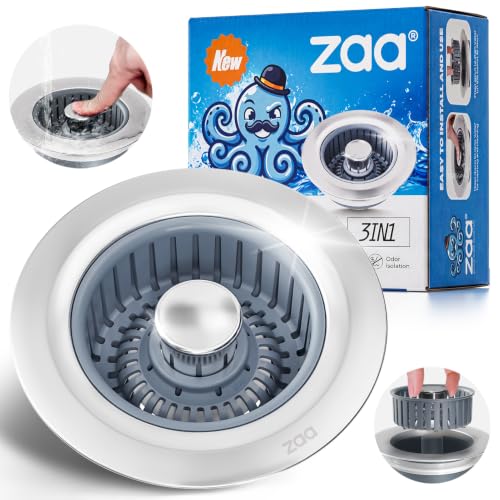
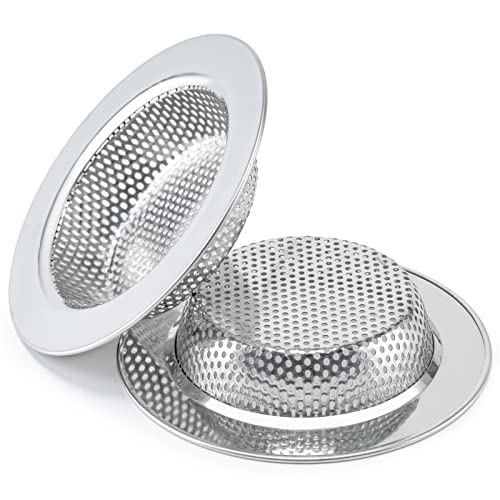

As an Amazon Associate we earn from qualifying purchases at no extra cost to you. Ratings are shown as listed on Amazon.
That distinction matters: a product described as a 3 1/2-inch drain generally refers to the sink opening it fits, not the total outside diameter of the decorative flange. As you compare options in 2026, check both the drain opening and the thickness of the sink before ordering.
Standard Sizes
Although 3 1/2 inches is the dominant kitchen-sink size, smaller drains are common in bar sinks, prep sinks, utility basins, and bathroom fixtures. The measurements below are useful starting points when replacing a strainer or choosing a new sink.
| Use | Typical sink opening | Metric equivalent | Typical outside flange |
|---|---|---|---|
| Full-size kitchen sink | 3 1/2 in. | 8.9 cm | 4 1/4–4 1/2 in. (10.8–11.4 cm) |
| Kitchen sink with disposer | 3 1/2 in. | 8.9 cm | 4 1/2–4 5/8 in. (11.4–11.7 cm) |
| Bar or prep sink | 2–3 1/2 in. | 5.1–8.9 cm | Varies by manufacturer |
| Bathroom lavatory | 1 1/4–1 1/2 in. | 3.2–3.8 cm | About 1 1/2–2 in. (3.8–5.1 cm) |
| Utility or laundry sink | 3 1/2 in. | 8.9 cm | About 4 1/4–4 1/2 in. (10.8–11.4 cm) |
A standard kitchen drain assembly typically includes a strainer basket, stopper, flange, gasket, friction ring, and locknut. The threaded drain body is often approximately 2 1/4 to 2 1/2 inches (5.7 to 6.4 cm) in outside diameter, though the exact size and thread pattern can vary. The drain tailpiece below the sink commonly connects to a 1 1/2-inch waste pipe using a slip-joint connection.
Many replacement strainers cost roughly $6 to $15, depending on the finish, stopper style, and included hardware. Basic basket strainers may be near the lower end of that range; upgraded pop-up or multi-function designs may cost more. For reference, the example products listed for this guide range from $5.89 to $9.99, including 3 1/2-inch stainless steel assemblies and smaller or removable-basket designs.
How to Measure Your Space
- Clear the cabinet area. Remove stored items beneath the sink so you can see the drain body, tailpiece, and connection to the trap. Place a bucket under the plumbing if you plan to loosen any fittings.
- Measure the sink opening. If the drain is removed, measure straight across the round hole from one inside edge to the opposite inside edge. For a typical kitchen sink, the result should be close to 3 1/2 inches, or 8.9 cm.
- Measure the existing drain flange. Measure the outside diameter across the metal flange on top of the sink. A flange around 4 1/4 to 4 1/2 inches is normal for many kitchen strainers.
- Check sink thickness. Measure the distance from the top surface of the sink to the underside around the drain opening. Most drain assemblies accommodate common sink materials, but unusually thick fireclay or stone sinks may require a longer threaded body.
- Measure the waste connection. Confirm the tailpiece or drain outlet size. A 1 1/2-inch connection is common under kitchen sinks, but a disposer, dishwasher branch, or older plumbing arrangement can change the configuration.
- Check clearance below the bowl. Allow room for the drain body, locknut, tailpiece, trap, and any disposer. A deep sink can reduce cabinet clearance, even when the drain opening itself is standard.
- Compare the product specifications. Look for the stated compatible opening, flange diameter, threaded body length, gasket dimensions, and included adapters. Do not rely on “universal” alone if your sink is unusually thick or shallow.
If the old strainer is still installed, measuring the opening directly may be difficult. In that case, measure the top flange and identify the sink model or drain brand. You can also remove the basket and measure the inside of the drain body, but avoid forcing a ruler into the threads, which can produce an inaccurate reading.
By Room or Use Case
Full-Size Kitchen Sinks
Single-bowl, double-bowl, and three-bowl kitchen sinks most often use a 3 1/2-inch drain opening. A double-bowl sink normally requires two separate strainers, so verify whether you need one assembly or a two-pack. If one bowl connects to a garbage disposer, the disposer typically replaces the standard basket strainer in that opening but still uses a comparable sink flange size.
Bar and Prep Sinks
Bar sinks do not follow one universal drain size. Some use the standard 3 1/2-inch opening, while compact models use openings around 2 inches or another manufacturer-specific dimension. Measure before buying. A regular kitchen basket strainer will not seal correctly in a smaller prep sink simply because the product is labeled for a sink.
Utility and Laundry Sinks
Large utility sinks frequently use a 3 1/2-inch drain, but their bowls may be deeper and their materials thicker than a standard kitchen sink. Check the threaded drain-body length and the underside clearance. Utility sinks may also use a heavier metal strainer or a deep basket to catch lint and debris.
Bathroom Sinks
Bathroom lavatories generally use a much smaller drain, usually 1 1/4 or 1 1/2 inches. Bathroom pop-up drains are not interchangeable with standard kitchen strainers. Even if the flange appears similar from above, the body, stopper mechanism, overflow openings, and tailpiece size are different.
Farmhouse and Fireclay Sinks
Apron-front and fireclay sinks commonly use the same 3 1/2-inch kitchen opening, but the sink wall can be thicker. Confirm the maximum supported sink thickness in the drain specifications. A drain body that is too short may not leave enough room for the gasket and locknut to engage securely.
Common Sizing Mistakes
- Confusing the opening with the flange: A 3 1/2-inch drain may have a flange larger than 4 inches. Match the opening specification, not just the visible top diameter.
- Buying a bathroom drain: A 1 1/4-inch or 1 1/2-inch lavatory drain is too small for a standard kitchen sink.
- Ignoring sink thickness: Thick stone, fireclay, and farmhouse sinks may need a longer drain body or a specialized gasket.
- Forgetting the disposer: A garbage disposal requires a compatible mounting flange rather than an ordinary basket strainer.
- Assuming every prep sink is the same: Small sinks can use several different drain sizes. Measure the opening before ordering.
- Measuring the pipe instead of the sink hole: The plumbing connection under the sink does not tell you the diameter of the opening above it.
- Overlooking the finish: Brushed stainless, polished stainless, chrome, and matte black may all fit mechanically, but the finish should coordinate with the faucet and other fixtures.
FAQ
Is a 3 1/2-inch drain hole standard for every kitchen sink?
No, but it is the standard for most full-size kitchen sinks in the United States. Bar, prep, compact, and specialty sinks can use smaller or nonstandard openings. Check the sink documentation or measure the hole before purchasing a replacement.
What size strainer fits a standard kitchen sink?
Most standard kitchen sinks accept a 3 1/2-inch basket strainer. The complete strainer will usually have a flange approximately 4 1/4 to 4 1/2 inches wide. Confirm the sink thickness and the drain-body dimensions as well.
Can I install a 3 1/2-inch drain in a 3-inch hole?
No. The drain body must fit through the sink opening, and enlarging a finished sink is not a normal do-it-yourself adjustment. Use a drain made for the existing hole or consult the sink manufacturer before modifying anything.
Do kitchen sink drains have standard plumbing connections?
Many residential kitchen drains connect to a 1 1/2-inch waste line, but the connection below the sink can vary with the trap, disposer, dishwasher branch, and local plumbing. Match the drain tailpiece and included fittings to the existing setup rather than assuming the under-sink connection is identical in every home.