Key takeaways
- No stated flow rate, valve material or operating pressure.
- “All functions at once” claims without a total GPM requirement.
- A digital display with no information about batteries, power or replacement parts.
- A concealed system that does not identify the rough-in valve or required wall depth.
- Many accessories at an unusually low price, with no itemized package contents.
- No maximum-temperature setting, safety stop or cartridge replacement information.
- Reviews that mention leaks, missing adapters, poor instructions or inconsistent temperature control.
- Finish descriptions that do not explain whether the trim is plated, painted or PVD-coated.
What's inside
Buying a thermostatic shower system can look simple until the specifications start piling up: rain showerheads, body jets, diverters, cartridges, handheld sprays, digital displays and multiple finishes. The most common mistake is choosing by appearance first. A large ceiling-mounted showerhead may look impressive but deliver disappointing pressure. A low-priced system may include several outlets yet lack the valve, trim or adapters needed for installation. Even a well-made set can be a poor fit if its controls are too close together or its flow rate exceeds what your plumbing can supply.
The right approach is to match the system to your bathroom, water supply and daily habits. This guide explains what to look for in a thermostatic shower system, including the measurements, materials, safety features and ownership costs that matter most in 2026.
As an Amazon Associate we earn from qualifying purchases at no extra cost to you. Product prices and availability are accurate as of the date shown and are subject to change.


Decide These 3 Things First
- How many outlets will run at once? Decide whether you want a showerhead and handheld together, or whether you also need body jets, a tub filler or a second showerhead. A system with a three- or four-function diverter is unnecessary if you will use only one outlet at a time.
- What does your plumbing already support? Check hot- and cold-water pressure, pipe locations, valve depth and available hot-water capacity. Many systems require separate rough-in work, and a rainhead plus multiple jets can demand substantially more flow than a basic shower.
- Which controls and mounting positions suit the room? Choose wall or ceiling mounting, handle placement and finish before ordering. Confirm that the shower arm, control valve and handheld slide bar will not conflict with doors, niches or existing tile.
Size and Water Demand
Showerhead size is one of the most visible specifications, but it is not automatically a performance upgrade. A 10- to 12-inch rain showerhead is a practical range for most bathrooms. Larger heads, such as 16 inches or more, spread water across a wider area and may feel weaker if pressure or flow is limited.
Check the stated flow rate before buying. In the United States, many showerheads are rated at a maximum of 2.5 gallons per minute (GPM), while water-saving models may be 1.5 to 2.0 GPM. A handheld spray commonly uses about 1.75 to 2.5 GPM. Six body jets listed at 0.5 GPM each can add another 3 GPM when operated together. Your total demand may therefore exceed 6 GPM with a rainhead, handheld and jets running simultaneously.
Look for a clear statement about whether outlets can operate at the same time. “Six functions” usually describes selectable modes, not six water outlets running together. Also measure the ceiling height and the distance between the wall and the center of your standing position. A 12-inch head on a 15-inch arm can place water too close to the wall in a compact shower.
Material and Finish
Material descriptions should distinguish the main valve body from the decorative trim. Brass or stainless steel is preferable for the pressure-bearing valve and water channels. Brass is common and durable, while stainless steel can offer good corrosion resistance and a lighter appearance. A set described only as “metal” does not tell you whether the important internal components are brass, stainless steel or a lower-cost alloy.
ABS plastic is not automatically a problem for a showerhead or handheld wand. It is lightweight, resists some surface corrosion and can be easier to handle. For a long shower arm, diverter body or concealed valve, however, buyers generally want a clearly identified metal construction.
Finish quality matters in daily use. Chrome is usually the easiest finish to clean and tends to make water spots less visible than very dark finishes. Matte black and brushed gold can look striking but may show mineral deposits, soap residue or scratches more clearly. Avoid abrasive cleaners and confirm that the manufacturer specifies a compatible cleaning method. Finish warranties are often shorter than warranties for the valve itself.
Construction and Cartridge Quality
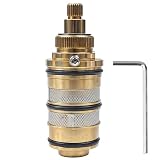
The thermostatic cartridge is the heart of the system. It mixes hot and cold water and is designed to hold the selected temperature as supply conditions change. Look for a replaceable cartridge, an accessible service stop and a clear maximum-temperature limit. A common safety setting is around 100°F or 38°C, although the exact adjustment varies by product.
Thermostatic control is different from a standard pressure-balancing valve. Pressure balancing helps reduce temperature swings caused by another fixture opening, while thermostatic control responds to temperature. A well-specified system may include both functions, but the product description should say what the valve actually provides.
Pay attention to the valve body size and installation requirements. A concealed valve may need a rough-in box or a finished wall depth of roughly 2 to 4 inches, depending on the model. Exposed systems are easier to install and service but occupy more wall space. A diverter with push buttons can be convenient, while a rotary diverter may offer more obvious visual feedback. Either way, the mechanism should feel positive rather than loose.
Comfort and Performance
Comfort depends on more than the number of spray modes. For a handheld, look for a hose between 59 and 79 inches, a wand that weighs roughly 0.5 to 1.5 pounds, and a slide bar or bracket that allows at least 24 inches of height adjustment. A silicone nozzle face is useful because mineral buildup can often be removed by rubbing the nozzles gently.
Consider the control layout. The temperature handle should be easy to identify by touch, with a stop or button that prevents accidental movement into very hot settings. Controls spaced about 4 to 6 inches apart are generally easier to operate than tightly packed knobs, especially for children or anyone with limited dexterity.
Body jets need careful planning. Two to six jets may be included, but their angle and location matter more than the count. They are typically positioned around chest, back or hip height, and each requires a properly sealed water connection. If the system promises simultaneous operation, verify the diverter configuration and total flow requirement rather than relying on marketing language.
Digital temperature displays can be convenient, but ask how they are powered. Some use replaceable batteries, while others require a connection to the water-powered generator or a wired installation. If a product lists lighting or a display, check whether the display shows temperature in Fahrenheit, whether the screen can be turned off and whether the electronics have a stated water-resistance rating. Do not assume that “LED” means the system heats water; shower controls do not function as water heaters.
Price Tiers: What You Actually Get
At roughly $180 to $350, budget systems commonly offer a 10- to 12-inch showerhead, handheld wand, basic thermostatic control and one or two finish choices. Some include body jets, but verify whether the concealed valve, rough-in components and tub filler are included. Lower pricing can also mean less detailed installation documentation or limited cartridge availability.
The $350 to $650 midrange is where buyers often find the best balance. Systems may include better-finished brass components, a more usable diverter, multiple mounting options, improved handheld brackets and a digital display. A set around $550 may include a tub filler or several selectable functions, but the package contents still need to be checked line by line.
At $650 to $1,500 or more, premium systems tend to offer stronger brand support, replacement parts, refined controls, custom trim and more extensive finish options. Premium pricing does not guarantee higher water pressure or a better shower, especially if the home’s plumbing is the limiting factor. Pay for serviceability and fit before paying for extra outlets.
Warranty and Replacement Parts
Read the warranty by component. A manufacturer may cover the valve for five years but cover electronic parts, finish or accessories for only one year. Confirm whether the warranty applies to residential use, whether proof of purchase is required and whether labor or removal costs are excluded.
Replacement availability is just as important. Ask whether thermostatic cartridges, check valves, O-rings, diverter buttons and shower hoses can be ordered separately. A system with a three-year warranty is less reassuring if the cartridge is proprietary and unavailable after the warranty ends. Keep the model number, installation instructions and purchase receipt in a safe place.
Delivery, Installation and Assembly
Before ordering, inventory the box contents. A complete exposed set may include the valve, trim, shower arm, rainhead, handheld, hose, bracket and seals. A concealed system may require a separate rough-in valve, and a tub version should clearly include a tub spout. Do not assume that mounting hardware, supply elbows or adapters match your existing plumbing.
Professional installation often costs about $300 to $900 for a straightforward replacement, while a new concealed installation with wall opening, waterproofing and tile repair can run $800 to $2,500 or more, depending on local labor and access. Body jets and ceiling plumbing can increase both cost and complexity.
Weigh the package before delivery if wall or ceiling work is involved. A complete system may weigh 15 to 35 pounds, and a large boxed set can be awkward to carry. Inspect every finish and threaded connection before the installer closes the wall. Test for leaks and confirm temperature calibration while the valve remains accessible.
Spec Checklist
| Spec | Budget | Mid | Premium |
|---|---|---|---|
| Typical price | $180–$350 | $350–$650 | $650–$1,500+ |
| Rain showerhead | 8–10 inches | 10–12 inches | 12–16 inches |
| Rated flow | 1.75–2.5 GPM | 1.75–2.5 GPM | 1.5–2.5 GPM |
| Handheld hose | 59–70 inches | 59–79 inches | 63–79 inches |
| Valve material | Stated brass or stainless steel preferred | Brass or stainless steel | Certified or clearly specified metal construction |
| Controls | Thermostat plus diverter | Thermostat, diverter and safety stop | Service stops, refined diverter and adjustable limit |
| Warranty target | 1–3 years | 3–5 years | 5 years or more on valve |
Red Flags
- No stated flow rate, valve material or operating pressure.
- “All functions at once” claims without a total GPM requirement.
- A digital display with no information about batteries, power or replacement parts.
- A concealed system that does not identify the rough-in valve or required wall depth.
- Many accessories at an unusually low price, with no itemized package contents.
- No maximum-temperature setting, safety stop or cartridge replacement information.
- Reviews that mention leaks, missing adapters, poor instructions or inconsistent temperature control.
- Finish descriptions that do not explain whether the trim is plated, painted or PVD-coated.
FAQ
What is the most important feature in a thermostatic shower system?
A reliable, serviceable thermostatic cartridge and a clearly adjustable temperature limit matter more than the number of spray modes. After that, match the system’s total flow requirement to your home’s water pressure and hot-water capacity.
Can a thermostatic shower run a rainhead and handheld at the same time?
Some can, but it depends on the diverter, internal valve passages and available flow. Check the product’s simultaneous-use statement and add the rated GPM of every outlet you plan to operate. A system may include both outlets without being designed to run them together.
Is brass better than stainless steel for a shower system?
Both can be suitable when properly manufactured. Brass is widely used for valves and fittings, while stainless steel offers strong corrosion resistance. The key is knowing what material is used for the valve body, diverter and water-bearing parts—not merely the finish on the visible trim.
Do I need a plumber to install one?
A simple exposed replacement may be manageable for an experienced DIYer, but concealed valves, body jets, ceiling-mounted heads and tub fillers usually require professional plumbing and waterproofing work. Have the installer verify pipe locations, valve depth, pressure and temperature calibration before the wall is closed.