Key takeaways
- Single-hole: One opening, usually about 1 3/8 inches (3.5 cm) in diameter.
- Centerset: Two handle holes positioned 4 inches (10.2 cm) apart from center to center.
- Mini-widespread: Two or three holes with a spread of approximately 4 to 8 inches (10.2 to 20.3 cm).
- Widespread: Separate handles and spout, commonly adjustable between 8 and 16 inches (20.3 and 40.6 cm).
- Wall-mount: The faucet is installed in the wall rather than through the sink or countertop.
What's inside
Replacing a bathroom sink is easier when the new basin matches the faucet you already own—or when the faucet matches the sink you plan to install. The most important measurement is the faucet spread: the distance between the centers of the mounting holes. Measuring this distance correctly helps you avoid mismatched holes, exposed openings, extra drilling, or a faucet that cannot be installed.
This guide explains how to measure bathroom faucet spread for a replacement sink, identifies standard sizes, and shows how to check the other dimensions that affect installation in 2026.
As an Amazon Associate we earn from qualifying purchases at no extra cost to you. Product prices and availability are accurate as of the date shown and are subject to change.


The Short Answer
To measure bathroom faucet spread, measure from the center of one faucet mounting hole to the center of the other. Do not measure from the outside edges of the holes or from the edges of the faucet handles.
Most bathroom faucets use one of these configurations:
- Single-hole: One opening, usually about 1 3/8 inches (3.5 cm) in diameter.
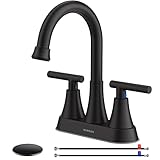
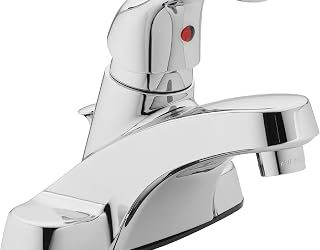
- Centerset: Two handle holes positioned 4 inches (10.2 cm) apart from center to center.
- Mini-widespread: Two or three holes with a spread of approximately 4 to 8 inches (10.2 to 20.3 cm).
- Widespread: Separate handles and spout, commonly adjustable between 8 and 16 inches (20.3 and 40.6 cm).
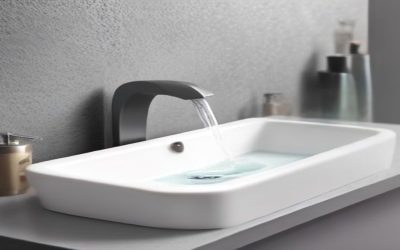
- Wall-mount: The faucet is installed in the wall rather than through the sink or countertop.
If the old sink is still installed, measure the faucet holes before removal. If the sink is already removed, measure the center points of the openings from the underside or use the manufacturer’s sink specifications.
Standard Sizes
The following table covers the most common bathroom faucet layouts. Actual hole diameters and minimum clearances can vary by brand, so use these figures as a starting point and confirm the product installation guide before buying.
| Faucet style | Typical spread | Metric equivalent | Typical hole arrangement |
|---|---|---|---|
| Single-hole | One hole; approximately 1 3/8 in. diameter | One hole; approximately 3.5 cm diameter | Spout and handle integrated in one faucet body |
| Centerset | 4 in. center to center | 10.2 cm center to center | Two or three holes, usually covered by one base plate |
| Mini-widespread | 4 to 8 in. | 10.2 to 20.3 cm | Separate spout and handles |
| Widespread | 8 to 16 in. | 20.3 to 40.6 cm | Three separate holes or mounting components |
| Wall-mount | Usually 3 1/2 to 8 in. between supply connections | 8.9 to 20.3 cm | Connections are in the wall, not the sink deck |
A sink advertised as “8-inch faucet compatible” generally has holes spaced 8 inches apart on center. A three-hole sink may also accept a single-handle faucet if the faucet includes a matching deck plate, but the plate must cover the unused openings. Conversely, a centerset faucet usually cannot span a sink designed for a larger widespread faucet.
How to Measure Your Space
- Identify the faucet configuration. Count the holes in the sink or countertop. One hole indicates a single-hole setup. Two holes may indicate a centerset faucet, while three separate holes often indicate a widespread or three-hole centerset arrangement.
- Locate the hole centers. For round holes, the center is the midpoint across the opening. You can estimate it by placing a ruler across the diameter. If the faucet is installed, measure from the centerline of one handle or mounting hole to the centerline of the other.
- Measure center to center. Place the ruler parallel to the back edge of the sink and measure horizontally from the center of the left hole to the center of the right hole. Record the measurement to the nearest 1/8 inch, or about 3 mm.
- Check the number of holes. Measure the spout opening separately from the handle openings if the sink has three holes. Some replacement faucets need all three holes, while others use only one hole and require a cover plate for the remaining openings.
- Measure the deck thickness. Measure the sink or countertop from the top surface to the underside. Many faucet shanks fit decks up to about 1 1/2 or 2 inches thick, but thick stone, vessel-sink countertops, and reinforced vanity tops may require extension hardware.
- Check clearance behind the sink. Leave room for the faucet handle movement, backsplash, cleaning, and installation tools. A faucet may fit the hole spacing but still be unusable if the handles hit the wall or backsplash.
- Measure the faucet height and reach. A spout that is too short may not reach the drain area, while an oversized spout can splash water outside the basin. Compare the faucet’s spout reach with the distance from the mounting hole to the center of the bowl.
- Inspect the supply connections. Bathroom faucet supply lines commonly connect to 3/8-inch compression shutoff valves, but older plumbing may use different fittings. Check the included hoses and the distance from the faucet connections to the valves before removing the old faucet.
- Photograph and label the old setup. Take a photo beneath the sink and label the hot and cold lines. This is especially useful when replacing a widespread faucet with separate hot and cold supply hoses.
When measuring a replacement sink for an existing faucet, use the faucet’s required spread—not just the dimensions of the old basin. A sink can be larger or smaller overall while still fitting the same 4-inch or 8-inch faucet layout.
By Room or Use Case
Standard bathroom vanity
A 4-inch centerset faucet is the most common choice for a compact or standard bathroom vanity. It works well on many small rectangular and oval sinks and often includes a base plate that covers the three-hole arrangement. Measure the existing holes carefully because a nominal 4-inch faucet is installed using a 4-inch center-to-center spacing.
Large primary-bath vanity
A widespread faucet is a better match for a larger vanity or a sink with generous deck space. Common spreads range from 8 to 12 inches, although adjustable models may extend to 16 inches. Measure the available deck area as well as the hole spacing so the spout and handles do not appear crowded or sit too close to the backsplash.
Powder room or narrow sink
Small pedestal sinks and narrow vanities often use a single-hole or 4-inch centerset faucet. Before selecting a single-hole model, confirm that the sink has a single center opening. If it has three holes, choose a faucet with a compatible escutcheon or a separate cover plate designed to hide the unused openings.
Vessel sink and countertop installation
Vessel sinks are usually installed with a tall single-hole faucet through the countertop. Measure the countertop thickness, faucet height, and spout reach together. A standard bathroom faucet may be too short to clear the vessel rim, while a tall faucet may produce excessive splashing if its reach and water angle are not appropriate.
Repairing an existing faucet
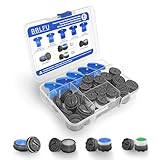
If the faucet spread is correct but the handles are loose or the water flow is reduced, replacement parts may solve the problem without replacing the sink. Extension repair kits for certain widespread faucet cartridges commonly cost about $10 to $20. Faucet aerator inserts and small flow-restrictor kits generally range from about $8 to $15, depending on the number of pieces and included removal keys. Match the brand, cartridge type, thread size, and faucet model before ordering; spread alone does not identify internal parts.
Common Sizing Mistakes
- Measuring edge to edge: Always measure center to center. Edge measurements can be off by the diameter of one or both holes.
- Confusing 4 inches with 4 centimeters: A standard centerset faucet is 4 inches, or about 10.2 cm—not 4 cm.
- Ignoring hole count: A two-hole faucet and a three-hole faucet may have similar spacing but require different sink layouts or cover plates.
- Assuming all widespread faucets are fixed at 8 inches: Some widespread models adjust across a range, while others have fixed connections. Check the minimum and maximum spread.
- Forgetting deck thickness: A mounting shank that is too short cannot be secured, even when the faucet spread is correct.
- Skipping backsplash clearance: Handles need space to rotate, and some faucets require room for a basin wrench during installation.
- Matching only the appearance: Two faucets can look similar but use different cartridge extensions, supply connections, hole requirements, or aerator threads.
FAQ
Is bathroom faucet spread measured from the inside or outside of the holes?
Measure from the center of one mounting hole to the center of the other. The measurement is not taken from the inside or outside edges. For a 4-inch centerset faucet, the two hole centers should be 4 inches apart.
Can I install an 8-inch faucet on a 4-inch sink?
Usually not without modifying the countertop or using a different sink. An 8-inch widespread faucet needs mounting points that are farther apart. A deck plate can cover extra holes, but it cannot usually reposition existing holes to create the required spread.
What if my measurement is slightly different from a standard size?
Recheck that you measured center to center and that the ruler was parallel to the back edge. A difference of 1/8 inch can result from measurement error, but a larger difference may indicate a nonstandard faucet or an adjustable widespread model. Use the manufacturer’s installation dimensions before purchasing.
Do faucet aerators affect faucet spread?
No. An aerator controls the water stream at the end of the spout and does not change the distance between mounting holes. Aerators must match the faucet’s internal or external thread size, while faucet spread is determined by the sink or countertop layout.