Key takeaways
- Measuring the drain flange instead of the hole: A 2 1/2-inch flange does not mean the sink requires a 2 1/2-inch opening.
- Confusing the tailpiece with the sink opening: The plumbing outlet is usually 1 1/4 inches, while the ceramic drain opening is commonly 1 3/4 inches.
- Ignoring the overflow: A drain without overflow will not properly serve a sink with an overflow passage.
- Assuming all “universal” drains fit: Some universal listings cover several flange and thread sizes but still require a specific hole diameter.
- Forgetting the countertop cutout: The sink’s drain opening may be standard even when the countertop cutout, faucet holes, and sink placement are not.
- Choosing by finish alone: Matching chrome or nickel is useful, but the drain must first match the opening, overflow, stopper, and tailpiece.
- Skipping the installation clearance: A drain can fit the basin while its lift rod, nut, or tailpiece conflicts with a drawer or vanity shelf.
What's inside
The Short Answer
The standard drain opening for a bathroom undermount sink is usually 1 3/4 inches (about 44.5 mm) in diameter. This size accepts most standard bathroom pop-up drains, grid drains, and sink drain assemblies. The drain opening is also commonly called the sink drain hole or drain bore.
Although 1 3/4 inches is the most common specification, actual openings can vary slightly by manufacturer. Some sinks have an opening close to 1 5/8 inches, while specialty or large-cap drains may require an opening near 2 inches. Always compare the sink’s technical drawing with the drain manufacturer’s required hole size before purchasing.
As an Amazon Associate we earn from qualifying purchases at no extra cost to you. Product prices and availability are accurate as of the date shown and are subject to change.
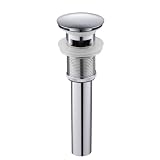


Do not confuse the drain opening with the plumbing connection below the sink. A bathroom sink drain typically has a 1 1/4-inch tailpiece, which connects to the trap. The visible flange at the top is larger—often approximately 2 1/4 to 2 3/4 inches across—so it covers the hole and seals against the basin.
Standard Sizes
Most bathroom undermount sinks are designed around a standard drain-and-tailpiece combination. The following measurements are useful when selecting a replacement drain or checking whether an existing drain will fit.
| Part or measurement | Typical size in inches | Approximate size in centimeters | What it means |
|---|---|---|---|
| Sink drain opening | 1 3/4 in. | 4.45 cm | The hole cut through the bottom of most bathroom sinks |
| Common acceptable opening range | 1 5/8–1 7/8 in. | 4.13–4.76 cm | A range seen across different sink and drain designs |
| Drain flange diameter | 2 1/4–2 3/4 in. | 5.72–6.99 cm | The top rim that sits over and covers the drain opening |
| Bathroom drain tailpiece | 1 1/4 in. | 3.18 cm | The threaded or smooth outlet connecting to the P-trap |
| Large-cap or specialty drain opening | About 2 in. | About 5.08 cm | May require a specifically matched drain assembly |
| Typical sink depth | 5–8 in. | 12.7–20.3 cm | Helps determine basin capacity and under-counter clearance |
A drain marketed as fitting a “standard 1 3/4-inch opening” is generally the right starting point for a bathroom undermount sink. For example, a chrome bathroom sink drain with overflow may cost approximately $15 to $25, while brushed-nickel pop-up drains with larger caps commonly cost about $16 to $30. Price does not determine compatibility; the listed opening size, overflow design, thread size, and flange dimensions do.
The sink must also have the correct overflow configuration. A sink with an overflow channel needs a drain labeled with overflow. A vessel or basin without an overflow generally uses a drain without overflow. Installing the wrong style can cause leaking, poor drainage, or an unusable overflow passage.
How to Measure Your Space
- Remove the old drain if possible. Loosen the drain nut from below and lift out the flange. Scrape away old plumber’s putty or silicone so the hole can be measured accurately.
- Measure the drain opening, not the visible flange. Use a tape measure, ruler, or calipers to measure straight across the ceramic or porcelain hole at its narrowest point. Do not measure the wide metal rim on top.
- Measure in two directions. Check the opening from front to back and side to side. A round hole should have nearly identical readings. A difference of more than about 1/16 inch may indicate a beveled, irregular, or damaged opening.
- Check the overflow. Look for a small opening or channel near the upper inside wall of the basin. If one is present, select a drain with overflow openings. If there is no overflow, use a drain without overflow.
- Measure the space beneath the sink. Record the distance from the underside of the countertop to the drain centerline, then measure to the back wall. A drain may fit the ceramic opening but still interfere with a drawer, shelf, or backsplash plumbing.
- Check the tailpiece and trap. Most bathroom sink plumbing uses a 1 1/4-inch drain tailpiece, but older installations may have adapters or unusual fittings. Measure the existing pipe outside diameter before ordering replacement parts.
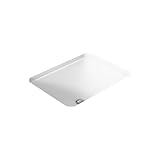
- Review the sink’s cut sheet. Manufacturer drawings are more reliable than general size charts. A rectangular undermount sink such as a 20 1/4-by-15 11/16-inch model may have a standard drain opening, but the exact drain location and clearance still depend on the design.
By Room or Use Case
Primary bathroom vanity
A standard 1 3/4-inch drain is the best choice for most primary-bathroom undermount sinks. Choose a metal pop-up drain if you want a stopper for filling the basin, or a grid drain if you prefer continuous drainage. Confirm that the drain finish matches the faucet and cabinet hardware; chrome, brushed nickel, matte black, and polished brass are common options.
Guest bathroom
Guest-bath sinks usually have the same drain dimensions as primary-bath sinks. A basic pop-up assembly in the $15-to-$30 range is usually sufficient. If the sink includes an overflow, use a compatible overflow drain even when the basin is used infrequently. The overflow is a safety feature, not a substitute for a properly closed stopper.
Small powder room
Compact undermount sinks may measure approximately 15 to 18 inches wide and 12 to 15 inches front to back, but their drain openings commonly remain near 1 3/4 inches. Measure cabinet and plumbing clearance carefully because a shallow vanity can leave very little room for the P-trap. A low-profile drain or space-saving trap may help, but both must match the sink and local plumbing requirements.
Large or deep undermount sink
A larger basin does not automatically require a larger drain hole. Many sinks measuring 20 to 24 inches wide still use a standard 1 3/4-inch opening. However, some large-cap drains are designed for a larger opening and use a wider decorative flange. Check the drain’s required hole diameter rather than assuming that a large sink needs a large drain.
Accessible or high-use bathroom
For a bathroom used by children, older adults, or people with limited hand strength, a simple push-button or easy-lift drain may be more practical than a complicated lift-rod mechanism. The opening is still commonly 1 3/4 inches, but verify that the stopper height can be adjusted for the basin depth and that the drain provides a secure seal.
Common Sizing Mistakes
- Measuring the drain flange instead of the hole: A 2 1/2-inch flange does not mean the sink requires a 2 1/2-inch opening.
- Confusing the tailpiece with the sink opening: The plumbing outlet is usually 1 1/4 inches, while the ceramic drain opening is commonly 1 3/4 inches.
- Ignoring the overflow: A drain without overflow will not properly serve a sink with an overflow passage.
- Assuming all “universal” drains fit: Some universal listings cover several flange and thread sizes but still require a specific hole diameter.
- Forgetting the countertop cutout: The sink’s drain opening may be standard even when the countertop cutout, faucet holes, and sink placement are not.
- Choosing by finish alone: Matching chrome or nickel is useful, but the drain must first match the opening, overflow, stopper, and tailpiece.
- Skipping the installation clearance: A drain can fit the basin while its lift rod, nut, or tailpiece conflicts with a drawer or vanity shelf.
FAQ
Is a 1 3/4-inch drain opening standard for an undermount bathroom sink?
Yes. A 1 3/4-inch opening, or approximately 44.5 mm, is the most common size for residential bathroom undermount sinks. Check the manufacturer’s specification before ordering because some specialty sinks use slightly smaller or larger openings.
What size drain pipe connects to a bathroom sink?
Most bathroom sink drains have a 1 1/4-inch tailpiece that connects to a 1 1/4-inch P-trap. The sink opening itself is larger, usually 1 3/4 inches. An adapter may be needed if the existing plumbing uses a different size.
Do undermount sinks need a drain with overflow?
Only if the sink has an overflow passage. Look for an opening near the upper inside wall of the basin or check the product specifications. Use a drain with overflow for an overflow sink and a drain without overflow for a sink designed without one.
Can I use any bathroom drain in a 1 3/4-inch opening?
Not necessarily. The drain must have the correct body diameter, flange coverage, thread length, overflow configuration, and stopper style. Verify all measurements before installation. For a 2026 bathroom update, the safest approach is to match the drain to the sink model or use a drain explicitly listed for a standard 1 3/4-inch opening.