Key takeaways
- Near a shower or on an open vanity: Choose coated wire or ventilated plastic. Leave space between the basket and the wall so air can circulate, and do not store damp towels in it.
- Inside a dry linen cabinet: Natural wicker is a reasonable choice for lightweight, dry items. Keep it off a surface that gets wet during cleaning.
- Under a sink: Favor plastic or coated wire, since plumbing drips and cleaning-product spills are more likely here. Measure around the drain trap and supply lines before choosing basket width and height.
- For small bottles or loose grooming tools: A close-weave plastic basket prevents narrow items from slipping through. A wire basket may need a removable, washable liner.
- For spare towels or toilet paper: Use a basket with enough width that items are not compressed tightly; avoid placing paper directly below a pipe connection that could leak.
What's inside
Choose bathroom storage baskets for shelves that are about 1–2 inches shorter than the shelf’s clear depth and width, then favor ventilated plastic or coated wire where splashes and damp towels are common; natural wicker suits dry, well-ventilated storage but needs more care to limit mildew.
As an Amazon Associate we earn from qualifying purchases at no extra cost to you.
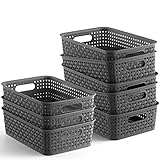

Match basket dimensions to shelf depth first
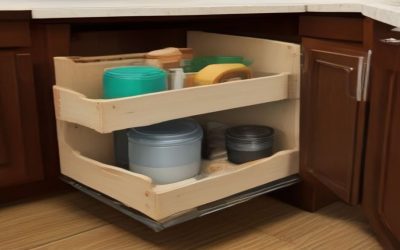
A basket that fits the shelf can still be difficult to use if it sits flush against a wall, catches on a door, or leaves no room to grip its rim. Measure the clear shelf surface—not the overall cabinet dimensions—and check for hinges, trim, pipes, and a front lip. Leave roughly ½–1 inch of clearance at the back and sides where possible. A front handle may need extra space to pull the basket out.
Use these common dimensions as a starting point, not a guarantee: bathroom furniture varies, and the usable space inside a shelf is often smaller than its advertised depth.
| Clear shelf depth | Suggested basket depth | Good fit for | Check before buying |
|---|---|---|---|
| 8–10 in | 6–8 in | Shallow wall shelves, cotton rounds, small bottles | Whether the basket blocks a cabinet door or projects past the shelf |
| 11–13 in | 9–11 in | Many bathroom vanities and linen-cabinet shelves | Allow clearance for a front rim, handle, or shelf lip |
| 14–16 in | 12–14 in | Deeper linen storage, folded towels, larger toiletries | Measure around plumbing and confirm the shelf can carry the loaded basket |
Measure height as well as depth if the basket will sit below another shelf. Leave about 1 inch above the basket for lifting it out without scraping the shelf overhead. For frequently used items, keep the heaviest basket between waist and chest height; storing a loaded bin overhead makes it harder to remove safely.
Wicker, wire, or plastic: which holds up best?
“Wicker” describes a weaving style, not a single material. Natural reed, rattan, and similar plant fibers behave differently from synthetic resin wicker. Likewise, wire baskets may be bare, painted, or coated. Check the actual material and finish rather than relying on the basket’s appearance.
| Material | Humidity and mildew risk | Strengths | Trade-offs and care | Best situation |
|---|---|---|---|---|
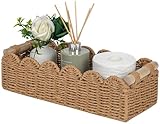
| Natural wicker or reed | Higher if repeatedly damp or poorly ventilated | Lightweight, warm-looking, hides visual clutter | Fibers can absorb moisture, trap dust, and become musty; dry promptly and avoid storing wet cloths | Dry shelves away from the shower, for spare toilet paper or dry toiletries |
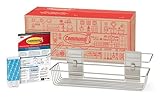
| Coated wire | Low when the coating is intact; corrosion risk rises if it chips | Air circulates well, contents are easy to see, basket dries quickly | Inspect joints and coating for scratches; narrow items may need a liner | Ventilated storage for bottles, hair tools, or items used near a shower |
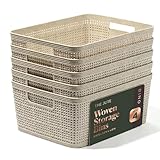
| Plastic weave or molded plastic | Generally low; nonporous surfaces are easy to wipe | Resists splashes, weighs little, and suits damp cabinets | Water can still collect in a solid bottom; some lightweight designs flex under heavy bottles | Shared bathrooms, under-sink storage, or shelves exposed to frequent moisture |
For a humid room, ventilation and drying matter as much as the basket material. A basket with open sides cannot prevent mildew if wet washcloths are packed inside it or the shelf stays damp. Conversely, natural wicker can work well in a dry linen cabinet if the room is ventilated and the basket is kept away from direct splashes.
Pick by bathroom conditions
- Near a shower or on an open vanity: Choose coated wire or ventilated plastic. Leave space between the basket and the wall so air can circulate, and do not store damp towels in it.
- Inside a dry linen cabinet: Natural wicker is a reasonable choice for lightweight, dry items. Keep it off a surface that gets wet during cleaning.
- Under a sink: Favor plastic or coated wire, since plumbing drips and cleaning-product spills are more likely here. Measure around the drain trap and supply lines before choosing basket width and height.
- For small bottles or loose grooming tools: A close-weave plastic basket prevents narrow items from slipping through. A wire basket may need a removable, washable liner.
- For spare towels or toilet paper: Use a basket with enough width that items are not compressed tightly; avoid placing paper directly below a pipe connection that could leak.
Check load, access, and cleaning before you buy
Basket capacity is not the same as shelf capacity. Bottles of shampoo, jars, and cleaning supplies can make a compact basket surprisingly heavy. If a shelf has a stated weight limit, include the basket itself and everything inside it. When no limit is provided—especially on a wall-mounted shelf—do not assume that a lightweight-looking shelf can support a fully loaded bin. Keep glass bottles low, where a dropped item is less likely to break or injure someone.
Think about how the basket will be used. A front handle helps with deep shelves, but can snag on a cabinet frame. Cutout handles stay compact, while separate handles may take up extra width. On a shelf above the toilet, check that the basket can be lifted out without hitting a light fixture or wall. For a family bathroom, several smaller baskets are often easier to carry and sort than one deep, overloaded bin.
Maintenance is part of humidity resistance. Empty baskets occasionally, wipe the shelf beneath them, and let both dry before returning damp items. Plastic is generally easy to clean with a damp cloth and mild soap; follow the maker’s instructions. For coated wire, dry scratches and chipped spots promptly. For natural wicker, remove dust with a soft brush and keep it dry rather than soaking it.
A quick measuring and selection sequence
- Measure the shelf’s usable width, depth, and height. Include lips, rails, pipes, hinges, and door clearance.
- Subtract clearance. As a practical starting point, choose a basket 1–2 inches narrower and shorter than the shelf’s usable dimensions, adjusting for handles and obstructions.
- Estimate the contents. Group heavy bottles separately from light items, and avoid loading a basket beyond the shelf’s capacity.
- Choose material for the wettest likely condition. Use natural wicker in dry storage; choose coated wire or plastic where splashes or condensation are more likely.
- Confirm access and cleaning. Make sure the basket can be pulled out, lifted, and wiped without catching on the shelf or blocking a door.
What to choose
For a dry linen shelf, natural wicker offers a tidy, textured look if it stays away from damp towels and splashes. For a bathroom that regularly gets steamy, coated wire is a strong choice when airflow and visibility matter, while plastic is the easier-care option for under-sink areas and frequent splashes. In every case, measure the shelf’s clear space first: a well-sized basket that can be removed and aired out is more useful than a larger one that fits only when wedged in place.