Key takeaways
- Exact model and claims: Confirm the test or certification applies to the model you are considering and covers the contaminants relevant to your water.
- Capacity details: Distinguish daily production from stored, ready-to-dispense water.
- Routine: Find out how feed and reject water are added, removed, and cleaned.
- Ongoing cost: Add up every required filter and note the recommended replacement schedule.
- Counter compatibility: Check width, depth, height, lid clearance, reservoir removal, and outlet access.
- Household needs: Consider whether a small reservoir will keep pace with cooking and drinking use, not just occasional glasses.
Best Countertop Reverse Osmosis Systems for Cleaner Water
The best countertop reverse osmosis system is the one that fits your daily water use and available counter space while keeping replacement filters and wastewater manageable. For renters or households that want filtered water without plumbing changes, a tank-based unit is often the practical starting point; choose a tankless model when counter clearance and continuous dispensing matter more. Compare verified contaminant-reduction claims, usable daily output, mineral options, and the cost and availability of replacement filters before choosing.
Quick picks by situation
| Situation | What to prioritize | Likely fit |
|---|---|---|
| Renting or avoiding installation | Self-contained reservoir, simple setup, easy-to-replace filters | Tank-based countertop RO system |
| Limited counter space | Small footprint, clearance for the lid and water reservoir | Compact tank-based unit; measure before buying |
| Several people filling bottles daily | Higher stated daily output and a larger clean-water reservoir | Higher-capacity countertop system, tank or tankless |
| Prefer water with added minerals | A clearly specified remineralization stage and replacement cartridge | RO system with a post-filter mineral cartridge |
| Want less frequent refilling | Tankless dispensing and a suitable production rate | Tankless model, if its dimensions and power needs work |
How to compare countertop RO systems
1. Look beyond the number of filtration stages
Stage counts are not a reliable measure of performance by themselves. A system might combine sediment and carbon filtration with a reverse-osmosis membrane, then add a final taste filter or remineralization cartridge. Another may count several carbon layers as separate stages. Check the component list and the manufacturer’s contaminant-reduction documentation instead of choosing by the biggest stage number.
Our top picks

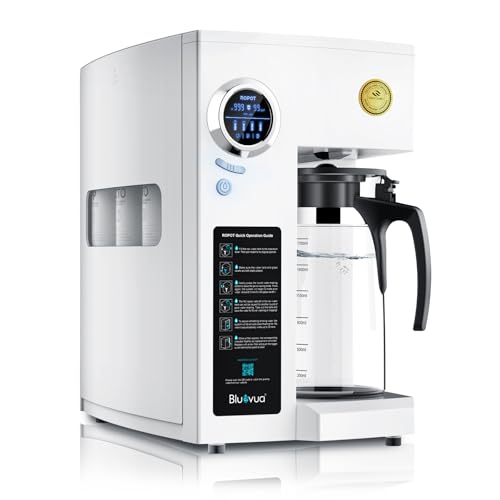

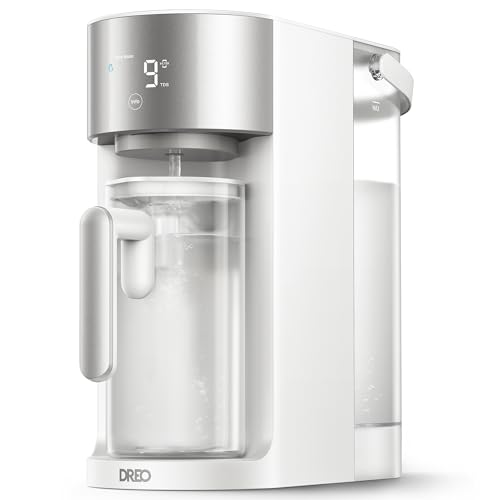
As an Amazon Associate we earn from qualifying purchases at no extra cost to you. Ratings are shown as listed on Amazon.
Match stated reduction claims to your concern. If you are buying for a specific contaminant, look for independent certification or test documentation that covers that contaminant and the exact system model. Certification to a general standard does not automatically mean a product is certified to remove every substance of concern. If your water comes from a private well, consider having it tested first; an RO unit is not a substitute for identifying the treatment your water needs.
2. Match daily output to how you use water
Manufacturers may advertise production in gallons per day, but that figure is not the same as the amount ready to pour from a countertop unit at any moment. A reservoir-style model stores a limited quantity of purified water and must refill and process more as you use it. Room temperature, feed-water conditions, and operating cycles can also affect real-world production.
Estimate your routine: drinking, cooking, coffee, and bottle filling add up quickly. Check both the stated daily capacity and the clean-water reservoir volume. If you routinely need several gallons at once, a small countertop reservoir may mean repeated refills even when the advertised production rate sounds ample.
3. Choose tank or tankless based on the counter, not just convenience
Tank-based systems hold water ready to dispense, which can make serving a glass quick. In exchange, they take up space and require you to monitor and refill the feed-water reservoir. Tankless models produce water on demand and can reduce stored-water volume, but they still need room for the machine, access for maintenance, and an outlet. Their flow rate and production capacity vary, so “tankless” does not necessarily mean unlimited instant water.
Measure the actual space where the unit will sit, including room to open lids, remove reservoirs, and reach the faucet or dispenser. A unit that fits the counter’s width may still be awkward under low cabinets. Allow access behind or beside it if the manual calls for ventilation or clearance.
4. Decide whether remineralization is worth the extra cartridge
Reverse osmosis removes many dissolved substances, including minerals that contribute to water’s taste. A remineralization stage adds selected minerals back after filtration, which some people prefer for flavor. It is a taste and composition feature, not proof that the water is healthier than water from an otherwise suitable RO system.
Check what minerals the cartridge adds, how often it needs replacement, and whether it is included in the system’s filter schedule. If you prefer neutral-tasting water or want fewer consumables, a model without remineralization may be simpler.
5. Compare wastewater and filter costs over time
RO filtration sends some feed water away as reject water. A published wastewater ratio can help compare systems, but confirm how the manufacturer defines it and under what conditions it was measured. A lower ratio can be appealing, yet it should not outweigh verified filtration performance or a capacity that suits your household. Countertop models may collect reject water in a separate reservoir rather than sending it down a drain, so check how often that container must be emptied.
Before buying, price the complete replacement set—not just the most frequently changed filter. Check the replacement intervals, whether filters are sold individually, and whether the cartridges are available directly from the manufacturer. A system with a low purchase price can cost more to maintain if its proprietary filters are expensive or difficult to source.
Use measurements to check countertop fit
Product dimensions are only part of the fit calculation. The table below is a planning guide, not a set of dimensions for any particular model. Measure your own unit’s published footprint and reservoir before ordering, and follow its manual for required clearance.
| Check | Planning measurement | Why it matters |
|---|---|---|
| Counter depth | Measure the usable depth; compare with the unit’s full footprint | Leaves room for the dispenser, backsplash, and safe placement |
| Height beneath cabinets | Measure from counter to the cabinet underside, then compare with the unit height plus lid-opening room | A top-loading reservoir may need extra vertical clearance |
| Side and rear access | Keep enough room to lift out reservoirs and reach filter doors | Reduces the chance that routine cleaning or filter changes require moving the unit |
| Water and power access | Check the reach to a suitable outlet and a place to fill and empty reservoirs | A cord stretched across a sink or cooking area can be inconvenient or unsafe |
| Refill planning | Compare the clean-water storage volume with your household’s usual serving size | Helps predict how often you will wait for or refill water |
What to verify before ordering
- Exact model and claims: Confirm the test or certification applies to the model you are considering and covers the contaminants relevant to your water.
- Capacity details: Distinguish daily production from stored, ready-to-dispense water.
- Routine: Find out how feed and reject water are added, removed, and cleaned.
- Ongoing cost: Add up every required filter and note the recommended replacement schedule.
- Counter compatibility: Check width, depth, height, lid clearance, reservoir removal, and outlet access.
- Household needs: Consider whether a small reservoir will keep pace with cooking and drinking use, not just occasional glasses.
Bottom line
For many renters and smaller households, a compact tank-based countertop RO system offers a useful balance of easy setup and ready-to-pour water. A tankless model is worth considering when you want on-demand dispensing and have room for its footprint and power connection. In either case, base the choice on verified contaminant claims, reservoir size and daily output, filter replacement costs, and measured cabinet clearance—not stage count alone.