Key takeaways
- Check the faucet: The system may include a dedicated faucet, or require a compatible existing one. Confirm the counter or sink has an available hole; drilling stone or a finished countertop can require a professional.
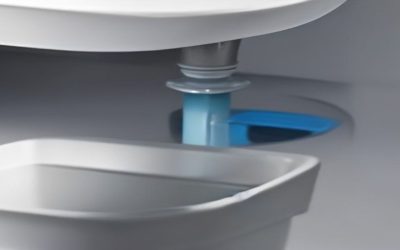
- Inspect the drain: Most under-sink RO systems send reject water to a drain connection. A disposal, tight cabinet, or existing drain hardware can complicate placement.
- Locate the shutoff valve: The feed-water connection must be accessible, and the tubing needs a route that avoids sharp bends and moving drawers.
- Plan for service: Leave access to the prefilters and membrane. Do not bury the unit behind stored cleaners or a fixed shelf.
- Check local requirements: Follow the installation manual and local plumbing rules. If you are renting, get permission before adding a faucet hole or drain saddle.
Best Tankless Reverse Osmosis Systems: Which Type Fits Your Kitchen?
The best tankless reverse osmosis system for most kitchens is a compact, 400–800 GPD model with a published contaminant-reduction data sheet, a clearly stated recovery ratio, and filters you can replace without moving the unit. Choose a higher-output model if you fill large pots often; choose a system with a verified NSF/ANSI certification for the contaminants you care about if water quality matters more than speed.
Tankless RO systems can free up the cabinet space occupied by a conventional storage tank, but they are not automatically smaller in every direction or simpler to install. They need room for the filter housing, hoses, drain connection, and sometimes a power adapter. The right choice depends on how much water you draw, how much wastewater you accept, and whether your sink cabinet has an electrical outlet.
Our top picks

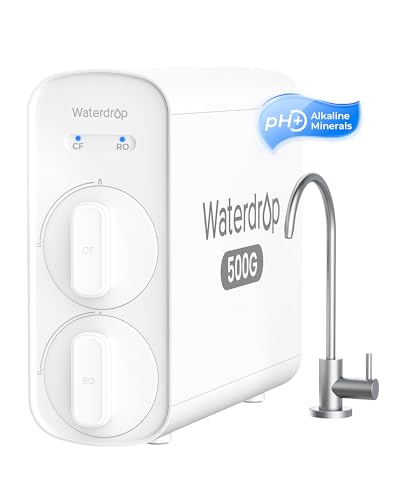
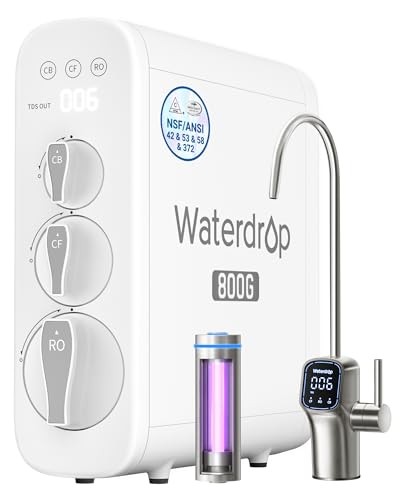
![[Dual Flow] Waterdrop WD-T4-A Alkaline pH+ Reverse Osmosis Water Filter, NSF/ANSI 372 Certified, 10-Stage, 450GPD Tankless Undersink RO Filtration System, 2:1 Pure to Drain, BPA Free, Plug-in required](https://m.media-amazon.com/images/I/41Sikz7z1SL._SL500_.jpg)
As an Amazon Associate we earn from qualifying purchases at no extra cost to you. Ratings are shown as listed on Amazon.
Quick comparison by kitchen situation
| Kitchen situation | What to prioritize | Good target specification |
|---|---|---|
| Small apartment or crowded cabinet | Compact footprint and accessible filters | Under 17 in. tall; confirm space for hoses and filter removal |
| Several people filling bottles and pitchers | Higher rated output and fast dispensing | 600–800 GPD; check the faucet’s actual flow rate |
| Water conservation is a priority | Low waste-to-clean-water ratio | Look for a stated ratio near 2:1 or better under the maker’s test conditions |
| No outlet under the sink | Electrical requirements and outlet access | Confirm whether the model requires a powered pump; many tankless units do |
| Renter or temporary installation | Reversible plumbing changes | Check faucet-hole needs, drain-clamp installation, and lease requirements first |
How the main trade-offs compare
| Decision factor | What to compare | Why it matters |
|---|---|---|
| Footprint | Unit width, depth, height, and filter-change clearance | A narrow body may still be too tall for a cabinet shelf or garbage-disposal plumbing. |
| Filtration stages | What each stage does, not just the stage count | Carbon prefilters protect the membrane; postfilters can improve taste. More stages alone do not prove better performance. |
| Flow rate | Rated gallons per day and faucet output | Daily production ratings are not the same as the stream you get at the faucet. |
| Recovery ratio | Gallons of feed water used per gallon of purified water | A lower waste volume can reduce water use, but results depend on water pressure and conditions. |
| Power | Adapter, pump, and outlet location | Many tankless designs use a pump to maintain output; an outlet may be necessary. |
| Filter replacement | Replacement interval, cost, and access | Frequent or awkward changes can erase the appeal of a compact system. |
What to look for in a tankless RO system
Footprint and under-sink fit
Measure the clear cabinet space, not just the door opening. Record the width, depth, and height available after accounting for the sink bowl, garbage disposal, shutoff valves, and existing plumbing. Then compare those measurements with the system’s dimensions and the space needed to pull out each cartridge. A unit that fits tightly on installation day may become difficult to service later.
As a practical planning allowance, reserve about 2–3 inches around the unit for hoses and access where the cabinet layout permits, plus the manufacturer’s specified clearance for filter removal. Treat that as a planning guide, not a universal installation rule: some cartridges pull straight down, while others twist out from the front or side.
Stages and verified contaminant claims
Common configurations combine sediment and carbon prefiltration, an RO membrane, and a final carbon stage. Compare the contaminant-reduction claims against the system’s performance data sheet and the specific certification standard named by the manufacturer. NSF/ANSI 58 covers reverse osmosis drinking-water treatment systems; other standards apply to particular materials or contaminant claims. Certification should be checked for the exact model, not assumed from a brand name or the words “NSF materials.”
If you have a known concern—such as lead, arsenic, nitrate, or PFAS—confirm that the exact system has a documented reduction claim for that contaminant. An RO label by itself is not a substitute for checking the data.
Rated production versus faucet speed
Tankless models commonly advertise output in gallons per day (GPD). That number describes production under specified test conditions; it does not mean the faucet dispenses that many gallons evenly throughout the day. Pressure, temperature, and incoming-water quality affect output. For ordinary drinking and cooking, a 400–600 GPD rating may be adequate for a household of one or two. Larger households or frequent pot filling may benefit from 600–800 GPD, provided the faucet’s flow rate also suits the way you use it.
Recovery ratio and wastewater
A recovery ratio of 2:1 means the system sends roughly two gallons of concentrate to the drain for every gallon of purified water, under the stated conditions. A 3:1 ratio uses more feed water for the same product-water volume. Compare ratios only when the manufacturers describe their test conditions consistently; higher pressure and water temperature can change real-world performance. Also confirm that your drain connection can accommodate the system’s reject-water line.
Electricity and filter upkeep
Many tankless systems use an electric pump, sensors, or controls. Check the power-adapter requirements and whether the cord can reach a grounded outlet without crossing a wet or hot area. If there is no outlet in the cabinet, ask an electrician about a safe, code-compliant solution rather than using an improvised extension cord.
Filter schedules vary by model and water quality. Compare the replacement intervals, the number of cartridges, and the cost of the full set—not only the membrane. A simple replacement layout can matter as much as a long advertised interval: look for cartridges that can be reached without disconnecting the drain line or removing the unit.
Installation realities before you buy
- Check the faucet: The system may include a dedicated faucet, or require a compatible existing one. Confirm the counter or sink has an available hole; drilling stone or a finished countertop can require a professional.
- Inspect the drain: Most under-sink RO systems send reject water to a drain connection. A disposal, tight cabinet, or existing drain hardware can complicate placement.
- Locate the shutoff valve: The feed-water connection must be accessible, and the tubing needs a route that avoids sharp bends and moving drawers.
- Plan for service: Leave access to the prefilters and membrane. Do not bury the unit behind stored cleaners or a fixed shelf.
- Check local requirements: Follow the installation manual and local plumbing rules. If you are renting, get permission before adding a faucet hole or drain saddle.
Bottom line
For a compact kitchen, prioritize cabinet fit and straightforward cartridge access over the highest stage count. For a busy household, compare both GPD and faucet flow rather than relying on production capacity alone. If conserving water matters, favor a clearly documented low-waste ratio and check the conditions behind it. Before ordering, measure the cabinet, confirm electrical access, and verify that the exact model’s contaminant claims match your needs.