Key takeaways
- Measure the finished-wall projection, bowl width, door swing, and clear space in front and at the sides.
- Choose the desired seat height using the bowl rim height plus seat thickness.
- Verify that the bowl, carrier, flush plate, water supply, and drain rough-in are a compatible set.
- Confirm the carrier’s load rating and required wall or floor anchoring with the installation documents.
- Check flush volume and service-part access, including how routine valve replacement is performed.
- Ask the installer to confirm local code requirements and the framing plan before the wall is closed.
Best wall-hung toilets: choose by room, carrier, and service access
The best wall-hung toilet is one whose bowl fits your bathroom, whose in-wall carrier is rated for the expected load, and whose flush and service parts suit your plumbing—not simply the one with the shortest projection. For a compact room, compare the toilet’s actual projection and bowl width; for a remodel, confirm the carrier fits the wall and floor structure before choosing the bowl.
Compare the factors that determine fit
| Decision factor | What to check | Useful starting point |
|---|---|---|
| Bowl dimensions | Projection from finished wall, width, and seat height. Dimensions can vary between round-front and elongated bowls. | Many wall-hung bowls project roughly 19–23 inches; verify the exact model drawing. |
| Clearance | Local code, door swing, nearby vanity, and comfortable space in front of the bowl. | In the U.S., common code guidance calls for at least 15 inches from the toilet centerline to each side obstruction and 21 inches of clear space in front; local rules may differ. |
| Weight capacity | The carrier’s stated load rating and installation requirements—not just the bowl’s material. | Many residential carriers are rated around 500–800 lb when installed as specified. Check the manufacturer’s documentation for the exact carrier. |
| Flush performance | Flush volume, bowl-wash design, and compatibility with the carrier’s flush valve. | Many current models use about 1.28 gallons per flush; confirm the specific bowl-and-carrier combination. |
| Service access | Whether the flush plate opening allows access to the fill valve, flush valve, and shutoff. | Choose a system with service parts accessible through the plate opening, and keep the plate model and parts information. |
These ranges are screening figures, not guarantees. The manufacturer’s installation drawing and your local plumbing code take precedence, particularly for clearances, carrier anchoring, and rough-in dimensions.
Our top picks

As an Amazon Associate we earn from qualifying purchases at no extra cost to you. Ratings are shown as listed on Amazon.
Choose by bathroom and project type
| Your situation | What to prioritize | Likely best fit |
|---|---|---|
| Small bathroom or powder room | Short projection, compact width, and a door that clears the front of the bowl. | A compact or round-front bowl, provided it still offers comfortable seating and meets required clearances. |
| Taller users or easier transfers | Finished seat height measured from the floor, including the seat. | A bowl and carrier combination that achieves the desired height; accessible installations must follow applicable requirements. |
| Children in the household | Manageable seat height, easy-to-clean shape, and dependable flush performance. | A standard-height bowl may be easier for children; avoid choosing a very high installation solely for an adult user without considering the rest of the household. |
| Renovation with the wall open | Carrier depth, stud or floor anchoring, drain location, and future parts availability. | A complete carrier-and-bowl system selected before framing and rough plumbing are finalized. |
| Existing finished wall or limited access | Whether the wall can be opened and whether the chosen system’s service opening is sufficient. | Consider a conventional floor-mounted toilet if installing or servicing a carrier would require disproportionate demolition. |
How to compare bowls and flush systems
Measure the room using finished surfaces
Check the bowl’s projection from the finished wall, not from the framing. Mark its outline on the floor with tape, then test the door swing and the distance to the vanity, shower, or tub. Measure width at the widest point and confirm side clearance from the toilet centerline. A bowl that saves two inches of projection can make a tight layout easier, but it cannot compensate for inadequate required clearance.
Seat height also needs a real measurement. Ask for the bowl’s rim height and add the seat thickness to estimate the finished sitting height. Do not assume that “comfort height” means the same thing across brands. If multiple household members will use the toilet, consider how that height works for both seated transfers and children.
Match the carrier and bowl as a system
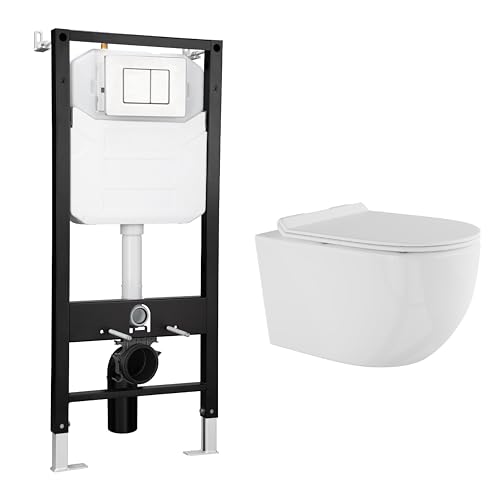
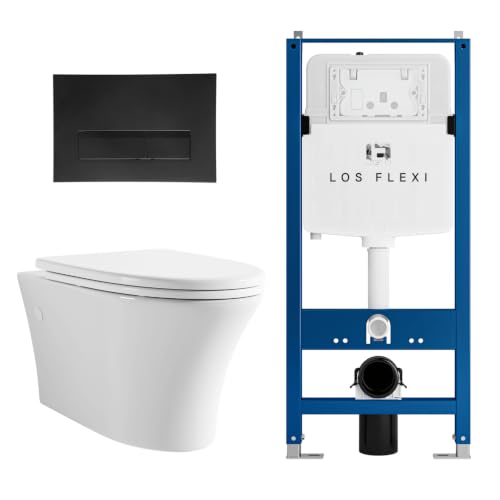
The carrier is the concealed steel frame and waste connection that supports the toilet. It must be compatible with the bowl, flush plate, water supply, drain arrangement, and wall depth. A carrier can anchor to studs, the floor, or both, depending on its design. Have a qualified plumber confirm the structure and rough-in before closing the wall; finish materials alone are not a substitute for the specified structural anchoring.
Confirm the load rating in the carrier’s installation documents and follow its installation conditions. Do not treat a published rating as permission to exceed local requirements or ignore anchoring instructions. The bowl and seat have their own requirements too, so check the complete system rather than relying on a single headline capacity figure.
Compare flushing beyond gallons per flush
Flush volume is only one part of performance. Look for the bowl’s flushing mechanism, rim-wash design, and documented compatibility with the selected carrier. A dual-flush plate may offer different flush volumes, but the matching carrier and bowl determine how the system operates. If the toilet will serve a busy household, prioritize a well-supported system with readily identifiable replacement valves and seals over an unfamiliar configuration chosen for a small water-saving claim.
Know the service-access trade-off
A wall-hung toilet hides the tank and carrier, creating a cleaner look and leaving more floor visible for cleaning. The trade-off is that concealed components must be reached through the flush-plate opening or through wall access if a repair goes beyond routine service. Before buying, find the manufacturer’s service instructions and check whether the fill valve, flush valve, and shutoff can be reached through the plate opening.
Keep the carrier and flush-plate model numbers, installation manual, and any access-panel details with the home’s records. Ask the installer to show you how to remove the plate and isolate the water supply. If the proposed layout hides the carrier behind tile or cabinetry without a planned access route, resolve that before the finish wall is built.
Purchase checklist
- Measure the finished-wall projection, bowl width, door swing, and clear space in front and at the sides.
- Choose the desired seat height using the bowl rim height plus seat thickness.
- Verify that the bowl, carrier, flush plate, water supply, and drain rough-in are a compatible set.
- Confirm the carrier’s load rating and required wall or floor anchoring with the installation documents.
- Check flush volume and service-part access, including how routine valve replacement is performed.
- Ask the installer to confirm local code requirements and the framing plan before the wall is closed.
For a compact bathroom, start with a dimensioned compact bowl and test its footprint in the actual layout. For a new build or open-wall renovation, compare complete carrier systems on capacity, rough-in fit, flushing, and service access. If the wall cannot be opened or future access is uncertain, a floor-mounted toilet may be the more practical choice.