
Key takeaways
- The best resin 3D printers for detailed prints depend on whether you value fine surface quality, larger models, low operating cost, or a simpler beginner workflow: for most first-time users, an 8K–12K mono-LCD printer with a self-leveling build plate is…
The best resin 3D printers for detailed prints depend on whether you value fine surface quality, larger models, low operating cost, or a simpler beginner workflow: for most first-time users, an 8K–12K mono-LCD printer with a self-leveling build plate is the best balance, while experienced makers may prefer a faster premium machine or a larger-format model.
Our top picks
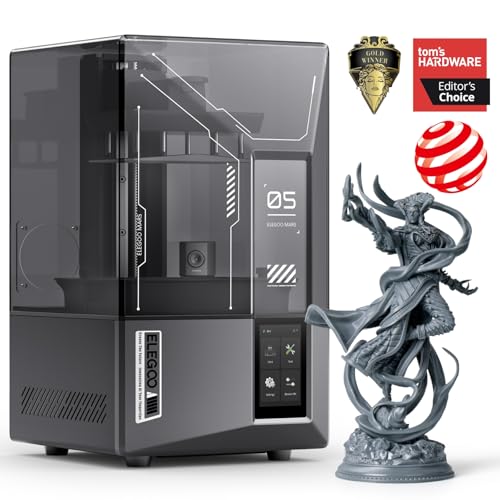

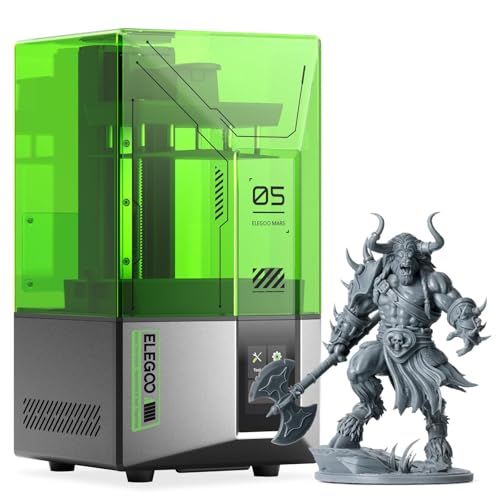

As an Amazon Associate we earn from qualifying purchases at no extra cost to you. Ratings are shown as listed on Amazon.
Best resin 3D printers by situation
| Best for | Printer type or example | Typical build volume | Typical price range | Main reason to choose it |
|---|---|---|---|---|
| First detailed printer | 8K–12K mono-LCD printer such as the Elegoo Mars 5 Ultra | Approximately 6.5 × 3.6 × 5.1 in | Usually $200–$350 | Sharp miniatures, manageable size, relatively low entry cost |
| Large models and batches | Mid-size printer such as the Elegoo Saturn 4 Ultra | Approximately 8.5 × 4.8 × 8.7 in | Usually $400–$650 | More parts per build and fewer compromises on model scale |
| Fast production work | High-speed model such as the Anycubic Photon Mono M7 Pro | Approximately 10.2 × 8.5 × 9.1 in | Usually $500–$800 | High throughput and a comparatively large working area |
| Professional repeatability | Formlabs Form 4 | Approximately 7.9 × 4.9 × 9.3 in | Usually $3,500–$5,000 before accessories | Consistent workflow, validated materials and strong software support |
What matters most when comparing resin printers
Resolution is more than the advertised “K” number
Printer resolution describes the LCD’s pixel grid, but pixel size is a more useful comparison. A 10-inch screen with 12K resolution can have a similar pixel size to a smaller 7-inch screen with 8K resolution. For miniatures, jewelry prototypes and small decorative hardware, a pixel size around 18–35 microns is generally capable of crisp edges and readable small features.
Layer height affects vertical detail separately. Most resin printers can print at approximately 0.05 mm, while many can use 0.02–0.03 mm for especially fine work. Lower layer heights increase print time and do not automatically improve details that are limited by the screen’s XY resolution. A sensible starting point is 0.05 mm, then 0.03 mm for models where curved surfaces or tiny lettering justify the extra time.
Build volume determines what you can print in one piece
A compact printer is sufficient for tabletop figures, replacement knobs, small sculptures and jewelry masters. A mid-size machine is more practical for helmets, architectural models, batches of figurines or several cabinet-hardware prototypes in one run. Larger volume does not make a printer more precise, but it reduces the need to split and join parts.
Measure the complete printer, not only the advertised build area. A printer with a footprint of about 14 × 14 inches may need at least 24 × 20 inches of usable bench space once you add a wash-and-cure station, resin bottles and a place to set the removable build plate. Allow roughly 8–12 inches above the printer if the lid lifts vertically, and check that the equipment can pass through doors and around counters before buying.
Head-to-head: compact versus mid-size resin printers
| Consideration | Compact resin printer | Mid-size resin printer |
|---|---|---|
| Typical footprint | About 9–12 in wide and 9–12 in deep | About 15–20 in wide and 15–20 in deep |
| Typical build height | Approximately 4.5–6 in | Approximately 7–10 in |
| Approximate resin used for a 28–32 mm miniature | About 8–20 ml, depending on supports and hollowing | About the same per miniature, but more can fit in one job |
| Typical print time for a small batch | Often 2–5 hours | Often 2–5 hours, with more pieces per plate |
| Best fit | Small apartment, occasional maker, limited budget | Frequent printing, larger objects, production batches |
| Main drawback | Parts may need to be split | Higher resin consumption, heavier equipment and more ventilation demand |
Resin cost, waste and recurring expenses
Standard resin commonly costs about $20–$35 per kilogram, while water-washable, tough, flexible, castable and engineering resins can range from approximately $30 to more than $100 per kilogram. A finished object’s resin cost includes supports, rafts, failed prints and the resin left in the vat. If a model uses 120 grams after supports and waste, its material cost is roughly $3–$12 depending on the formulation.
Resin printing also requires consumables. Budget for nitrile gloves, paper towels, disposable filters, silicone mats, isopropyl alcohol or a compatible cleaning solution, and replacement FEP or ACF films. A wash-and-cure station usually costs about $100–$300, but it makes the process cleaner and more repeatable than hand-washing parts.
Water-washable resin reduces the need for alcohol, but it does not make uncured resin safe to pour down a drain. Dirty wash water still needs to be cured and disposed of according to local rules. For the lowest ongoing cost, standard resin in a large bottle is often economical; for the lowest mess, a reputable water-washable formulation may be worth the premium.
Ventilation and safe placement
Resin printers release odors and volatile compounds during printing, and washing produces additional fumes. Do not treat a printer’s carbon filter as a substitute for room ventilation. The best setup is a dedicated enclosure vented outdoors, with the exhaust kept away from windows, air intakes and neighboring rooms.
For an apartment, use a small enclosure with an exhaust duct to an approved window insert only if the lease and building rules allow it. Keep the printer away from bedrooms, food-preparation surfaces and children’s play areas. A 10 × 12 ft room may physically fit a printer and workbench, but it should have reliable ventilation and enough clearance to move safely around the equipment. The printer should sit on a rigid, level surface that can support at least twice its operating weight without noticeable vibration.
Cleanup requirements beginners often underestimate
After a print finishes, the part is not ready to use. The usual workflow is to remove the build plate, scrape off the model, drain excess resin, wash it, dry it completely, remove supports and cure it under UV light. A large part may need 5–10 minutes of washing and 5–20 minutes of curing, depending on its geometry and resin instructions. Support removal is easiest before final curing because the material is less brittle.
Use a washable silicone mat and separate containers for clean and dirty solvent. Keep tools dedicated to resin work rather than using kitchen equipment. Before the next print, inspect the vat for cured fragments and check the film for clouding or damage. One small cured particle can cause a failed print or puncture the film during the next job.
Decision matrix for your workspace
| Your situation | Best choice | Why | What to avoid |
|---|---|---|---|
| Small apartment | Compact 8K–12K printer with an enclosure | Uses less bench space and less resin per failed print | Large open-frame setup without an exhaust plan |
| Kids or pets | Lockable enclosure in a restricted-access room | Prevents contact with liquid resin, solvent and contaminated tools | Printer on an accessible desk or low cabinet |
| Renter with limited modifications | Compact printer plus a sealed enclosure and filtered exhaust | Less permanent than installing ductwork | Assuming a carbon filter removes every ventilation concern |
| Frequent miniature batches | Mid-size printer with a dependable release system | Fits more parts per plate and reduces the number of print cycles | Choosing only by maximum XY resolution |
| Large props or architectural models | Large-format printer or a machine that supports reliable part splitting | Provides more usable height and fewer joins | Expecting a compact printer to produce large objects in one piece |
| Professional production | Formlabs Form 4 or another validated professional ecosystem | Repeatable profiles, documented materials and structured support | Comparing only the printer’s purchase price |
Which printer should you buy?
Choose a compact 8K–12K resin printer if you are learning, printing miniatures or working with limited space. Models such as the Elegoo Mars 5 Ultra are appealing when footprint, price and fine detail matter more than object size.
Choose a mid-size machine such as the Elegoo Saturn 4 Ultra if you already know you will print frequently, need multiple parts per build or want to reduce the number of pieces that must be joined. The Anycubic Photon Mono M7 Pro is another type of choice for makers who prioritize speed and a larger working area, although its ventilation and resin demands deserve careful planning.
Choose the Formlabs Form 4 when consistent production, material documentation and workflow support matter more than keeping the initial purchase price low. It can be the better business tool, but proprietary materials and accessories may increase the long-term cost.
Final buying checklist
- Compare pixel size and build volume, not only the advertised K rating.
- Confirm the printer, wash station and enclosure fit on a rigid work surface.
- Leave approximately 8–12 inches above a lifting lid and enough side clearance for handling the build plate.
- Plan outdoor exhaust or another responsible ventilation arrangement before ordering.
- Budget for resin, gloves, cleaning fluid, replacement film and a wash-and-cure station.
- Select a printer with automatic leveling or a well-docu
FAQ
Which printer should you buy?
Choose a compact 8K–12K resin printer if you are learning, printing miniatures or working with limited space. Models such as the Elegoo Mars 5 Ultra are appealing when footprint, price and fine detail matter more than object size.Affiliate disclosure. As an Amazon Associate we earn from qualifying purchases at no extra cost to you. Prices accurate as of the date shown.Best Resin 3D Printers for Detailed PrintsCheck price on Amazon


