Key takeaways
- A Japanese chef knife set is a different purchase from a generic block of German-style knives.
A Japanese chef knife set is a different purchase from a generic block of German-style knives. The word “Japanese” usually points to a thinner blade, a harder steel, and a lighter feel in the hand, along with specialty shapes such as the gyuto, santoku, nakiri, and kiritsuke. Buyers searching this phrase are normally deciding whether they want a compact trio for daily prep or a larger collection that includes a block, a roll bag, or a magnetic stand.
This guide is written for home cooks who want that Japanese-style edge without sorting through dozens of near-identical listings. Every pick below is judged only on what its product title states: steel type, layer count, piece count, and storage. Nothing here is a lab result, so treat the comparisons as a way to narrow your shortlist for 2026, not as a verdict on long-term durability.
Quick Picks
Our top picks



As an Amazon Associate we earn from qualifying purchases at no extra cost to you.
| Product | Best for | Key spec from the title |
|---|---|---|
| Damascus VG10 3-Piece Set | Cooks who want a layered-steel look | 67-layer Damascus, VG10 steel core, 3 pieces |
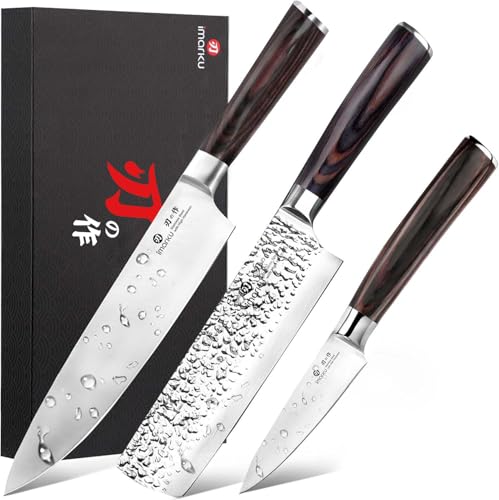
| imarku 3-Piece Set | Small kitchens and starter collections | Japanese HC stainless steel, pakkawood handle |
| HOSHANHO 5-Piece Set | Everyday prep with a few extra blades | 10CR15MOV high carbon steel, 5 pieces |
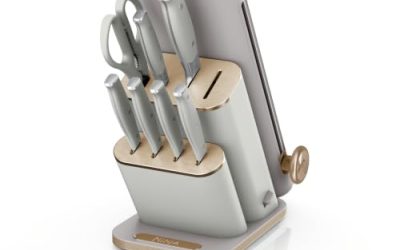
| HOSHANHO 7-Piece Magnetic Block Set | Counter storage without a slotted block | 9 layers 10CR15MOV, magnetic knife block |
| FAMCOTE Knife Set with Block | Gift buyers who like rosewood handles | 5-layer 9CR18MOV clad steel, hand forged |
| Kiritsuke, Gyuto, Santoku, Nakiri Set with Bag | Learning the classic Japanese shapes | Four named Japanese blade styles, carry bag |
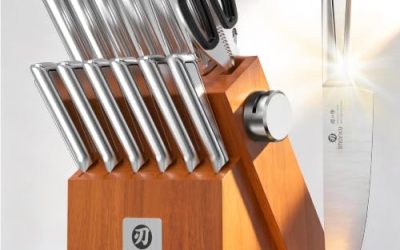
| SYOKAMI 7-Piece Foldable Block Set | Cooks tight on counter space | Foldable magnetic acacia wood block, 7 pieces |
How to Choose
Match the steel to your maintenance habits
Steel names in titles are shorthand for trade-offs. VG10 and 9CR18MOV generally sit toward the harder, edge-holding end, while 10CR15MOV is a common mid-range stainless that is easier to touch up. Harder steel keeps an edge longer but can chip if you twist through bone or frozen food. If you only own a basic whetstone or pull-through sharpener, a slightly softer steel is more forgiving.
Decide how many pieces you will actually use
Three knives (chef, utility, paring) cover most weeknight cooking. Five to seven pieces add a bread knife, a santoku, or shears. Past seven, extra pieces are often steak knives or small fillers. A buyer who cooks mostly vegetables and proteins should prioritize a good gyuto or santoku over a long count.
Look at storage before you buy
Blocks protect edges but take counter room. Magnetic blocks hold knives on their sides and shrink the footprint, while roll bags suit people who travel or work in shared kitchens. Check that the storage format is included in the title, because a loose set means buying a drawer tray later.
Ignore marketing noise, check the handle
Words like “razor sharp” and “professional” appear on nearly every listing and tell you nothing. Handle material, balance, and whether the blade is described as forged or stamped matter more. Pakkawood and rosewood resist moisture differently from plain hardwood, so look for finish details. Cheaper sets usually cut corners on the handle joint and sheath, not the headline blade.
The 7 Best Options
Damascus VG10 3-Piece Set
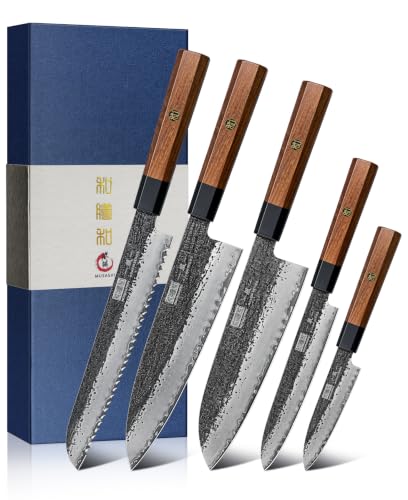
This compact trio leans on its steel: a VG10 core wrapped in 67-layer Damascus, according to the title. It suits a cook who wants a few high-quality blades rather than a drawer full of fillers, and the ocean-blue ergonomic handle gives it a look that works as a gift. Because the title lists a specific core steel and a layer count, it is also one of the easier sets here to compare on paper against the other three-piece option, which names only a general stainless category. Buyers who sharpen on stones will find a core steel like this rewarding to maintain.
- Strength: VG10 core is a well-known choice for edge retention.
- Strength: Three pieces keep the purchase focused on daily tasks.
- Trade-off: No block or bread knife is listed, so storage is a separate buy.
Skip it if you want a full block set or need serrated cutting for crusty loaves.
imarku 3-Piece Japanese Set
The imarku set is a three-knife starter built from Japanese HC stainless steel with an ergonomic pakkawood handle. It fits small apartments, first kitchens, or anyone replacing a worn chef knife and paring knife in one move. The listing leans on practical details rather than exotic metallurgy, which is useful if you want a straightforward everyday trio and would rather not research steel charts before buying. It also makes a sensible second set for a vacation rental or dorm kitchen.
- Strength: Pakkawood handle is a moisture-resistant, comfortable material.
- Strength: Small count means less to store and sharpen.
- Trade-off: The title does not name the exact steel grade, so edge-holding is harder to compare.
Skip it if you want specialty shapes like a nakiri or a magnetic block included.
HOSHANHO 5-Piece Set
HOSHANHO lists 10CR15MOV high carbon steel for this five-piece collection, aimed at daily prep. It sits between the minimal trio and the block sets, giving a cook a chef knife plus a few supporting blades. The title pitches it at daily prep, so think weeknight chopping, trimming, and slicing rather than butchery. It is a reasonable middle step for someone who has outgrown a three-knife starter but does not want to commit to a block and a seven-knife lineup.
- Strength: 10CR15MOV is a familiar stainless that is relatively easy to maintain.
- Strength: Five pieces cover most home tasks without clutter.
- Trade-off: No block is mentioned in the title, so edges need a sleeve or tray.
Skip it if you want built-in storage or a Damascus finish.
HOSHANHO 7-Piece Magnetic Block Set
This seven-piece option adds a magnetic knife block and uses a hand-forged, nine-layer 10CR15MOV construction per the title. It is built for cooks who want knives visible and within reach, with a block that does not grind edges against wood slots. Compared with the five-piece set from the same brand, it adds two more blades and the stand, so the decision is mostly about whether you want storage included. Buyers who like to see every knife before choosing one will appreciate the open layout.
- Strength: Magnetic block keeps blades accessible and shows the whole set at a glance.
- Strength: Seven pieces give a more complete lineup than the five-piece version.
- Trade-off: Magnetic stands need a stable spot, and careless placement can scratch blades.
Skip it if you share a kitchen with small children who could pull knives from an open stand.
FAMCOTE Knife Set with Block
FAMCOTE pairs a five-layer clad construction in 9CR18MOV steel with rosewood handles and a block. The title also frames it as a gift for men and women, which suits holiday shoppers who want something presentation-ready. A layered clad build usually means a harder core protected by softer outer metal, which is why this construction is popular in Japanese-style knives. Plan on hand washing and prompt drying to keep the wooden handles looking good for years.
- Strength: 9CR18MOV is toward the harder end of common stainless steels.
- Strength: Rosewood handles and a block make it gift-friendly out of the box.
- Trade-off: Harder steel can chip if used on bones or frozen items.
Skip it if you prefer a lighter, minimalist set without wooden handles to maintain.
Kiritsuke, Gyuto, Santoku and Nakiri Set with Bag
This one names its four blade styles outright: kiritsuke, gyuto, santoku, and nakiri, along with a carry bag. It is a good learning set for someone curious about how each Japanese shape behaves, or for a cook who moves between kitchens. A kiritsuke is a flat-tipped, versatile slicer, the gyuto is the all-purpose chef shape, the santoku suits chopping, and the nakiri is a rectangular vegetable blade. Having all four lets you learn which feels natural before investing in a pricier single knife.
- Strength: Four named Japanese profiles cover slicing, chopping, and vegetable work.
- Strength: The bag makes transport and drawer storage simple.
- Trade-off: The listed title does not give a steel grade, so hardness is unclear.
Skip it if you need a paring knife or bread knife in the same box.
SYOKAMI 7-Piece Foldable Block Set
SYOKAMI uses a foldable magnetic acacia wood block with a seven-piece Japanese-style high carbon stainless lineup. The foldable block is the selling point for small counters, since it can be stored flatter than a standard stand. The title also calls the whole set Japanese-style high carbon stainless steel, which positions it alongside the other seven-piece magnetic option while offering a different block design. If counter real estate is your main complaint, this is the layout that speaks to it most directly.
- Strength: Foldable magnetic block saves space when not in use.
- Strength: Acacia wood adds a warmer look than plastic or steel stands.
- Trade-off: Moving parts on a block can loosen over time, so check the hinge quality.
Skip it if you want a fixed, heavy base that never shifts.
Which One Fits Your Situation
You cook for two in a small apartment
The imarku 3-piece set or the Damascus VG10 trio keeps the count low and the drawer tidy. If a layered look matters, pick the Damascus; otherwise imarku is the simpler starter.
You want the knives visible and quick to grab
The HOSHANHO 7-piece magnetic block set puts every blade on display. Pair it with a stable counter spot and keep it away from edges where children reach.
You are learning Japanese blade shapes
The kiritsuke, gyuto, santoku, and nakiri set with bag is the one that names each profile. It lets you try slicing and vegetable work with the intended tool for each task.
You have almost no counter space
The SYOKAMI 7-piece set with a foldable magnetic acacia block is built for tight kitchens. You get a full lineup that folds away when you need the work surface back.
You need something gift-ready
The FAMCOTE set with block and rosewood handles arrives as a complete presentation, which saves wrapping a loose set and a stand separately.
Common Mistakes
- Choosing by piece count alone and ending up with steak knives and fillers you never use.
- Assuming “Japanese” in a title guarantees a specific steel; check for a named grade like VG10 or 9CR18MOV.
- Skipping storage, then leaving unsheathed knives rattling in a drawer.
- Using hard-steel blades on bones, frozen food, or as can openers and chipping the edge.
- Putting any of these knives in a dishwasher when the maker recommends hand washing.
Specs and Terms Explained
Gyuto
The gyuto is the Japanese take on the Western chef knife. It has a long, gently curved belly for rocking cuts and a pointed tip for precise work. If a set names only one big knife, it is probably the gyuto or its santoku cousin.
Santoku
Santoku means three virtues, usually read as slicing, dicing, and mincing. The blade is shorter than a gyuto, with a flatter edge and a rounded tip, which suits cooks who like a push-cut or chop. It also feels less intimidating for newer cooks.
Nakiri
A nakiri is a rectangular vegetable knife with a flat edge that touches the board along its length, so it cuts through cabbage and carrots cleanly. It is not meant for meat or bones, and the tall blade can chip if twisted.
Kiritsuke
A kiritsuke has an angled tip and a long, flat edge, and it traditionally belongs to expert chefs. In a home set it works as a vegetable and slicing knife with a dramatic profile. It rewards confident, straight cuts and punishes sloppy ones.
VG10
VG10 is a stainless steel alloy popular in Japanese knives, valued for fine edge retention and decent rust resistance. A set labeled Damascus VG10 means the core is likely this alloy with layered cladding. It is harder than ordinary stainless, so it needs gentler care.
Which One Should You Buy?
| If you… | Choose… |
|---|---|
| Want a compact trio with a named core steel | Damascus VG10 3-Piece Set |
| Want a small Japanese-style trio without a block | imarku 3-Piece Japanese Set |
| Want five pieces covering most daily prep | HOSHANHO 5-Piece Set |
| Like a visible, magnetic way to store knives | HOSHANHO 7-Piece Magnetic Block Set |
| Prefer a conventional block with more pieces | FAMCOTE Knife Set with Block |
| Want to explore classic Japanese blade shapes in one bag | Kiritsuke, Gyuto, Santoku and Nakiri Set with Bag |
| Need storage that folds away when not in use | SYOKAMI 7-Piece Foldable Block Set |
Care Habits for Thinner Blades
- Cut on wood or soft plastic and avoid glass, granite, and bone.
- Rinse right after cutting acidic foods such as citrus or tomatoes, then dry the steel.
- Do not scrape food off the board with the edge. Flip the knife and use the spine.
- Use magnetic storage carefully by placing the spine on first and rolling the blade away, so the edge does not drag across the surface.
- Slide a blade guard or edge cover over any knife that travels in a drawer or a bag, since thin edges chip easily when they meet other metal.
- Wipe the handle as well as the blade, because oils and moisture collecting at the bolster can dull the finish over time.
Related guides
- Bathroom Makeup Organizer With Dustproof Lid
- Stackable Bathroom Storage Bins With Lids
- Widespread Bathroom Faucets 8 Inch
Frequently Asked Questions
Is a Japanese chef knife set better than a German-style set?
It depends on use. Japanese-style blades are typically thinner and harder, which suits precise slicing. German-style blades are often heavier and tougher for rougher tasks.
How many knives do I really need?
Most home cooks do well with a chef or santoku knife, a utility knife, and a paring knife. Add a bread knife if you slice loaves often.
Is Damascus steel worth it?
The layered pattern is partly cosmetic, but the core steel matters more. A set listing a VG10 core with Damascus cladding combines a good edge steel with the visual finish.
Can I sharpen these at home?
Yes. A whetstone gives the best control, while pull-through sharpeners are quicker but remove more metal. Harder steels reward patient stone work.