Key takeaways
- Compare the best copper peptide serums with GHK-Cu, from The Ordinary and Biossance to Asterwood, with sizes, label percents and layering tips inside.
Copper peptide serums are built around one headline ingredient: copper tripeptide-1, usually written as GHK-Cu on the label. It is a small peptide that carries copper ions, studied for decades in lab settings for its role in skin renewal signals. That background is why so many brands now sell a blue-tinted serum with GHK-Cu at the top of the ingredient story, aimed at skin that looks less firm and slower to bounce back than it used to.
This guide is deliberately narrow. Our wider peptide serum roundup covers general peptide blends such as Matrixyl and Argireline on their own, and our peptide cream guide covers the same family in moisturizer form. Here, a product only qualifies if a copper peptide is a named, featured part of the formula. All five picks are serums with copper peptide at the center, differing mainly in how much detail the brand publishes and what supports the copper in the bottle.
One honest note before the picks. The evidence for GHK-Cu applied to skin is still limited, and much of what brands quote comes from their own testing rather than large independent trials. Treat these serums as a slow, supportive step for firmness and texture, not as a procedure in a bottle. The blue tint is normal: it comes from the copper complex itself, not from added dye in most formulas.
Disclosure: As an Amazon Associate, we earn from qualifying purchases made through links on this page, at no extra cost to you.
How to Choose a Copper Peptide Serum
Check that the copper peptide is actually named. Look for Copper Tripeptide-1 or GHK-Cu in the ingredient list or product name. A serum that simply says “peptides” on the front may contain no copper at all. Every pick here names its copper peptide openly.
See whether the brand publishes a percent. A few brands print the copper peptide level, such as 1% or 0.10%. Most do not, and an unpublished percent is not proof of a weak formula, but a printed figure makes comparison easier. Where a percent is not published, the Specs below say so plainly.
Look at what supports the copper. GHK-Cu rarely works alone in these bottles. Common partners include hyaluronic acid for water binding, squalane for a softer finish, niacinamide for tone support, and extra signal peptides such as Matrixyl 3000 or Argireline. That supporting cast is where these five serums differ most.
Plan your layering before you buy. Brand guidance commonly advises against applying copper peptide serums in the same routine as strong direct vitamin C (L-ascorbic acid) or strong retinoids, since the copper complex can clash with those actives. A simple pattern is copper peptides in the morning and a retinoid at night, or alternating evenings.
Mind the tint and the texture. Copper formulas range from deep blue to pale aqua, and a strong tint can transfer to a pillowcase if you apply a thick layer right before bed. Thin, watery serums layer well under moisturizer; richer, squalane-based ones can replace a light moisturizer for dry skin. Patch test first, and give the product several weeks of steady use before judging it.
The 5 Best Copper Peptide Serums
1. The Ordinary Multi-Peptide + Copper Peptides 1% Serum

- Best for: A clearly labeled 1% copper peptide level inside a broad peptide blend
This is the serum most people meet first in this category, and it sets the transparency bar. The Ordinary prints the copper peptide level right in the name: copper tripeptides at 1%, carried in a wider multi-peptide formula that also includes Matrixyl 3000, Matrixyl synthe’6, SYN-AKE, Relistase, Argirelox and a probiotic complex, plus amino acids and hyaluronic acid. It was previously sold as Buffet + Copper Peptides 1%, so older mentions of that name refer to this same formula.
The texture is a light, slightly viscous water-based serum with a natural blue tone from the copper complex. It layers cleanly under moisturizer and sunscreen. Because the blend is busy, it suits someone who wants copper peptides plus a general peptide routine in a single bottle rather than a minimalist formula.
The Ordinary is direct about conflicts: its guidance says this serum should not be used in the same routine as direct vitamin C, retinoids, or strong direct acids. Plan it for the opposite end of the day from those actives.
Specs
- Size: 30 ml / 1 fl oz
- Copper peptide: Copper tripeptide-1 (GHK-Cu), 1% as published by the brand
- Supporting actives: Matrixyl 3000, Matrixyl synthe’6, SYN-AKE, Argireline-family peptides, amino acids, hyaluronic acid
- Format: Water-based dropper serum
- Fragrance: None added, per the brand
- Model: Not published
2. Biossance Squalane + Copper Peptide Rapid Plumping Serum
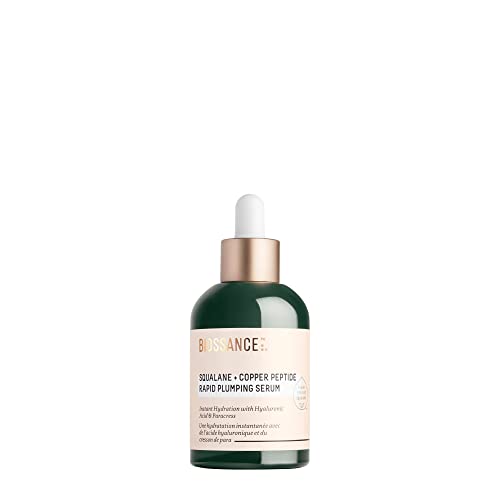
- Best for: Dry skin that wants copper peptide in a richer, cushioned serum
Biossance takes the opposite route from a bare-bones formula. Its serum pairs a copper peptide complex with the brand’s signature sugarcane-derived squalane, so the finish is noticeably more emollient than the watery picks in this guide: squalane and hyaluronic acid hold water at the surface while the copper peptide does the longer-term firmness support work.
This is the pick for skin that finds thin gel serums unsatisfying. The texture sits between a serum and a light facial oil, and can stand in for a moisturizer layer on warm days for normal to dry skin. The brand does not publish a copper peptide percent, which is the main transparency trade-off here. The bottle is the largest in this guide at 50 ml, and the formula is vegan; if your skin leans oily, sample the feel first, because the squalane base is richer than the other four picks.
Specs
- Size: 50 ml / 1.69 fl oz
- Copper peptide: Copper peptide complex; percent not published by the brand
- Supporting actives: Sugarcane-derived squalane, hyaluronic acid
- Format: Pump serum with an emollient finish
- Model: 3001227
- UPC: 810029621489
3. MAELOVE Peptide Squad Collagen Renewal Serum

- Best for: A four-class peptide lineup with copper peptides plus niacinamide
Maelove built Peptide Squad around covering all four peptide classes in one bottle, and copper peptides are one of the four. The formula combines copper peptides with Argireline, Matrixyl 3000 and a collagen-supporting peptide set, then rounds it out with hyaluronic acid, niacinamide and ceramides. That makes it the most crowded ingredient story in this guide, aimed at shoppers who want one serum covering firmness, fine lines and barrier support together.
The feel is a classic midweight serum: smooth, quick to absorb, and easy to layer. Niacinamide gives it a tone-support angle the simpler GHK-Cu bottles do not claim, and the ceramides make it friendlier to skin that gets dry or reactive with active-heavy routines. Maelove does not publish the copper peptide percent, so the copper content is a brand claim rather than a printed number; what you can verify on the label is the breadth of the peptide roster.
Specs
- Size: 30 ml / 1 fl oz
- Copper peptide: Copper peptides; percent not published by the brand
- Supporting actives: Argireline (acetyl hexapeptide-8), Matrixyl 3000, hyaluronic acid, niacinamide, ceramides
- Format: Dropper serum
- Scent: Aloe, per the listing details
- Model: Not published
4. Asterwood Copper Peptides Serum

- Best for: A short, readable ingredient list with the GHK-Cu percent printed
Asterwood is the minimalist entry. The whole formula is six ingredients: water, pentylene glycol, phenylpropanol, sodium hyaluronate, copper tripeptide-1 and sodium hydroxide. The brand prints the copper tripeptide-1 level at 0.10% in the ingredient list itself, lower than The Ordinary’s 1% but stated with unusual precision, and pairs it with sodium hyaluronate at 1.5% for surface moisture.
Because the list is so short, this is the easiest pick for label scanners. There is no added fragrance and no essential oils, and the light texture layers under almost anything. It is also a sensible first copper serum if you want to test how your skin responds to GHK-Cu before moving to a stronger formula. The trade-off is support: beyond the hyaluronate, there are no extra signal peptides or antioxidants here.
Specs
- Size: 30 ml / 1 fl oz
- Copper peptide: Copper tripeptide-1 (GHK-Cu), 0.10% as printed in the ingredient list
- Supporting actives: Sodium hyaluronate 1.5%
- Format: Dropper serum, six ingredients in total
- Fragrance: None added, per the brand
- Model: Not published
5. TOSOWOONG Copper Peptide Face Serum

- Best for: A K-beauty take with GHK-Cu inside a 12-peptide blend
TOSOWOONG brings a Korean formulation style to the category. Its serum leads with copper tripeptide (GHK-Cu) and builds a 12-peptide blend around it, in a 33 ml bottle slightly larger than the standard 30 ml size. The positioning is firmness and elasticity support with a moisturizing finish, in line with how K-beauty serums combine several signal peptides at moderate levels rather than one peptide at a headline percent.
The texture is a smooth, essence-like serum that spreads without much residue, and the blend format makes it a comfortable daily step under cream. As with Maelove, the copper peptide percent is not published; the label claim rests on the named GHK-Cu plus the breadth of the peptide roster. If you prefer a printed percent above all else, The Ordinary and Asterwood above are the more transparent choices.
Specs
- Size: 33 ml / 1.11 fl oz
- Copper peptide: Copper tripeptide (GHK-Cu); percent not published by the brand
- Supporting actives: 12-peptide blend
- Format: Serum, essence-like texture
- Fragrance: Not published
- Model: Not published
Comparison Table
| Product | Size | Copper peptide | Percent published | Standout trait |
|---|---|---|---|---|
| The Ordinary Multi-Peptide + Copper Peptides 1% | 30 ml | Copper tripeptide-1 | Yes, 1% | Broad peptide blend, clear labeling |
| Biossance Squalane + Copper Peptide | 50 ml | Copper peptide complex | No | Squalane-rich, cushioned finish |
| MAELOVE Peptide Squad | 30 ml | Copper peptides | No | Four peptide classes plus niacinamide |
| Asterwood Copper Peptides Serum | 30 ml | Copper tripeptide-1 | Yes, 0.10% | Six-ingredient minimalist formula |
| TOSOWOONG Copper Peptide Face Serum | 33 ml | Copper tripeptide (GHK-Cu) | No | 12-peptide K-beauty blend |
Frequently Asked Questions
What does GHK-Cu actually do in a serum?
GHK-Cu is a copper-carrying peptide studied for its role in renewal signaling, including support for collagen and elastin activity. In a cosmetic serum, the realistic expectation is gradual support for firmness and texture with steady use. The published evidence is still limited and much of it comes from brand-funded work, so treat claims as directional rather than guaranteed.
Why is my copper peptide serum blue?
The blue to blue-green color is a natural property of the copper complex, and a useful sign that copper peptide is genuinely present. A deeper tint usually tracks with a higher copper peptide level. The color fades as the serum absorbs, though a thick layer before bed can transfer slightly to light pillowcases.
Can I use a copper peptide serum with vitamin C or a retinoid?
Brand guidance commonly says not to layer these serums with strong direct vitamin C (L-ascorbic acid) or strong retinoids, since the combination can reduce how well each works and can irritate skin. A workable pattern is copper peptides in the morning and retinoid at night, or alternating evenings.
How long before I notice anything?
Set expectations in weeks, not days. Most brands suggest judging a copper peptide serum after six to twelve weeks of consistent use, and changes tend to be subtle. Take a photo in the same light each month if you want an honest record, and keep sunscreen in the routine, since unprotected sun exposure works against the firmness you are trying to support.
Who should skip copper peptide serums?
Anyone with a known copper sensitivity should avoid them, and very reactive skin should patch test on a small area for several days first. If your routine already includes several strong actives, adding copper peptides means rearranging, not just adding: something else usually has to move to a different time of day.
Conclusion
The right copper peptide serum depends on how you weigh transparency against texture. The Ordinary Multi-Peptide + Copper Peptides 1% is the clearest label in the group and the natural first choice if a printed percent matters to you. Asterwood offers the same transparency habit in a far shorter formula at a lower published level. Biossance is the comfortable pick for dry skin, Maelove packs the widest peptide roster into one bottle, and TOSOWOONG delivers a smooth K-beauty blend built around named GHK-Cu. Whichever you choose, keep it away from strong vitamin C and retinoids in the same routine, and judge it over weeks rather than days.
More from Amazon
Programs that pair well with the guide above. Offers and eligibility are set by Amazon and may change.
Set up recurring deliveries of everyday items on eligible products. Terms and savings are set by Amazon.
Explore Subscribe & SaveCollect the home and kitchen items you want in one registry that guests can shop from.
Create a wedding registryFree shipping on eligible items, Prime Video and more. Eligible new members can start with a free trial.
Start a Prime free trialAudiobooks and podcasts to listen to on the go. Eligible new members can start with a free trial.
Try Audible freeAs an Amazon Associate we earn from qualifying purchases.