Our Top Picks
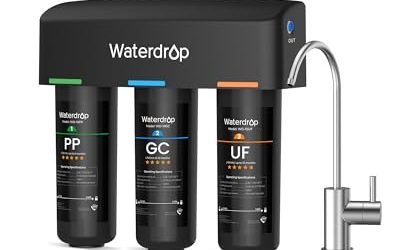
 Waterdrop G3P600 Tankless Reverse Osmosis Water Filter System600 GPD18.06 x 5.68 x 17.76 Inches31 poundsCheck on Amazon
Reverse osmosis is the broadest single technology for kitchen drinking water in this guide, because it addresses dissolved solids, fluoride, nitrate, arsenic, lead, and other contaminants that carbon filtration alone does not reduce to the same extent. The trade-off is complexity. A reverse osmosis system needs a dedicated faucet, a storage tank or a powered tankless unit, a drain connection for wastewater, and space for several filter housings under the sink.
This guide is for homeowners who want filtered drinking and cooking water at the kitchen sink and are ready for an under-sink installation. It covers tank systems that work without power, tankless systems that need an outlet, and alkaline models that add minerals back after filtration. Picks were compared using published specifications only: stages, daily output, tank or tankless design, pure-to-drain ratio, power needs, certification listings, faucet type, and dimensions.
At a Glance
| Product | Best for | Key specification |
|---|---|---|
| iSpring RCC7AK-BN, NSF Certified, 75 GPD, Alkaline 6-Stage | Classic tank system, no power | 6-stage; 75 GPD; alkaline stage; tank |
| Waterdrop G3P600, 8 Stage Tankless, NSF/ANSI 42, 53, 58, 372 | Tankless, fast flow, smart faucet | 8-stage; 600 GPD; 2:1 pure to drain |
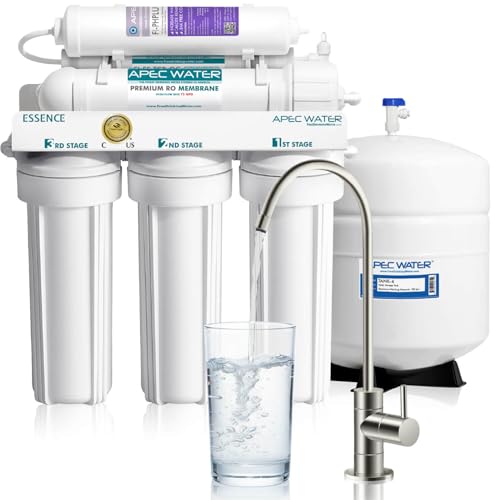
| APEC ROES-50 Essence, 5-Stage, WQA Certified | Simple 5-stage tank system | 5-stage; 50 GPD; tank; no power |
| APEC ROES-PH75 Essence, Alkaline pH+, 75 GPD, 6-Stage | 6-stage alkaline tank system | 6-stage; 75 GPD; alkaline stage; tank |
How to Choose
1. Decide tank or tankless first
A tank system stores filtered water in a pressurised tank, usually about 4 gallons in total with about 3.2 gallons usable, and dispenses it without power. A tankless system produces water on demand, needs a power outlet under the sink, and frees the space a tank would occupy, but it cannot dispense water during a power cut. In a kitchen without a spare outlet, a tank system is the practical choice.
2. Check the certified claims, not only the headline claims
Systems are often listed as certified to NSF/ANSI 58 for total dissolved solids, with additional listings to NSF/ANSI 42 for chlorine, taste, and odour, and NSF/ANSI 372 for lead-free materials. Read the certification listing for the exact model, because a claim in a product title does not always match the certifier record.
3. Compare daily output and pure-to-drain ratio
Daily output is published in gallons per day, as a headline number or a certified number. The iSpring RCC7AK-BN is sold as 75 gallons per day, with a certified output of 25.41 gallons per day listed by NSF in published comparisons. The Waterdrop G3P600 is listed as 600 gallons per day, with a 2:1 pure-to-drain ratio.
4. Confirm power, drain, and faucet requirements
Tank systems here need no electricity, but they do need a drain saddle connection and a dedicated faucet hole. Tankless systems need a power outlet under the sink, a drain connection, and a dedicated faucet, often a smart faucet with a display for total dissolved solids and filter life. Confirm that the sink has a spare hole or a soap dispenser hole, and that the drain pipe is accessible for the saddle clamp.
5. Consider alkaline remineralization and cabinet fit
Reverse osmosis removes minerals along with contaminants, which can leave water tasting flat. Alkaline models add minerals back in a final stage, described as restoring a more natural taste. The iSpring RCC7AK-BN and the APEC ROES-PH75 both include an alkaline mineral stage. Measure height, width, and depth inside the cabinet, because vertical housings need clearance above for removal, and pre-filters, the membrane, and any alkaline stage each have a published replacement interval.
Our Picks
iSpring RCC7AK-BN NSF Certified, 75 GPD, Alkaline 6-Stage Reverse Osmosis System, pH+ Remineralization RO Water Filter System Under Sink, Patented Top-Mounted Faucet Design

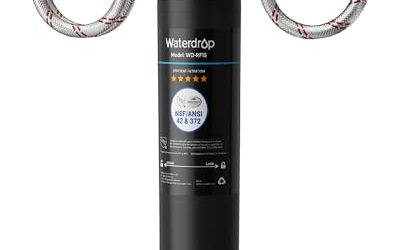
Waterdrop G3P600 Reverse Osmosis System, 8 Stage Tankless Reverse Osmosis Water Filter, NSF/ANSI 42 and 53 and 58 and 372 Certified, Under Sink RO System, 2:1 Pure to Drain, Smart LED Faucet
APEC Water Systems ROES-50 Essence Series Top Tier 5-Stage WQA Certified Ultra Safe Reverse Osmosis Drinking Water Filter System

APEC Water Systems ROES-PH75 Essence Series Top Tier Alkaline Mineral pH+ 75 GPD 6-Stage Certified Ultra Safe Reverse Osmosis Drinking Water Filter System
Which One Is Right for You?
For a kitchen without a spare outlet under the sink, a tank system is the practical starting point. The APEC ROES-50 suits a household that wants a simple 5-stage system, while the iSpring RCC7AK-BN suits a household that wants broader NSF certification and an alkaline stage. The APEC ROES-PH75 suits a household that wants the higher 75 gallon per day output and an alkaline stage. For a kitchen with a power outlet and a tight cabinet, the Waterdrop G3P600 is the tankless choice to compare first.
Frequently Asked Questions
Do I need a drain connection for an under-sink reverse osmosis system?
Yes. Reverse osmosis produces wastewater as part of filtration, and the systems here include a drain saddle for connection to the sink drain pipe. Check the drain pipe material and access before ordering.
Does a reverse osmosis system need electricity?
Tank systems here, including the iSpring RCC7AK-BN and both APEC models, need no electricity and run on line pressure. Tankless systems, including the Waterdrop G3P600, need a power outlet under the sink for the pump and the smart faucet display. Confirm power access before choosing a tankless model.
What is the difference between a 50 GPD and a 600 GPD system?
Gallons per day is the published daily output under the test conditions in the listing. A 50 gallon per day system is usually enough for drinking and cooking, while a 600 gallon per day tankless system is designed for fast on-demand flow. Certified output can be lower than the headline output.
Bottom Line
The right under-sink reverse osmosis system depends on power, cabinet space, and the contaminants you want addressed. A tank system such as the APEC ROES-50 or the iSpring RCC7AK-BN suits a kitchen without a spare outlet, while the APEC ROES-PH75 adds output and an alkaline stage in the same tank format. A tankless system such as the Waterdrop G3P600 suits a tight cabinet with power access and a need for fast flow.
Disclosure: As an Amazon Associate, this site earns from qualifying purchases.
FAQ
Which One Is Right for You?
Do I need a drain connection for an under-sink reverse osmosis system?
Does a reverse osmosis system need electricity?
What is the difference between a 50 GPD and a 600 GPD system?
More from Amazon
Programs that pair well with the guide above. Offers and eligibility are set by Amazon and may change.
Set up recurring deliveries of everyday items on eligible products. Terms and savings are set by Amazon.
Explore Subscribe & SaveCollect the home and kitchen items you want in one registry that guests can shop from.
Create a wedding registryFree shipping on eligible items, Prime Video and more. Eligible new members can start with a free trial.
Start a Prime free trialAudiobooks and podcasts to listen to on the go. Eligible new members can start with a free trial.
Try Audible freeAs an Amazon Associate we earn from qualifying purchases.