Our Short List of 3

- Best for: Owners of one or two oil-rubbed bronze faucets who want cleaning and a protective coat in a single gentle product.
- Specs:
- Brand: Flitz
- Size: 3.4 oz bottle
- Formula: Water-based wax with carnauba and beeswax
- Best for: Busy kitchens and family bathrooms with oil-rubbed bronze faucets that need frequent, gentle spray cleaning.
- Specs:
- Brand: KOHLER
- Model number: K-EC23723-NA
- Size: 28 fl oz spray bottle
- Best for: Whole homes finished in oil-rubbed bronze, where several faucets and shower trims share one maintenance routine.
- Specs:
- Brand: Flitz
- Size: 7.6 oz bottle
- Formula: Water-based wax with carnauba and beeswax
All 3 Picks at a Glance
| Product | Specs | Action |
|---|---|---|
| Flitz Faucet Wax Plus, 3.4 oz |
| Check price on Amazon |
| KOHLER K-EC23723-NA Faucet Cleaner |
| Check price on Amazon |
| Flitz Faucet Wax Plus, 7.6 oz |
| Check price on Amazon |
Key takeaways
- Cleaners whose listings state they are safe for oil-rubbed bronze faucets: two protective waxes and one ammonia-free spray, compared by formula and use.
Oil-rubbed bronze is a living, coated finish, and that single fact decides which cleaners belong on it. The dark brown surface that makes the faucet look rich is a thin treated layer over the metal, and strong acids, ammonia, alcohol, and abrasive pads can cut through that layer and leave pale, patchy marks that no polish can reverse. A cleaner that is perfectly fine on chrome can quietly ruin bronze, so the only safe shopping rule is to buy products whose own listings name oil-rubbed bronze, or state plainly that the formula is safe on all faucet finishes.
That rule narrows the field a lot, and this guide keeps it narrow on purpose. Every pick below is a cleaner or cleaner-polish whose listing text supports use on oil-rubbed bronze: two water-based wax formulas that clean lightly while leaving a protective coat, and one ammonia-free, alcohol-free spray made by a faucet manufacturer for daily wipe-downs. If a popular bathroom spray does not say it is safe for this finish, it does not appear here, however well it works elsewhere.
Quick Picks
As an Amazon Associate we earn from qualifying purchases.
| Product | Best for | Key spec from title |
|---|---|---|
| Flitz Faucet Wax Plus, 3.4 oz | Protecting one bathroom faucet set | Water-based cleaner and polish, safe for oil-rubbed bronze |
| KOHLER K-EC23723-NA Faucet Cleaner | Daily spray-and-wipe cleaning | Ammonia and alcohol free, safe on all faucet finishes |
| Flitz Faucet Wax Plus, 7.6 oz | Several bronze faucets in one home | Larger bottle of the same wax cleaner and polish |
How to Choose
Read the finish claim on the listing, not the brand reputation
The first filter is the words on the product page itself. Look for an explicit statement that the cleaner is safe for oil-rubbed bronze, safe for delicate finishes, or safe on all faucet finishes, and be suspicious of vague wording such as “multi-surface” with no finish list at all. Bronze is often grouped with other coated finishes that react badly to the same chemicals, so a listing that names bronze, brass, and nickel together is a good sign. A listing that never mentions finishes is asking you to gamble with a coating that cannot be repaired once it is stripped.
Separate daily cleaners from cleaner-polishes
Sprays and waxes do different jobs, and choosing between them starts with what is actually on your faucet. A spray cleaner is built for frequent, light work: water spots, soap film, toothpaste splashes, and fingerprints that appear every few days. A cleaner-polish built on wax removes light staining and then leaves a thin barrier that slows the return of spots and makes the next wipe-down easier. Homes with hard water usually need the spray for routine care and the wax every few months, while a guest bathroom that sees little use may only need the wax.
Treat ammonia, alcohol, and abrasives as disqualifiers
Faucet makers’ own care guides for oil-rubbed bronze consistently warn against the same three groups: ammonia, alcohol and other solvents, and anything abrasive, including scouring pads and powder cleansers. Those ingredients attack the treated surface or scratch through it, and the damage shows up as light patches that spread with every repeat cleaning. When you compare listings, scan the formula description for what is absent as much as what is present. A product that advertises itself as ammonia-free and alcohol-free, or as a non-abrasive water-based wax, is describing exactly the profile this finish needs.
Match the bottle size to the number of fixtures
A small wax bottle goes further than most buyers expect, because the product is wiped on thin and buffed off, but it still runs out quickly when one home has bronze faucets in a kitchen, two bathrooms, and a shower. Count your fixtures before choosing a size. One or two faucets in a single bathroom are well served by a compact bottle, while a whole house finished in bronze justifies the larger size so the protective routine actually happens on schedule. The spray, by contrast, is consumed faster because it is used weekly rather than a few times a year.
The 3 Best Options
Flitz Faucet Wax Plus, 3.4 oz
- Best for: Owners of one or two oil-rubbed bronze faucets who want cleaning and a protective coat in a single gentle product.
- Specs:
- Brand: Flitz
- Size: 3.4 oz bottle
- Formula: Water-based wax with carnauba and beeswax
Owners of one or two oil-rubbed bronze faucets who want cleaning and a protective coat in a single gentle product.
It is a wax polish, not a heavy descaler, so thick limescale crust needs patience and repeated gentle applications rather than a stronger chemical.
This is the protective option for a single bathroom or a small set of bronze fixtures. The listing describes a water-based cleaner and polish built on carnauba and beeswax rather than solvents, and it states directly that the gentle, chemical-free, non-abrasive formula is safe for delicate finishes including oil-rubbed bronze. It is positioned for removing water stains, fingerprints, and light build-up, then leaving a protective seal in the same step, which suits bronze well because the finish suffers more from repeated scrubbing than from the deposits themselves. The compact bottle fits the scale of occasional, careful maintenance.
KOHLER K-EC23723-NA Faucet Cleaner
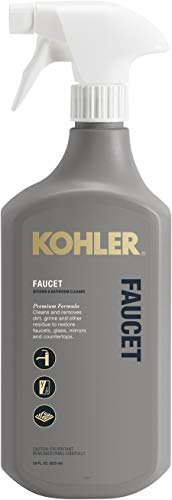
- Best for: Busy kitchens and family bathrooms with oil-rubbed bronze faucets that need frequent, gentle spray cleaning.
- Specs:
- Brand: KOHLER
- Model number: K-EC23723-NA
- Size: 28 fl oz spray bottle
Busy kitchens and family bathrooms with oil-rubbed bronze faucets that need frequent, gentle spray cleaning.
It cleans and shines but leaves no protective wax layer, so hard-water spots return at their normal pace between cleanings.
This is the everyday spray for bronze faucets that get used constantly. KOHLER sells it as its premium faucet cleaner, and the listing states that it cleans faucets, glass, mirrors, and countertops, removes dirt, grime, and other residue, and leaves a streak-free shine. The formula details matter most for bronze: it is ammonia-free and alcohol-free, the two solvent families that faucet care guides single out for this finish, and retailer and manual references for the product describe it as safe on all faucet finishes. The large spray bottle suits a routine of quick wipe-downs after the morning rush rather than occasional deep sessions.
Flitz Faucet Wax Plus, 7.6 oz
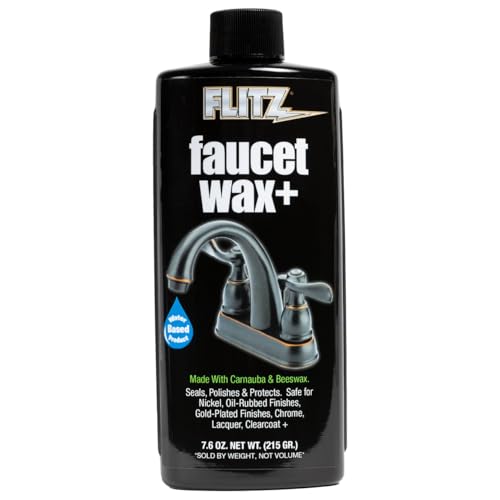
- Best for: Whole homes finished in oil-rubbed bronze, where several faucets and shower trims share one maintenance routine.
- Specs:
- Brand: Flitz
- Size: 7.6 oz bottle
- Formula: Water-based wax with carnauba and beeswax
Whole homes finished in oil-rubbed bronze, where several faucets and shower trims share one maintenance routine.
It duplicates the small bottle’s formula, so buy it for volume and routine coverage, not for stronger cleaning power.
This listing is the larger bottle of the same Flitz wax formula, and it earns its own place for homes where bronze is the standard finish rather than a single accent. The product description repeats the points that matter here: a water-based, USA-made metal wax that removes water stains and fingerprints from bronze and other finishes, with a gentle, chemical-free, non-abrasive formula described as safe on delicate finishes like oil-rubbed bronze. With more than twice the volume of the small bottle, it supports a standing routine across a kitchen faucet, multiple bathroom faucets, and matching shower trim without rationing each application.
Which One Fits Your Situation
One bronze faucet in a guest bathroom
Choose the small Flitz bottle. A guest bath faucet collects dust and the occasional water spot rather than daily grime, so the job is mostly protection: wipe the wax on, buff it off, and let the coat slow down spotting between visits. The compact size is enough for that pace, and the non-abrasive formula removes the temptation to scrub a rarely used fixture harder than its finish can tolerate. Reapply when water stops beading and spots start lingering after a plain wipe.
A family bathroom with daily splashes
Choose the KOHLER spray. Toothpaste, soap film, and handprints build up fast on a faucet that children and adults use all day, and a spray-and-wipe routine is the only kind that survives a busy schedule. The ammonia-free, alcohol-free formula is the reason it belongs near bronze at all, since a conventional bathroom spray would be a slow way to strip the finish. Keep a microfiber cloth beside it, spray lightly, and dry the faucet so minerals do not dry in place.
Hard water that keeps spotting the finish
Combine the spray for weekly cleaning with a Flitz wax application every few months. Hard water spots are mineral deposits, and on bronze the safe way to handle them is frequent gentle removal plus a barrier, not a descaling acid. The spray keeps deposits from hardening into crust, and the wax coat makes each new deposit sit on the surface instead of bonding to it, so the weekly wipe stays easy. If a spot survives gentle wiping, leave it for the next wax session rather than escalating to a stronger chemical.
Bronze fixtures throughout the house
Choose the large Flitz bottle and set a simple rotation. Kitchens and master baths usually need attention first because they see the most water, while secondary bathrooms can wait longer between applications. The bigger bottle removes the friction of running out mid-routine, which is when fixtures get skipped and spots harden. Work room by room with a soft cloth, buff each piece dry, and note which fixtures spot fastest, because those are the ones where a plumber may eventually need to check for a slow drip.
Common Mistakes
- Reaching for a general bathroom spray without checking its finish claims, even though ammonia and alcohol formulas can fade oil-rubbed bronze permanently.
- Scrubbing water spots with a scouring pad, green scrub sponge, or powder cleanser, which scratches through the treated surface and leaves pale patches.
- Using vinegar or a limescale remover to attack hard-water crust, trading a removable deposit for a damaged finish that cannot be restored.
- Spraying cleaner and walking away, instead of wiping and drying, which lets minerals concentrate on the surface as the liquid evaporates.
- Polishing harder when a stain resists, rather than repeating a gentle application, because pressure is what turns a safe wax into an abrasive.
Frequently Asked Questions
Why do so many common cleaners damage oil-rubbed bronze?
The finish is a treated surface layer rather than solid dark metal all the way through. Ammonia, alcohol, acids, and abrasives either dissolve that layer or scratch through it, exposing lighter metal beneath that then oxidizes at a different rate. The result is a pale patch that cleaning cannot undo. That is why this guide only includes products whose listings state they are safe for the finish or free of the chemicals faucet makers warn against.
Can I use vinegar on oil-rubbed bronze faucets?
It is a poor idea, even diluted. Vinegar is an acid, and faucet manufacturers’ care guidance for oil-rubbed bronze warns against acidic and lime-scale products because they attack the treated surface. A brief accidental splash rinsed off at once is unlikely to ruin a faucet, but making vinegar part of the routine invites fading. The safer pattern is a finish-safe spray for deposits and a wax coat that keeps new deposits from bonding.
How often should oil-rubbed bronze faucets be cleaned?
Wipe them dry after heavy use whenever you can, use a finish-safe spray about weekly in a busy bathroom, and apply a wax cleaner-polish every few months or when spots start surviving a normal wipe. Guest fixtures need far less. The exact rhythm depends on your water: hard water shortens every interval, while soft water lets the wax coat carry the finish for longer stretches between sessions.
Will a wax cleaner change the color of the finish?
A non-abrasive wax cleaner is designed to clean the surface and leave a thin protective coat without removing the treated layer, so the color should look richer rather than different, much as it does right after the faucet is dried and buffed. What changes color is the opposite approach: abrasive or chemical stripping that removes part of the finish itself. Always follow the listing’s directions and test any new product on a hidden area first.
FAQ
Why do so many common cleaners damage oil-rubbed bronze?
Can I use vinegar on oil-rubbed bronze faucets?
How often should oil-rubbed bronze faucets be cleaned?
Will a wax cleaner change the color of the finish?
More from Amazon
Programs that pair well with the guide above. Offers and eligibility are set by Amazon and may change.
Set up recurring deliveries of everyday items on eligible products. Terms and savings are set by Amazon.
Explore Subscribe & SaveCollect the home and kitchen items you want in one registry that guests can shop from.
Create a wedding registryFree shipping on eligible items, Prime Video and more. Eligible new members can start with a free trial.
Start a Prime free trialAudiobooks and podcasts to listen to on the go. Eligible new members can start with a free trial.
Try Audible freeAs an Amazon Associate we earn from qualifying purchases.