Key takeaways
- Find the best finish for wood countertop with sink use — compare food-safe oils, curing oil finishes, and wax conditioners for lasting water protection.
The best finish for wood countertop with sink use keeps standing water out of the wood, stays safe for food contact once cured or fully absorbed, and can be refreshed without stripping the whole countertop. Away from the sink, a light oil coat may be enough. Around the sink, splashes, drips, wet dishes, and soapy water reach the wood every day, and the end grain around the cutout soaks up water faster than the flat top. That is why the finish around a sink needs more water resistance, more coats, and a clearer maintenance plan.
The quick answer is to choose a curing oil finish or a food-safe oil-and-wax system for the whole top, seal the sink cutout with extra coats, and re-oil the sink area more often than the dry areas. A film-forming topcoat can give strong water protection, but it can crack or peel when water gets under it and is harder to touch up. A penetrating oil soaks in, leaves a natural look, and can be spot-refreshed, but it needs regular reapplication beside a sink. No finish makes wood waterproof forever. The best choice is the one you will actually maintain.
This guide explains how to choose a finish for a wood countertop with a sink, what to look for in water resistance, food safety, sheen, cure time, and repairability, and which products suit different kitchens. The products below are wood countertop finishes and sealers, not sinks or faucets. Each one is made for butcher block and other wood food-contact surfaces.
Quick Picks
| Product | Best For | Key Spec |
|---|---|---|
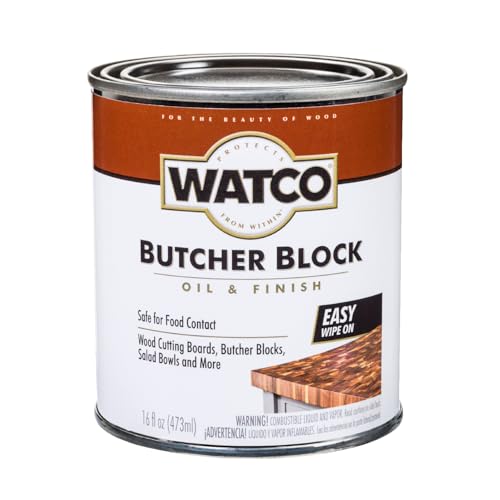
| Watco Butcher Block Oil & Finish (B000VITOT4) | A curing oil finish for the whole countertop | 16 fluid ounces; food-safe finish once fully dry; coverage of 100 square feet per pint |
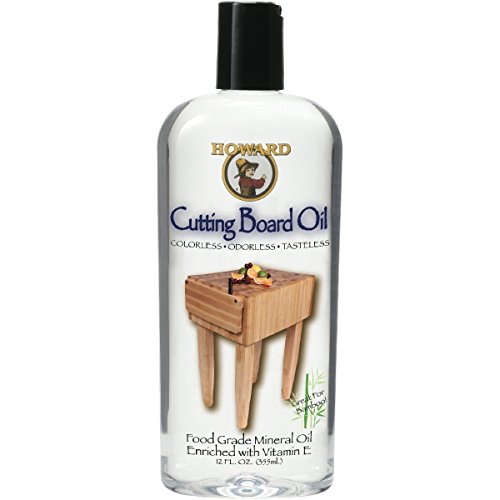
| Howard Cutting Board Oil (B004G6X0J2) | Simple food-grade mineral oil maintenance | 12 ounces; pure USP food-grade mineral oil; tasteless, odorless, and colorless |
| Howard Butcher Block Oil, Conditioner and Cutting Board Cleaner Kit (B07FN443G8) | A starter oil, conditioner, and cleaner set | 12-ounce set; food-grade mineral oil; food-safe wood sealer for butcher block |
How to Choose
Water Resistance Around the Sink
Water resistance is the first test for the best finish for wood countertop with sink use. Look for a finish described for butcher block countertops, that resists water after it has cured or been absorbed, and that can be built up in more than one coat. Pay close attention to the sink cutout, the joint where the sink meets the wood, and the end grain, because those areas absorb water fastest. Apply extra coats to the cutout edges, let each coat soak in, and wipe away excess so the surface does not stay tacky. Keep a towel near the sink, wipe up standing water, and do not let wet sponges or dish racks sit in one place for hours.
Food Safety and Cure Time
A kitchen countertop touches food, dishes, and hands, so food safety matters as much as water protection. Choose a finish labelled safe for food contact once fully dry or fully absorbed, and follow the label directions for drying and curing before food preparation. Some oils need hours between coats and a longer wait before full use. Others are mineral-oil based and do not cure to a hard film, so they need to be absorbed and wiped clean before food touches the surface. Do not rush the schedule. Keep the finish away from open flame and heat, store it as directed, and keep it out of reach of children. If anyone in the household has a food allergy, check the ingredient list first.
Penetrating Oil or Film-Forming Topcoat
Penetrating oils soak into wood fibres and leave the grain visible and natural. They are easy to refresh, because a new coat can be wiped on after cleaning and light sanding, and a worn spot beside the sink can be treated without refinishing the whole top. Their limit is that they need reapplication, and a single thin coat will not protect a sink area for long. Film-forming topcoats can give a harder, more water-resistant surface, but they can scratch, chip, or lift where water works under the edge, especially around a sink rim. For many wood countertops with a sink, a curing penetrating oil finish is a practical middle ground: it soaks in, builds protection with extra coats, and can be maintained in place.
Sheen, Colour, and Grain
Finish changes how wood looks. Clear oils deepen the colour and bring out grain, and the effect is stronger on darker woods and on end grain. Some finishes leave a low sheen, while others build to a soft satin glow after several coats. Around a sink, a higher sheen can show water spots more clearly, while a matte oil finish can hide small marks but may look dry sooner. Test the finish on an offcut before you commit to the whole top, and keep the same finish across the top and the sink cutout, so colour, sheen, and protection match.
Ease of Application and Recoating
A sink makes application harder, because you need to reach the cutout, the underside edge, and the narrow strip behind the faucet. A wipe-on oil is often easier in those tight areas than a brush-on topcoat that can pool or leave brush marks. The wood should be clean, dry, and sanded smooth before the first coat, with dust removed. Plan for more than one coat, and allow time for each coat to soak in. For maintenance, choose a finish that can be cleaned, lightly sanded if needed, and recoated without stripping.
Maintenance Beside a Sink
Maintenance is part of the finish, not an afterthought. Around a sink, expect to refresh the finish more often than on a dry worktop. Watch for water that no longer beads, wood that looks pale or dry, or dark spots near the sink. Those are signs to clean the area, let it dry fully, and apply a fresh coat. Keep the sink rim sealed and fix a gap promptly, because water under the rim can damage wood the finish cannot reach. Avoid harsh cleaners and abrasive pads, use a mild cleaner made for wood, wipe with the grain, and dry the surface after cleaning.
Wood Type and Sink Style
Wood type and sink style change how much protection you need. Open-grained woods, end-grain butcher block, and soft woods absorb more finish and more water than tight-grained hardwoods, so they need more coats and more frequent care. An undermount sink exposes the cutout edge to water from above and below, so that edge needs full sealing. A top-mount sink covers part of the cutout with its rim, but water can still work under the rim if the seal fails. When in doubt, use more coats on the sink area than on the rest of the top, and keep a record of when you last oiled it.
The Best Finish for Wood Countertop with Sink Reviewed
Watco Butcher Block Oil & Finish (B000VITOT4)
Watco Butcher Block Oil & Finish is a curing oil finish made for butcher block countertops, cutting boards, salad bowls, and other wood items that need a food-safe finish. The maker describes it as a specially formulated oil finish for easy and safe maintenance of indoor wood surfaces, with a non-toxic formula that is safe for food contact once fully dry. It is a liquid finish in a 16-fluid-ounce size, with a smooth finish type, for interior wood, and the maker lists coverage of 100 square feet per pint.
This finish suits a homeowner who wants a single product for the whole countertop and is willing to apply more than one coat. Apply it as a wipe-on finish, allow additional coats after 6 hours for a deeper finish, and hand wash coated surfaces before contact with food. Do not wash coated surfaces in a dishwasher. The oil sheen enhances the wood and protects it, and the clear colour keeps the grain visible.
Who it suits: kitchens with a wood countertop and a sink where the owner wants a curing oil finish, a natural look, and a product made for butcher block. Who should skip it: anyone who wants a hard, glossy film on top of the wood, or anyone who does not want to wait between coats. Around a sink, give the cutout extra coats and plan a maintenance coat sooner than on the dry part of the top.
Howard Cutting Board Oil (B004G6X0J2)
Howard Cutting Board Oil is a food-grade mineral oil for wood cutting boards and butcher block. The maker describes it as a deep-penetrating, pure USP food-grade mineral oil that is tasteless, odorless, and colorless, and that will not go rancid. It penetrates deep into wood fibres, helping to prevent cracking, drying, and warping, and is described as perfect for the initial oiling or seasoning of cutting boards and butcher blocks. This 12-ounce bottle contains mineral oil stabilized with vitamin E, and the maker states that it meets USP requirements and is safe for all food-contact surfaces.
This oil suits a homeowner who wants a simple, food-safe oil for regular maintenance, or who wants to season new wood before a wax conditioner. It is easy to apply and can be reapplied when the wood looks dry. Its limit around a sink is important to state plainly: mineral oil alone does not cure to a hard film, so it gives less standing-water protection than a curing oil finish or a hard topcoat, and it needs more frequent reapplication beside a sink. Use it as a maintenance and seasoning oil, not as a one-coat waterproof seal, and pair it with a wax conditioner if you want more water resistance.
Who it suits: owners of butcher block who want a food-grade oil for seasoning and upkeep, and who will re-oil the sink area on a regular schedule. Who should skip it: anyone who wants a single finish that cures hard and needs little upkeep, or anyone who expects mineral oil alone to hold back standing water for months. If you use it around a sink, apply it to clean, dry wood, wipe off the excess, and let it absorb fully.
Howard Butcher Block Oil, Conditioner and Cutting Board Cleaner Kit (B07FN443G8)
Howard Butcher Block Oil, Conditioner and Cutting Board Cleaner Kit is a three-part set for butcher block care, with a 12-ounce size. The set is described as a food-grade mineral oil and food-safe wood sealer, bringing together oil for seasoning, a conditioner for surface protection, and a cleaner for routine care. The oil is deep-penetrating, pure USP food-grade mineral oil that is tasteless, odorless, and colorless, and that will not go rancid. The conditioner is a blend of food-grade mineral oil, beeswax, and carnauba wax, made to protect wood surfaces and leave a smooth, water-resistant finish.
This kit suits a first-time butcher block owner, or a household that wants one purchase to cover oiling, conditioning, and cleaning. The maker guidance is to season wood with oil first, then condition it, and to use the cleaner for routine care between oil coats. That order matters around a sink: oil first to feed the wood, then wax conditioner to add surface water resistance. The kit is a partial fit to flag: it is a maintenance set, not a single curing film finish, so it needs repeat application, and the wax layer will wear faster where water, soap, and scrubbing are constant. It is still a full fit as a wood countertop finish system, because every part is made for butcher block and food-contact wood.
Who it suits: new butcher block owners who want a simple routine, and anyone who wants oil plus wax protection in one set. Who should skip it: anyone who wants a hard topcoat, or anyone who does not want to repeat oil and conditioner coats through the year. Around a sink, use the oil on the cutout and the top, follow with conditioner, and reapply the conditioner to the sink area more often.
What to Check Before You Buy
Before you buy a finish for a wood countertop with a sink, check the label for food-contact safety, the intended use on butcher block or countertops, and the drying and curing times. Check whether the finish is a penetrating oil, a curing oil, a wax conditioner, or a film topcoat, and whether it can be recoated in place. Check the size against the area you need to cover, remembering that a sink area needs extra coats and that a small bottle may cover a cutting board but not a full countertop.
Check the wood first. The surface should be clean, dry, and free of old peeling finish, food residue, and soap film. Sand lightly if the surface is rough or stained, remove dust, and test the finish on a hidden area or an offcut. Check the sink joint and the caulk or sealant around the rim, and fix any gap before you finish, because finish alone cannot seal a failed joint. Keep the room aired while you apply the finish, and follow the maker directions for storage and disposal of oily cloths, because some oil-soaked cloths can be a fire risk if left bunched up.
Check your maintenance plan before you choose. If you will re-oil often, a penetrating oil system is a good match. If you want longer gaps between coats, look for a curing oil finish with more coats on the sink area, and accept that touch-ups will still be needed. Do not choose a finish only for its sheen or colour. Choose it for water resistance, food safety, ease of recoating, and whether you will keep up the care it needs beside a sink.
FAQ
What is the best finish for a wood countertop with a sink?
The best finish for a wood countertop with a sink is a curing oil finish or a food-safe oil-and-wax system, applied in several coats, with extra coats on the sink cutout and a regular maintenance schedule. A penetrating finish is easier to refresh in place than a hard film. No finish makes wood fully waterproof, so drying the sink area and re-oiling it often are part of the protection.
Can I use mineral oil on a wood countertop with a sink?
Yes, food-grade mineral oil can be used on a wood countertop with a sink, but it needs frequent reapplication, because it does not cure to a hard film. Use it to season new wood and to maintain the surface, wipe off the excess, and let it absorb fully before food use. Around a sink, pair it with a wax conditioner for more surface water resistance.
How many coats should I apply around the sink?
Apply more coats around the sink than on the rest of the countertop. Start with the maker directions for the whole top, then add extra coats to the cutout edges, the end grain, and the narrow strip behind the faucet. Let each coat soak in, wipe away excess, and allow the drying time stated on the label between coats.
How do I protect the sink cutout in a wood countertop?
Seal the cutout fully, including the top edge, the vertical edge, and the underside edge, before the sink is fitted if you can. Use extra coats of finish on the end grain, keep the joint sealed, and check the caulk or sealant at the rim for gaps. After fitting, wipe up splashes, do not let water stand in the joint, and re-oil the cutout area on a shorter cycle.
How often should I refinish a wood countertop with a sink?
There is no single schedule that suits every kitchen, because use, water exposure, wood type, and finish all differ. When water soaks in at once instead of beading, when the wood looks pale or dry, or when dark spots appear near the sink, clean the area, let it dry fully, and apply a fresh coat. The dry parts of the countertop will need care less often than the sink area.
Bottom Line
The best finish for wood countertop with sink use is not the hardest or glossiest product on the shelf. It is the finish that protects the sink cutout, stays safe for food contact, and can be refreshed without a full strip and refinish. A curing oil finish such as Watco Butcher Block Oil & Finish gives a practical balance of protection and maintainability for the whole top. Food-grade mineral oil such as Howard Cutting Board Oil is a simple way to season and maintain wood, as long as you accept frequent reapplication beside a sink. A combined oil, conditioner, and cleaner kit such as the Howard set gives a clear routine for oiling, wax protection, and cleaning in one purchase.
Whichever finish you choose, seal the sink cutout with extra coats, keep the rim sealed, wipe up standing water, and re-oil the sink area before it looks dry. That care, repeated through the year, keeps a wood countertop with a sink looking good and working well.
Disclosure: As an Amazon Associate, we may earn from qualifying purchases.
FAQ
What is the best finish for a wood countertop with a sink?
Can I use mineral oil on a wood countertop with a sink?
How many coats should I apply around the sink?
How do I protect the sink cutout in a wood countertop?
How often should I refinish a wood countertop with a sink?
More from Amazon
Programs that pair well with the guide above. Offers and eligibility are set by Amazon and may change.
Set up recurring deliveries of everyday items on eligible products. Terms and savings are set by Amazon.
Explore Subscribe & SaveCollect the home and kitchen items you want in one registry that guests can shop from.
Create a wedding registryFree shipping on eligible items, Prime Video and more. Eligible new members can start with a free trial.
Start a Prime free trialAudiobooks and podcasts to listen to on the go. Eligible new members can start with a free trial.
Try Audible freeAs an Amazon Associate we earn from qualifying purchases.