The best kitchen sink for a quartz countertop is not defined by whether the bowl itself contains quartz. The decisive issue is coordination: the physical sink, engineered-stone slab, cabinet, support hardware, faucet holes, and plumbing must agree before the fabricator makes an irreversible cut. A beautiful sink with the wrong rim profile or inaccessible clips can turn a countertop installation into a field repair.
Affiliate disclosure: This article may contain affiliate links. We may earn a commission from qualifying purchases at no added cost to the buyer.
Our top picks


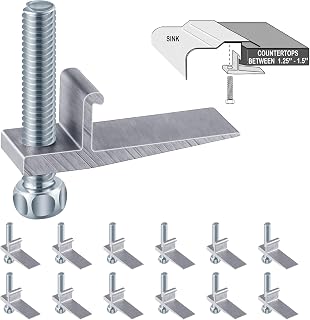


As an Amazon Associate we earn from qualifying purchases at no extra cost to you.
Editorial method: This is a document-based fit analysis, not hands-on load testing. Manufacturer product pages and technical documents were checked on August 26, 2026. The three examples represent composite, conventional stainless, and stainless workstation formats. They are not ranked by strength. The countertop fabricator and installer must approve the exact sink, template, reveal, and support method for the actual project.
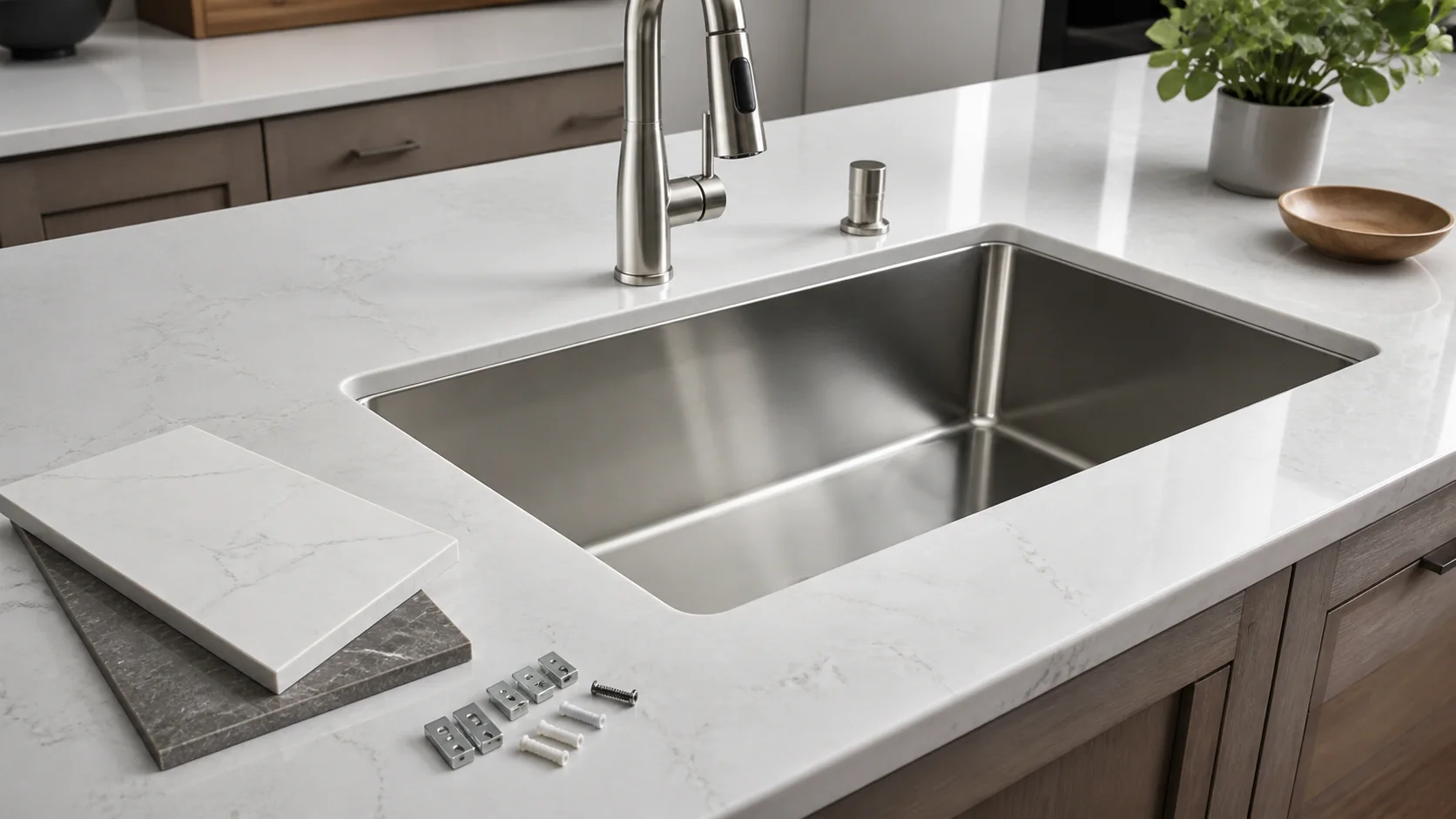
Three Exact Sinks, Three Fabrication Conversations
| Exact model | Documented configuration | Quartz-countertop question to resolve |
|---|---|---|
| KOHLER Cairn K-8206-CM1 | 33-1/2-inch undermount single bowl made from KOHLER Neoroc composite | Confirm rim profile, reveal choice, template revision, and support for the heavier composite bowl |
| Elkay Crosstown ECTRU30179RT | Undermount stainless single bowl with Aqua Divide feature and rear drain placement | Check clip access, faucet setback, divider relationship to cutout, and disposal clearance |
| Kraus Kore KWU110-32 | 32-inch undermount, 16-gauge stainless workstation sink with accessory ledge | Coordinate rail edge, cutout reveal, countertop overhang, accessories, and faucet reach |
The dimensions in a product name are not fabrication dimensions. The fabricator needs the current manufacturer template and, commonly, the physical sink. A model suffix can identify material, color, hole arrangement, accessory set, or market configuration. Match the carton label to the document before anyone traces or scans the rim.
Freeze the Sink Before the Cutout
Quartz fabrication usually moves from field measurement or digital templating to shop cutting and edge finishing. The sink decision belongs before that transition. Substituting a “same size” sink afterward is risky because corner radii, flange width, bowl taper, reveal line, clip positions, and drain center may differ even when outside dimensions appear close.
Ask who owns each approval. The sink manufacturer defines its rim and installation requirements. The quartz supplier defines allowable cutouts, edge distances, corner treatment, faucet-hole spacing, and fabrication limitations. The cabinet installer defines structural attachment opportunities. The plumber confirms the disposal and drain route. Put those approvals in writing rather than relying on a retailer’s compatibility checkbox.
Inspect the delivered sink before the slab is machined. Check the complete model number, color or finish, rim flatness, molded corners, drain opening, accessory ledges, included hardware, and shipping damage. A bowed rim or chipped composite edge should be resolved inside the return window, not hidden beneath a finished counter.
Choose the Reveal Deliberately
A positive reveal leaves some sink rim visible inside the opening. It can make the joint easier to see and may preserve more countertop material, but the exposed shelf can collect residue. A zero reveal aligns the cut edge with the bowl wall; it demands accurate coordination. A negative reveal lets the quartz slightly overhang the bowl, hiding the rim while creating an underside lip that requires cleaning.
No reveal is universally superior. The sink manufacturer may illustrate one or more options, while the fabricator may limit choices for a particular rim, radius, color, or shop process. A workstation adds another constraint: excessive overhang can interfere with a cutting board or rack intended to bear on the ledge.
Draw a full-scale corner detail showing quartz edge, adhesive or sealant joint, sink flange, ledge, accessory, and clip or rail. This simple section exposes conflicts that a top-view template cannot show. Approve the reveal on that detail before polishing begins.
Support the Sink Independently of Sealant
Sealant closes the water path between sink and counter; it should not be treated as the only structural system. The approved installation may use mechanical clips attached to suitable anchors, cabinet-spanning rails, a sink harness, a cradle, or blocking. The selection depends on sink weight, loaded bowl, disposal, cabinet construction, and quartz-fabricator requirements.
Support rails need a clear bearing path to sound cabinet structure. A face frame, drawer, dishwasher bay, corner cabinet, or narrow stile can obstruct a generic rail kit. Clips require space for installation and later tightening. Do not drill or cut the quartz underside in the field unless the fabricator explicitly authorizes the method.
Include realistic loads: a full basin, heavy cookware, a bottom grid, and an attached disposal. Composite Cairn and stainless models differ in dead weight, but every undermount sink needs engineered support. Photograph the completed system before plumbing and cabinet contents hide it.
Model Notes for the Fabricator Meeting
KOHLER Cairn K-8206-CM1
Cairn brings a matte composite bowl to the discussion. KOHLER identifies the 33-1/2-inch undermount format and provides a technical document from the model page. Confirm the Neoroc color suffix, actual rim, required base size, drain position, and permitted reveal. Ask how the chosen support system handles the bowl and disposal without concentrating load at the slab edge.
Elkay Crosstown ECTRU30179RT
This stainless model uses Elkay’s Aqua Divide configuration and a rear drain. The low divider affects how large objects span the bowl even though it remains one sink body. Verify the exact cutout file, flange clearance, clips, faucet setback, and whether the rear drain aligns with the existing wall outlet and disposal.
Kraus Kore KWU110-32
Kore adds an internal workstation rail to a 32-inch stainless undermount. The reveal decision must preserve the intended support surface for accessories. Place the cutting board and roll-up rack on the physical sink, then show the fabricator which edge cannot be covered. Confirm that faucet reach lands beyond an installed accessory instead of splashing onto it.
Protect the Quartz Around Faucets and Accessories
The sink opening is only one penetration. Faucet, dispenser, air-switch, filtered-water tap, and dishwasher air-gap holes need sufficient spacing from the cutout and from one another. Follow the quartz fabricator’s minimum web and edge distances. A tall faucet also needs handle clearance from the backsplash and room for its mounting hardware below.
Plan holes using the actual faucet shank, washers, electronic control cables, and hose path. A pull-down weight must move without hitting a support rail, disposal, trap, or filter. If an accessory hole is postponed, ask whether drilling it after installation is permitted and who accepts responsibility for the slab.
Cabinet and Plumbing Reality Check
Measure clear interior width between structural members, not the cabinet’s marketing width. Sink flange, clips, rails, cabinet walls, and face-frame returns consume space. A farmhouse or corner configuration creates additional constraints, but even a standard base can hide diagonal braces and drawer hardware.
Plot the drain outlet elevation and horizontal position. A deeper bowl plus disposal may put the trap outlet below the wall connection. A rear drain can free front storage or force a longer route. Resolve those elevations before fabrication; corrugated flexible drain tubing is not a substitute for a correctly designed trap.
Leave shutoffs and joints accessible. A rail should not block a valve handle, and a shelf should not make the trap impossible to remove. If cabinet modifications affect strength, the cabinet installer should restore the load path before the quartz is placed.
Approval Checklist Before Production
- Physical sink matches the purchase order and current template.
- Cabinet clear opening and structural condition are verified.
- Positive, zero, or negative reveal is drawn and approved.
- Mechanical support method is accepted by sink and counter installers.
- Cutout radii, faucet holes, edge distances, and seams are finalized.
- Accessory rails remain usable after the selected reveal.
- Disposal, trap, wall outlet, stops, filters, and hose paths fit below.
- Return timing and damage inspection are complete before cutting.
Do not release the slab to production while an item remains described as “field verify.” Field conditions can be verified before shop work through measurements, photographs, physical samples, and coordinated drawings. Uncertainty becomes far more expensive after the quartz is cut.
Coordinate the next decision with the compare kitchen sink materials.
Frequently Asked Questions
Does a quartz countertop require a quartz-composite sink?
No. Stainless steel, composite, fireclay, and other compatible sink materials can be installed with engineered quartz. Rim design, support, fabrication, and care compatibility matter more than matching material names.
Can the countertop overhang a workstation ledge?
Only to the extent approved by the sink design and fabricator. Too much negative reveal can block boards, racks, or colanders that need the ledge.
Are sink clips enough for a disposal?
Use the complete support method approved for the sink, quartz, cabinet, and attached disposal. Never infer capacity from the number of clips alone.
Can a different sink use the same cutout?
Not safely without comparing exact templates, corner radii, flange widths, reveals, and support access. Similar nominal dimensions do not prove interchangeability.
Who should create the sink opening?
The quartz fabricator should control cutting and polishing under its approved process. Do not modify engineered stone on site without explicit authorization and appropriate professional controls.
Recommendation: Buy Coordination, Not Just a Bowl
Choose KOHLER Cairn when its composite finish and bowl geometry justify the added support discussion; choose Elkay Crosstown when the Aqua Divide and rear drain suit the plumbing; choose Kraus Kore when workstation accessories fit the household workflow and approved reveal. The winning sink is the exact unit that the fabricator, cabinet installer, and plumber can all sign off before the first quartz cut.
Sources
- Kohler official product page
- Kohler specification document
- Elkay official product page
- Kraus KWU110-32 specification sheet