Best Adjustable Dumbbells for Home Gyms: Choose by Space, Range, and Use
The best adjustable dumbbells for most compact home gyms are a selectorized pair with a secure locking system, a useful range for your main exercises, and a cradle that fits your storage spot; choose loadable handles instead if low cost and a small footprint matter more than quick weight changes.
Adjustable dumbbells differ most in how they change weight, how much floor space they occupy, and how securely plates are held during a set. Before choosing, estimate the loads you’ll actually use: a pair suited to presses and rows may be too heavy or bulky for shoulder raises, while a light set can limit leg and back exercises.
Our top picks
 BowFlex Results Series 552 SelectTech Dumbbells
- Switch between weight settings with a quick twist…
- Get more workout in less space by replacing…
- Reinforced with durable metal plates and a locking…
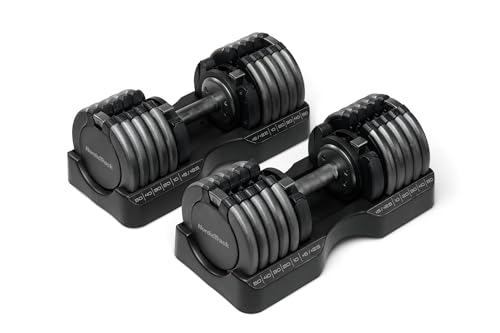 NordicTrack 55 lb Select-a-Weight Dumbbell Pair
- [Smooth Weight Selector] - Adjust each Select-A-Weight dumbbell…
- [10 Lb
- [Replace 30 Dumbbells] - Each Select-A-Weight dumbbell features…
 ALTLER Adjustable Dumbbell Set
- Adjustable Weight- Our adjustable weight dumbbell features free…
- Safe Locking System- We are applying a strong…
- Unique Dial System- One-handed operation design, convenient for…
| Product | Key specs | |
|---|---|---|
| BowFlex Results Series 552 SelectTech Dumbbells | Switch between weight settings with a quick twist… Get more workout in less space by replacing… Reinforced with durable metal plates and a locking… | Check price |
| NordicTrack 55 lb Select-a-Weight Dumbbell Pair | [Smooth Weight Selector] - Adjust each Select-A-Weight dumbbell… [10 Lb [Replace 30 Dumbbells] - Each Select-A-Weight dumbbell features… | Check price |
| ALTLER Adjustable Dumbbell Set | Adjustable Weight- Our adjustable weight dumbbell features free… Safe Locking System- We are applying a strong… Unique Dial System- One-handed operation design, convenient for… | Check price |
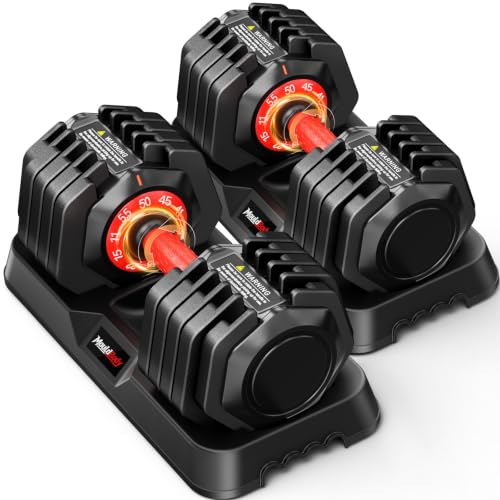 Mouldbody Adjustable Dumbbell Set Pair 50 lb Mouldbody Adjustable Dumbbell Set Pair 50 lb | 1:This adjustable dumbbell set replaces multiple dumbbells with… QUICK ADJUSTABLE WEIGHTS SYSTEM:Easily adjust weights with a… SPACE SAVING DUMBBELLS FOR HOME GYM:Compact dumbbell set… | Check price |
As an Amazon Associate we earn from qualifying purchases at no extra cost to you.
Quick Picks by Home-Gym Situation
| Situation | Best fit | Why |
|---|---|---|
| Small apartment or shared room | Selectorized dumbbells with a fitted cradle | One pair replaces several fixed pairs, and a dedicated base keeps parts together. |
| Frequent circuit training | Dial- or selector-adjusted set | Weight changes are quicker than swapping plates between exercises. |
| Limited budget or gradual strength training | Loadable handles with spin-lock collars | Often a lower-cost way to add weight in stages, though changes take longer. |
| Heavy rows, presses, and squats | Set with a sufficiently high maximum per dumbbell | Check the per-hand limit, not a combined pair figure, and verify the handle feels secure at the top setting. |
| Kids or pets in the home | Cradle-stored set with a positive locking mechanism | Store weights out of reach; a selector mechanism is not a substitute for supervision or safe storage. |
Compare the Main Adjustment Mechanisms
| Type | Typical footprint | Change speed | Main trade-off |
|---|---|---|---|
| Selectorized, dial or selector pin | About 16–20 in. long × 7–9 in. wide per cradle | Fast, often seconds | More compact than a rack of fixed weights, but the mechanism and cradle need careful handling. |
| Loadable handles with collars | Handles and plates can be stored separately; allow roughly 18–24 in. of shelf length for a pair of handles | Slower; plates must be changed and secured | Flexible and often economical, but loose plates take space and collars need checking. |
| Plate-loaded quick-lock system | Usually requires space for the handles plus a plate stack or storage tray | Moderate | Can balance adjustability and simplicity, but proprietary plates may limit expansion. |
These dimensions are planning estimates, not universal product specifications. Measure the exact set you’re considering, including its cradle and the space needed to lift the dumbbells out. Selectable increments also matter: smaller jumps can help with upper-body training, while larger jumps may be acceptable for rows or lower-body movements.
What to Check Before Buying
Weight range and increments
Look at the maximum weight for each dumbbell and the available steps between minimum and maximum. If a set jumps by several pounds at a time, that may be challenging for smaller muscle groups. If you plan to progress beyond its limit, check whether the manufacturer offers compatible expansion kits rather than assuming other plates will fit.
Handle comfort and grip
Handle diameter, knurling, and the space between the handle and the weight blocks affect comfort. A thicker handle can feel secure in larger hands but tiring in smaller hands. If possible, hold a similar-diameter handle before ordering. Avoid covering selector parts or blocking the locking mechanism with aftermarket grips.
Durability and safe use
Selectorized designs have moving parts, trays, and locking components that can be damaged by drops or by lifting a dumbbell before it is fully seated. Loadable designs are mechanically simpler, but collars can loosen if they are not secured and checked. Neither type should be treated like a traditional solid dumbbell for dropping after a set. Follow the manufacturer’s instructions, inspect locks and collars periodically, and set each weight down with control.
Fit the Set Into a Real Room
In a 10 × 12 ft room, a pair of adjustable dumbbells can fit beside a bench or along a wall without dedicating space to a full dumbbell rack. The challenge is the workout footprint: pressing, lunging, and placing weights down need clear floor area, not just a narrow storage slot. Keep the path to the cradle unobstructed and avoid storing weights where a door, drawer, or chair has to move over them.
| Planning item | Useful allowance | Why it matters |
|---|---|---|
| Cradle zone | About 2 × 2 ft for a compact pair, subject to product dimensions | Allows room to approach and lift the dumbbells without catching nearby furniture. |
| Exercise clearance | Roughly 3 ft of open floor on the sides used for lifting | Helps avoid striking a wall, table, or other equipment during presses and rows. |
| Bench setup | Allow about 6–7 ft of total length for a bench and working space | Leaves room to get on and off and position the dumbbells safely. |
| Storage surface | Use a level, stable floor or shelving rated above the combined stored load | A pair at 50 lb per dumbbell weighs 100 lb before counting the cradle. |
For renters, a floor-level cradle is generally easier to move than a heavy rack. Check the boxed weight and package dimensions before delivery: a pair with a high maximum load can arrive in separate, heavy boxes, and the carrier may leave them at the entrance. Measure narrow doorways, stair turns, and the route to the workout area. Keep the original packaging until you’ve confirmed all parts are present and the selectors work correctly.
Choose the Right Type, Not Just the Highest Weight
- Choose selectorized dumbbells if you change loads often, value a tidy storage footprint, and can handle them carefully.
- Choose loadable handles if you want to keep initial spending down, don’t mind slower changes, and have a place to store plates.
- Choose a heavier-capacity model if your routine relies on demanding presses or rows—but confirm that its size and grip suit your hands and room.
- Choose a lighter, finer-increment set if control and gradual progression matter more than a high maximum load.
Prices vary by capacity, adjustment system, and included storage, but adjustable dumbbell pairs commonly range from about $100–$600, with higher-capacity or premium systems sometimes costing more. Compare what the price includes: both dumbbells, cradle, compatible expansion weights, and any required accessories.
The right choice is the set you can store safely, adjust without hassle, and use across your planned exercises. Measure the storage spot first, decide on a realistic per-hand maximum, and then compare handle feel and weight increments among models that meet those constraints.