Key takeaways
- For a shared household: Choose a model with replacement tips available and a way to identify each person’s nozzle. Keep tips clean and stored separately; do not assume a single included tip is enough for multiple users.
- For braces: Prioritize compatible orthodontic tips, a larger reservoir, and multiple pressure levels. The extra capacity makes it easier to work around brackets without rushing.
- For travel: Favor a compact body, secure tank, travel lock, and charging arrangement that suits your destination. A smaller reservoir is a reasonable compromise for occasional trips.
- For sensitive gums: Choose gentle adjustment rather than a model selected for maximum power. If bleeding or discomfort persists, ask a dentist instead of increasing pressure.
- For shower use: Verify the exact waterproof rating and follow the care instructions. A sealed charging port or removable tank can make drying and storage easier, but neither replaces the stated rating.
Best Cordless Water Flossers for Easy Daily Cleaning
The best cordless water flosser for most people is a rechargeable model with adjustable pressure, a removable reservoir of about 200 ml or more, and a sealed design rated for use in the shower. Choose a larger tank if you dislike refilling mid-clean, a compact travel model if bag space matters most, or a flosser with specialty tips if you have braces, implants, or other specific cleaning needs.
Waterpik and Philips Sonicare both make established cordless flossers, but specifications vary by model and by region. Before buying, check the exact model’s manual: battery life, charging method, included tips, and waterproof rating are not consistent across an entire brand. The comparisons below use practical specification ranges rather than implying every model has the same features.
Our top picks
 Waterpik Cordless Advanced Portable Water Flosser
- Waterpik Cordless Advanced features a 360 degree rotating…
- The Cordless Advanced water flosser is portable and…
- Waterpik is the #1 water flosser brand recommended…
 COSLUS ADA Accepted C20 Water Dental Flosser
- ADA Scientific Council Accepted: Healthier gums in 15…
- Water Flossing Cleans Effectively for a Healthier Mouth:…
- BPA Free Upgraded 300ml Extra-Large Water Tank, No…
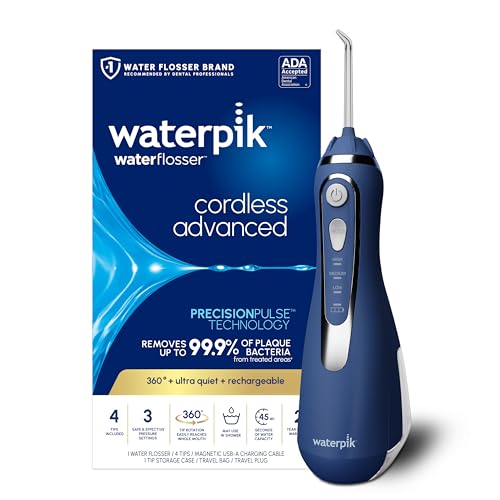 Waterpik Cordless Advanced Portable Water Flosser
- Waterpik Cordless Advanced features a 360 degree rotating…
- The Cordless Advanced water flosser is portable and…
- Waterpik is the #1 water flosser brand recommended…
| Product | Key specs | |
|---|---|---|
| Waterpik Cordless Advanced Portable Water Flosser | Waterpik Cordless Advanced features a 360 degree rotating… The Cordless Advanced water flosser is portable and… Waterpik is the #1 water flosser brand recommended… | Check price |
| COSLUS ADA Accepted C20 Water Dental Flosser | ADA Scientific Council Accepted: Healthier gums in 15… Water Flossing Cleans Effectively for a Healthier Mouth:… BPA Free Upgraded 300ml Extra-Large Water Tank, No… | Check price |
| Waterpik Cordless Advanced Portable Water Flosser | Waterpik Cordless Advanced features a 360 degree rotating… The Cordless Advanced water flosser is portable and… Waterpik is the #1 water flosser brand recommended… | Check price |
 Waterpik Cordless Advanced Portable Water Flosser Waterpik Cordless Advanced Portable Water Flosser | Waterpik Cordless Advanced features a 360 degree rotating… The Cordless Advanced water flosser is portable and… Waterpik is the #1 water flosser brand recommended… | Check price |
As an Amazon Associate we earn from qualifying purchases at no extra cost to you.
Quick comparison: which cordless flosser fits your routine?
| Need | Look for | Useful specification range | Trade-off |
|---|---|---|---|
| Everyday use, minimal refills | Rechargeable countertop-style handheld or larger cordless model | 200–300 ml reservoir; at least 2 pressure levels | Bulkier handle and storage footprint |
| Small bathroom or travel | Compact cordless model with a travel lock or case | 120–200 ml reservoir; roughly 250–450 g when empty | May need a refill for a thorough, unhurried clean |
| Sensitive gums | Low-pressure mode and gradual adjustment | At least 2 settings; a dedicated gentle mode is helpful | Fewer modes can mean less fine control |
| Braces or specialized dental work | Model compatible with orthodontic or plaque-seeker tips | Check that the needed tip is included or sold separately | Extra tips add replacement cost and storage needs |
| Shower use | Explicit waterproof rating in the manual | IPX7 indicates testing for temporary immersion under specified conditions | Water resistance does not mean the device should be charged wet |
These ranges are comparison guides, not guarantees. A reservoir’s usable runtime depends on pressure, pulsing pattern, and how long you direct the stream at each area. Similarly, battery-life claims may assume brief daily sessions and can change with age, charging habits, and mode.
What matters most when comparing cordless water flossers
Reservoir size and the refill question
Tank capacity is one of the most noticeable differences during daily use. A 150 ml reservoir is compact, but may not last through a careful full-mouth routine at higher pressure. Around 200–300 ml is more comfortable for many people; a larger tank usually reduces interruptions but makes the handle heavier and harder to pack. If you have braces or want to clean slowly around dental work, prioritize capacity over the smallest possible body.
Pressure settings and comfort
More pressure levels are useful only if they include a setting you can comfortably use. A beginner or someone with tender gums should start low and increase gradually, following the dental professional’s advice. Pulse patterns can differ between models, too, so a high-pressure number alone does not tell you which flosser will feel best. Look for clearly labeled gentle, normal, and stronger modes rather than relying on maximum pressure as a measure of cleaning quality.
Battery life, charging, and portability
Cordless models typically use rechargeable batteries, but charging time and connector type vary. Some use a proprietary charging base or cable, while others may use USB charging. Check the manual for the specified full charging time and expected use per charge; these details are not interchangeable across Waterpik or Philips Sonicare models. For frequent travel, a travel lock helps prevent accidental activation, and a removable tank that can dry fully is useful. Do not pack a flosser while water remains trapped in the reservoir or handle.
Weight figures are also easy to misread: a product listing may report the device without water, while a filled tank adds roughly 120–300 g, depending on capacity. That difference can matter if hand strength or wrist comfort is a concern. If possible, compare the handle shape and balance, not just the empty weight.
Waterproofing and nozzle options
“Water-resistant” and “waterproof” are not interchangeable. Look for a specific rating in the product documentation. An IPX7 rating generally refers to a defined temporary-immersion test; it does not authorize charging the device in a wet area, using a damaged seal, or ignoring the manufacturer’s instructions. If you plan to floss in the shower, confirm the exact model is rated for that use.
Standard jet tips suit general cleaning, while orthodontic tips are designed to direct water around braces and plaque-seeker tips may be intended for particular dental work. Gum-pocket tips, where available, require careful use and should be used as directed by a dental professional. Confirm tip compatibility before purchase: accessories can be model-specific, and a specialty nozzle may be sold separately.
Pick by situation, not by the longest feature list
- For a shared household: Choose a model with replacement tips available and a way to identify each person’s nozzle. Keep tips clean and stored separately; do not assume a single included tip is enough for multiple users.
- For braces: Prioritize compatible orthodontic tips, a larger reservoir, and multiple pressure levels. The extra capacity makes it easier to work around brackets without rushing.
- For travel: Favor a compact body, secure tank, travel lock, and charging arrangement that suits your destination. A smaller reservoir is a reasonable compromise for occasional trips.
- For sensitive gums: Choose gentle adjustment rather than a model selected for maximum power. If bleeding or discomfort persists, ask a dentist instead of increasing pressure.
- For shower use: Verify the exact waterproof rating and follow the care instructions. A sealed charging port or removable tank can make drying and storage easier, but neither replaces the stated rating.
Waterpik or Philips Sonicare?
Both brands offer cordless water-flossing models, so compare the specific devices rather than choosing on brand name alone. Waterpik’s cordless range includes models with different tank capacities, modes, and tip bundles; Philips Sonicare’s Power Flosser range also varies by model in design and features. Neither brand’s entire lineup can be summarized by one battery-life or waterproofing figure.
For a fair head-to-head, compare the same details on the box or product manual: reservoir capacity, number and type of pressure modes, included nozzles, battery and charging specifications, empty weight, and water-resistance rating. If you need an orthodontic or periodontal tip, verify compatibility and availability before deciding. A model that appears less expensive can cost more to maintain if its replacement tips are difficult to find or sold only in a bundle.
Before buying: check fit, upkeep, and ongoing costs
Measure the space where the flosser will live. A typical handheld unit needs room for the handle plus access to remove or refill its tank; allow approximately 25–30 cm of vertical clearance if the reservoir lifts off from the top. That is a practical planning estimate, not a universal product dimension. If your bathroom cabinet has a low shelf, check the model’s height and the direction its tank comes off before ordering.
After each use, empty remaining water and let the reservoir and tip air-dry according to the manual. Mineral buildup can affect performance, particularly with hard water, so follow the manufacturer’s cleaning and descaling instructions. Inspect seals and charging connections periodically, and replace worn or damaged tips as directed. A cordless flosser is easiest to keep using when it can be refilled, cleaned, and charged without awkward steps.
Bottom line: For an everyday primary device, start with a rechargeable model offering a 200 ml-or-larger reservoir, adjustable pressure, available replacement tips, and a documented waterproof rating if you want shower use. Choose a smaller unit for travel, and let your dental needs—not the number of modes—determine which nozzles and pressure controls are worth paying for.