Key takeaways
- Pro: Vortex water distribution improves extraction uniformity over basic drip heads
- Pro: Removable filter basket simplifies cleanup and reduces grounds buildup
- Con: The warming plate can scorch coffee if left on too long without a timer
Finding one of the best household coffee machines means matching brew capacity, ease of use, and build quality to how many people you serve and how often you pull a shot before work. The market is flooded with options that look identical on a spec sheet but differ sharply in daily usability: how the filter basket seats, whether the carafe drips on the warming plate, how the water reservoir handles scale, and whether a single button on/off switch actually saves time over a dial.
What separates a good budget machine from a bad one is rarely raw flavor potential. It is the small mechanical decisions—pour spout design, removable parts for cleaning, consistent brew temperature over multiple uses—that determine whether a coffee maker earns a permanent spot on your counter or gets pushed into a cabinet after two weeks. This 2026 roundup compares eight current models across their published specs, retail pricing, and recurring owner feedback to identify which machines deliver the most reliable results per dollar spent.
Our top picks
 BLACK+DECKER 12-Cup Drip Coffee Maker with Vortex
- The sturdy 12-cup* carafe has measurement markings for…
- This feature temporarily stops the flow of coffee…
- The front-facing window shows you the exact amount…
 Elite Gourmet EHC4128 Automatic 4-Cup Drip Coffee
- TRANSPARENT WATER RESERVOIR holds up to 4 cups…
- 4 CUP GLASS CARAFE for brewing the perfect…
- PAUSE 'N SERVE allows a quick pour of…
 BLACK+DECKER 12-Cup Coffee Maker with Easy On/Off
- The exclusive showerhead design evenly saturates coffee grounds,…
- This feature temporarily stops the flow of coffee,…
- Don’t put up with annoying spills
| Product | Key specs | |
|---|---|---|
| BLACK+DECKER 12-Cup Drip Coffee Maker with Vortex | The sturdy 12-cup* carafe has measurement markings for… This feature temporarily stops the flow of coffee… The front-facing window shows you the exact amount… | Check price |
| Elite Gourmet EHC4128 Automatic 4-Cup Drip Coffee | TRANSPARENT WATER RESERVOIR holds up to 4 cups… 4 CUP GLASS CARAFE for brewing the perfect… PAUSE 'N SERVE allows a quick pour of… | Check price |
| BLACK+DECKER 12-Cup Coffee Maker with Easy On/Off | The exclusive showerhead design evenly saturates coffee grounds,… This feature temporarily stops the flow of coffee,… Don’t put up with annoying spills | Check price |
 Mr. Coffee® 5-Cup Mini Brew Switch Coffee Mr. Coffee® 5-Cup Mini Brew Switch Coffee | Please refer to user guide or user manual… Grab-a-Cup Auto Pause lets you grab a cup… Lift & Clean Filter Basket makes for easy… | Check price |
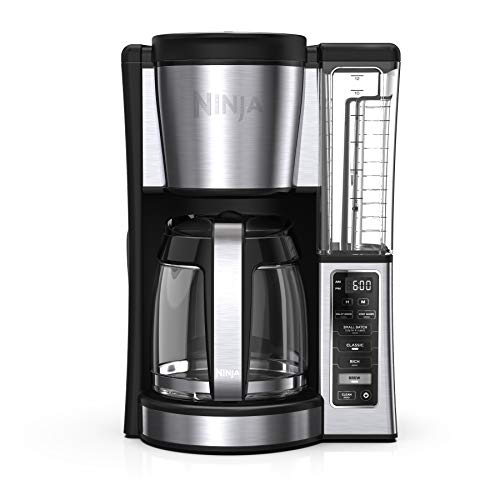 Ninja Fresh Brew Coffee Maker Ninja Fresh Brew Coffee Maker | Classic or Rich, each brew is flavorful and… Brew small or large batches of coffee Delivers even saturation and temperature control for ultra-flavorful… | Check price |
 Elite Gourmet EHC-5055 Automatic 5-Cup Brew & Elite Gourmet EHC-5055 Automatic 5-Cup Brew & | Too coarse a grind, too little coffee, or… It is important to note that the amount… TRANSPARENT WATER RESERVOIR holds up to 5 cups… | Check price |
 Hamilton Beach 2-Way Brewer Coffee Maker Hamilton Beach 2-Way Brewer Coffee Maker | SINGLE CUP OR FULL POT With the included mesh scoop, adding your favorite… ECO-FRIENDLY AND EASY ON YOUR WALLET | Check price |
 Ninja Single Serve Coffee Maker Ninja Single Serve Coffee Maker | This one cup coffee maker delivers single-serve convenience… Compatible with both pods and grounds, this single… Features 4 brew styles, including Over Ice, perfect… | Check price |
As an Amazon Associate we earn from qualifying purchases at no extra cost to you.
Quick Picks
| Product | Best for | Price |
|---|---|---|
| BLACK+DECKER 12-Cup with Vortex Brewing | Large households wanting full-featured brewing at a low price | $34.99 |
| Elite Gourmet EHC4128 4-Cup | Single drinkers or tight counters | $15.99 |
| BLACK+DECKER 12-Cup Easy On/Off | Anyone who values one-button simplicity | $27.97 |
| Mr. Coffee 5-Cup Mini Brew | Couples or dorm rooms needing mid-range capacity | $26.99 |
| Ninja Fresh Brew CE251 | Drinkers who want premium features without a single-serve format | $89.99 |
| Elite Gourmet EHC-5055 5-Cup | Small households that want pause-and-serve flexibility | $17.99 |
| Hamilton Beach 2-Way Brewer | Households split between pod users and pot brewers | $74.95 |
| Ninja Single Serve Combo | Pod and grounds drinkers who brew one cup at a time | $99.95 |
How We Picked
We evaluated each machine on four criteria: capacity-to-footprint ratio (how much coffee you get per square inch of counter space), mechanical simplicity of daily operation (number of steps from reservoir fill to first pour), cleaning accessibility (whether the filter basket, carafe, and water chamber can be disassembled without tools), and long-term owner-reported reliability (frequency of complaints about leaking, inconsistent brew strength, or early failure across retail review platforms).
The 8 Best Household Coffee Machines in 2026
BLACK+DECKER 12-Cup Drip Coffee Maker with Vortex Brewing
This is the machine for a household that runs on coffee and needs volume without fuss. The Vortex Brewing system cycles water in a circular pattern over the grounds, which owners consistently note produces a more even extraction than straight-drip models in this price tier. The 12-cup carafe suits families or anyone who prefers brewing once and drinking through the afternoon.
- Pro: Vortex water distribution improves extraction uniformity over basic drip heads
- Pro: Removable filter basket simplifies cleanup and reduces grounds buildup
- Con: The warming plate can scorch coffee if left on too long without a timer
Skip this one if you drink only one or two cups daily and have limited counter space—a 12-cup machine is wasted potential for a solo household.
Elite Gourmet EHC4128 Automatic 4-Cup Drip Coffee Maker
The EHC4128 exists for one purpose: brew a small pot fast without occupying real estate. At 4 cups it is sized for a single person or a pair who split a small morning serving. Owners praise how quickly the brew cycle completes and how easy it is to tuck onto a narrow shelf or RV counter.
- Pro: Compact footprint fits spaces where larger machines simply cannot go
- Pro: Automatic shut-off adds a safety layer for forgetful early-morning use
- Con: The 4-cup carafe is small enough that anyone wanting seconds must re-brew
Avoid this model if your household regularly needs more than two cups or if you prefer a full-strength pour from the bottom of the pot.
BLACK+DECKER 12-Cup Coffee Maker with Easy On/Off Switch
For buyers who want the same capacity as the Vortex model above but prefer a simpler interface, this version trades the circular brew head for a straightforward switch operation. The easy-pour non-drip carafe is a genuine daily convenience—owners highlight fewer stains on the warming plate because the spout closes when the pot is removed.
- Pro: Non-drip carafe eliminates the most common complaint with budget drip machines
- Pro: Single-button operation reduces cognitive load for shared households
- Con: No brew-strength adjustment means every cup extracts at the same pace
Pass on this if you are particular about controlling extraction time or want a programmable timer for early mornings.
Mr. Coffee 5-Cup Mini Brew Switch Coffee Maker
The 5-Cup Mini Brew occupies the middle ground that many buyers need: enough volume for two to three people without the bulk of a 12-cup reservoir. Mr. Coffee’s name carries weight in this tier, and owners report consistent brewing temperature across cycles without the uneven heating that plagues some competitors at this price point.
- Pro: Mid-size capacity balances counter space against household needs
- Pro: Switch operation is straightforward with no dial to misalign
- Con: The water reservoir lacks a clear level indicator on some units
Skip this if you regularly need more than 5 cups or if pod brewing is part of your routine.
Ninja Fresh Brew Coffee Maker, 12 Cup Glass Carafe, CE251
The CE251 targets coffee drinkers who want drip-machine simplicity but expect build quality closer to specialty equipment. The stainless steel housing, glass carafe, and adjustable brew-strength settings put it in a different class from the budget options above. Owners who use it daily describe it as the machine that finally replaced their caf\u00e9 morning without requiring a single-serve format.
- Pro: Brew-strength control (classic, rich, over ice) adds meaningful variety
- Pro: Stainless construction resists staining and feels durable under daily use
- Con: The price is roughly double the BLACK+DECKER and Mr. Coffee alternatives
This machine is overkill if you drink two cups a day and do not care about strength options—stick with a budget pot.
Elite Gourmet EHC-5055 5-Cup Brew & Drip Coffee Maker
At its price, the EHC-5055 is hard to beat for small households that value flexibility. The Pause N Serve feature lets you grab a cup mid-brew without waiting for the full cycle, and the reusable filter eliminates recurring paper costs. A water level indicator is a small detail that saves guesswork when filling the reservoir.
- Pro: Pause N Serve removes the wait between brew start and first cup
- Pro: Reusable filter cuts long-term operating costs to near zero
- Con: The 5-cup carafe is compact enough that a third person gets a half serving
Consider a larger machine if three or more people drink coffee in your home and you prefer not to run two brew cycles.
Hamilton Beach 2-Way Brewer Coffee Maker
The 49980A solves a real household problem: two people, two brewing preferences. One side handles a full 12-cup pot while the other brews a single cup by direct grounds, so pod drinkers and pot drinkers coexist without two separate machines on the counter. Owners frequently call this the most versatile layout in the category.
- Pro: Dual brewing modes cover nearly every household scenario in one unit
- Pro: Grounds-based single serve avoids pod waste while still offering one-cup convenience
- Con: Running both sides simultaneously draws more power and takes longer than either mode alone
Skip the 2-Way if every person in your household drinks the same way—a dedicated single-mode machine will cost less and brew faster.
Ninja Single Serve Coffee Maker Combo
This combo machine brews one cup at a time from either K-Cup pods or your own ground coffee, giving it broad compatibility without requiring a separate grinder setup. Owners who alternate between convenience pods and quality ground beans describe it as the most flexible single-serve option they have used, with consistent brew temperature from cup to cup.
- Pro: Accepts both pods and grounds, eliminating format lock-in
- Pro: Fast heat-up means a single cup is ready in under a minute
- Con: The price sits at the top of this roundup, and there is no multi-cup option
Pass on this if multiple people need coffee at the same time—single-serve brewing creates a queue in busy households.
Buying Guide
Match Capacity to Your Actual Consumption
A 12-cup machine produces approximately three to four average mugs per full brew cycle. If your household consumes two mugs daily, you will either waste grounds on a partial fill or drink stale coffee hours later. Small 4- and 5-cup pots suit solo or couple drinkers and eliminate both problems. The single-serve category fills one cup only and makes sense when brew times are staggered rather than simultaneous.
Prioritize Cleanability Over Feature Count
Every feature adds a surface where coffee oils accumulate. Look for removable filter baskets, wide reservoir openings, and carafes without sealed lids or complex pour mechanisms. Machines with a single switch and few internal channels tend to develop fewer flavor-transfer issues over months of use than units with multiple valves, tubes, and gaskets.
Evaluate the Carafe Design, Not Just the Material
Glass carafes resist staining and do not retain odors, but they crack more easily on a warming plate. Plastic or stainless carafes survive drops and insulate better, though lower-grade plastics can impart a taste during the first weeks. The real differentiator is the pour spout: non-drip designs that close when the carafe is lifted keep the warming plate clean and reduce one of the most common daily irritations with drip machines.
Our Verdict
The Ninja Fresh Brew CE251 is our top pick for buyers who want the most capable drip machine in this group and are willing to pay for adjustable strength, durable construction, and a full 12-cup glass carafe. The Elite Gourmet EHC4128 is the best budget choice, delivering a complete brew cycle for under $20 in a footprint small enough for any kitchen.
One condition shifts the ranking: if your household includes both pod users and grounds drinkers, the Hamilton Beach 2-Way Brewer wins because no other machine in this comparison handles both formats without requiring a second device.
FAQ
Can I use ground coffee in a single-serve combo machine?
Yes. The Ninja Single Serve Combo and the Hamilton Beach 2-Way both include a dedicated grounds basket for direct brewing. The grounds format gives you control over roast and grind that pods do not, at the cost of slightly more cleanup per cup.
How long should a household coffee machine last?
With regular descaling and proper use, budget drip machines typically last three to five years before heating elements degrade or plastic components discolor. Stainless models with glass carafes can exceed five years, though the warming plate is usually the first component to fail on any machine.
Is a reusable filter worse than paper for flavor clarity?
Mesh reusable filters allow more fine particles through, which can add slight body but also minor sediment. Paper filters trap more oils and fines, producing a cleaner cup. For most household drinkers the difference is marginal, and the convenience of skipping paper replacements outweighs the subtle taste shift.
Do drip machines need descaling, and how often?
Yes, all drip machines accumulate mineral scale from water, which eventually blocks internal passages and reduces brew temperature. A cycle of white vinegar and water or a commercial descaling solution every one to two months keeps performance consistent and extends the machine’s usable life noticeably.