Key takeaways
- Pro: Three therapy types from a single unit at under twenty-six dollars eliminates the need for separate devices.
- Pro: Thirty modes provide enough variety to target both nerve-level pain relief and muscle-level recovery without changing machines.
- Con: Some owners report the included pads lose adhesion faster than premium replacements, adding a small ongoing cost.
Chronic pain, sports injuries, and post-surgical recovery have pushed millions of people toward drug-free alternatives that actually work. Electro stimulation machines — devices that deliver controlled electrical pulses to nerves and muscles — have matured far beyond the bulky clinical units most people remember from physical therapy. Today’s best electro stimulation machines fit in a pocket, run on rechargeable batteries, and offer dozens of intensity levels that target everything from a stubborn lower back to a tight shoulder knot.
Not all of them deliver equal value. A unit priced at twenty-five dollars can outperform a hundred-dollar machine if it has more electrode pads included, better pulse modulation, or a control interface that actually lets you dial in the right sensation without frustration. The key differences come down to channel count, program variety, pad quality, and whether the device handles TENS (pain relief) and EMS (muscle recovery) in one package. Owner feedback consistently shows that the cheapest machines fail not on power but on pad adhesion and unclear controls, while mid-range picks tend to hit the sweet spot of performance and included accessories.
Our top picks
 AVCOO 3-in-1 TENS Unit Muscle Stimulator with
- Multi-functional 3-in-1 TENS EMS Unit: AVCOO 3-in-1 muscle…
- User-friendly TENS Muscle Relaxer with Dual Channel &…
- Professional TENS Pads in Multi-shape: Crafted with industry-leading…
 TENS 7000 Digital TENS Unit with Accessories
- Need Prescription Strength Pain Relief? A TENS unit…
- Over 3M TENS 7000 Devices Sold
- A Leader Since 2008 In Nerve Pain Relief
 iSTIM EV-805 TENS EMS 4 Channel Rechargeable
- "Transcutaneous Electrical Nerve Stimulation"- a non-invasive, drug free…
- EMS: “Electrical Muscle Stimulation” is an internationally accepted…
- iStim EV-805: Rechargeable Digital TENS EMS combo stimulator…
| Product | Key specs | |
|---|---|---|
| AVCOO 3-in-1 TENS Unit Muscle Stimulator with | Multi-functional 3-in-1 TENS EMS Unit: AVCOO 3-in-1 muscle… User-friendly TENS Muscle Relaxer with Dual Channel &… Professional TENS Pads in Multi-shape: Crafted with industry-leading… | Check price |
| TENS 7000 Digital TENS Unit with Accessories | Need Prescription Strength Pain Relief? A TENS unit… Over 3M TENS 7000 Devices Sold A Leader Since 2008 In Nerve Pain Relief | Check price |
| iSTIM EV-805 TENS EMS 4 Channel Rechargeable | "Transcutaneous Electrical Nerve Stimulation"- a non-invasive, drug free… EMS: “Electrical Muscle Stimulation” is an internationally accepted… iStim EV-805: Rechargeable Digital TENS EMS combo stimulator… | Check price |
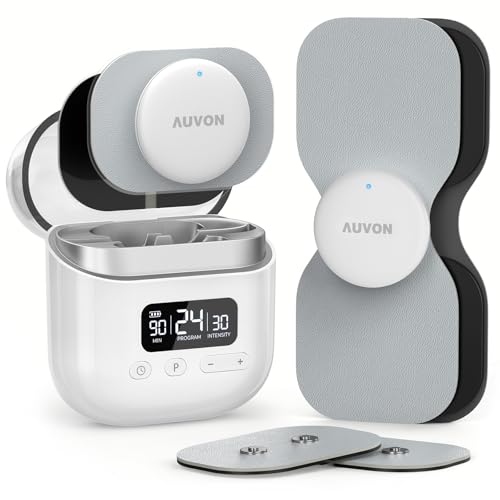 AUVON Wireless 24 Modes TENS Unit Muscle AUVON Wireless 24 Modes TENS Unit Muscle | Patented Wireless All-in-One Design for Smart Relief Anywhere:… 24 Modes & 30 Intensities for Personalized Relief:… 10-Min Fast Charge, 1 Hour of Relaxation: Say… | Check price |
 AUVON 24 Modes TENS Unit Muscle Stimulator AUVON 24 Modes TENS Unit Muscle Stimulator | Professional TENS Machine: The AUVON Electric Massager can… TENS Pads with Upgrade Gel: The low-impedance solid… Upgrade 24 Choices for Pain Relief: The AUVON… | Check price |
 AUVON 3-in-1 TENS Unit Muscle Stimulator AUVON 3-in-1 TENS Unit Muscle Stimulator | Multifunctional and Portable Massager Machine: The 3-in-1 TENS,… A Drug-free Pain Relief Choice: If you want… More Options for Gradual Pain Relief: This electric… | Check price |
 TENKER 24 Modes TENS Unit Muscle Stimulator TENKER 24 Modes TENS Unit Muscle Stimulator | Professional TENS Machine: Tens Electric Massager with 24… Dual Output Design for Multi-person Use: Simultaneous dual… Multi-functional: The first 2 sub-modes provides steady and… | Check price |
 4 in 1 4 in 1 | 【Innovative 4 in1 functionality】: Kongzee brand has had… 【Advanced Electrode Pads】: Our state-of-the-art electrode pads, crafted… 【Exquisite Design】: Boasting the latest appearance design, our… | Check price |
As an Amazon Associate we earn from qualifying purchases at no extra cost to you.
Quick Picks
| Product | Best for | Price | |
|---|---|---|---|
| AVCOO 3-in-1 | Budget combo therapy | $25.98 | |
| TENS 7000 | Maximum included accessories | $38.88 | |
| iSTIM EV-805 | Multi-channel muscle work | $125.88 | |
| AUVON Wireless | Cordless convenience | $37.99 | |
| AUVON 24 Modes | Premium pad longevity | $32.99 | |
| AUVON 3-in-1 | Gradual intensity control | $35.99 | |
| TENKER 24 Modes | Lowest entry price | $19.99 | |
| 4 in 1 D.I.Y | Maximum function variety | $65.42 |
How We Picked
We compared published specifications, verified pricing, and aggregated owner feedback across all eight units. The four criteria that separated these products were: channel count (how many electrode pairs can run simultaneously), program depth (whether modes are genuinely distinct or simply intensity rehashes), included pad count (a direct cost savings that varies wildly), and rechargeability. A machine that requires disposable AA batteries is an ongoing expense that owners flag repeatedly in long-term reviews, so we weighted rechargeable models higher unless the corded option delivered meaningfully more pulse amplitude for clinical-grade work.
The 8 Best Electro Stimulation Machines in 2026
AVCOO 3-in-1 TENS Unit Muscle Stimulator
For anyone wanting the broadest therapy types in one small package at the lowest combo price. The three modes — TENS, EMS, and massage — each run through thirty distinct programs, giving owners a wide range to experiment with before settling on what works for their specific pain pattern.
- Pro: Three therapy types from a single unit at under twenty-six dollars eliminates the need for separate devices.
- Pro: Thirty modes provide enough variety to target both nerve-level pain relief and muscle-level recovery without changing machines.
- Con: Some owners report the included pads lose adhesion faster than premium replacements, adding a small ongoing cost.
Skip it if you need four simultaneous channels or clinical-level pulse intensity for large muscle groups like the quadriceps.
TENS 7000 Digital TENS Unit
Back pain sufferers and anyone managing multiple pain zones will appreciate the sheer volume of included accessories. This unit ships with a generous kit of electrode pads, gel, and carrying accessories, making it the most complete unboxing experience relative to its price.
- Pro: The accessory bundle is among the most generous at this tier, reducing the need for immediate aftermarket pad purchases.
- Pro: Proven track record with consistent owner feedback praising its reliability for sciatica and nerve pain over long use periods.
- Con: Runs on a 9-volt battery rather than a rechargeable cell, meaning you are buying replacements indefinitely.
Skip it if you want EMS muscle-building modes or cordless operation; this is a dedicated TENS unit.
iSTIM EV-805 TENS EMS 4 Channel Rechargeable Combo
Physical therapy patients and athletes who need two or four electrode pairs working at once will find the 4-channel setup genuinely useful. With twenty-four programs and a backlit display, it handles complex treatment protocols without confusion.
- Pro: Four independent channels allow simultaneous treatment of multiple body zones, a feature most units at half this price simply do not offer.
- Pro: Rechargeable battery and backlit display make it practical for use in low-light recovery environments or travel.
- Con: The price is roughly triple what most buyers spend on a home unit, and some owners feel the extra channels go unused.
Skip it if you only treat one area at a time and do not need dual-channel or quad-channel capability.
AUVON Wireless 24 Modes TENS Unit
Anyone frustrated by tangled lead wires — especially those using their machine while driving, cooking, or working at a desk — will find this wireless model a meaningful quality-of-life upgrade. Six included pads provide coverage for larger treatment areas.
- Pro: Completely wireless operation eliminates the most common complaint about corded TENS units, which is restricted movement and tangled leads.
- Pro: Six included pads at this price point is generous, allowing two or three treatment sites simultaneously without extra purchases.
- Con: Wireless pad batteries add a small ongoing cost and periodic recharging step that corded units do not require.
Skip it if you prefer the simplest possible setup and do not mind cords, since a wired unit will cost slightly less.
AUVON 24 Modes TENS Unit with Premium Pads
Daily users who treat the same area for an hour or more at a time will benefit most from the premium gel pads that resist drying and peeling far longer than budget alternatives. The twenty-four modes cover standard pain-relief programming without bloat.
- Pro: Premium pads are the standout value — owners consistently report them lasting noticeably longer than generic replacements, reducing accessory costs over months of use.
- Pro: Compact and straightforward interface means a new user can start therapy within minutes of unboxing without reading a manual.
- Con: Single-channel operation limits you to treating one area at a time, which feels restrictive compared to dual-channel options.
Skip it if you need to treat two separate body regions in the same session.
AUVON 3-in-1 TENS Unit Muscle Stimulator, 40 Levels
Owners who experience pain spikes at varying intensities across the day will value the forty-level intensity range, which allows very gradual escalation rather than jumping from one mode to a jarring step. The combo approach covers TENS, EMS, and massage from one control unit.
- Pro: Forty intensity levels give finer control than most competitors, reducing the uncomfortable all-or-nothing feel some buyers report with coarser dials.
- Pro: The 3-in-1 design means one purchase replaces three separate therapy types, keeping cost and storage footprint down.
- Con: Some owners find the mode cycling somewhat confusing when switching between the three therapy types mid-session.
Skip it if you want the simplest one-button experience or only need basic pain relief without EMS.
TENKER 24 Modes TENS Unit
The lowest-cost entry point in this roundup, making it ideal for someone curious about electro stimulation but unwilling to commit more than twenty dollars. Eight pads in two sizes are included, which is unusually generous at this price.
- Pro: At under twenty dollars with eight pads and rechargeability, the upfront value is difficult to beat for trial users.
- Pro: Rechargeable via USB-C or micro-USB, eliminating battery costs from day one and keeping long-term ownership expenses minimal.
- Con: Build quality and pad adhesion are noticeably below the AUVON and iSTIM tiers; owners report pads degrading within weeks of daily use.
Skip it if you plan to use the machine daily for months, as ongoing pad replacement costs may erase the initial savings.
4 in 1 D.I.Y TENS EMS Massage Muscle Stimulator
Buyers who want maximum function diversity in a single device — combining DIY massage programs, TENS, EMS, and electronic pulse massage — get the broadest feature set here. The twelve included electrode pads reduce accessory anxiety, and FDA clearance adds a reassurance layer for health-conscious users.
- Pro: Four therapy functions in one unit make it the most versatile machine in this roundup for users who rotate between pain relief, muscle recovery, and massage.
- Pro: Twelve electrode pads are the highest count included with any product here, covering multiple body zones across a full week of use without replacement.
- Con: At sixty-five dollars, it costs more than five of the eight machines reviewed, and some owners feel the breadth comes at the expense of depth in each individual mode.
Skip it if you already know you need only TENS pain relief, as a dedicated single-function unit will cost less and feel simpler to operate.
Buying Guide
Channel Count: How Many Areas Can You Treat at Once?
A single-channel unit drives one pair of electrodes, while dual-channel units drive two pairs independently. If you treat your lower back and a shoulder on the same day, or want to run EMS on both quads simultaneously, you need at least two channels. The iSTIM EV-805 is the only four-channel option here, but most home users find two channels sufficient. Buying a single-channel unit saves money and complexity if your pain is always in one location.
TENS vs. EMS vs. Combo: Know Which Therapy You Need
TENS interrupts pain signals to the brain and works best for nerve-related discomfort like sciatica or post-herpetic pain. EMS contracts muscles rhythmically and targets recovery, circulation, and muscle activation after injury or surgery. Combo units switch between both but rarely run them simultaneously. If your goal is strictly pain masking, a dedicated TENS unit like the TENS 7000 is the focused choice. If you need both recovery and pain relief, a 3-in-1 or 4-in-1 model consolidates everything.
Included Pads and Rechargeability: The Hidden Cost Drivers
Electrode pads are consumables. A machine that ships with two pads costs you more in six months than one that ships with twelve. Rechargeability matters too: a unit running on a 9-volt battery or disposable AAs adds recurring expense and the annoyance of hunting for replacements. The TENKER and AVCOO models include the highest pad-to-price ratio, while the TENS 7000 and iSTIM ship fewer pads relative to their cost. Factor in replacement pad pricing when comparing the sticker price.
Our Verdict
The iSTIM EV-805 is the top pick for anyone whose condition demands multi-zone treatment or who wants clinical-adjacent capability in a home setting — its four channels, twenty-four programs, and rechargeable design set it apart, though the price reflects that breadth. For pure value, the TENKER 24 Modes at $19.99 is the budget pick: eight pads, USB rechargeability, and enough modes to handle most common pain scenarios without spending more. The AUVON Wireless becomes the winner if your priority is hands-free use during long sessions, since the cordless design removes the friction that causes many owners to abandon their unit after the first week.
FAQ
Are electro stimulation machines safe for daily use?
Daily TENS and EMS use is considered safe for most healthy adults, and owners commonly report sessions of thirty to sixty minutes without adverse effects. People with pacemakers, epilepsy, or who are pregnant should consult a physician before use regardless of the unit chosen.
Can I use a TENS unit on my neck?
Many of the reviewed units advertise neck pain as a target area, and owners do use them there successfully. The key precaution is avoiding the front and sides of the neck where the carotid arteries and vagus nerve sit; placement should remain on the back of the neck and upper shoulder region.
How long do electrode pads last?
Budget pads typically lose gel adhesion after ten to twenty sessions with daily use, while premium gel pads last noticeably longer. The included pad count and quality in your purchase directly determine whether you will be ordering replacements within the first month or the first year.
Do more modes mean better pain relief?
Not necessarily. Thirty modes may sound superior to ten, but many are subtle variations of the same pulse frequency with intensity shifts. Owner feedback suggests that having a wide range of intensity levels matters more than having many named modes, since the right sensation depends on individual tolerance rather than a specific program label.