Key takeaways
- Small pieces: Penny rounds and 1-inch squares create more grout lines, which can hide minor wall irregularities but take longer to clean.
- Medium pieces: Two- to four-inch rectangles balance visual interest, cutting efficiency, and maintenance.
- Larger mosaic shapes: Hexagons, arabesques, and elongated diamonds make a statement but require careful alignment at corners and cabinet ends.
The best mosaic backsplash tiles for kitchen projects are porcelain or ceramic for everyday durability, glass for light and easy wiping, and marble or other natural stone when texture and variation matter more than low maintenance.
The right choice depends less on the tile’s appearance alone than on four practical questions: how much water and cooking residue the backsplash will face, how accurately the sheets can be cut, how much grout you are willing to maintain, and whether the pattern is proportionate to your wall and kitchen layout.
Our top picks
 Vamos Tile Glossy Dolomite White Backsplash Tile
- Realistic Ceramic Tile Look: Glossy and shiny hexagon…
- High Quality White Backsplash: The peel and stick…
- The micro beveled edges design of Pure white…
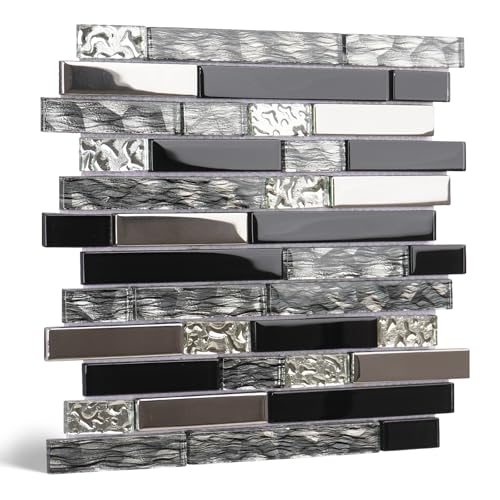 5-Sheet Glass Backsplash Tiles
- Real Glass Tile: The glass metal tile is…
- Size: Come in a box of 5 sheets…
- Easy DIY: Mesh Backing, Non-sanded Grout for Installation,…
 DICOFUN 10-Sheet Rustic Slate Look Peel and
- 𝐒𝐢𝐳𝐞 𝐚𝐧𝐝 𝐂𝐨𝐯𝐞𝐫𝐚𝐠𝐞: Each sheet measures 12''x12''x0.12'', 1…
- 𝐒𝐭𝐫𝐨𝐧𝐠 𝐀𝐝𝐡𝐞𝐬𝐢𝐯𝐞: Backed with 3M formulated adhesive foam…
- 𝐄𝐚𝐬𝐲 𝐃𝐈𝐘 with a chic pinwheel mosaic look
| Product | Key specs | |
|---|---|---|
| Vamos Tile Glossy Dolomite White Backsplash Tile | Realistic Ceramic Tile Look: Glossy and shiny hexagon… High Quality White Backsplash: The peel and stick… The micro beveled edges design of Pure white… | Check price |
| 5-Sheet Glass Backsplash Tiles | Real Glass Tile: The glass metal tile is… Size: Come in a box of 5 sheets… Easy DIY: Mesh Backing, Non-sanded Grout for Installation,… | Check price |
| DICOFUN 10-Sheet Rustic Slate Look Peel and | 𝐒𝐢𝐳𝐞 𝐚𝐧𝐝 𝐂𝐨𝐯𝐞𝐫𝐚𝐠𝐞: Each sheet measures 12''x12''x0.12'', 1… 𝐒𝐭𝐫𝐨𝐧𝐠 𝐀𝐝𝐡𝐞𝐬𝐢𝐯𝐞: Backed with 3M formulated adhesive foam… 𝐄𝐚𝐬𝐲 𝐃𝐈𝐘 with a chic pinwheel mosaic look | Check price |
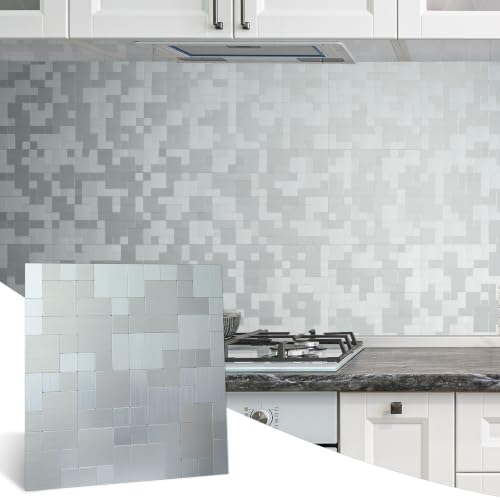 DICOFUN 10-Sheet Metal Peel and Stick Tile DICOFUN 10-Sheet Metal Peel and Stick Tile | 𝐒𝐢𝐳𝐞 𝐚𝐧𝐝 𝐂𝐨𝐯𝐞𝐫𝐚𝐠𝐞: Each sheet measures 12''x12''x0.12'', 1… 𝐒𝐭𝐫𝐨𝐧𝐠 𝐀𝐝𝐡𝐞𝐬𝐢𝐯𝐞: Backed with 3M formulated adhesive foam… 𝐄𝐚𝐬𝐲 𝐃𝐈𝐘 with a high-end mosaic look | Check price |
As an Amazon Associate we earn from qualifying purchases at no extra cost to you.
Best mosaic backsplash tiles by kitchen situation
| Kitchen situation | Best tile type | Useful sheet or tile scale | Why it works | Main compromise |
|---|---|---|---|---|
| Small apartment or compact galley | Glossy glass or light ceramic | 1–2 inch pieces on 12 x 12 inch sheets | Reflects light and suits narrow walls | Many grout joints require regular wiping |
| Busy family kitchen | Porcelain or glazed ceramic | 2 x 4 inch, 2 x 6 inch, or medium mosaic pieces | Resists stains and handles frequent cleaning | Harder cuts than softer ceramic or glass |
| Heavy cooking and grease exposure | Glossy porcelain, ceramic, or glass | Pieces at least 2 inches wide | Smooth surfaces and fewer joints wipe clean more easily | Very glossy finishes show splashes and fingerprints |
| Traditional or natural-material kitchen | Marble, travertine, or other stone mosaic | 1–2 inch mosaics or a restrained geometric pattern | Adds depth and natural variation | Usually needs sealing and more careful stain removal |
| Rental or temporary remodel | Removable decorative panel or peel-and-stick mosaic-style tile | Pre-sized panels | Minimal wet work and easier removal | May not tolerate heat, steam, or uneven walls as well as installed tile |
Material comparison: ceramic, porcelain, glass, and stone
Ceramic mosaic tile
Glazed ceramic is often the most flexible value choice. It is available in small squares, penny rounds, rectangles, and decorative shapes, and it is generally easier to cut than porcelain. A smooth glaze is suitable behind a sink or cooktop because food residue can be wiped from the surface without penetrating the tile.
Ceramic works especially well when you want a handmade appearance, varied edges, or a color that is not available in standard porcelain. Inspect the edges before purchase: intentionally irregular edges can make a wall look handcrafted, while inconsistent factory cuts may make grout lines appear uneven.
Porcelain mosaic tile
Porcelain is denser and less porous than ordinary ceramic. It is a strong choice for a backsplash that may receive repeated cleaning, impact from cookware, or moisture near a sink. Through-body porcelain can also disguise small chips better than a tile with a thin contrasting glaze.
The trade-off is installation. Dense porcelain takes more effort to cut cleanly and may require a quality diamond blade. Intricate sheets with many small pieces can be slower to fit around outlets, corners, and the underside of cabinets.
Glass mosaic tile
Glass is nonporous, bright, and effective in kitchens that need more reflected light. It is particularly useful in a dark galley kitchen or on a short wall between upper cabinets, where a glossy surface can make the area feel less enclosed. Clear and translucent glass may reveal the adhesive or wall behind it, so the substrate must be flat, clean, and consistently colored.
Glass can chip during cutting if the blade or technique is unsuitable. Choose a tile installer familiar with glass, and plan cuts so narrow slivers are not placed beside exposed outside edges. A contrasting grout can emphasize the pattern; a similar grout color creates a quieter surface.
Marble and other natural stone
Marble, travertine, slate, and limestone provide variation that manufactured tile cannot fully reproduce. Honed stone softens a traditional or transitional kitchen, while polished stone adds contrast to matte cabinetry. Stone is less forgiving of acidic cleaners, tomato sauce, wine, and oil. Many varieties benefit from sealing before or after grouting, according to the manufacturer’s instructions.
Stone mosaics also tend to have a more textured surface, which can trap flour, grease, and dust. For a cooktop backsplash, a smooth or lightly honed finish is usually easier to live with than deep tumbled edges.
Sheet size, mesh backing, and grout-line reality
Most mosaic backsplash products arrive as sheets close to 12 inches square, although rectangular sheets around 10 x 12 inches and larger decorative panels are also common. A 12 x 12 inch sheet covers one square foot before accounting for trimming. Measure the wall in square feet, then add approximately 10% for a straightforward installation and 15% or more for diagonal layouts, repeated patterns, or many outlet cutouts.
Mesh-backed sheets hold individual pieces in position and speed installation, but they do not eliminate layout work. Sheets can shift if too much mortar is applied, and visible sheet-to-sheet seams can appear when the installer does not stagger or blend them. Hold sheets against the wall dry before installation to check whether the edge pieces look intentional.
- Small pieces: Penny rounds and 1-inch squares create more grout lines, which can hide minor wall irregularities but take longer to clean.
- Medium pieces: Two- to four-inch rectangles balance visual interest, cutting efficiency, and maintenance.
- Larger mosaic shapes: Hexagons, arabesques, and elongated diamonds make a statement but require careful alignment at corners and cabinet ends.
For a kitchen with frequent splashes, use a grout color that is close to the tile or slightly darker. White grout paired with textured stone or tiny light mosaics usually shows discoloration sooner. Cement-based grout is economical and widely available, but it is more porous. Premixed or performance grouts can simplify stain resistance, although the product must be compatible with the tile and joint width. Avoid assuming that “more grout” means “more durable”; the correct joint width and proper curing matter as much as the label.
Pattern scale for different kitchen layouts
Small kitchens and narrow galley walls
Use a small or medium pattern when the backsplash wall is less than 30 inches high or when several appliances and outlets interrupt it. A light 1-inch mosaic can visually connect short sections, while a vertical rectangular mosaic can make a low ceiling feel taller. Avoid a high-contrast, oversized pattern that is repeatedly cut by outlets; the fragments can look accidental.
Large open kitchens
A larger wall can support 2 x 4 inch, 2 x 6 inch, or larger geometric pieces without looking busy. If the backsplash extends across a long run of cabinets, a restrained pattern is often easier to align and less tiring to view. Reserve a small or decorative mosaic for the range wall and use a simpler field tile elsewhere if you want a focal point.
Peninsulas, corners, and interrupted walls
Count every change in plane before selecting the pattern. Herringbone, chevron, and arabesque sheets require more planning at inside corners because the design may not continue naturally. A square or straight-set rectangular mosaic is more forgiving where the backsplash ends beside a tall cabinet or meets a window trim.
Cutting and installation difficulty
Tile shape affects labor as much as material. Straight rectangular pieces are generally the simplest to cut and align. Hexagons and fish-scale shapes need more edge planning, while glass and dense porcelain demand the right blade to reduce chips. Mesh-backed sheets can be cut between pieces with a utility knife, but individual tiles at the edge may still need nippers or a wet saw.
Leave a planned movement gap where the tile meets countertops, cabinets, and inside corners; these changes of material are normally finished with flexible caulk rather than rigid grout. Around outlets, use approved extenders when needed so the receptacle sits safely at the new wall surface. Do not rely on thick grout to conceal uneven cuts or gaps.
Measurements that prevent common backsplash mistakes
- Measure from the countertop to the underside of the upper cabinets, then measure behind the range separately. These heights are often different.
- Keep the layout centered on the main visual feature, such as the range hood, rather than automatically centering every sheet on the wall.
- Avoid ending with narrow strips. If a planned edge leaves less than about half a tile, adjust the starting point so both ends have balanced cuts.
- Check cabinet, window, and outlet trim before ordering. A thick mosaic plus mortar can change how an outlet cover or trim piece fits.
- Order all tile from the same production run when possible, since shade and texture can vary between batches.
Bottom line
Choose glazed ceramic for design flexibility and easier cutting, porcelain for maximum everyday resilience, glass for brightness and simple surface cleaning, and natural stone for character when you accept sealing and more careful maintenance. For most households, a medium-size mosaic on a 12 x 12 inch mesh-backed sheet offers the best balance of pattern, installation speed, and grout upkeep. A Garay Kitchens & Baths design consultation can help coordinate the tile scale with cabinet proportions, countertop edges, lighting, and the exact shape of your backsplash walls.