Key takeaways
- Gas stove or portable butane burner: any material works. A portable cassette burner (Iwatani and similar brands are the standard) placed on the table is the classic setup — look for burners around 2.9–3.5 kW output for steady simmering.
- Induction: requires a magnetic base — stainless or clad aluminum marked induction-ready. Donabe and plain aluminum won’t work.
- Electric coil/glass top: choose flat-bottomed stainless; avoid thin hammered aluminum that warps on coil elements.
- All-in-one electric hot pots: units like the Zojirushi Gourmet d’Expert or Tiger’s multicookers combine pot and burner, plug in anywhere, and regulate heat automatically — the simplest option if you lack a portable burner.
The best shabu shabu pot for Japanese hot pot is a wide, shallow stainless steel or aluminum pot, 26–30 cm (10–12 in) in diameter and 7–9 cm deep, sized so broth stays at a gentle simmer and thin meat slices cook in 5–10 seconds. Below that, your best pick depends on three things: whether you need one broth or two, what burner your kitchen has, and how many people you’re feeding. Here’s how to sort it out.
Our top picks


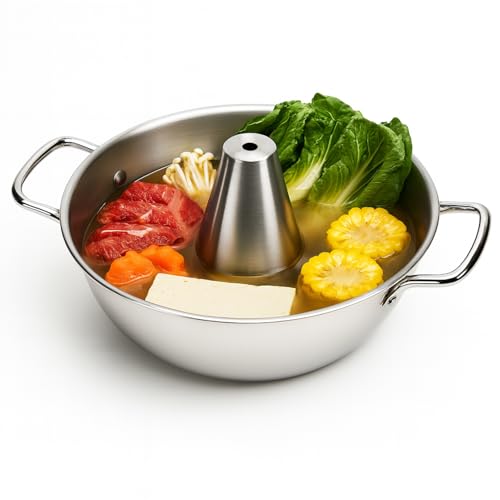

As an Amazon Associate we earn from qualifying purchases at no extra cost to you. Ratings are shown as listed on Amazon.
What Actually Matters in a Shabu Shabu Pot
Shabu shabu is different from heavier hot pot styles. The broth is light (usually kombu dashi), the meat is sliced paper-thin, and cooking happens continuously at the table rather than in one batch. That means the pot needs fast, even heat response and a wide surface area so multiple diners can swirl slices without crowding.
Material: the real trade-offs
| Material | Heat response | Weight (26 cm pot) | Care | Best for |
|---|---|---|---|---|
| Stainless steel (18-8 or 18-10) | Moderate; even with aluminum-clad base | ~1.2–1.8 kg | Dishwasher-safe; won’t react with acidic broths | Everyday use, induction cooktops |
| Aluminum (anodized or hammered) | Very fast; responds instantly to burner changes | ~0.7–1.0 kg | Hand wash; avoid highly acidic broths in uncoated pans | Gas burners, frequent simmer adjustments |
| Cast iron / Nambu tetsu | Slow to heat, but holds a steady simmer beautifully | 2.5–4 kg | Dry immediately; seasoning upkeep | Sukiyaki-style meals, table presentation |
| Copper (tin-lined) | Fastest and most precise | ~1.5 kg | Expensive; needs re-tinning over time | Traditionalists, restaurant-style cooking |
| Donabe (earthenware) | Slow; superb heat retention once hot | 2–3 kg | Hand wash; must cure before first use; no induction | Long leisurely meals, ambient heat retention |
For most home cooks, stainless steel with a clad base hits the sweet spot: induction-compatible, dishwasher-safe, and forgiving. Aluminum is the traditional choice in Japan for shabu shabu specifically because kombu dashi isn’t acidic and its instant response lets you keep the broth at the ideal “just below boiling” point. Save cast iron for sukiyaki, where you want retained heat for a sweeter, heavier broth.
Divided vs. single basin
A single-basin pot is the authentic shabu shabu setup: one mild dashi, shared by everyone. Divided “yin-yang” pots make sense if your household regularly wants two broths (say, a spicy side and a plain dashi side) or if you’re cooking for mixed dietary needs. The downsides: the divider cuts each basin’s usable surface roughly in half, thin slices are harder to swirl in a smaller pocket, and the weld line at the divider is the part most likely to develop leaks or trapped grime in cheaper pots. If you only occasionally want two broths, a single pot plus a second small pot is the more durable route.
Burner compatibility
Match the pot to your heat source before anything else:
- Gas stove or portable butane burner: any material works. A portable cassette burner (Iwatani and similar brands are the standard) placed on the table is the classic setup — look for burners around 2.9–3.5 kW output for steady simmering.
- Induction: requires a magnetic base — stainless or clad aluminum marked induction-ready. Donabe and plain aluminum won’t work.
- Electric coil/glass top: choose flat-bottomed stainless; avoid thin hammered aluminum that warps on coil elements.
- All-in-one electric hot pots: units like the Zojirushi Gourmet d’Expert or Tiger’s multicookers combine pot and burner, plug in anywhere, and regulate heat automatically — the simplest option if you lack a portable burner.
Sizing: Capacity, Table Space, and Clearance
Broth should fill the pot only two-thirds full, so usable volume is less than the listed capacity. A practical guide:
| Pot diameter | Fills (2/3 broth) | Serves | Table footprint needed |
|---|---|---|---|
| 20–22 cm | ~1.5 L | 1–2 | ~30 cm round of clear table |
| 26–28 cm | ~2.5–3 L | 3–4 | ~40 cm clear circle |
| 30 cm+ | ~4 L+ | 5–6 | ~45–50 cm, plus burner space |
Leave at least 15 cm of clearance around a tabletop burner, keep the gas canister compartment facing away from diners, and use a table no smaller than 80 cm square for a 4-person setup so ingredient plates fit comfortably. If your table is smaller, an all-in-one electric unit has a tighter footprint than pot-plus-burner.
Our Picks by Situation
- Best all-around for most homes: a 26–28 cm clad-base stainless divided or single pot — induction-safe, dishwasher-friendly, and works with any burner. Expect to pay roughly $40–$90 for a well-made one.
- Best traditional experience: a hammered aluminum shabu shabu pot with a central chimney-style divider (available through Japanese kitchenware brands and importers like Pearl Metal and similar makers). Pairs with a butane tabletop burner for authentic tableside cooking. Usually $30–$70.
- Best for small kitchens or renters: an all-in-one electric unit such as the Zojirushi Gourmet d’Expert — it sautés, simmers, and doubles as a rice-and-stew cooker, so it earns its counter space. Typically $150–$230.
- Best for long, slow dinners: a medium donabe (brands like Nagatani-en’s Iga-yaki line are the benchmark) if you cook on gas. Broth stays hot long after the flame is off, and it doubles as a serving centerpiece. Roughly $80–$200.
- Best for two-broth households: a 28 cm stainless yin-yang pot with a welded (not riveted) divider — fewer leak points and easier cleanup.
Cleanup and Durability Realities
Thin stainless and aluminum pots clean easily but are prone to scorch marks if the broth boils dry mid-meal — keep a pitcher of water or extra dashi at the table. What actually wears first: nonstick coatings on budget electric pots (usually the failure point within 2–3 years of weekly use), welds on cheap divided pots, and butane canisters (always remove the canister before storing the burner). Cast iron and donabe can last decades but chip or crack if dropped or thermally shocked — never pour cold water into a hot donabe.
One cleanup tip that saves scrubbing: skim the foam and fat regularly during the meal, and soak the pot in hot water right after dinner. The protein film from thin-sliced meat sets hard if it dries.
FAQ
Can I use a regular stockpot for shabu shabu?
You can, but a deep stockpot makes it awkward to swish and retrieve slices, and the smaller surface area crowds multiple diners. A wide, shallow pot is functionally better, not just traditional.
Do I need a portable burner?
For tableside cooking, yes — or an all-in-one electric pot. Cooking at the stove and carrying the pot over works for nabe-style meals but defeats the point of shabu shabu, where each bite is cooked fresh.
Is a divided pot worth it?
Only if you regularly serve two broths. For occasional variety, the single basin gives you more usable cooking surface and fewer failure points.
Pick your burner type first, then your size, then material — in that order — and you’ll land on a pot that fits your table and your cooking style for years.