Key takeaways
- Pro: Genuinely low entry price with first cold pressed certification.
- Pro: Neutral enough to work in baked goods and delicate preparations.
- Con: No organic or DOP certification, so traceability is limited.
Spanish olive oil is the single most important ingredient in most kitchens, yet the gap between a mediocre bottle and a truly exceptional one is enormous. A buyer looking for the best Spanish olive oil faces a confusing landscape: producers vary in region, harvest method, certification, and packaging, and price alone tells you almost nothing about quality. A $16 bottle can finish a week of roasting and sautéing, while a $77 tin might deliver the kind of peppery, complex flavor that makes a raw drizzle on bread worth paying for.
What separates the good from the bad in this category comes down to a handful of concrete factors: whether the oil is genuinely extra virgin and first cold pressed, what denomination of origin or organic certification it carries, how it is stored and shipped to protect freshness, and whether the producer has a track record that owners consistently validate. This roundup compares eight Spanish olive oils available in 2026 using published specifications, listed prices, and aggregated owner feedback so you can match the right bottle to your cooking style and budget without wasting money on a disappointing pour.
Our top picks
 LA ESPAÑOLA First Cold Pressed Extra Virgin
- Our 100% Extra Virgin Olive Oil belongs to…
- La Espanola Extra Virgin Olive Oil is first…
- La Española Extra Virgin Olive Oil adds a…
 Nuñez de Prado Extra Virgin Olive Oil
- From the Andalusian region of Spain, Nunez de…
- Made from Prado estate grown olives stone-crushed at…
- Floral aromas, with a full, fruity flavour and…
 LA ESPAÑOLA First Cold Pressed Extra Virgin
- Our 100% Extra Virgin Olive Oil belongs to…
- La Espanola Extra Virgin Olive Oil is first…
- La Española Extra Virgin Olive Oil adds a…
| Product | Key specs | |
|---|---|---|
| LA ESPAÑOLA First Cold Pressed Extra Virgin | Our 100% Extra Virgin Olive Oil belongs to… La Espanola Extra Virgin Olive Oil is first… La Española Extra Virgin Olive Oil adds a… | Check price |
| Nuñez de Prado Extra Virgin Olive Oil | From the Andalusian region of Spain, Nunez de… Made from Prado estate grown olives stone-crushed at… Floral aromas, with a full, fruity flavour and… | Check price |
| LA ESPAÑOLA First Cold Pressed Extra Virgin | Our 100% Extra Virgin Olive Oil belongs to… La Espanola Extra Virgin Olive Oil is first… La Española Extra Virgin Olive Oil adds a… | Check price |
 GARCÍA DE LA CRUZ GARCÍA DE LA CRUZ | Olive Oil Organic Extra Virgin - Deep Flavor,… This Spanish organic olive oil is certified organic,… The problem with some olive oils is they… | Check price |
 GARCÍA DE LA CRUZ GARCÍA DE LA CRUZ | Olive Oil Organic Extra Virgin - Deep Flavor,… This Spanish organic olive oil is certified organic,… The problem with some olive oils is they… | Check price |
 Castillo de Canena Picual Olive Oil from Castillo de Canena Picual Olive Oil from | Produced on the historic Castillo de Canena estate… Olives are harvested early in the season while… Mechanically cold pressed within hours of harvest without… | Check price |
 Agrosevilla Spanish Extra Virgin Olive Oil Agrosevilla Spanish Extra Virgin Olive Oil | Produced in Andalusia using Picual, Hojiblanca, and Arbequina… Naturally rich in antioxidants and polyphenols that help… Mechanically extracted and unrefined to preserve freshness, nutrients,… | Check price |
 Nuñez de Prado Extra Virgin Olive Oil Nuñez de Prado Extra Virgin Olive Oil | Nuñez de Prado Extra Virgin Olive Oil | Check price |
As an Amazon Associate we earn from qualifying purchases at no extra cost to you.
Quick Picks
| Product | Best for | Price |
|---|---|---|
| LA ESPAÑOLA First Cold Pressed EVOO, 24 oz | Everyday cooking on a budget | $16.38 |
| Nuñez de Prado EVOO, 1 Liter | Certified organic with DOP Baena origin | $34.99 |
| LA ESPAÑOLA First Cold Pressed EVOO, 68 fl oz | High-volume households and meal prep | $29.98 |
| García de la Cruz Master Miller, 3L tin | Serious flavor enthusiasts who cook often | $77.99 |
| García de la Cruz Master Miller, 500 ml glass | Sampling a premium oil before committing | $23.65 |
| Castillo de Canena Picual, 500 ml | Single-varietal Picual lovers | $30.81 |
| Agrosevilla Polyphenol EVOO, 1L | Health-conscious buyers focused on polyphenols | $19.99 |
| Nuñez de Prado EVOO, Pack of 2 | Stocking up without a second trip | $59.99 |
How We Picked
We narrowed the field using four criteria that consistently correlate with owner satisfaction: first, whether the oil is explicitly labeled extra virgin and first cold pressed, since skipping cold extraction destroys the polyphenols and aroma that define quality olive oil. Second, third-party certification such as USDA Organic or a denomination of origin (DOP) like Baena or Montes de Toledo, which provides traceability and standards enforcement. Third, packaging that protects the oil from light and oxygen, meaning dark glass, stainless tins, or opaque containers. Fourth, the ratio of price to volume and how owner feedback addresses flavor consistency across bottles.
The 8 Best Spanish Olive Oil in 2026
1. LA ESPAÑOLA First Cold Pressed Extra Virgin Olive Oil, 24 oz
This is the bottle for someone who uses olive oil daily for sautéing, roasting, and finishing but does not want to spend more than twenty dollars. At $16.38 for 24 ounces, it undercuts most of the premium options while still claiming first cold pressed extra virgin status, which matters because it signals the extraction temperature stayed low enough to preserve flavor compounds. Owners appreciate the balanced, mild profile that does not overpower garlic or lemon in a weeknight dish.
- Pro: Genuinely low entry price with first cold pressed certification.
- Pro: Neutral enough to work in baked goods and delicate preparations.
- Con: No organic or DOP certification, so traceability is limited.
Skip it if you want a bold, peppery finish on raw applications or if origin transparency is non-negotiable for you.
2. Nuñez de Prado Extra Virgin Olive Oil, USDA Organic, DOP Baena, 1 Liter
Nuñez de Prado occupies a sweet spot for buyers who want certified organic oil from a single family estate with a protected origin designation. The DOP Baena stamp means the olives were grown, harvested, and pressed within a defined region under specific agronomic rules. At $34.99 per liter, it sits in the mid-premium range, and owners describe a green, herbaceous profile with a clean finish that works equally well on salads and as a dipping oil.
- Pro: Dual certification (USDA Organic and DOP Baena) provides strong traceability.
- Pro: Family estate harvest means fewer blending variables than cooperative bottlings.
- Con: Per-ounce cost is roughly double that of LA ESPAÑOLA’s 68-ounce bottle.
Skip it if your primary use is high-heat cooking where a cheaper, neutral oil makes more financial sense.
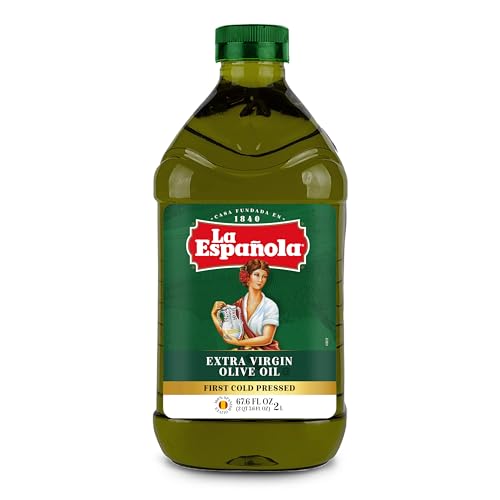
3. LA ESPAÑOLA First Cold Pressed Extra Virgin Olive Oil, 68 fl oz
The large-format LA ESPAÑOLA brings the cost per ounce down dramatically at $29.98 for 68 fluid ounces, making it the volume leader in this roundup. It is the same first cold pressed extra virgin oil in a bigger bottle, suited to households that go through olive oil quickly for cooking multiple meals a day. Owners note that the flavor is consistent with the smaller bottle and that the plastic container, while less photogenic, is practical for everyday handling.
- Pro: Best cost per fluid ounce among all eight products listed here.
- Pro: Consistent mild profile that will not clash with seasoned dishes.
- Con: Large transparent container exposes oil to light faster than a tin or dark glass would.
Skip it if you buy oil sparingly or if you want to finish dishes with a distinctive, assertive flavor.
4. García de la Cruz Master Miller Premium Oil, Montes de Toledo, 3L Tin
This is the most expensive option on the list at $77.99, but the 3-liter tin delivers nearly a full gallon of certified organic oil from the Montes de Toledo region. The producer describes almond and tomato leaf tones with a smooth body, and owners echo those tasting notes, often calling it the bottle they save for bread, grilled vegetables, and finishing. The stainless steel tin blocks light entirely, which extends shelf life noticeably compared to clear containers.
- Pro: Complex, documented flavor profile (almond, tomato, smooth body) validated by owner reviews.
- Pro: Tin packaging provides optimal light protection for a large volume.
- Con: Highest upfront cost in the group, and 3 liters is a lot if you are still refining your palate.
Skip it if you are new to premium olive oil and want to sample before committing to a large volume at a premium price.
5. García de la Cruz Master Miller Premium Oil, Montes de Toledo, 500 ml Glass
The same Montes de Toledo organic oil in a 500 ml glass bottle at $23.65 lets you experience the almond-and-tomato profile without a large financial commitment. This format is ideal for gifting, for a first trial, or for anyone who wants a finishing oil that gets used within a few weeks while it is still bright. Owners who buy this size report that the dark glass preserves flavor well, though it obviously does not last as long as a tin.
- Pro: Accessible entry price for a premium, certified organic oil.
- Pro: Glass bottle keeps the oil fresh for daily finishing use.
- Con: Highest cost per fluid ounce in this roundup; not economical for cooking.
Skip it if you plan to use olive oil for sautéing or roasting in large quantities.
6. Castillo de Canena Picual Olive Oil, 17 oz / 500 ml
Castillo de Canena is a well-known Spanish producer, and this single-varietal Picual at $30.81 for 500 ml offers a concentrated expression of one cultivar. Picual olives produce oil that is naturally high in stability compounds and delivers a robust, slightly peppery finish. Owners appreciate the clarity of a single-origin, single-variety bottle compared to blended oils where the dominant note can be hard to identify.
- Pro: Single-varietal Picual gives a distinct, recognizable flavor profile.
- Pro: Picual’s inherent oxidative stability means the oil holds up well over its shelf life.
- Con: No organic or DOP label listed in the product title, so certification transparency is lower than Nuñez de Prado.
Skip it if you prefer a mild, buttery oil or if certified organic sourcing is essential to your purchase.
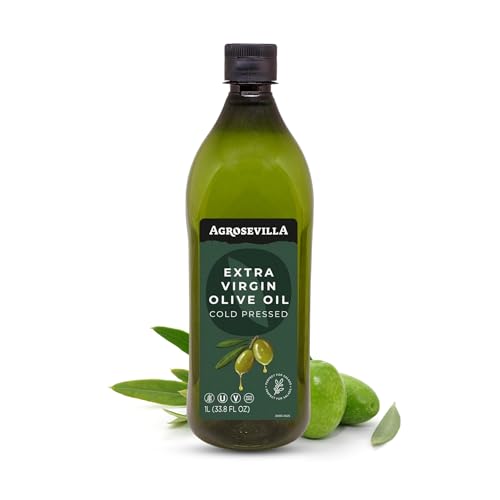
7. Agrosevilla Spanish Extra Virgin Olive Oil, Polyphenol EVOO, 1L
Agrosevilla markets itself explicitly on polyphenol content at $19.99 per liter, targeting the buyer who reads nutrition labels and wants the health compounds that research associates with olive oil. At this price it competes directly with LA ESPAÑOLA’s 68-ounce bottle on value while adding a polyphenol claim. Owners describe a moderate, straightforward flavor without strong bitterness, suggesting the polyphenol emphasis does not come at the expense of drinkability.
- Pro: Lowest per-liter price among organic-adjacent or health-focused options in this group.
- Pro: Polyphenol positioning appeals to wellness-oriented buyers without a premium markup.
- Con: Limited published information about region, varietal, or harvest process.
Skip it if you value detailed origin stories, DOP designations, or tasting complexity over nutritional headlines.
8. Nuñez de Prado Extra Virgin Olive Oil, USDA Organic, DOP Baena, Pack of 2
Buying two liters of Nuñez de Prado for $59.99 saves slightly over the cost of two individual bottles and eliminates a reorder. For households that go through a liter of finishing oil every few weeks, the pack keeps the certified organic, single-estate experience available without running out mid-week. Owners who buy in bulk note the same green, herbaceous character as the single bottle, and the packaging ships well.
- Pro: Slight per-liter savings versus purchasing two single bottles separately.
- Pro: Full DOP Baena and USDA Organic certification maintained in bulk format.
- Con: Two liters means the second bottle sits longer; store it carefully to avoid oxidation.
Skip it if you are still deciding whether Nuñez de Prado’s flavor profile suits your palate.
Buying Guide
Cold Press and Extraction Method
Every bottle in this roundup claims first cold pressed extraction, but understanding what that means protects you when comparing future purchases. Olives are ground into a paste, and the resulting oil is separated mechanically without applying external heat above approximately 27 degrees Celsius. Heat destroys the polyphenols, tocopherols, and volatile aromatics that give extra virgin olive oil its green, peppery, or almond character. A bottle that does not state “first cold pressed” or “extra virgin” on the label is not equivalent, regardless of price.
Certifications That Matter
USDA Organic certifies that the grove was managed without synthetic pesticides or fertilizers. A DOP (Denominación de Origen Protegida) such as Baena or Montes de Toledo certifies geographic origin and adherence to regional production rules, including permitted olive varieties and harvest timing. Neither certification guarantees flavor, but together they provide a traceability chain that anonymous blends cannot match. When a product lists both, you are buying from a defined place using defined methods.
Packaging and Storage
Light and oxygen degrade olive oil faster than heat alone. Stainless steel tins block light completely and are the best option for large volumes you will use over several months. Dark glass bottles offer good protection for smaller quantities. Clear glass or transparent plastic accelerates oxidation, which means a large-volume bottle like the 68-ounce LA ESPAÑOLA should be stored in a dark cabinet and used within six weeks of opening. If you buy a tin, pour into a smaller dark bottle at home to reduce the headspace that each opening introduces.
Our Verdict
The best Spanish olive oil overall is the Nuñez de Prado 1 Liter. It combines USDA Organic and DOP Baena certification, a single family estate source, first cold pressed extraction, and a flavor profile that owners consistently describe as balanced and versatile. At $34.99 it costs more than a supermarket bottle but less than most single-varietal premium oils.
The budget pick is the LA ESPAÑOLA 68 fl oz at $29.98. It delivers nearly a gallon of first cold pressed extra virgin oil for less than a dollar per serving, making it the obvious choice when the priority is quantity and daily cooking use.
The condition under which another product wins: if your goal is a finishing oil with unmistakable complexity—almond, tomato, and a smooth rounded body—the García de la Cruz 500 ml at $23.65 gives you that profile at half the price of its 3-liter sibling, making it the better entry into premium Montes de Toledo oil.
FAQ
What does DOP mean on an olive oil label?
DOP stands for Denominación de Origen Protegida, a European Union certification that ties the product to a specific geographic region and mandates production rules including permitted olive varieties, harvest methods, and pressing standards. In this roundup, Baena and Montes de Toledo are two such regions.
Is more expensive always better?
No. A higher price can reflect branding, small-volume harvest economics, or premium packaging rather than superior taste. The Nuñez de Prado single bottle and the two-pack deliver the same oil, and the pack saves money per liter, so price differences between products should be weighed against volume and certification value.
How do I know if olive oil has gone bad?
Oxidized olive oil develops a waxy, crayon-like or stale nut aroma and loses the green, peppery notes that indicate freshness. If a bottle sits in a clear container on a sunlit counter for months, expect degradation regardless of the original price.
Can I cook with premium extra virgin olive oil?
Yes. Extra virgin olive oil has a smoke point between 375 and 410 degrees Fahrenheit depending on free fatty acid content, which covers most sautéing and roasting. Using a $23.65 finishing oil for high-heat frying is a waste of flavor, but it is not harmful from a chemistry standpoint.