Our Top Picks
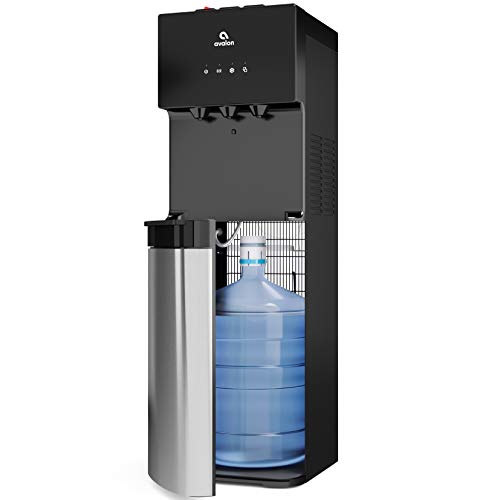 Avalon A4BLWTRCLR Bottom Loading Water Cooler Water Dispenser3 or 5 gallon bottle13 x 12 x 41 inches38.1 PoundsCheck on Amazon
 Brio 520 Series Self Cleaning Water Dispenser Bottom41.515.6 x 12.2 x 41.4 inches39.6 PoundsCheck on Amazon


For most households, a bottom-loading, three-temperature dispenser such as the Brio 520 Series is the best all-around pick: you slide a heavy bottle into the base instead of lifting it overhead, and you get hot, room-temperature and cold water from one slim cabinet. Choose the Frigidaire EFWC498 if you want a compact top-loading hot-and-cold unit, or one of the other bottom-loading models for a different look. A home water dispenser is a floor-standing cooler that draws from a 3- or 5-gallon bottle and heats and chills the water inside.
Quick List
- Brio 520 Series self-cleaning dispenser – best for families who want easy bottle changes and a self-cleaning function
- Brio bottom-loading dispenser with LED display – best for three-temperature convenience with a child safety lock
- Avalon A4BLWTRCLR – best for a stainless steel cabinet look in the kitchen
- Tehanld bottom-loading dispenser – best for kitchens that need an empty-bottle indicator and 3- or 5-gallon bottles
- Manastin bottom-loading dispenser – best for a darker, pebble-black finish with child-safe controls
- Frigidaire EFWC498 – best for a slim top-loading hot-and-cold unit in tight spaces
Which One Is Right for You?
| If you… | Choose |
|---|---|
| want the easiest bottle changes and a self-cleaning feature | Brio 520 Series |
| want three temperatures with an LED display and child lock | Brio bottom-loading dispenser |
| prefer stainless steel to match other appliances | Avalon A4BLWTRCLR |
| want to use either 3-gallon or 5-gallon bottles | Tehanld or Frigidaire EFWC498 |
| want dark finishes and an empty-bottle indicator | Manastin or Tehanld |
| have limited floor space and can lift a bottle overhead | Frigidaire EFWC498 |
The decision usually comes down to bottle loading and temperature range. A full 5-gallon bottle of water weighs roughly 40 pounds, so many people find a bottom-loading cabinet worth having. A top-loading cooler is slimmer and often lighter, but you will lift that bottle above your head. Next, decide whether you need room-temperature water as a separate option, which five of these six models provide.
All 6 Picks in Detail
1. Brio Bottom-Loading Cooler – Best for Three Temperatures and a Clear Display
As an Amazon Associate we earn from qualifying purchases at no extra cost to you.

This Brio listing describes a bottom-loading dispenser for 5-gallon bottles with three temperature settings, hot, room and cold spouts, a child safety lock and an LED display. It is a practical, no-surprises pick for an office kitchen or a family home where multiple people need different water temperatures. The bottom-loading design hides the bottle, which many buyers like because the kitchen looks tidier. The LED display makes it clear when the unit is heating or chilling and when the bottle is close to empty.
This is the kind of unit that quietly fits into a busy household or a small office. The three spouts mean the person making instant oatmeal and the person filling a cold glass do not have to compromise, and the LED display gives everyone a quick view of what the cooler is doing. Because the listing is for 5-gallon bottles, plan your bottle supply around that size, and keep a spare bottle on hand so you are never stuck when the indicator warns that the bottle is low.
- Loading: bottom-loading for 5-gallon bottles per the listing
- Temperatures: hot, room and cold spouts
- Safety: child safety lock
- Display: LED display
- Finish and dimensions: confirm on listing
- Power and cooling type: confirm on listing
Pros
- Bottom-loading convenience
- Three separate spouts
- Clear LED status display
Cons
- Self-cleaning is not part of the description
- Takes up more floor space than a slim top-loader
It overlaps with the Brio 520 Series, so pick it if you are happy to sanitize on a schedule and do not need an automated cleaning step.
2. Avalon A4BLWTRCLR – Best for a Stainless Steel Look

Avalon’s A4BLWTRCLR is described as a bottom-loading water cooler with three temperature settings, hot, cold and room, and a durable stainless steel cabinet. The metal finish blends with refrigerators and ranges in a modern kitchen and tends to hide fingerprints better than glossy plastic. Bottom loading means no lifting a heavy bottle above waist height. Buyers who care about appearance as well as function will appreciate the cabinet, while those who care about maintenance should plan on regular sanitizing since the listing does not describe a self-cleaning function.
A stainless cabinet is also practical. It resists dents better than thin plastic, wipes down quickly after splashes and keeps its appearance for years when cared for. In a rental or a family room where the dispenser sits in the open, that finish makes the appliance look intentional rather than temporary. Check the manual for the recommended cleaning products, because abrasive cleaners can scratch brushed metal and harsh chemicals should never touch the drinking-water reservoir or spouts.
- Loading: bottom-loading; confirm bottle sizes on listing
- Temperatures: hot, cold and room
- Cabinet: stainless steel per the listing
- Safety: confirm child lock details on listing
- Display and indicators: confirm on listing
- Dimensions: confirm on listing
Pros
- Stainless steel cabinet looks good in a modern kitchen
- Three temperature choices
- Bottom-loading design
Cons
- Fewer listed convenience features than the Brio 520
- Self-cleaning not mentioned
It competes on style with the Brio models, which emphasize display and cleaning features more than finish.
3. Tehanld Bottom-Loading Cooler – Best for 3- or 5-Gallon Bottles

The Tehanld cooler comes in charcoal black and is listed for 3- or 5-gallon bottles, with hot, room and cold spouts and an LED display with an empty-bottle indicator. The ability to use smaller 3-gallon bottles is useful for people who cannot easily handle the weight of a 5-gallon jug, such as older adults or anyone with a bad back. The empty-bottle indicator saves you from discovering an empty bottle at the wrong moment. It is a good fit for small households that want bottom-loading convenience without needing every extra feature of a premium model.
The 3-gallon option deserves attention. Lighter bottles are easier to carry from a car or a delivery drop-off, they fit in a smaller storage space and they make sense when only one or two people drink from the cooler. Remember that smaller bottles empty faster, so the empty-bottle indicator becomes more useful, and you will refill more often. For a single person or a couple, the lighter bottle is often a better fit than a 5-gallon jug that sits for weeks.
- Loading: bottom-loading for 3- or 5-gallon bottles per the listing
- Temperatures: hot, room and cold spouts
- Display: LED display with empty-bottle indicator
- Finish: charcoal black
- Safety: confirm child lock on listing
- Dimensions and power: confirm on listing
Pros
- Works with smaller 3-gallon bottles
- Empty-bottle indicator
- Three temperatures
Cons
- Brand is newer, so confirm warranty details
- Self-cleaning is not described
Compared with the Manastin, it is nearly identical in layout but adds explicit 3-gallon bottle support in its listing.
4. Frigidaire EFWC498 – Best for a Slim Top-Loading Cooler

The Frigidaire EFWC498 is a top-loading cooler that dispenses hot and cold water, holds 3- or 5-gallon bottles and includes a child safety lock. It is slimmer than the bottom-loading models, with common listings giving a footprint around 11 inches deep and 11.5 inches wide, though some variants differ, so confirm on the page. It does not offer a separate room-temperature tap, which matters if you use water for infant formula or pets. If you can lift a bottle into place, this is a compact way to get hot and cold water in a kitchen, garage, dorm or cottage.
This is a sensible choice for a garage, a dorm room, a cottage or a home office where space is more limited than convenience. Public energy-efficiency certification data exists for this model family, which is useful if you are comparing running costs, though you should confirm certification for the exact variant you buy. The trade-off is simple: you accept lifting the bottle in exchange for a narrow footprint and a lower profile. If lifting is a concern, consider a bottom-loading model or a smaller 3-gallon bottle.
- Loading: top-loading for 3- or 5-gallon bottles
- Temperatures: hot and cold; no separate room-temperature tap
- Safety: child safety lock on the hot tap
- Size: about 36 inches tall on common listings; confirm variant
- Cooling: compressor-based per public specifications; confirm on listing
- Extras: removable drip tray
Pros
- Slim footprint for small kitchens
- Well-known appliance brand
- Child safety lock
Cons
- You must lift the bottle overhead
- No room-temperature spout
Next to the Brio and Avalon models, it trades bottom loading and a room-temperature tap for a smaller footprint.
5. Brio 520 Series Self-Cleaning Dispenser – Best for Easy Bottle Changes

The Brio 520 Series is a bottom-loading cooler built for households that go through water quickly. The bottle sits in a compartment at the base, so you tilt it into place rather than hoisting it. The listing highlights a self-cleaning function, and public Brio information describes automatic sanitizing in the 500 series, though the method and details can differ between versions, so confirm them for the exact model on the product page. Hot, cold and room-temperature taps give a flexible setup for tea, formula, drinking water and pasta. Child safety and bottle status indicators round out a practical feature set for a busy kitchen.
In daily use, the main benefit is how little effort a refill takes. Because the bottle goes in at the bottom, even a smaller adult or teenager can change it without a stool, and the bottle hides inside the cabinet so the kitchen looks tidier. The three taps also mean one appliance can replace a kettle, a pitcher in the refrigerator and a countertop filter jug. If you buy it, read the manual for the self-cleaning cycle: cycles usually run on a schedule or on demand, and you should still wipe the spouts and drip tray yourself.
- Loading: bottom-loading for 3- or 5-gallon bottles per the manufacturer’s series page; confirm on listing
- Temperatures: hot, cold and room-temperature outputs
- Cleaning: self-cleaning function; method varies by version, confirm on listing
- Safety: child safety lock on the hot tap
- Display: bottle status and temperature indicators
- Dimensions: roughly 41 inches tall on common versions; confirm on listing
Pros
- Easy to load without lifting overhead
- Three temperature choices
- Self-cleaning reduces routine maintenance
Cons
- Larger footprint than a top-loading cooler
- Self-cleaning details vary by version
Compared with the other Brio listed here, it adds the self-cleaning feature, which makes it the better choice for people who dislike manual sanitizing.
6. Manastin Bottom-Loading Cooler – Best for a Pebble Black Finish

Manastin’s bottom-loading dispenser is offered in pebble black, with three temperature settings, hot, cold and room, an empty-bottle indicator and child-safe features. The darker finish suits modern kitchens with black appliances. Its feature list covers what most households need: three temperatures, protection against accidental hot-water use, and an indicator that warns you when it is time to swap the bottle. Since the title is truncated in the listing, confirm bottle sizes and dimensions on the product page before ordering.
A dark finish suits kitchens with black stainless appliances or matte cabinets, and it hides splashes better than white plastic. Child-safe features matter just as much as looks. Hot water is the main hazard, and a lock that requires a deliberate action protects curious toddlers and pets. Even with a lock, place the unit in a spot where the hot spout is not at child height, and teach older kids how to use it safely before they treat it like a toy.
- Loading: bottom-loading; confirm bottle sizes on listing
- Temperatures: hot, cold and room
- Indicator: empty-bottle indicator
- Safety: child-safe controls per the listing
- Finish: pebble black
- Dimensions and power: confirm on listing
Pros
- Three temperature options
- Empty-bottle indicator
- Stylish dark finish
Cons
- Limited public detail on cleaning features
- Some specs need confirming
It is the closest match to the Tehanld, so choose between them on finish and the bottle sizes each lists.
Specs Compared
| Model | Loading | Temperatures | Bottle size | Notable feature |
|---|---|---|---|---|
| Brio 520 Series | Bottom | Hot, room, cold | 3 or 5 gallon; confirm | Self-cleaning |
| Brio bottom-loading | Bottom | Hot, room, cold | 5 gallon | LED display, child lock |
| Avalon A4BLWTRCLR | Bottom | Hot, room, cold | confirm on listing | Stainless steel cabinet |
| Tehanld | Bottom | Hot, room, cold | 3 or 5 gallon | Empty-bottle indicator |
| Manastin | Bottom | Hot, room, cold | confirm on listing | Empty-bottle indicator, pebble black |
| Frigidaire EFWC498 | Top | Hot and cold | 3 or 5 gallon | Slim, child safety lock |
How We Chose These
We compared these six dispensers by reading each listing’s title and description and cross-checking public manufacturer information and certification summaries for the better-known models. Our criteria were loading style, temperature options, safety features around hot water, bottle size support, cleaning features, footprint and how clearly the listing states these details. Where a detail was missing, we say to confirm it on the product page. We gave priority to safety and ease of use for a family kitchen and did not rely on brand reputation alone.
What to Look For
Top-loading versus bottom-loading
A full 5-gallon bottle weighs about 40 pounds, and a top-loading cooler asks you to lift it to roughly shoulder height and flip it over the opening. Bottom-loading models let you tilt the bottle into a compartment near the floor. If anyone in your household has back, shoulder or grip limits, bottom loading is worth the extra footprint. Top-loading units are slimmer and often lighter, which helps in a dorm or garage. A 3-gallon bottle weighs about 25 pounds, which makes top loading more manageable if the model supports that size.
Temperature options and hot water safety
Hot water from a dispenser is typically close to boiling, and public specifications for common models give a range around 176 to 200 degrees Fahrenheit. That is hot enough to scald in a second or two. Look for a child safety lock on the hot tap, and place the dispenser where a toddler cannot reach the taps. Three-temperature units add a room-temperature spout, which is convenient for filling pet bowls, mixing formula or drinking without ice-cold shock. If you do not need room-temperature water, a hot-and-cold unit is simpler and slimmer.
Cleaning and hygiene
Water that sits in a reservoir can develop biofilm if the unit is not cleaned, so choose a model that makes cleaning easy. Self-cleaning systems, where present, use ultraviolet light or ozone to treat the reservoir. Without one, plan to sanitize the reservoir every few months following the manual, using a recommended sanitizing solution and a thorough rinse. Also wipe the spouts and drip tray weekly, because splashes encourage grime. Keep a calendar reminder: every time you change the bottle is a reasonable moment to wipe the spouts, and every third month is a good time for a deeper clean.
Space, power and placement
Floor-standing dispensers need a few inches of clearance behind and beside them so the compressor can vent heat. Plug the unit into a wall outlet directly, avoiding extension cords, and follow the manual on how long to let it stand upright before powering on after transport. Measure height as well as width: bottom-loading cabinets are usually taller than 40 inches, which can clash with a low shelf or a cabinet overhang. As a rule of thumb, leave at least four to six inches behind the unit, and keep it off a carpet that can trap dust and block airflow.
Running costs and bottle logistics
Heating water continuously uses power, so check whether the unit has an energy-saving mode or a switch for the hot tank. Some models carry an energy-efficiency certification, which is worth confirming on the product page. Also think about how you will get bottles: refill stations, delivery services or exchange programs all work, but each prefers a specific bottle size, so check that the dispenser supports the bottle you plan to buy.
Choosing bottles and water sources
Not all bottled water is the same. Refillable 5-gallon bottles from a local refill station are inexpensive per gallon and reduce plastic waste, while single-use exchanges are more convenient. Whichever you choose, handle the bottle neck carefully and rinse the cap area before inserting it, because dust on the neck ends up in the reservoir. Store spare bottles upright, out of direct sun and away from solvents or fuel, since plastic can absorb odors. A rule of thumb for planning: a household that drinks a gallon a day empties a 5-gallon bottle in about five days, so match your bottle supply and storage space to that pace.
Questions
Is a bottom-loading water dispenser worth it?
If you use 5-gallon bottles, usually yes. The bottle weighs about 40 pounds, and a bottom-loading design lets you tilt it into the base instead of lifting it overhead.
How hot does the hot water get?
Public specifications for common models put hot water at about 176 to 200 degrees Fahrenheit. That is hot enough to scald, so use the child safety lock and keep the dispenser out of reach of young children.
How often should I clean a water dispenser?
Wipe the spouts and drip tray weekly, and sanitize the reservoir every few months according to the manual. Models with a self-cleaning function reduce, but do not always eliminate, manual care.
Can I use a 3-gallon bottle?
Only if the listing says so. Several of these models support 3- or 5-gallon bottles, but others state 5 gallon only, so confirm before buying bottles.
Do these dispensers need a water line?
The models here are bottled-water coolers, so they do not need a plumbing connection. Some other Brio versions are no-line filtered units, so check the exact model if filtering is important.
Can I leave the dispenser on all the time?
Yes, that is how most are designed to run, but unplug it or use any hot-water switch when you are away for long periods. Always follow the manufacturer’s manual.
Update History
- October 21, 2026 – Initial publication; product set drawn from current catalog listings.
- Check the product page for current specifications and availability before buying.
Sources
- Manufacturer product and series pages for Brio and Frigidaire
- Retailer listing titles and specification fields for all six products
- Public energy-efficiency certification summaries where available