Key takeaways
- Pro: Ultra-sharp edge straight from factory, minimal honing needed initially
- Pro: Five-blade layout eliminates the need to buy individual add-ons later
- Con: Handle shape may feel too rounded for cooks who prefer a pinch grip on a flatter spine
A chef knife set is one of those purchases that looks simple on the surface and turns into a maze the moment you start comparing. You want blades that hold an edge without demanding a sharpening ritual every weekend, handles that feel secure when your palms are damp, and a bundle that actually covers the tasks you cook most—chopping onions, slicing tomatoes, breaking down a whole chicken. The bad options waste your money on decorative blocks you never open, steel that dulls within weeks, or sets so thin on knives that you end up buying individual pieces anyway.
What separates a good chef knife set from a mediocre one in 2026 comes down to three things: the steel grade and how it’s heat-treated, the balance point of the chef’s knife specifically (that’s the blade you’ll use every single day), and whether the set includes tools you’ll actually reach for versus filler pieces. We compared published specs, current pricing, and aggregated owner feedback across hundreds of verified reviews to narrow down which sets deliver genuine performance per dollar.
Our top picks



As an Amazon Associate we earn from qualifying purchases at no extra cost to you.
Quick Picks
| Product | Best for | Price |
|---|---|---|
| Brewin CHEFILOSOPHI 5 PCS | Home cooks who want Japanese-style sharpness without a full set investment | $69.99 |
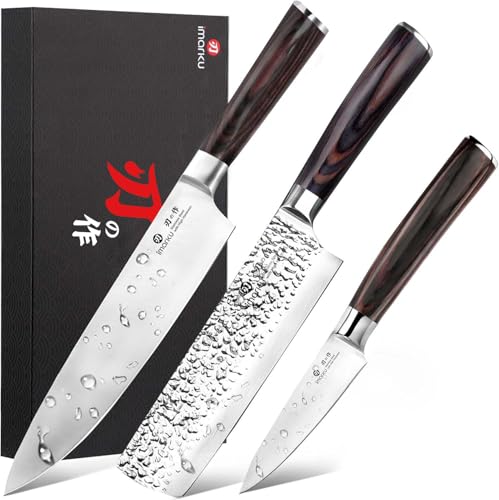
| imarku 3 Pieces | Cooks who prefer a curated trio of essential blades | $139.99 |
| Astercook 15-Piece German | Setting up a new kitchen with one purchase | $59.99 |
| Dfito 9-Piece Roll Bag | Chefs who cook in multiple locations or store knives on the go | $99.99 |
| Dfito 9-Piece Roll Bag | Gift-givers targeting cooking enthusiasts who travel | $99.99 |
| SYOKAMI 14-Piece Roll Bag | Pro chefs and outdoor cooks who need a portable all-rounder | $79.99 |
| Astercook 13-Piece Anti-Rust | Budget buyers who want dishwasher-safe convenience | $19.98 |
| HOSHANHO Butcher Set | Home butchers and heavy-meat preparers | $119.98 |
How We Picked
We filtered every candidate by steel composition (looking for high-carbon stainless or German-style X50CrMoV15 equivalents), handle material (pakkawood and full-tang construction over plastic), blade count relative to practical kitchen tasks, and owner-reported edge retention over the first six months. Price-to-blade-count mattered, but we weighted build quality higher—a $20 set that dulls in three weeks costs more than a $70 set that stays sharp for a year. We also flagged sets where the block or storage solution felt like an afterthought versus a genuine part of the package.
The 8 Best Chef Knife Set in 2026
Brewin CHEFILOSOPHI 5 PCS
This set targets home cooks who want the precision of Japanese-inspired blades without committing to a fifteen-piece block they’ll never fully use. The five pieces cover the chef’s knife, santoku, utility, paring, and bread knife—genuinely the most-used shapes in a weeknight kitchen. High-carbon stainless steel gives you a noticeably thinner, sharper edge out of the box compared to Western-style sets in the same bracket. The red pakkawood handles add heft and grip, though some owners note the ergonomic curve takes a few sessions to get comfortable with if you’ve used flat-handled German knives before.
- Pro: Ultra-sharp edge straight from factory, minimal honing needed initially
- Pro: Five-blade layout eliminates the need to buy individual add-ons later
- Con: Handle shape may feel too rounded for cooks who prefer a pinch grip on a flatter spine
Skip it if you need a carving knife or don’t bake bread—a six- or seven-piece layout would serve you better.
imarku 3 Pieces
The imarku trio is for cooks who already know exactly which three knives matter to them—typically chef, bread, and paring—and don’t want to pay for six blades they’ll never lift. Japanese high-carbon stainless steel delivers a noticeably harder edge than budget German sets, and the pakkawood handles carry a premium look that justifies the price for gift buyers. The ergonomic shaping is comfortable during long prep sessions, though the set’s narrow focus means you’re on your own if a task calls for a santoku or utility blade.
- Pro: Premium build quality and finish in each blade—excellent as a gift
- Pro: Harder steel holds an edge longer between sharpenings than softer alternatives
- Con: Only three pieces; gaps remain for carving or fillet work
Skip it if you’re starting from zero and need broader coverage; look at a ten-plus piece set instead.
Astercook 15-Piece German
This is the “everything you need to open a new kitchen” option. Fifteen pieces with a block and integrated sharpener means you unpack it and cook that evening. German-style stainless steel is softer than Japanese high-carbon, which translates to easier honing and forgiveness against hard bones or frozen foods. The block keeps counters organized, though its footprint is large. Owners consistently praise the value density—per-blade cost is among the lowest in this roundup.
- Pro: Includes knife block and sharpener; nothing else to buy
- Pro: German steel tolerates rougher use without chipping
- Con: Larger pieces feel heavier and less nimble than Japanese-style counterparts
Skip it if you have limited counter space or prefer hand-washing only; the block adds clutter.
Dfito 9-Piece Roll Bag
The Dfito set is built for cooks who move. A roll bag replaces a block, making it practical for cooking at a second home, a friend’s kitchen, or a food-prep station away from your main draw. Nine pieces cover chef, santoku, bread, utility, paring, and a honing steel—solid coverage without excess. The roll bag protects edges during transit better than a block with open slots. Owners flag that the blades are lighter than premium Western sets, which suits quick prep but may feel underwhelming for heavy butchering.
- Pro: Roll-bag storage is compact, portable, and edge-protective
- Pro: Nine blades including honing steel give full daily-driver coverage
- Con: Lighter blade weight won’t satisfy cooks who prefer heft for dense vegetables or squash
Skip it if you store knives permanently on a counter and want a block as display.
Dfito 9-Piece Roll Bag (Gift Angle)
The same Dfito set earns a second slot here specifically as a gift option. The roll bag presentation looks more considered than a standard block set, and nine pieces at under a hundred dollars reads generous without overcommitting the buyer. It suits someone who cooks outdoors, travels with knives, or rents a space where a full block doesn’t make sense. The only gift-consideration wrinkle: ensure the recipient actually uses knives—this set looks most thoughtful on a cooking enthusiast, not a casual reheater.
- Pro: Roll bag packaging feels premium and intentional as a present
- Pro: Versatile piece count suits varied cooking styles without overwhelm
- Con: Lighter steel may not appeal to someone who already owns a quality Western set
Skip it as a gift if the recipient’s knife skills are minimal; a simpler three-piece set is more digestible.
SYOKAMI 14-Piece Roll Bag
SYOKAMI packs fourteen pieces into a roll bag, making it the most comprehensive portable option here. Japanese stainless steel with pakkawood handles targets professional chefs who need a full knife roll for catering gigs, RV cooking, or BBQ competitions. The piece count includes carving, boning, and fillet knives alongside the standard chef and utility shapes—genuine versatility for meat-heavy cooking. At under eighty dollars, the per-blade cost is competitive. Some owners note the blades are thinner than Western counterparts and chip if used on frozen items.
- Pro: Fourteen blades in roll format is rare at this price point
- Pro: Covers carving, boning, and fillet—tasks most sets in this range skip
- Con: Thin Japanese-style edges require more care against hard or frozen foods
Skip it if you cook exclusively with soft produce and don’t break down whole animals.
Astercook 13-Piece Anti-Rust
At just under twenty dollars, this is the lowest-priced set in our roundup and it targets a specific buyer: someone who wants dishwasher-safe knives and anti-rust coating, meaning zero maintenance beyond washing. Thirteen pieces with six blade guards for drawer storage rather than a block. The tradeoff is blade performance—this is serviceable stainless, not high-carbon. It’s ideal for a first apartment, a shared kitchen, or as backup knives for a party. Owners who try to compare it against premium sets are disappointed, but expectations set correctly, it does the job.
- Pro: Dishwasher-safe and rust-resistant—truly zero-maintenance ownership
- Pro: Lowest price in the roundup with thirteen usable blades
- Con: Softer steel dulls noticeably faster; expect more frequent honing
Skip it if you take knife care seriously or cook proteins daily; the edge won’t hold.
HOSHANHO Butcher Set
This set is purpose-built for home butchers, hunters, and anyone who processes whole animals or large cuts of meat. Blade geometry differs from a general chef knife set here—longer, stiffer blades suited to splitting and trimming. The roll bag gift presentation and sharp edge out of the box make it popular for Father’s Day or holiday gifting to outdoor cooking enthusiasts. It’s not a substitute for a general kitchen set; if you also need to slice tomatoes or mince herbs, buy this alongside a standard chef knife set.
- Pro: Specialized blade profiles excel at meat breakdown tasks
- Pro: Strong gift appeal for butchers, hunters, and BBQ cooks
- Con: Too niche for everyday vegetable and fruit prep
Skip it if you cook plant-forward meals and rarely handle whole cuts of meat.
Buying Guide
Steel Hardness and Edge Retention
Japanese high-carbon stainless typically measures between 56 and 60 on the Rockwell scale, giving you a sharper factory edge that stays keen longer but chips more easily under lateral force. German-style X50CrMoV15 sits around 54-56, sacrificing some sharpness for durability and easier resharpening with a basic steel. If your cooking involves bones, frozen foods, or scraping hard surfaces, softer German steel forgives more. For precision slicing of soft items, harder Japanese steel wins.
Handle Material and Full Tang Construction
Full tang means the blade’s metal extends through the entire handle—visible as a metal strip between the handle scales. This prevents the handle from loosening over time and gives better balance. Pakkawood (stabilized wood-resin composite) offers the best grip-to-durability ratio in this price range; it resists moisture far better than bare wood without the slickness of plastic. Avoid sets where the handle material is unlabeled or listed only as “plastic” if you plan heavy daily use.
Storage: Block vs. Roll Bag vs. Guards
Blocks protect edges and look presentable but consume counter space and collect grime inside slots. Roll bags are portable and edge-safe but require drawer or shelf storage when not in transit. Blade guards with drawer storage work for budget sets but let blades knock against each other without individual sleeves. Match storage to your kitchen layout and portability needs, not just aesthetics.
Our Verdict
Top pick: The Brewin CHEFILOSOPHI 5-Piece delivers the best balance of edge quality, useful piece count, and price for most home cooks. Japanese-style sharpness at under seventy dollars is hard to argue with, and the five blades cover virtually every daily task without filler.
Budget pick: The Astercook 13-Piece Anti-Rust set wins on pure value and low-maintenance ownership. At just under twenty dollars with dishwasher-safe convenience, it’s the right call for first kitchens or shared spaces.
Alternative winner: If you need portability or cook across multiple locations, the SYOKAMI 14-Piece Roll Bag outperforms everything here in piece count and coverage at $79.99.
FAQ
Is a chef knife set better than buying individual knives?
A curated three- or five-piece set typically costs less per blade than buying equivalents individually, and the matching steel and handle design feel cohesive during use. The downside is filler pieces—you may pay for a cheese knife or apple corer you’ll never use.
How often should I sharpen knives from these sets?
Japanese high-carbon sets need sharpening roughly every three to six months under home use, while softer German steel sets can go longer between sessions but need weekly honing with a steel. The Astercook anti-rust set benefits from more frequent honing since its softer edge rolls first.
Can I put these knives in the dishwasher?
Only the Astercook 13-Piece explicitly advertises dishwasher safety. For all other sets, hand-washing preserves the edge, prevents handle swelling (even pakkawood degrades with repeated heat cycles), and avoids blade-to-blade contact during a wash cycle.
What’s the right number of pieces in a chef knife set?
Five to nine is the practical sweet spot for home cooks—you get chef, santoku, paring, bread, and utility without paying for rarely used shapes. Ten-plus sets make sense for professional kitchens or people who regularly process meat, fish, and baked goods.