Key takeaways
- Measure the width of the wall space where it will mount; the awning should not exceed it.
- Consider projection (how far it extends out); 8 to 10 feet shades a typical seating group.
- Account for the sun’s angle: lower afternoon sun needs more projection to shade seats.
- Leave clearance above doors and windows for the mounting bar and roll.
A retractable awning is one of the highest-impact upgrades you can make to an outdoor living space, turning a sun-baked patio into a shaded room you can use all day. Unlike fixed structures, it extends when you want shade and rolls away to let the sun back in, protecting furniture and lowering the temperature near adjoining rooms. But awnings vary widely, and buying the wrong size or operation type is an expensive mistake.
This 2026 guide walks through the key decisions: manual versus motorized, sizing for your patio, fabric and frame quality, and the mounting and wind considerations that determine how long your awning lasts. Read it before you buy and you will get shade that fits your home and your budget.
Our top picks


As an Amazon Associate we earn from qualifying purchases at no extra cost to you.
⚡ Save on Your Next PC — Amazon Prime
Prime members get fast free shipping on the systems above, plus early access to Prime Day & Black Friday PC deals. New members get a 30-day free trial.
Watch: How to Choose a Retractable Awning for Your Patio — Video Review
Manual or Motorized: How You Want to Operate It
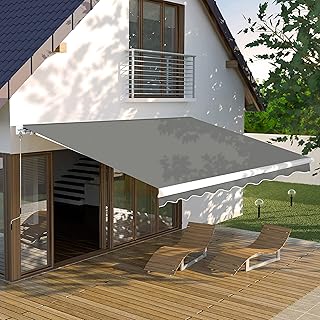
The first fork is operation. Manual crank awnings, like the Yardenaler 12×10 FT Manual Retractable Awning or a Yaheetech 10×8 crank model, cost less and have no wiring, making them great for smaller patios and budgets. Motorized awnings, such as the electric Motorized Awning with a black structure and remote, extend at the push of a button and are the convenient choice for large spans you will open and close often. Motorized units cost more and need a power source, but the ease pays off on big patios.
Sizing Your Awning to the Patio
- Measure the width of the wall space where it will mount; the awning should not exceed it.
- Consider projection (how far it extends out); 8 to 10 feet shades a typical seating group.
- Account for the sun’s angle: lower afternoon sun needs more projection to shade seats.
- Leave clearance above doors and windows for the mounting bar and roll.
Fabric and Frame Quality
The fabric does the work, so look for UV-resistant, water-repellent material that will not fade or sag; models in the 12×10 range such as the VEVOR Manual Retractable Awning and Aoxun 12×10 crank awning use weather-rated fabric for this reason. The frame and arms should be sturdy powder-coated aluminum to resist rust and hold tension. A quality awning also blocks a large share of UV, protecting both your skin and the furniture and flooring beneath it.
Mounting, Pitch, and Wind Protection
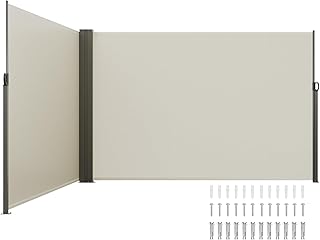
Awnings mount to a wall, roof, or soffit, and the surface must be solid enough to bear the load, so confirm you are anchoring into structural framing, not just siding. Set a pitch (angle) so rain runs off rather than pooling, which is a leading cause of awning damage. Because wind is an awning’s biggest enemy, retract it in strong gusts; for exposed patios, a retractable side awning like the VEVOR Side Awning privacy screen adds lateral shade and a windbreak without the overhead exposure.
Tips
- Retract the awning in high winds and storms to prevent frame and fabric damage.
- Choose a light fabric color to reflect heat, or a darker one for maximum UV blocking.
- Set a slight downward pitch so rain sheds instead of pooling in the fabric.
- Clean the fabric periodically and let it dry fully before rolling it up to avoid mildew.
Frequently Asked Questions
Is a manual or motorized awning better?
It depends on size and use. Manual crank awnings are cheaper, simpler, and ideal for smaller patios you shade occasionally. Motorized awnings are worth the extra cost for large spans or if you will open and close them frequently, thanks to push-button ease.
What size retractable awning do I need?
Match the width to your available wall space without exceeding it, and choose a projection of 8 to 10 feet to shade a typical seating group. Factor in the sun’s angle, since lower afternoon sun requires more projection to keep seats in shade.
Can a retractable awning withstand wind and rain?
It handles light rain well when pitched to shed water, but it should be retracted in strong wind, its main vulnerability. Quality aluminum frames and weather-rated fabric help, but no retractable awning should be left extended during storms.
Where can I mount a retractable awning?
Most mount to an exterior wall, but roof and soffit mounts are options depending on your structure. The critical requirement is anchoring into solid structural framing that can bear the load, not just siding or trim.
Conclusion
Choosing a retractable awning comes down to four decisions: manual versus motorized operation, correct width and projection, quality UV-resistant fabric on an aluminum frame, and secure structural mounting with the right pitch. Nail those and remember to retract in high wind, and your patio gains a comfortable, shaded room. Plan carefully in 2026 and you will enjoy cooler, more usable outdoor space for many summers to come.