Key takeaways
- Always vent to the outside, never into an attic or crawlspace.
- Use rigid or semi-rigid metal duct rather than flexible plastic for better airflow and fire safety.
- Keep duct runs short and minimize elbows to preserve CFM.
- Match the switch to a timer so the fan keeps running a few minutes after you finish cooking.
Cooking pushes heat, grease, steam, and odors into the air, and a good ceiling-mounted exhaust fan clears them before they settle on cabinets and walls. Installing a ventilation fan is a very achievable weekend project that improves air quality, reduces lingering smells, and protects your kitchen surfaces from greasy buildup.
This guide walks through sizing the fan to your kitchen, wiring safely, cutting the ceiling opening, and ducting to the outside. Whether you choose a compact unit or a high-flow model like the Fitop 130 CFM Bathroom Exhaust Fan, the fundamentals are the same.
Our top picks



As an Amazon Associate we earn from qualifying purchases at no extra cost to you.
⚡ Save on Your Next PC — Amazon Prime
Prime members get fast free shipping on the systems above, plus early access to Prime Day & Black Friday PC deals. New members get a 30-day free trial.
Watch: How to Install a Ceiling Fan for Kitchen Ventilation — Video Review
Size the Fan to Your Kitchen
Ventilation is measured in CFM, or cubic feet of air moved per minute. For a kitchen you want stronger airflow than a bathroom because cooking generates so much steam and grease. A small utility space might be served by a 50 CFM unit like the V2262-50, but most kitchens do better with 130 CFM or more, and larger cooking areas benefit from a 200 CFM fan such as the REEPLAR 8-inch model. Also check the sones rating, since a fan under 2.0 sones runs quietly.
Cut Power and Plan the Route
Before touching any wiring, switch off the circuit at the breaker and confirm it is dead with a voltage tester. Plan the shortest, straightest duct route to an exterior wall or roof cap, because every bend and extra foot of duct reduces airflow. Venting into an attic instead of outside is a common mistake that just relocates moisture and causes mold.
Cut the Opening and Mount the Housing
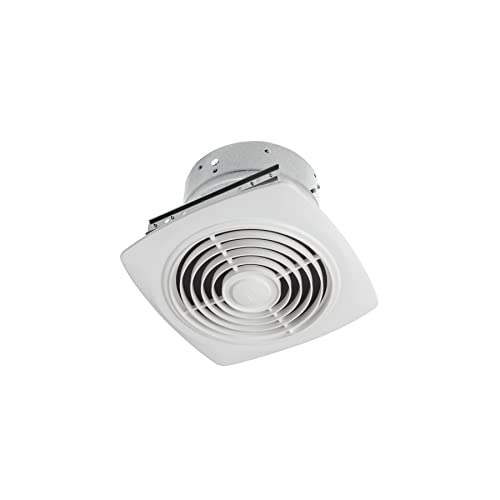
Trace the fan housing template on the ceiling, confirm you will not hit a joist, and cut the opening with a drywall saw. Secure the housing to a joist or with the included brackets so it sits flush and does not vibrate. Fans like the Broan-NuTone 505 ceiling ventilation unit include mounting hardware designed to anchor firmly between joists.
Wire and Duct the Fan
Connect the fan wiring to your switch leg, matching black to black, white to white, and ground to ground, and secure the connections in the housing box. Attach the duct to the fan outlet with a clamp and foil tape, run it to the exterior cap, and make sure the backdraft damper opens freely so outside air cannot flow back in. A quiet, easy-install round unit like the LBiWin 8-inch fan simplifies this stage.
Test and Seal
Restore power and confirm the fan pulls air by holding a tissue near the grille. Seal the housing to the ceiling drywall and check that the exterior damper closes when the fan is off. Proper sealing prevents drafts and keeps the fan working efficiently.
Tips
- Always vent to the outside, never into an attic or crawlspace.
- Use rigid or semi-rigid metal duct rather than flexible plastic for better airflow and fire safety.
- Keep duct runs short and minimize elbows to preserve CFM.
- Match the switch to a timer so the fan keeps running a few minutes after you finish cooking.
Frequently Asked Questions
How much CFM do I need for a kitchen fan?
Aim for at least 130 CFM for a standard kitchen, and 200 CFM or more for large or open-plan cooking areas. Undersized fans cannot keep up with cooking steam and grease.
Can I install a ventilation fan myself?
Yes, if you are comfortable turning off the circuit, working with basic wiring, and cutting a ceiling opening. If new wiring or a roof penetration is required, consider hiring an electrician or roofer for that step.
Why is my exhaust fan so loud?
Noise usually comes from a high sones rating, loose mounting, or restrictive ducting. Choose a fan under 2.0 sones and mount it firmly with smooth, short ducts.
Where should the fan vent to?
Always to the exterior through a wall or roof cap with a backdraft damper. Venting indoors traps moisture and causes mold and rot.
Conclusion
A properly sized and correctly ducted ceiling ventilation fan transforms kitchen air quality and protects your surfaces from grease. Size for at least 130 CFM, vent to the outside, keep the ductwork short, and you will have a quiet, effective fan that pays for itself in cleaner air and easier cleanup.