Key takeaways
- Clean the aerator screen every few months by soaking it in vinegar to remove mineral buildup and restore flow.
- Keep a spare washer on hand, since a worn washer is the usual cause of a post-install drip.
- Choose an NSF or cUPC certified aerator to guarantee safe materials and accurate flow ratings.
- Note whether you have hard water, which clogs aerators faster and may warrant more frequent cleaning.
A faucet aerator is one of the smallest, cheapest upgrades in your kitchen, and one of the most effective at saving water. This little screw-on tip mixes air into the stream, reducing flow from a wasteful 2.2 gallons per minute down to as little as 1.5 or even 1.0 GPM without you feeling any loss in pressure. Over a year, that adds up to thousands of gallons saved.
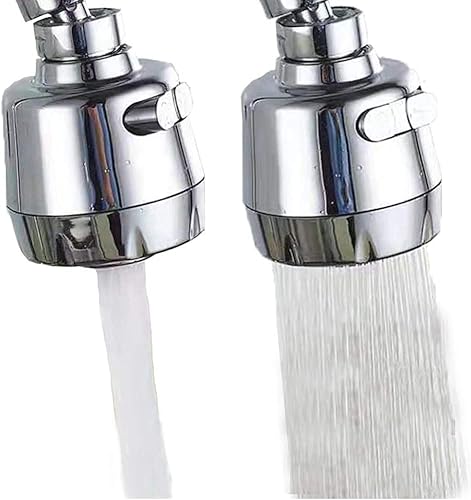
Installing one takes about five minutes and no special skills. This guide covers how aerators work, how to pick the right size and flow rate, and the simple steps to swap yours out. A versatile 360-degree swivel model like the 2PCS Deluxe Water Saving Faucet Aerator even adds a movable sprayer while it saves water.
Our top picks





As an Amazon Associate we earn from qualifying purchases at no extra cost to you.
⚡ Save on Your Next PC — Amazon Prime
Prime members get fast free shipping on the systems above, plus early access to Prime Day & Black Friday PC deals. New members get a 30-day free trial.
Watch: How to Install a Kitchen Faucet Aerator for Water Saving — Video Review
How an Aerator Saves Water
An aerator introduces air into the water stream, which maintains the feeling of strong pressure while actually letting less water through. A standard old faucet flows around 2.2 GPM, but a low-flow aerator can cut that to 1.5 GPM, a savings of roughly 30 percent, with no practical difference for rinsing dishes or filling pots. Some bathroom-oriented inserts go as low as 1.0 GPM.
Identify Your Thread Type and Size
Aerators come in male and female threads and in several diameters, most commonly the M22 and M24 sizes. Look at your faucet tip: if the threads are on the outside it needs a female aerator, and if they are inside it needs a male one. Universal kits such as the ONESWI 360-degree swivel aerator fit both M22 female and M24 male threads, which removes the guesswork.
Remove the Old Aerator
Twist the existing aerator off counterclockwise by hand. If mineral buildup has it stuck, wrap the tip in a cloth to protect the finish and use pliers gently, or soak the area in vinegar to dissolve scale first. Keep the old rubber washer aside so you can compare sizes.
Install and Test the New One
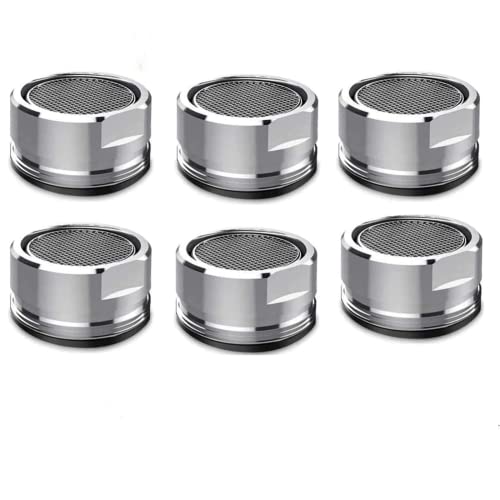
Make sure the new aerator’s rubber washer is seated, then thread it on clockwise by hand until snug. Do not overtighten, since hand-tight plus a slight turn is enough and prevents cracking. Turn on the water and check for leaks around the threads; if it drips, tighten a touch more or reseat the washer. A certified insert like the Hibbent NSF-certified aerator ensures safe, consistent flow.
Add Function While You Save
Modern aerators do more than restrict flow. Swivel models rotate 360 degrees to reach every corner of the sink, and multi-mode versions switch between a soft stream and a spray for rinsing produce. A 3-mode adjustable sprayer attachment turns a basic faucet into a far more useful one while still cutting water use.
Tips
- Clean the aerator screen every few months by soaking it in vinegar to remove mineral buildup and restore flow.
- Keep a spare washer on hand, since a worn washer is the usual cause of a post-install drip.
- Choose an NSF or cUPC certified aerator to guarantee safe materials and accurate flow ratings.
- Note whether you have hard water, which clogs aerators faster and may warrant more frequent cleaning.
Frequently Asked Questions
How much water can an aerator actually save?
Switching from a 2.2 GPM faucet to a 1.5 GPM aerator cuts flow by about 30 percent, which can save thousands of gallons per year in a busy kitchen.
How do I know what size aerator I need?
Check whether your faucet threads are external (needs female) or internal (needs male), and measure the diameter. Universal M22 and M24 kits fit the most common faucets.
Will a low-flow aerator hurt water pressure?
No. By mixing in air, an aerator keeps the stream feeling strong while using less water, so everyday tasks feel the same.
Why is my new aerator leaking?
Almost always a missing or misaligned rubber washer, or cross-threading. Reseat the washer, thread it on straight, and hand-tighten firmly.
Conclusion
Installing a faucet aerator is a five-minute, few-dollar upgrade that cuts water use by up to a third with no drop in performance. Match the thread type, seat the washer, and thread it on snugly, and you will start saving water and money with your very next dish.